This annual award recognizes individuals from three major geographic regions (the Americas; Europe, The Middle East, and Africa; and Asia-Pacific) who have made a recent and major impact in the field of measurement science.

ACS Measurement Science Au, ACS Sensors, Analytical Chemistry, Journal of Proteome Research, and the Journal of the American Society for Mass Spectrometry, in partnership with the ACS Division of Analytical Chemistry, are proud to announce the winners of the 2023 Advances in Measurement Science Lectureship Award:
- Europe, Middle East, and Africa:
Niko Hildebrandt, Université de Rouen Normandie, France - The Americas:
Julia Laskin, Purdue University, United States - Asia-Pacific:
Jian-Feng Li, Xiamen University, China
This annual award honors the contributions of one individual from each of three major geographic regions—the Americas, Europe/the Middle East/Africa (EMEA), and Asia-Pacific—who has made a major recent impact in the field of measurement science.
The winners will be honored during the ACS Division of Analytical Chemistry symposium at the ACS Fall National Meeting on August 14, 2023, in San Francisco, California. Learn more about the winners in their interviews below.
Meet Professor Niko Hildebrandt
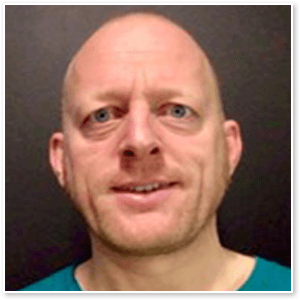
Niko Hildebrandt is a Full Professor at Université de Rouen Normandie and head of the nanoFRET research group at the COBRA Laboratory in Rouen, France. Currently, he is a full-time Visiting Research Professor in the Department of Chemistry at Seoul National University in South Korea.
Prof. Hildebrandt earned a diploma in Medical Physics from the Technical University of Applied Sciences Berlin in Germany in 2001, and a Ph.D. in Physical Chemistry from the University of Potsdam, Germany, which he obtained under the supervision of Professor Hans-Gerd Löhmannsröben in 2007. Dr. Hildebrandt’s main research interest is time-resolved photoluminescence spectroscopy and microscopy and the application of lanthanides and nanomaterials for multiplexed Förster resonance energy transfer (FRET) biosensing.
What does this award mean to you?
I am very honored to be one of the recipients of this prestigious award. Especially Analytical Chemistry and ACS Sensors are top journals within my field of research, and I am very happy that FRET (Förster resonance energy transfer) is recognized as an important part of measurement science by an international and multidisciplinary community of researchers. I highly appreciate that the focus of this award is on measurement science because precise, accurate, and reliable measurements are the most important part of our work and the basis for all characterization, analysis, interpretation, and application.
How would you describe your research to someone outside your field of research?
In short, I would say “Light goes in, light comes out, sensing done, without a doubt!” More seriously, our research analyzes molecular interactions at the nanoscale via energy transfer between molecules and/or nanoparticles. These energy transfer donors and acceptors can be coupled to biomolecules and their distances can be measured by fluorescence. Thus, we can analyze complex biological systems in their native form under physiological conditions by relatively simple spectroscopy or microscopy. Our main work consists of the development and application of novel energy transfer probes for simple, sensitive, and specific multiplexed biosensing and bioimaging. A typical field of application would be the quantification of biomarkers in clinical diagnostics.
What do you think is the biggest challenge currently in your area of research?
To make researchers aware that analytical performance is not defined by record-breaking limits of detection or by being able to perform measurements in-vivo. One problem is that the impact of a research study is often evaluated via such criteria. However, does it help others if you can detect a specific biomolecule with a specific material and technology at an extremely low concentration within 50 lab animals in one single study? Most probably not. A novel analytical sensing or imaging approach (including materials and technologies) requires careful characterization, well-performed and well-described measurement science with appropriate control experiments, the demonstration of sensitivity, specificity, reliability, and reproducibility, and the discussion of and possibly application to actual real-life scenarios. Then, the research can be reproduced and advanced also by other labs to show that the results are relevant and translatable into knowledge and technologies accessible to society.
What is next in your research?
Who knows? Research is full of mysteries! At the moment, I am a Visiting Professor in Jwa-Min Nam’s group in the Department of Chemistry at Seoul National University, and we are working on the combination of plasmonics and FRET within a project financed by the “BrainPool” program of the Korean National Research Foundation. While a lot of research has been done concerning plasmonic enhancement of fluorescence and FRET, translating those concepts into reliable, reproducible, and efficient biosensing in solution is a whole different story, and we are working hard on advancing toward this objective.
Have there been any highlights in your career to date that you are especially proud of?
I am especially proud of my current and former students and postdocs, who have done and are doing a fantastic job in advancing FRET knowledge and technology and who have made my life as a researcher a real pleasure (well, most of the time…). It is an important privilege to work with so many young and diverse people from different backgrounds and cultures.
What would your advice be to someone just starting out in the field?
Enjoy research, collaborate, discover new places, people, and cultures, and do not be discouraged by bureaucracy, administration, and politics, which tend to become worse the further you advance in your career.
Meet Professor Julia Laskin
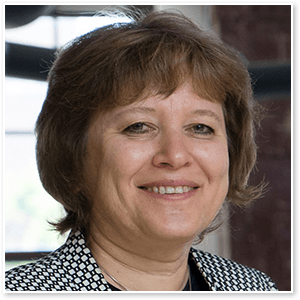
Julia Laskin is a William F. and Patty J. Miller Professor of Analytical Chemistry at Purdue University. She received her M.S. in Physics from the Leningrad Polytechnical Institute and a Ph.D. in Physical Chemistry from the Hebrew University of Jerusalem in 1998. Her research is focused on understanding phenomena underlying collisions of complex ions with surfaces for selective modification of substrates using beams of mass-selected ions and the development of new approaches for quantitative molecular imaging of biological samples using mass spectrometry.
What does this award mean to you?
It is a great honor and a recognition of my group’s efforts focused on the development of new instruments and approaches for mass spectrometry imaging of biological systems. We are very excited about these developments and believe they will have a transformative impact on biological research.
How would you describe your research to someone outside your field of research?
Mass spectrometry imaging provides detailed information about the localization of many classes of biomolecules including small metabolites, drugs, lipids, and proteins in biological systems. This capability is important in drug discovery, clinical research, biotechnology, agriscience, and other areas of research. Current efforts in this field are focused on enhancing spatial resolution, sensitivity, speed of analysis, quantitative capabilities, and molecular specificity. My group is developing a mass spectrometry imaging technique called nano-DESI that does not require any special sample pretreatment. Nano-DESI belongs to a class of ambient ionization approaches, which are rarely used for imaging with high spatial resolution. Using our custom-designed imaging platform, we have been able to obtain a very high spatial resolution approaching the subcellular level and dramatically improved the throughput of imaging experiments. We have also focused on understanding the phenomena associated with the analysis, which allowed us to develop approaches for quantification in imaging experiments.
What do you think is the biggest challenge currently in your area of research?
The biggest challenge in this field is connecting the spatially resolved molecular information to biological pathways, which will enable biological discovery. Mass spectrometry imaging provides rich chemical information, which is complementary to other spatial omics approaches that have gained popularity in biology. The challenge is to combine different imaging modalities to place the detailed molecular maps provided by mass spectrometry imaging into the context of gene and protein expression.
What is next in your research?
There are many research directions I am excited about. Further improvement of the spatial resolution and throughput of nano-DESI imaging will provide molecular details of individual cells and cell compartments in biological tissues. High throughput imaging generates large amounts of data, which presents a challenge to the downstream visualization and analysis. We are developing computational methods for the efficient image classification and mapping of the imaging data onto biological pathways, which will streamline the path to biological discovery. We are also developing approaches for increasing the depth of molecular coverage and separating isomeric biomolecules, which are common in biological systems. I see many exciting opportunities in this field, which will bring mass spectrometry imaging to every biological and clinical research lab.
Have there been any highlights in your career to date that you are especially proud of?
I am very proud of the progress we have made in the development of nano-DESI imaging. In just ten years, we brought the technique from its infancy to a robust high-performance experimental tool for imaging and identification of many classes of biomolecules. I am also very proud of the development of ion soft landing instruments for preparative mass spectrometry and understanding the fundamentals of ion-surface interactions, which will help expand the applications of this technique in materials science, energy storage, quantum computing, and other fields.
What would your advice be to someone just starting out in the field?
Learn the fundamentals! It is much easier to develop new instruments and approaches in mass spectrometry when you understand the underlying phenomena.
Meet Prof. Jian-Feng Li
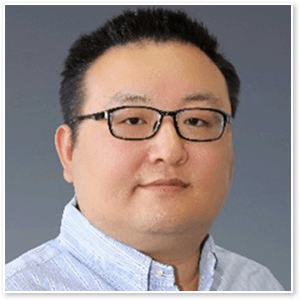
Jian-Feng Li is a full Professor of Chemistry and the Vice Dean of College of Energy at Xiamen University. He earned his B.Sc. degree in Chemistry from Zhejiang University in 2003, and his Ph.D. degree in Chemistry from Xiamen University in 2010. His research interests include surface-enhanced Raman spectroscopy, electrochemistry and electrochemical energy, surface catalysis, in situ characterization and analysis of energy materials and processes, and rapid Raman detection in the fields of public security and life or health.
What does this award mean to you?
Winning this award makes me feel that the emerging field of energy analysis is being accepted by the analytical community, which will continue to motivate us to tackle the major challenges in this field.
How would you describe your research to someone outside your field of research?
What I am doing is using spectroscopies with high sensitivity and spatial resolution to “watch” the evolution of reaction intermediates and active sites during electrochemical or catalytic processes.
What do you think is the biggest challenge currently in your area of research?
The sensitivity and temporal-spatial resolution should be further improved so that we can capture the transient intermediate with a short lifetime and achieve the in-situ study of chemical reactions at a single-molecule level. This may provide insightful information to reveal the nature of chemical reactions.
What is next in your research?
We are planning to develop operando spectroscopies with high sensitivity to investigate the reaction mechanisms of energy processes under more practical working conditions. Meanwhile, we are also developing spectroscopies with Angstrom spatial resolution to probe the distribution of physical external field (electric/optical/thermal field) and chemically active species and understand their critical roles in regulating chemical reactions.
Have there been any highlights in your career to date that you are especially proud of?
I may choose the invention of shell-isolated nanoparticle-enhanced Raman spectroscopy (SHINERS) and its successful applications in the in-situ study of important energy catalytic processes on model single crystals and practical nanocatalysts.
What would your advice be to someone just starting out in the field?
I would suggest young scholars challenge themselves with tasks that others cannot accomplish or problems that have yet to be solved.
Learn About Last Year's Winners