
Sleep deprivation can affect alertness, coordination, and judgment, yet it remains hard to measure objectively. A new study suggests saliva may hold molecular clues.
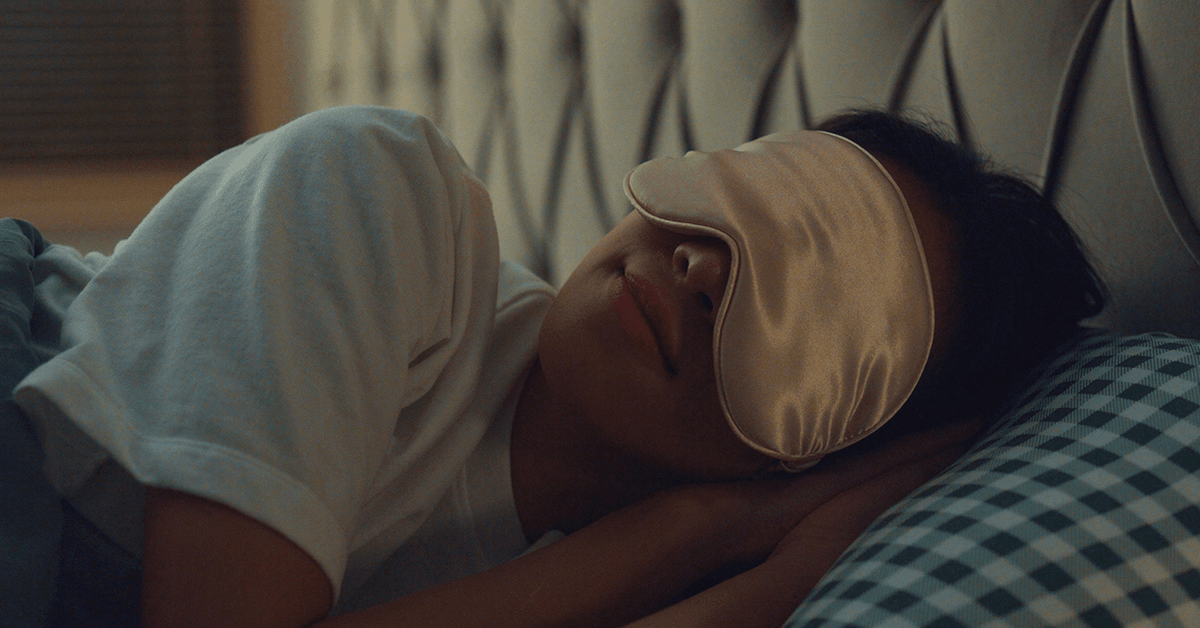
Sleep deprivation can dull alertness, slow reaction time, and impair coordination. In some legal contexts, it already carries consequences. Under New Jersey’s Maggie’s Law, a driver who has been awake for more than 24 consecutive hours may face reckless-driving prosecution after a fatal crash. But unlike alcohol or drug use, there is still no simple clinical or forensic test that can determine whether someone is acutely sleep deprived.
A new study in the Journal of Proteome Research explores one possible route: saliva. Researchers at the University of Zurich set out to investigate whether acute sleep loss leaves behind a detectable metabolic signature in oral fluid, and whether that pattern could be recognized without first collecting a personal baseline sample.
Searching Saliva for a Sleep-Loss Signal
The team studied 20 healthy young men who typically slept seven to nine hours per night. Participants were assigned three sleep conditions in random order, with at least one week between conditions:
- One night without sleep
- Four consecutive nights with sleep restricted to six hours
- A control condition with about eight hours of sleep
The two sleep-loss conditions produced the same total sleep deficit of eight hours, a design that allowed the team to ask whether the body responds differently to one full night awake compared with several nights of shorter sleep.
Saliva samples were collected at multiple time points and analyzed using liquid chromatography coupled to mass spectrometry. The researchers then used machine learning models to look for patterns among thousands of molecular features in the salivary metabolome.
A Fingerprint of Acute Sleep Deprivation
The results pointed to a distinct metabolic fingerprint after a full night without sleep. In the overall sleep-deprivation model, a reduced panel of 12 molecular features classified acute sleep deprivation with strong performance. The model performed best on samples collected earlier in the day, but its classifications were still more often right than wrong at later time points. The findings also argue against the idea of one universal "sleepiness molecule" that rises steadily with every hour awake. Instead, sleep deprivation appears to involve a time-dependent pattern of metabolites, shaped in part by circadian rhythms and sleep pressure.
The sleep-restriction condition told a different story. Four nights of six-hour sleep did not produce metabolic changes that the model could reliably distinguish from the rested condition. That nuance is important: the study supports detection of acute total sleep deprivation, not every pattern of insufficient sleep.
What Comes Next?
The work is still investigational. The study focused on healthy young men with regular day-night schedules, so the findings will need to be tested in larger and more diverse groups, including women, shift workers, frequent drivers, and people with possible confounding factors such as medical conditions, drug use, or stimulant use.
Even so, the study points to a useful shift in how acute sleep loss might be evaluated. Instead of relying only on self-reports or outward signs of fatigue, future tests may be able to look for a chemical pattern in saliva. For now, the findings suggest that one sleepless night can leave measurable traces in oral fluid, even if turning that signal into a practical test will require larger and more diverse studies.
Sleep science: read related articles in ACS journals
Obstructive Sleep Apnea Associated with Periodontitis: Evidence from Mendelian Randomization and Salivary Proteomics
Min Yu, Mengqi Feng, Xuehui Chen, Kaiyan Ma, Xu Gong, and Xuemei Gao*
DOI: 10.1021/acs.jproteome.5c01158
Wearable Sleep Detection System Based on Piezoelectric Signals and Convolutional Neural Network Analysis
Limei Zhang, Ping Cao*, Junlai Jiang, Jing Zhang*, Surong Tan, and Hanlin Zhang
https://pubs.acs.org/doi/10.1021/acs.langmuir.6c01554
Identification of Oral Protein Biomarkers for Cognitive Impairment Susceptibility in Obstructive Sleep Apnea: A Cross-Species Proteomic Study
Yuhan Xu, Mengqi Feng, Min Yu, Ying Xu, Xinyu Fu, Yuke Chen, Chunyan Liu*, and Xuemei Gao*
DOI: 10.1021/acsomega.5c11514
A Self-Adhesive, Motion-Resistant Multifunctional Hydrogel Patch with Island-Bridge Design for Comprehensive Sleep Monitoring
Xiaoyan Liu, Renguang Zhang*, Dongying Wang, and Chuizhou Meng*
DOI: 10.1021/acsami.6c01854
Neuromodulation in the Prelimbic Cortex of Sleep-Deprived Rats via a Bidirectional Microelectrode Array Modified with PtNPs/Sorbitol-Doped PEDOT:PSS
Jin Shan, Wei Xu, Jinping Luo, Zhaojie Xu, Yu Liu, Qianli Jia, Shiya Lv, Yiming Duan, Peiyao Jiao, Qi Li, Yan Luo, Yulong Ma, Xiaoying Zhang, Yilin Song*, Weidong Mi*, and Xinxia Cai*
DOI: 10.1021/acsaelm.5c01393
Bovine Milk Casein-Derived Sleep-Enhancing Peptides: Bioavailability, Functional Mechanisms, and Development Strategies
Yibo Liu, Meishuai Liu, Yuanbin Wang, Libo Liu, Guofang Zhang, Chun Li*, Jian He*, Zhicheng Chen, Quan Su, and Jiazhou Wei
DOI: 10.1021/acs.jafc.5c09875
Get e-Alerts
Stay Connected With Journal of Proteome Research
Never miss an issue again! Sign up now for email updates on future calls for papers, the latest articles, and other content from Journal of Proteome Research.