
The Gordon Hammes Lectureship Award recognizes and honors an individual whose scientific contributions have had a major impact on research across all of biological chemistry.
Biochemistry and the ACS Division of Biological Chemistry are pleased to announce the winner of the 2023 Gordon Hammes Lectureship Award, Dr. Hung-Wen “Ben” Liu of The University of Texas at Austin, and the winner of the 2023 Gordon Hammes Scholar Award, Dr. Jacob Sieg of The Pennsylvania State University.
The awards will be presented at ACS Fall 2023 in San Francisco, from August 13-17 where the winners will each be presenting a lecture along with other prominent researchers in the field. Join us for the Hammes Award Symposium on August 14 at 2pm PDT in the Moscone Center South building, Room 210.
Learn more about the winners and their research below.
Dr. Hung-Wen “Ben” Liu, 2023 Gordon Hammes Lecturer
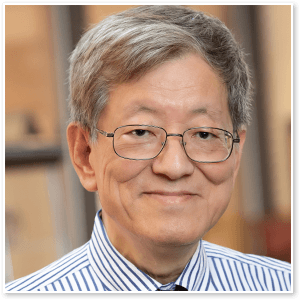
The Gordon Hammes Lectureship Award recognizes and honors an individual whose scientific contributions have had a major impact on research across all of biological chemistry.
“Ben Liu fully exemplifies the spirit of the Gordon Hammes Award, says Biochemistry Editor-in-Chief Alanna Schepartz. “He is both a fearless mechanistic enzymologist and a world-class scholar. His work has guided how chemists in academia and industry think about complex biosynthetic transformations and innovative approaches to pharmaceutical development.”
Can you give us a short overview of the research you are currently undertaking?
I am flattered to be chosen this year as the recipient of the prestigious Gordon Hammes Lectureship Award. I am most grateful for this recognition bestowed by Biochemistry and the ACS Division of Biological Chemistry, and I am humbled by the achievements of those who have received this award before me, making this truly an honor. The research in my group lies at the crossroads of chemistry and biology. We are particularly interested in trying to understand the chemistry that underlies mechanistically novel and important chemical transformations related to secondary metabolism. I think it is fair to say that many of the fundamental principles of enzymology were established in the twentieth century via the study of primary metabolic enzymes and that these key insights and methodologies are just as applicable to the study of secondary metabolic enzymes today. One of the key differences, however, is the structural complexity of many natural products compared to most primary metabolites. On the one hand, this imposes a considerable challenge, because in order to study secondary metabolic pathways and the responsible enzymes, one must be able to produce suitable chemical probes. To this end, my laboratory has often placed an emphasis on utilizing synthetic organic chemistry in our design of experiments to study the detailed mechanisms of these enzymes. On the other hand, this structural complexity often requires new and unprecedented enzymological activities often relying on radical mediated transformations, organometallic chemistry and pericyclic reaction modalities requiring new models of catalysis and in some cases a reevaluation of existing models. Despite the challenges, we have thus found this line of investigation as well as our collaborations with crystallographers and computation chemists to be quite rewarding and enlightening. Consequently, this is the science we are now pursuing, namely identifying and describing completely new catalytic paradigms in biochemistry.
What advice would you give to students who aspire to be where you are now?
First and foremost, it would be entirely disingenuous of me to take full credit for all the achievements of my laboratory. Over the years, I have relied on the creativity, ingenuity, and hard work of more than 100 graduate students and postdoctoral fellows whom I have had the great fortune to mentor. These scientists have subsequently gone on to successful careers in both academia and industry. To all my coworkers, I have tried to instill a passion for science as well as a rigorous, competitive attitude towards research. My advice, which can perhaps be applied to others, is to follow your interests, keep a curious mind and be on the lookout for interesting and important scientific questions. Through hard work, consistency, persistence, and an appreciation for the research opportunities you are presented with, I believe anybody can achieve whatever they put their mind to especially when they are willing to work with others recognizing the strengths and novel perspectives that others can contribute.
If you weren’t a biochemist, what would you be?
I earned my undergraduate degree in Chemistry from Tunghai University in Taiwan. While my primary interest at that time was history, I was "arm-twisted" to select chemistry as my major due to my family’s concerns about my job prospects after graduation. Fortunately, I met a wonderful chemistry professor, Dr. Lewis Fikes, who was a source of inspiration leading to a fascination with organic chemistry that has followed me throughout my career. Two other great scientists, Professor Koji Nakanishi, who was my Ph.D. advisor at Columbia, and Professor Christopher Walsh, who was my postdoctoral mentor at MIT, also played a significant role in introducing me to the exciting world of scientific research, instilling within me an appreciation for the elegance of complicated biological processes and inspiring me to approach scientific questions with enthusiasm and rigor. While I enjoy being a professor working at the interface of chemistry and biology, I have not given up my interest in history. I have collected a library of books on history and literature over the years, and I plan to read them all after I retire.While it can be said that the most important lesson from history is that we often ignore the lessons of the past, as a scientist, I have been trained to think and draw conclusion based on evidence. Hence, I still believe that history provides a looking glass through which we can understand why and how nations, societies and peoples experience the ups and downs they do over time. I look forward to pursuing this second passion of mine in the future.
Dr. Jacob Sieg, 2023 Gordon Hammes Scholar
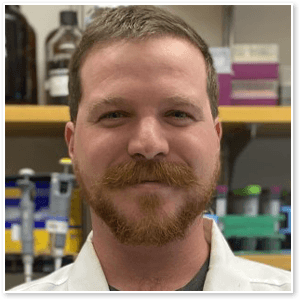
The Gordon Hammes Scholar Award honors young scientists responsible for the very best papers published in Biochemistry.
“Sieg co-authored a fantastic paper for Biochemistry,” says Editor-in-Chief Alanna Schepartz.“ By examining the complex network of interactions among RNA, the metabolome, and divalent Mg2+ under conditions that mimic the Escherichia coli cytoplasm., he was able to develop an artificial cytoplasm that mimics in vivo E. coli conditions. He is a fantastic choice for the Gordon Hammes Scholar Award.”
Can you give us a short overview of the research you are currently undertaking?
We are working on updating thermodynamic models for RNA secondary structures to better describe how RNA folds and functions in cells. Basically, we define an experimentally reproducible system that imitates the cell in a test tube, and then make measurements of RNA folding in this physiologically relevant solution. This information can be used in countless ways given the growing importance of RNA structures in advances in medicine and cellular engineering. Previously, work has focused on using non-biological “crowding” reagents, such as polyethylene glycol, as a stand in for the cellular environment. The limitation of this approach is that researchers are replacing one non-biological environment with another. In contrast, we have focused on a “bottom-up” approach where we determine what exists in a cell and get as much of that as is experimentally reproducible into a test tube. So far, our research has focused on biologically relevant mixtures of metabolites, monovalent metal ions, and divalent magnesium metal ions, and we are finding interesting effects on RNA folding and function.
What advice would you give to students who aspire to be where you are now?
Adopt a growth mindset. Take the hard classes and learn new skills while you still can. Learning will be hard, you are going to be wrong a lot, and a lot of your experiments are not going to work. However, see these experiences as an opportunity to learn. Later, you are going to run out of time to push yourself and learn new skills. You will need to publish, finish your degree, write proposals, and apply for jobs. So, take time early in graduate school to get outside of your comfort zone and challenge yourself.
Lastly, start analyzing your data in an open-source programming language like python or R (R is my personal favorite). I don’t think people realize the ways that commercially available data analysis software limits the ways they can think about and solve their problems. In contrast, using a programming language is much more powerful (plus it is free), but it is hard to learn. My advice is to spend time early in your degree and learn how to do simple tasks, like making a scatter plot or performing a y=mx+b linear regression, in a language like R. At first it will be frustrating, but if you do it every day for 2 to 3 years while you are analyzing your regular data, you will start to surprise yourself and others with what you can think of and do.
If you weren’t a biochemist, what would you be?
This is a challenging question. I took my first chemistry class in high school, started to learn more about how the matter that everything is made of really works, and I thought “I’ve got to learn more about this forever.” But before that, I was interested in evolution and ecology, especially insects and arachnids. Now, there are all these inadvertent, not-so-natural experiments occurring in the invertebrate world, as populations respond to environmental changes caused by climate change and pesticide overuse. This would be a cool area to work in.
Want More from This Journal?
Stay Connected
Sign up today for email updates on the latest research, issues, and other content from Biochemistry.