
This Special Issue aims to highlight the diverse and expanding roles of 4d and 5d transition metals in biological and bioinspired catalysis. Submit your manuscript by July 1, 2027.
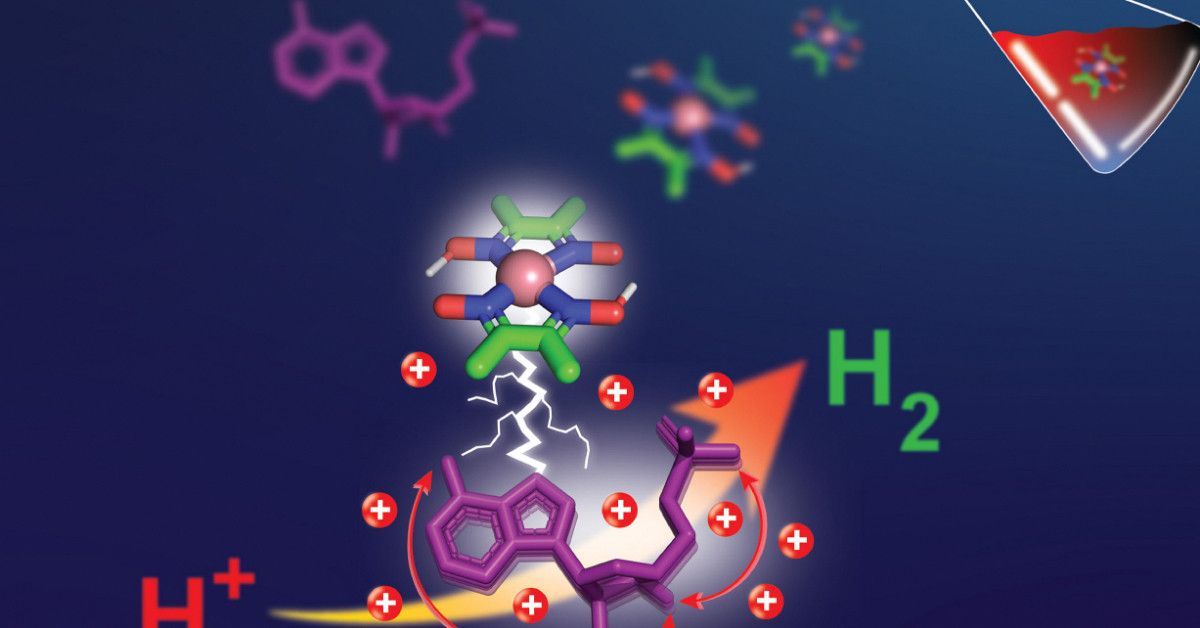
Advances in bioinorganic chemistry, chemical biology, and catalysis have increasingly blurred the boundaries between metalloenzymes and synthetic systems. Investigations of naturally occurring metal-dependent enzymes have provided fundamental insights into catalytic mechanisms, while biomimetic and bioinspired complexes have emerged as powerful platforms for reproducing, probing, and enhancing biological transformations. At the same time, incorporating 4d and 5d metals into proteins, peptides, and other biological scaffolds has opened new opportunities to develop artificial metalloenzymes with tailored functions.
In particular, the distinct electronic structures, coordination preferences, and reactivity of these heavier transition metals provide access to chemical transformations and mechanistic pathways that can complement, or extend beyond, those typically associated with naturally occurring first-row transition metals. Their integration into biological scaffolds is therefore increasingly being explored not only to mimic metalloenzyme function, but also to expand the chemical space accessible to protein- and peptide-based catalysis. This emerging interface provides a compelling platform for connecting fundamental coordination chemistry with new directions in biocatalysis and catalyst design.
This Special Issue in JACS Au aims to highlight the diverse and expanding roles of 4d and 5d transition metals in biological and biomimetic catalysis.
Topics of Interest
Topics include, but are not limited to:
Fundamental Bioinorganic Chemistry
- Structure and function of molybdenum- and tungsten-dependent enzymes
- Electronic structure and redox chemistry of 4d and 5d metal centers in biology
- Theoretical and spectroscopic investigations of electronic structure, bonding, and reactivity
- Metal-ligand cooperativity in biological and bioinspired catalysis
Metalloenzymes and Natural Systems
- Molybdenum and tungsten enzymes in carbon, sulfur, and nitrogen cycling
- Mechanisms of oxygen atom transfer in Mo/W enzymes
- Evolution and metal selection in metalloenzymes
- Biological metal trafficking and cofactor assembly for 4d and 5d metals
Biomimetic and Bioinspired Catalysts
- Synthetic models of molybdenum and tungsten enzyme active sites
- Functional biomimetic catalysts for oxygen atom transfer and redox reactions
- Ligand design inspired by biological coordination environments
- Small-molecule activation by bioinspired 4d and 5d metal complexes
Artificial Metalloenzymes
- Incorporation of Ru, Rh, Pd, Ir, Os, Pt, and Au complexes into proteins
- Directed evolution and engineering of artificial metalloenzymes
- Hybrid catalysts combining organometallic and enzymatic reactivity
- Catalysis in protein, peptide, DNA, and supramolecular scaffolds
Sustainable and Energy-Relevant Catalysis
- CO₂ reduction and utilization catalyzed by 4d and 5d metal complexes
- Hydrogen evolution and oxidation inspired by biological systems
- Water oxidation and artificial photosynthesis
- Nitrogen fixation and nitrogen-containing substrate transformations
- Biomimetic approaches to renewable fuel production
Emerging Directions
- Time-resolved and operando studies of catalytic intermediates
- Computational modeling, predictive catalyst design, and machine-learning approaches
- Single-molecule and single-site catalytic studies
- 4d and 5d metal-mediated catalysis in living cells and chemical biology applications
- Medicinal and therapeutic applications of catalytic metal complexes
Organizing Editors
Prof. Carole Duboc, Associate Editor, JACS Au
Université Grenoble Alpes, France
Dr. Kushal Sengupta, Guest Editor
Max Planck Institute for Chemical Energy Conversion, Germany
Prof. Takahiko Kojima, Guest Editor
University of Tsukuba, Japan
Submission Information
We welcome submissions for this Special Issue through July 1, 2027. For more information on submission requirements, please visit the journal’s Author Guidelines page.
Accepted manuscripts for consideration in this Special Issue will include research Articles, Letters, Methods/Protocols, and Perspectives. Papers accepted for publication for this Special Issue will be available ASAP (as soon as publishable) online. After all submissions have been published, they will then be compiled online on a dedicated landing page to form the Special Issue. Manuscripts submitted for consideration will undergo the full rigorous peer review process expected from ACS journals.
Open Access: JACS Au is a gold open access journal, which means work published in the journal will be immediately freely available for anyone to read in perpetuity. Article Publication Charges (APC) apply for publication in this fully open access journal. More than 2,000 individual institutions are supported by ACS institutional open access agreements and submitting corresponding authors based at participating institutes are eligible for support of the APC through these agreements. Please visit our website for more information on Open Access Pricing, our ACS Country Discount & Waiver Policy, and ACS Institutional Open Access Agreements.
How to Submit
- Log in to the journal’s submission page on the ACS Publishing Center.
- Select your manuscript type and upload your manuscript and related files.
- Review the title and abstract fields to confirm any pre-populated information has transferred correctly.
- Under “Special Issue Selection,” select The Role of 4d and 5d Metals in Catalysis: From Metalloenzymes to Biomimetic Models.
- Confirm all other information is correct.
- Submit your article.
If you have any general questions regarding submission to this Special Issue, please contact Prof. Carole Duboc (duboc-office@jacsau.acs.org).
Get e-Alerts
Stay Connected With JACS Au
Never miss an issue again! Sign up now for email updates on future calls for papers, the latest articles, and other content from JACS Au.