Learn more about each of the winners, gain insight into what inspires their research, and view the winning posters.

The Scientific Organizing Committee of the ACS Publications Symposium: Biological and Medicinal Chemistry accepted 90 abstracts, which were presented during the symposium in Bonn, Germany from March 6-8, 2023.
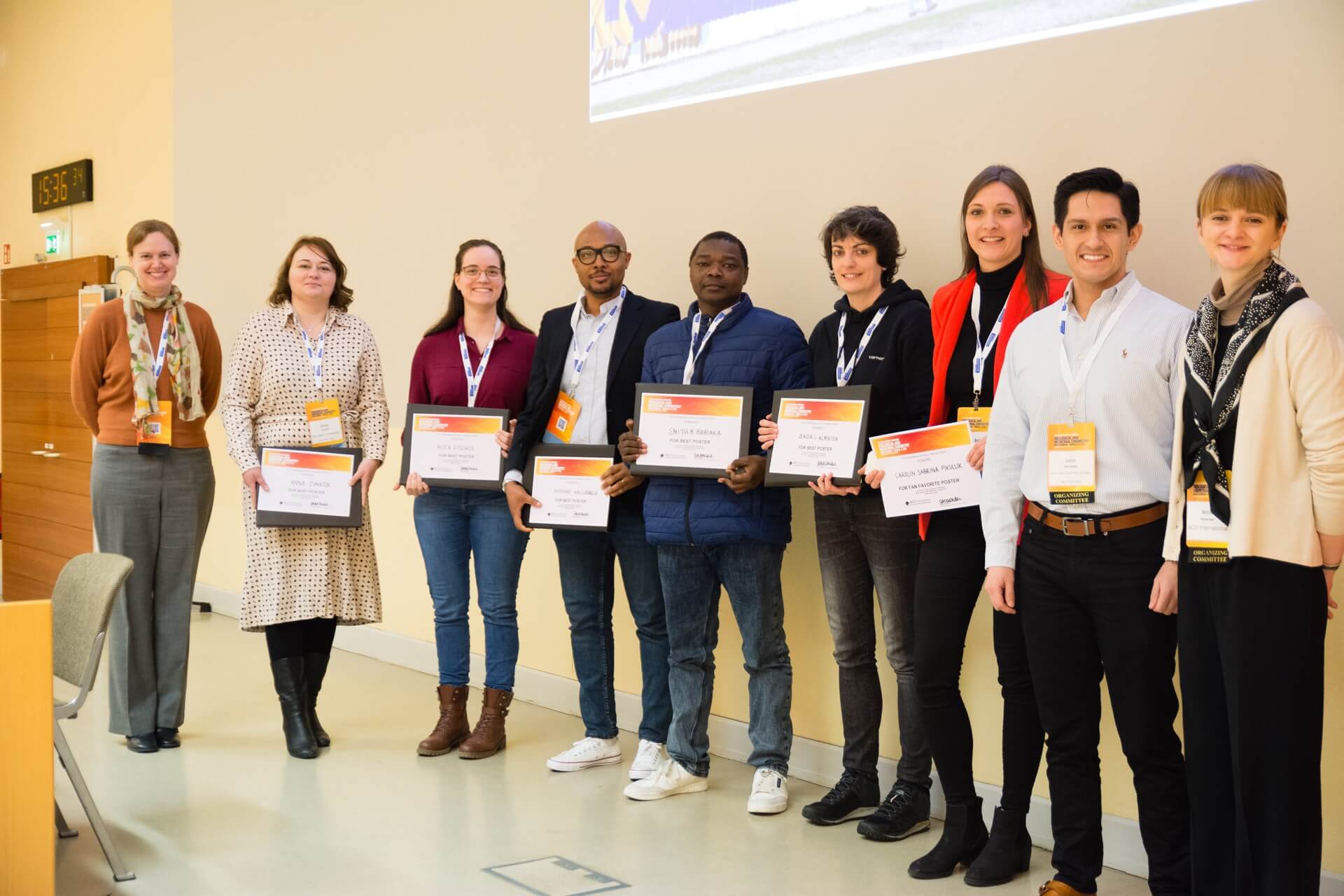
Five poster winners and one fan favorite were selected based on their exceptional research. We caught up with each of the winners to learn about what inspires their work, their mentors, and important unsolved issues in their respective fields.
Get to know each of the winners and view their posters below.
Zaida L. Almeida, Winner
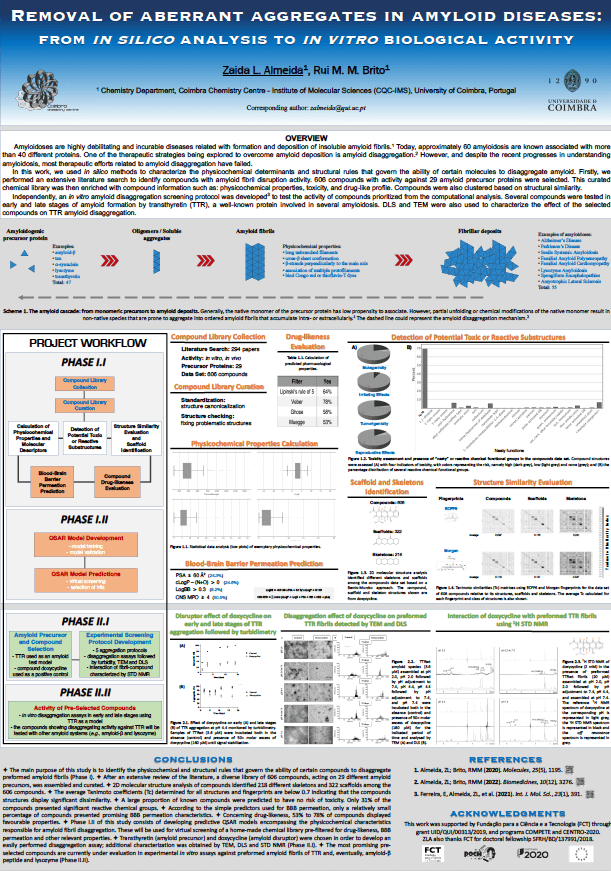
Removal of aberrant aggregates in amyloid diseases: from in silico analysis to in vitro biological activity
Zaida L. Almeida, Rui M. M. Brito
What inspired you to pursue your area of research?
I have always been fascinated to do research in areas related to the development of new therapeutic drugs and the discovery of more effective therapies against incurable diseases. Amyloid diseases or amyloidosis as Alzheimer’s, Parkinson’s, or Huntington’s diseases, are a group of debilitating and degenerative disorders that has gained wide attention in the last decades, and are central to my own research interests. These pathologies are caused by the accumulation and deposition of insoluble protein aberrant aggregates and amyloid fibrils in various organs affecting their function and some of them are amongst the most common disorders of the modern era, affecting millions of people worldwide. The therapies available are limited or non-existent and in most cases non-curative. Thus, the discovery of more efficacious disease-modifying medicines against amyloid diseases is urgent and critical, and this is what has motivated me to do science in this area of research over the last few years.
Who are your mentors? How have they impacted your work so far?
My first steps in scientific research were taken with Professor Rui M. M. Brito in my undergraduate academic internship in Chemistry. At that time, one of his main research interests was the study of the molecular mechanisms of certain human disorders, in particular amyloid diseases caused by the protein transthyretin (TTR). Since then, Professor Rui M. M. Brito helped me both to develop my scientific skills and as well as the interest in the field of amyloid diseases. Nowadays, we still work together, and we are still focused on the rational design of new therapeutic agents against, not only TTR amyloidosis, but also amyloid diseases in general.
Where did you get the idea for the research presented in your talk?
The idea for the research behind my presentation came from the realization that new approaches to disease-modifying therapies were necessary to address the health challenges posed by amyloid diseases. A persistent central challenge regarding these pathologies is their early diagnosis. Frequently, when a patient begins to exhibit clinical symptoms, extensive protein aggregation, amyloid deposition, and consequently organ misfunction have already settled in. Thus, one of the possible therapeutic strategies to be explored and that can act directly on preformed aggregates and fibrils is amyloid solubilization or disaggregation. In this sense, this project was divided in two parts, combining computational and experimental approaches, in order to understand the physicochemical and structural rules that govern the ability of certain molecules to interact and disaggregate preformed aggregates and amyloid fibrils into native monomers or soluble off-pathway non-toxic aggregates.
What advice would you give to anyone presenting a poster or talk for the first time?
There are many important aspects to have into account when presenting a poster or a talk. The main objective is to tell a coherent story with a logical leitmotif, with a beginning, a middle and an end. The presentation must be visually clear and concise, keeping the words simple and to the point. Be also aware of the audience and tailor the words and depth of the message to the audience. Then, it is imperative to dedicate time to practice before the conference. Make sure you know all the aspects of your presentation, so you can speak assertively and without hesitation. And finally, smile and enjoy the moment. Scientific events are a fabulous way to interact with scientists, get their feedback and sometimes make new collaborations and friends.
What do you think is the most important unsolved problem in your field right now?
In what respects amyloid diseases, there are several unsolved problems. However, I think that one of the most challenging and unsolved puzzles is to understand how the aggregation of a given precursor protein leads to amyloid deposition in distinct organs causing different diseases or different clinical manifestations. This is for example the case of the protein transthyretin and its single-site mutants which may cause several hereditary amyloidosis, such as “familial amyloid polyneuropathy” (ATTRv-PN) and “familial amyloid cardiomyopathy” (ATTRv-CM), with ATTRv-PN affecting mostly the peripheral nervous system, while ATTRv-CM mainly targets the heart. There are several factors that may play a role in this issue, namely the physicochemical properties of the protein, its local concentration, and the microenvironment of the specific organ. In addition, the ability of the protein to form aggregates that differ in their morphology, stability, seeding capacity, co-aggregation and surface properties may also be of paramount importance. Although amyloid diseases share some common pathological features, the details of the molecular events leading to amyloid formation by each precursor protein must be carefully studied and analyzed in order to develop the precision therapies of the future.
Smith B. Babiaka, Winner
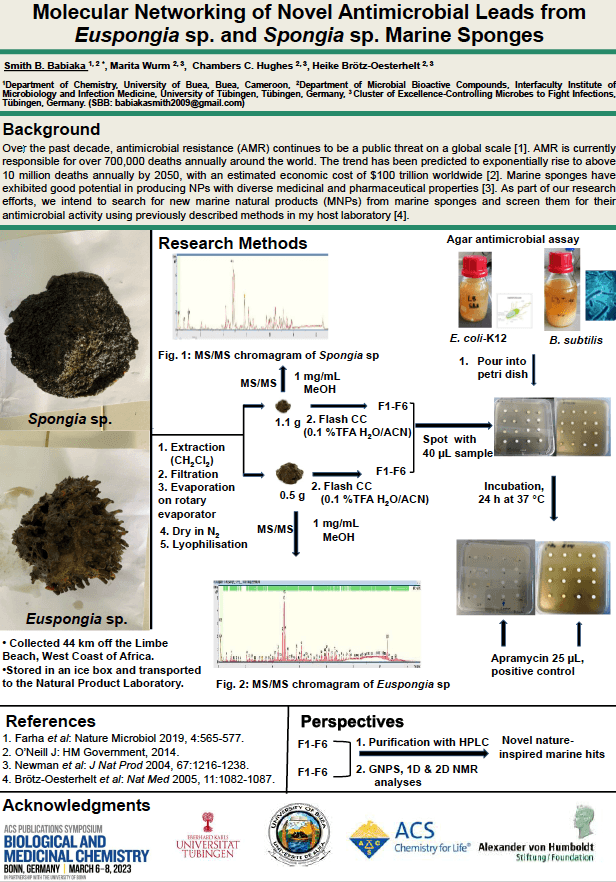
Molecular Networking of Novel Antimicrobial Leads from Euspongia sp. and Spongia sp. Marine Sponges
Smith B. Babiaka, Marita Wurm, Chambers C. Hughes, Heike Brötz-Oesterhelt
What inspired you to pursue your area of research?
Very few professors have been trained in my home country in the area of marine natural product (MNP) drug discovery. There is a lack of capacity and skills in MNP chemistry to make use of our genetic resources properly. Majority of research has been focused on natural product bioprospecting from the terrestrial ecosystem which is not sustainable. Also, the marine environments possess quite novel structures, a well-established track record for the discovery of new natural products (NPs) with significant antimicrobial activities. The marine environment in my region constitutes an untapped repository for the discovery of new antimicrobial drugs. To the best of our knowledge, the medicinal potential of marine sponges in this region has not been investigated.
Who are your mentors? How have they impacted your work so far?
Prof. Dr. Chambers C. Hughes, Prof. Dr. Heike Brötz-Oesterhelt, Prof. Ntie-kang Fidel and Prof. Kennedy O. Abuga. I have been impacted by working and reading publications with high impact factors published by Prof. Dr. Chambers C. Hughes. Next, being trained in the use of ultra-modern state-of-the-art in the group of Prof. Dr. Heike Brötz-Oesterhelt is a great opportunity for me to exploit.
Where did you get the idea for the research presented in your talk?
Reading solid articles published in ACS journals like Journal of Natural Products, Chemical Reviews, ACS Chemical Biology, etc. about isolation of natural products from marine sponges. Also reading articles published by some RSC journals like Natural Product Reports, Chemical Society Reviews, etc. motivated me to work on marine sponges. Since 2018, I have downloaded more than 1000 articles on marine natural products published in top journals like Journal of Natural Products, Chemical Reviews, ACS Chemical Biology Natural Product Reports, Chemical Society Reviews etc. Everyday, I spend time reading these articles and I get my research ideas from these publications.
What advice would you give to anyone presenting a poster or talk for the first time?
They have to be very organised in communicating their research ideas, and avoid scientific jaggons. Next, their ideas must be very clear to everyone.
What do you think is the most important unsolved problem in your field right now?
Getting new antimicrobial agents to fight antibiotic resistance in the world.
Alica Fischle, Winner
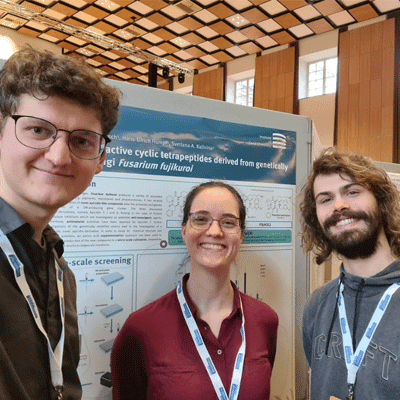
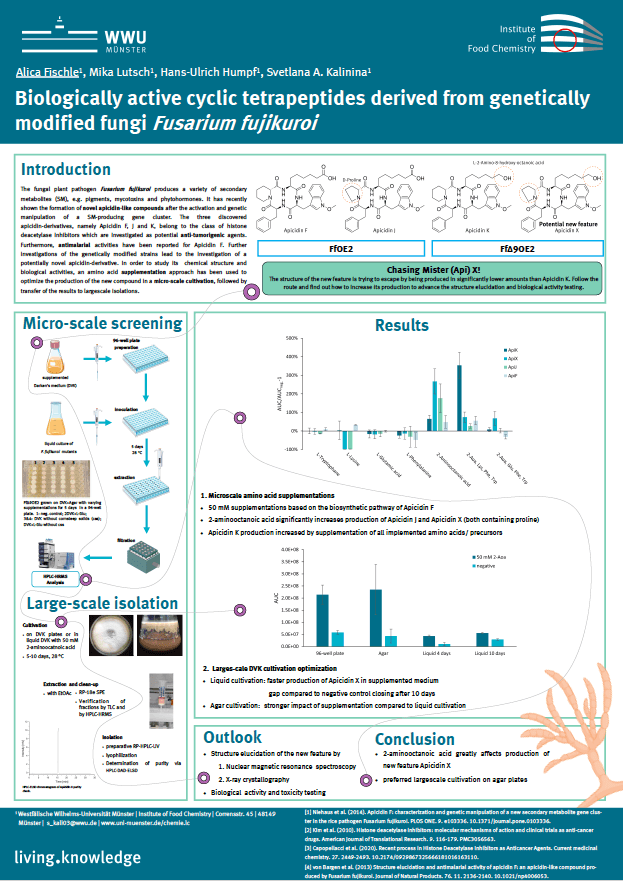
Biologically active cyclic tetrapeptides derived from genetically modified fungi Fusarium fujikuroi
Alica Fischle , Mika Lutsch , Hans-Ulrich Humpf, Svetlana A. Kalinina
What inspired you to pursue your area of research?
I was inspired by the broad variety and possibilities in the field and love the opportunity to learn more about so many different techniques while keeping my mind sharp and flexible for new discoveries.
Who are your mentors? How have they impacted your work so far?
The professors I've had the honor of learning from, my mentors during my undergraduate studies and my supervisor who keeps motivating and inspiring me to go beyond.
Where did you get the idea for the research presented in your talk?
Lots and lots of papers, personal discussions, and other current projects in the working group.
What advice would you give to anyone presenting a poster or talk for the first time?
Be curious, be creative, be precise, be prepared, and have fun.
What do you think is the most important unsolved problem in your field right now?
To understand and explore the role of fungi in all its complexity.
Dr. Anna Junker, Winner
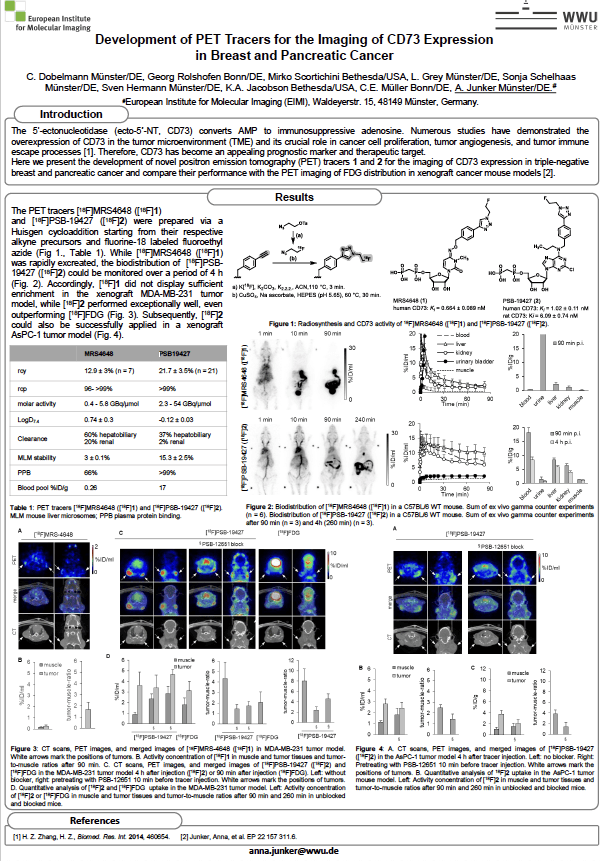
Development of PET Tracers for the Imaging of CD73 Expression in Breast and Pancreatic Cancer
C. Dobelmann, Georg Rolshofen, Mirko Scortichini, L. Grey, Sonja Schelhaas, Sven Hermann, K.A. Jacobson, C.E. Müller, A. Junker
What inspired you to pursue your area of research?
I always wanted to advance cancer treatment and diagnostic options.
Who are your mentors? How have they impacted your work so far?
Prof. Dr. C. E. Mueller (Bonn university), Dr. K. A. Jacobson (NIH, NIDDK, Bethesda, MD), Prof. Dr. B. Wuensch (Münster university). There are countless times they provided me with guidance and support .
Where did you get the idea for the research presented in your talk?
I am working on PET tracer development for various types of cancer and CD73 appeared as the most logical choice.
What advice would you give to anyone presenting a poster or talk for the first time?
Engage with people at the conference, dont be shy.
What do you think is the most important unsolved problem in your field right now?
Oh there are plenty... Early detection and elimination of tumors is, in my opinion, one of the key aspects regarding the aging of our polulation. Tackeling infectious diseases is another fconcern that requires our attention.
Dr. Antoine L. D. Wallabregue, Winner
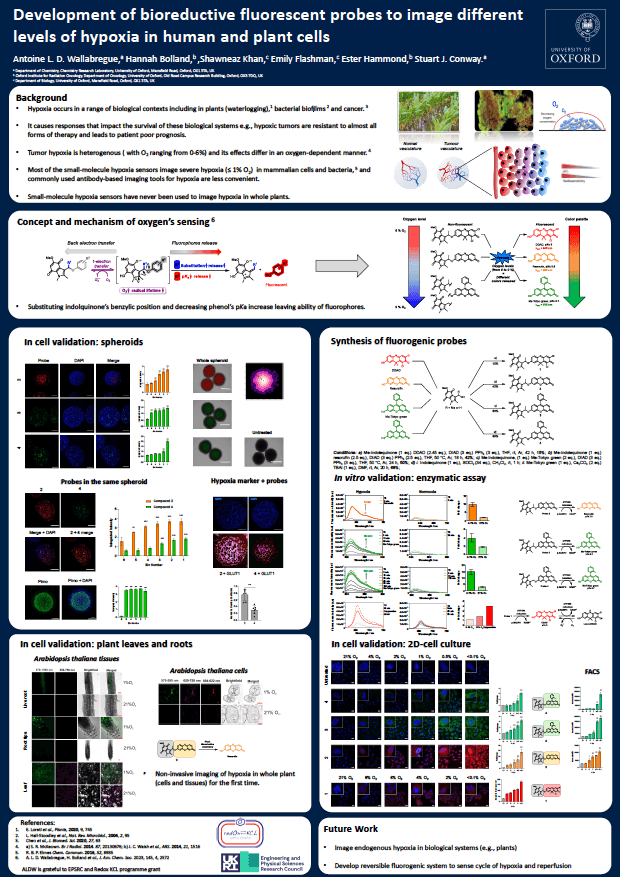
Development of bioreductive fluorescent probes to image different levels of hypoxia in human and plant cells
Antoine L. D. Wallabregue, Hannah Bolland, ShawneazKhan, Emily Flashman, Ester Hammond, Stuart J. Conway
What inspired you to pursue your area of research?
The idea that the research I am doing is useful and will have an impact on society. Besides, I am fascinated by the complexity and diversity of chemical reactions in the cell. This is the driving force of my research for developing tools to study and increase our understanding of cell chemistry in disease-related conditions. This multidisciplinary (involving spectroscopy, chemistry, and biology) and very exciting and has enabled me to explore several fields of chemical biology from cellular trafficking to drug delivery.
Who are your mentors? How have they impacted your work so far?
First of all my parents, who taught me that being different is more important than being better. Then my Ph.D. and current Post-Doctoral supervisor, who have given me the necessary freedom and guidance to develop the ideas that lead to my current research. These are important qualities to enable young scientists to evolve. Finally, I learned a lot from several esteemed experts from different fields throughout my different collaborations.
Where did you get the idea for the research presented in your talk?
I was inspired by the thorough works of Steven Everett et al., published in the early 2000s, and the molecular mechanism of hypoxia sensing through the hypoxia-inducible factors (HIFs) by cells.
What advice would you give to anyone presenting a poster or talk for the first time?
Be confident and enjoy the time being because you already did the most difficult part: the research.
What do you think is the most important unsolved problem in your field right now?
The translation of researchers' findings from fundamental (biomedical or clinical) research into practical human health benefits such as new therapeutics, devices & diagnostics, or other clinical interventions.
Carolin S. Pikullik, Fan Favorite
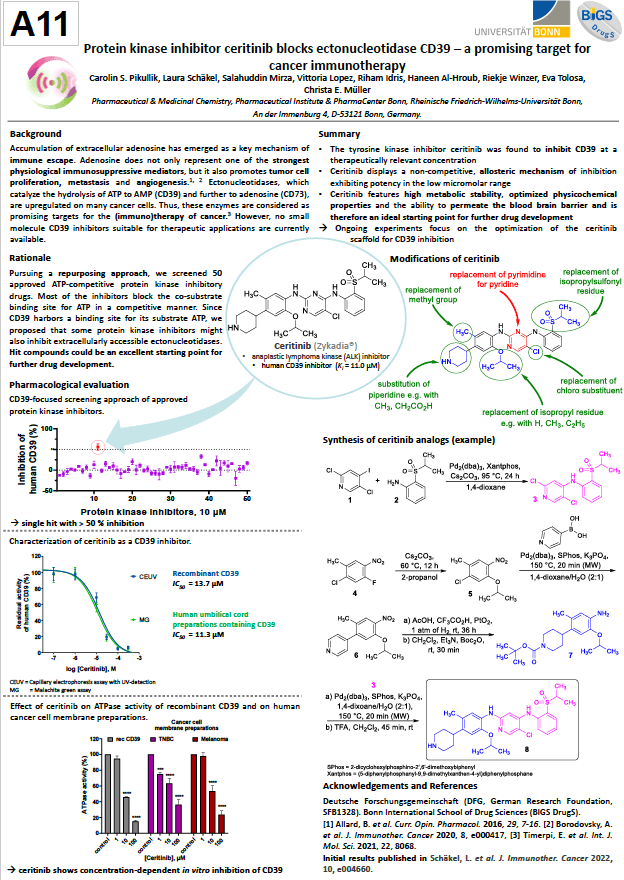
Protein kinase inhibitor ceritinib blocks ectonucleotidase CD39 – a promising target for cancer immunotherapy
Carolin S. Pikullik, Laura Schäkel, Salahuddin Mirza, Vittoria Lopez, Riham Idris, Haneen Al-Hroub, Riekje Winzer, Eva Tolosa, Christa E. Müller
What inspired you to pursue your area of research?
Ever since I was a small child I was extremely fascinated by science especially by chemistry. I was curious about the functioning of natural laws, people around me did not have the answers for all my questions and I liked to spend time reading and searching for answers. When choosing what to study at university, the interdisciplinary and scientifically oriented degree program in pharmacy seemed perfect for me. My love and enthusiasm for Pharmaceutical & Medicinal chemistry then developed quickly. Now I get to pursue my fascination for chemistry in the lab every day, always motivated by the thought of making a small contribution to significant research topics such as cancer treatment.
Who are your mentors? How have they impacted your work so far?
I've been fortunate to have a number of knowledgeable mentors who have helped me develop professionally and personally. Two most notable mentors are of course my boss Prof. Christa E. Müller as well as my very esteemed colleague Dr. Jörg Hockemeyer, who immediatly took me under his wing when I started my PhD. They both embody all characteristics of a great scientist: a large treasure of knowledge and experience, the ability to dream big, persevereance and a solution-oriented mindset. Last but not least I have to mention my friends, most of whom are also pharmacists and researchers, especially my best friend Charly. When I didn't see hope or possibilities, she saw greatness in me and reminded me to keep going.
Where did you get the idea for the research presented in your talk?
The search for novel CD39 inhibitors using a repurposing approach was already initiated before I started my PhD in Christa's working group. Since CD39 harbors a binding site for its substrate ATP, we proposed that some protein kinase inhibitors, who block the co-substrate binding site for ATP on these enzymes, might also inhibit extracellularly accesssible nucleotidases. When tyrosine kinase inhibitor ceritinib was found to inhibit CD39 at a therapeutically relevant concentration, I started my project wich focuses on the optimization of the ceritinib scaffold for CD39 inhibition.
What advice would you give to anyone presenting a poster or talk for the first time?
Stay calm and be self-confident. You can be really proud of what you've achieved and it is a privilege to be able to work in an academic institution that generates knowledge and transfers it to society, for the benefit of others. Always remember to be enthusiastic - you're research is exciting and you love what you do. It is also very important to check the audience's understanding when presenting your very specific data.
What do you think is the most important unsolved problem in your field right now?
I would like to see researchers around the globe become more unified and work more closely together towards the same goals.
View all of the winners below:
Want to Learn More About ACS Publications Events?