
The contributions of many women to Chemical Research in Toxicology are motivated by a combined passion for science and commitment to making scientific discoveries that impact a sustainable future of humans and the environment through science-driven policies for chemical safety. In celebration of Women's History Month and in recognition of the contributions of women to toxicology and allied areas, we are pleased to highlight a special collection of recent papers published in the journal by authors who identify as women.
The highlighted authors are at various stages of their scientific careers, from doctoral students to established leaders, working around the world at different types of institutions.
Read on to hear from each of these inspiring women in their own words and catch up on the entire series below:
Women in Toxicology: Interviews (Part 1)
Women in Toxicology: Interviews (Part 2)
Women in Toxicology: Interviews (Part 3)
Women in Toxicology: Interviews (Part 4)
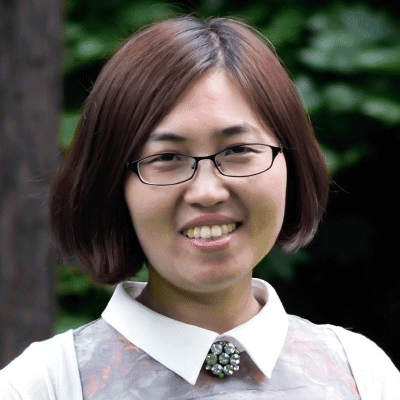
Haiying Yu, Professor, Zhejiang Normal University, China
Share about your entry into chemical toxicology and your path to your current area?
My Ph.D. supervisor, Prof. Dr. Gerrit Schüümann, leads the group to carry out scientific research on chemical toxicology. I received his supervision and completed the basic academic training during my Ph.D. period. Since I got my degree and independently work in Zhejiang Normal University, I chose to do research in chemical toxicology unhesitatingly. This is my interest.
How do you want to contribute to the advancement of the field?
Our group employs computational chemistry approaches combined with experimental detection to explore the toxicity mechanism of chemicals, especially emerging environmental pollutants. We hope to investigate the interactions of chemicals with biomolecules, including metabolism, to provide mechanistic information of chemical toxicity at molecular level. Furthermore, we are committed to establish the relationship between molecular structure and chemical activity/toxicity, to provide important tools for activity/toxicity prediction of new chemicals. In addition, training doctoral candidates is also an important way to promote the development of the field, which is what we are doing now.
What inspired you to do the research in the article we are highlighting?
The research basis of the group and the interests, passions, and curiosity of the members.
What is something that has impacted you in a positive manner?
When the students in our research group made progress in their research subject under my guidance, I was encouraged and moved by their jubilation and eager to continue exploring.
What was your training circle like?
I get my Ph.D. degree in Helmholtz Centre for Environmental research-UFZ, Germany. My Ph.D supervisor is Prof. Dr. Gerrit Schüümann. He led me into the field of computational toxicology, and He is an important guide on my academic path. His acumen and insight into scientific problems, and his diligence and effort have inspired me a lot. The other group members gave me a great deal of help in software learning, helping me to quickly enter into my subject research. I feel incredibly lucky to obtain such valuable guidance and help at the beginning of my academic career. After that, I worked at Zhejiang Normal University until now. I also got help from many colleagues. The frequent discussion and communication opened my mind to innovative ideas. All these helps me grow up fast. I am very appreciative of that.
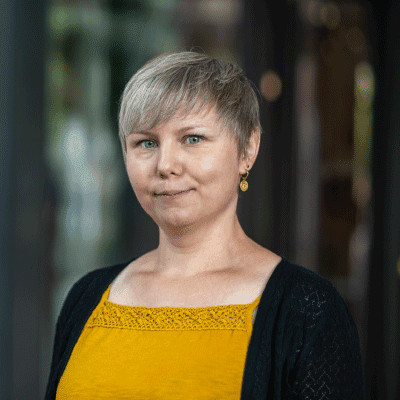
Luise Henneberger, Research Group Leader, Helmholtz Centre for Environmental Research, Germany
Share about your entry into chemical toxicology and your path to your current area?
I started working on the topic of quantitative in vitro-to-in vivo extrapolation (QIVIVE) after my PhD in 2015 in an industry-funded research project. More projects evolved from this work and since the beginning of 2020 I am leading my own research group on “Bioassay exposure assessment”.
How do you want to contribute to the advancement of the field?
My vision is to improve cell-based in vitro bioassays from the perspective of a chemist to establish these test systems as alternatives to animal testing for chemical risk assessment. I want to advance our understanding of in vitro exposure by measuring and modelling chemical concentrations and identifying the main distribution and loss processes. Another goal of my research is to replace animal derived components in in vitro bioassays by chemically defined alternatives.
What inspired you to do the research in the article we are highlighting?
I wanted to test some hypotheses I had on how the results of QIVIVE models change if freely dissolved concentrations are used instead of nominal concentrations. To minimize uncertainty, I wanted to use only experimental data as input parameters for the QIVIVE model. The pharmaceuticals we chose for the present publication were ideal for this purpose, because these are data-rich chemicals and only very few additional experiments had to be conducted to complete the data set.
What is something that has impacted you in a positive manner?
I was lucky to have good mentors during all stages of my career that on the one hand gave me the freedom to pursue my own ideas and on the other hand taught me how to critically review my own work and the work of others.
What was your training circle like?
I have a diploma in food chemistry but decided to do my PhD in environmental chemistry and later moved on to do my Postdoc in environmental/cell toxicology. The experience across different disciplines helped me to shape my own research agenda.
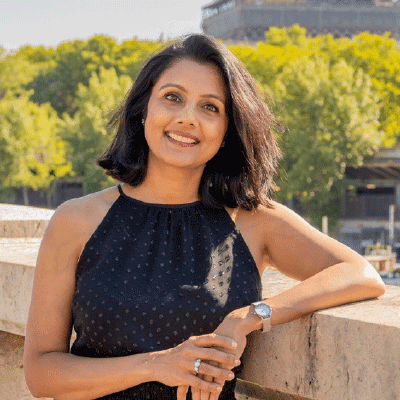
Payal Rana, Director Level, Pfizer, United States
Share about your entry into chemical toxicology and your path to your current area?
Since childhood, I have been interested in science, especially biology, which led to formal education in cell and molecular biology and biotechnology.
How do you want to contribute to the advancement of the field?
I have over 18 years of experience in drug discovery, chemistry, pharmacology, drug safety, and business development in the pharmaceutical industry.I would like to continue to grow in the field of nonclinical toxicology and continue to support drug development.
What inspired you to do the research in the article we are highlighting?
There has been an increased need to develop various predictive approaches to identify drug safety liabilities for key organs such as the liver during the preclinical stages of the drug development process.This article addresses a significant gap in the literature describing the value of animal toxicity studies for predicting clinical liver injury outcomes using drug datasets associated with human liver injury.
What is something that has impacted you in a positive manner?
My brilliant colleagues at Pfizer have positively impacted me. They demonstrate tremendous scientific rigor, challenge the status quo, and show immense drug development skills. Additionally, my inner circle of family and friends has been a constant source of inspiration, who pushes me to be a better version of myself every day.
What was your training circle like?
I graduated from the University of Connecticut with a BSc in molecular and cell biology and MSc in biotechnology. I received MBA and PhD from the University of Rohde Island with primary PhD research in developing predictive models and mitochondrial toxicity mechanism
Clarissa Schwab, Associate Professor, Aarhus University, Denmark
Share about your entry into chemical toxicology and your path to your current area?
By training, I am a microbial food biotechnologist. I have been working for many years with microbes from food or the gut with a big interest in how such bacteria ferment, i.e., metabolize carbohydrates and other compounds to smaller acids, alcohols, and gases to gain energy. Some years ago, we realized that the microbial formation of specific molecules cannot always be explained by enzymatic activity, and that there are additional, chemical reactions that happen together with microbial transformation processes. Combined enzymatic and chemical reactions extend the spectrum of metabolites that can result microbial fermentation enormously. Some of these compounds act as antimicrobials, which is very interesting in the fields of food and gut microbiology. Other compounds confer toxicological effects against host cells, and that brought us in contact with chemical toxicology.
How do you want to contribute to the advancement of the field?
I am not a chemical toxicologist and will not become one in the future. But I strongly believe in interdisciplinary research approaches to reveal the complex interactions between microbes, the metabolites they produce and their environment. There are still many uncertainties. As an example, we often do not really know which role concentration plays for the activity of a given metabolite. A compound might confer a beneficial message at low dose but might start to cause toxic effects when present at high levels. There are likely other effects that need to be investigated with partners from different fields to further reveal the variety of implications microbial and chemical activity can confer together in different ecosystems. I will be glad to provide and investigate the contribution of food and gut microbes to such processes in future studies.
What inspired you to do the research in the article we are highlighting?
We know since 2016 that certain food and gut microbes release the unsaturated aldehyde acrolein through a degradation reaction during glycerol metabolism. Already back then, research work was done in collaboration with the Toxicology group of Prof. Shana Sturla at ETH Zurich in Switzerland. We studied many aspects of bacterial glycerol utilization in gut microbial ecosystems with a focus on its antimicrobial activity. At the same time acrolein is highly reactive and can form adducts with DNA and proteins. Whether this happens when acrolein is formed within a living microbe and would need to get out of the cell and react with biomolecules in the extracellular environment we did know. We confirmed that such a reaction is possible in the highlighted paper, which is very exciting. And there are already many ideas on the next experiments we can do to find out more of the consequences of microbial acrolein releases for the microbial community and the host!
What is something that has impacted you in a positive manner?
Any positive feedback and interest in our research! The response to academic research efforts seems disproportionally dominated by a high number of rejections, for example for research grants and scientific papers. The rare praise that is communicated really helps a lot to keep motivation up. My big aim is to generate a much more positive atmosphere in my Functional Microbe Technology group, and to celebrate the activities and results of the lab members that are worth celebrating.
What was your training circle like?
I received a classical academic education starting with an engineering degree (Technology and Biotechnology of Foods) and PhD in Technical Microbiology at the TU Munich, Germany, followed by postdoc stays in Canada at the University of Alberta (Food Microbiology) and in Austria at the University of Vienna (Environmental Microbiology). I worked as senior scientist at the ETH Zurich, Switzerland (Food Biotechnology), where I realized that I do not want to do anything else than becoming professor. I am now a happy Associate Professor at Aarhus University in Denmark at Department of Biological and Chemical Engineering. It took a while to find this position and what I had to realize was, that if you want to go the academic route, allow for a lot of time, it is a lengthy process, positions are rare, and the entire process needs a fair bit of luck to be at the right place with the right people at the right time.
Christie M. Sayes, Associate Professor, Baylor University, United States
Share about your entry into chemical toxicology and your path to your current area?
During my undergraduate classes, I was introduced to “nanotechnology”. The Bucky Ball and Single Walled Carbon Nanotubes were presented as complex materials with so much potential to change energy, transportation, information, and construction sectors. When I decided to apply to graduate school in Chemistry programs, I specifically sought out “nano” programs. I was fortunate to be accepted to Rice University during an exciting period where almost every faculty member in the Chemistry Department researched nanoscience. One of the projects that became available to me was studying the unwanted side effects of unintentional exposures (environmental or occupational) to engineered materials. I took that project on and have been dedicated to environmental health and safety since.
How do you want to contribute to the advancement of the field?
I see my role as a research mentor to the next generation of scientists. I like to write, and I like to instill a passion for writing in students. As a professor in a university, my goal is to train students to have both a solid foundation of chemical toxicology as well as an aptitude to evolve as science and technology advances over time.
What inspired you to do the research in the article we are highlighting?
My students and I have been concerned about inhaled toxicants for many years. This is a driving force for many graduate students to join my research and training lab. Particularly with vaping, young students, such as those in middle-school, are routinely using vape devices. Most kids think the ingredients in the vape juices are safe since they are labeled as GRAS for ingestion. However, there is a disconnect in that kids (and some adults) do not realize that GRAS for ingestion exposure does not translate to GRAS after inhalation exposure. And that the toxicity of aerosols still needs to be evaluated and communicated to the public.
What is something that has impacted you in a positive manner?
My mentors and colleagues have impacted me in positive ways throughout my own training and professional career. From high school teachers of yesterday to collaborative partners of today, I value interdisciplinary science and seek individuals to work with for almost every research project. I am now at a point in my career where people seek mentorship from me, and I am humbled to be a sounding board for junior investigators to talk to and offer guidance when needed/
What was your training circle like?
My training started in chemistry in undergraduate and continued in graduate school. However, in graduate school, I was introduced to the field of toxicology and was curious to learn more. My post-doctoral training was in pulmonary toxicology. I started a tenure track faculty position and pursued research projects in molecular toxicology. Now I am studying the effects of emerging contaminants in the water and air on human cells and rodent models. I still work with nanomaterials, but have expanded my research interests to other substances, too, such as disinfection byproducts in drinking water and aerosols produced after heating e-juices in electronic delivery devices.
Want More from This Journal?
Stay Connected
Sign up today for email updates on the latest research, issues, and other content from Chemical Research in Toxicology.
