
Get to know Professor Thybaut as he discusses his vision for the journal, what makes for a strong manuscript, and the importance of open access publishing.
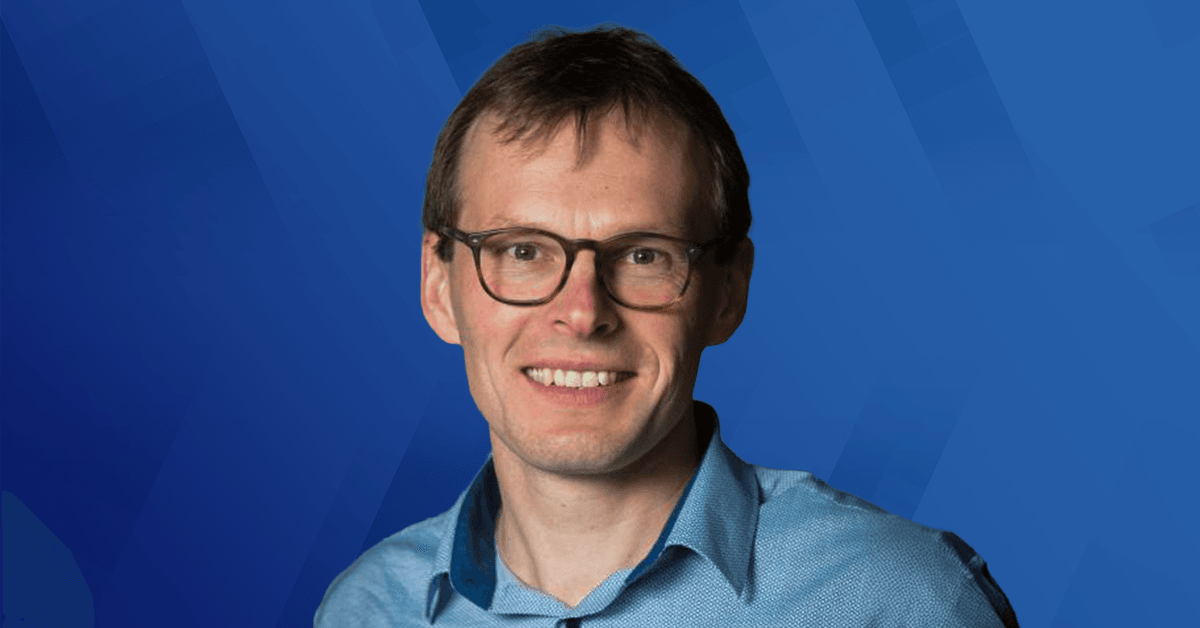
ACS Publications is excited to announce Professor Joris Thybaut of Ghent University, Belgium, as the new Deputy Editor of ACS Engineering Au.
Prof. Thybaut is a Senior Full Professor in Catalytic Reaction Engineering (CaRE) within the Laboratory for Chemical Technology at Ghent University since 2014 (first being appointed as assistant professor in 2005) where he serves the executive committee. He also directs the Chemical Engineering and Materials Sciences program committee in the Faculty of Engineering and Architecture. His research activities evidence a steady evolution from more classical refining reactions to renewables valorisation and circularity, typically involving heterogeneous catalysis and complex reaction networks, either at gas or liquid phase conditions. The common denominator in his research projects is the development of an elementary understanding of the occurring phenomena, be it experimentally or via the construction of (micro)kinetic models.
Prof. Thybaut went to the 'Institut des Recherches sur la Catalyse' in Lyon, France, for a postdoc on high throughput experimentation in 2003, performed an industrial sabbatical with Shell (Amsterdam, 2010) and served as visiting professor at the Japanese Advanced Institute for Science and Technology in the period 2020-2021. In 2014 he received a prestigious ERC consolidator grant for model based catalyst design for the conversion of renewables into chemicals and fuels. Prof. Thybaut chaired CAMURE 12 & ISMR 11 held in Ghent in September 2024 and has regularly been organizing seasonal schools on kinetics and reactors, either open towards the academic and industrial community or, in case upon invitation, for large-scale industrial companies. He has published over 250 papers in peer reviewed journals and has (co-)authored four books.
In this interview, he shares his vision for the journal, his passion for research, and his thoughts on how young researchers might approach their research.
What does it mean to you to be the Deputy Editor of ACS Engineering Au?
I really feel honoured by becoming the Deputy Editor of ACS Engineering Au. I see it as a recognition of the relevance of my research as well as of my services to the community.
The journal is fully open access. How important is this for you?
I expect open access to become the future way of publishing. One can see a logic in it that publishing comes at a price for the authors, particularly when publications will exclusively be open access. In that case, budgets now going to journal subscriptions can be spent differently, e.g., guaranteeing that researchers can realize a minimum number of publications per year. Potentially, open access publishing may result in a decrease of the total number of publications but an increase in their quality!
What is your vision for ACS Engineering Au?
ACS Engineering Au has a generic profile, which is one of its strengths. Of course, apart from that, it should have its unique features as compared to other journals, particularly within the ACS family. A focus on ‘emerging’ trends such as electrification, process intensification, artificial intelligence, circularity, etc. is one way to provide ACS Engineering Au with its own identity. This will be achieved via special issues, invited contributions, perspectives. I look particularly forward to the collaborations in this respect!
Why should researchers working in the field consider submitting their next best manuscript to ACS Engineering Au?
ACS journals have a solid reputation in the field. ACS being a society rather than a commercial entity definitely gives it a specific charm. Submitted manuscripts will be carefully considered and forwarded for review when considered relevant within the scope of ACS Engineering Au. In this manner, we’ll aim at establishing a community of active researchers, more specifically targeting the next generation, with an interest in ACS Engineering Au which will automatically reinforce itself.
What are you looking for in papers you receive?
Originality, structure and novel insights are the key aspects I’m looking for in new submissions. A paper should have been attributed the necessary attention upon its writing. The content needs, of course to be there, but it also needs to be presented in an easily accessible manner, without becoming a popular contribution, let aside a commercial. The title should properly sketch what the manuscript will be about and the abstract should read like a sneak preview of the entire manuscript. It should convince the reader to continue reading, if not the entire manuscript, at least the conclusions. I prefer the latter to be concise and contain some clear take away messages which will be easily remembered.
What excites you about your current research?
Today, we’re not only witnessing impactful transitions, we’re actively taking part in them: despite the large fossil resources that are still available, we’re facing the consequences of their massive exploitation and use. Establishing a truly circular economy rather than the linear one we have been used to for so long is a challenge coming with multiple facets: energy, matter, conversion. So much impressive research is being performed in this area, and it feels good to be part of that. It’s unlikely that a single alternative source as fossil resources have been, will be able to provide us with same amounts of energy and materials in the future. Diversification will be of utmost importance and being able to contribute to this with reaction and reactor engineering expertise gives so much satisfaction!
What element has been most central to your scientific career, and why?
Securing the ERC consolidator grant i-CAD has been the major milestone in my career so far. It has marked my transition from associate to full professor and was a kind of conclusion of the route towards my scientific independence. It meant that, from that point onwards, the full responsibility for research projects, equipment and, most importantly, people, came to me. It was a first of its kind for me at that time, given the highly collaborative environment I was working in. Ever since, I’ve been able to maintain the level of activity that was established back then, distributed over science, but also teaching and services to the community. It’s an awesome combination of items to work on and I feel privileged that I can take on these challenges. No single day annoys…
What advice would you give to young researchers in the field today?
Collaborate, team up, listen to each other, have respect for each other’s opinion and dare to think outside of the box. Don’t be constrained within the boundaries of your comfort zone: the magic happens outside! On the other hand, do not forget the chemical and physical fundamentals on which our field is based and dare to take the time to explore things thoroughly. Resist the rat race of the number of publications in the highest impact factor journals. Of course, these numbers are important, but they do not necessarily reflect the reputation which the journal has established over the years, not to say decades. Ensure the quality of your work rather than the quantity. That will be the most solid foundation to establish your career on.
Get e-Alerts
Stay Connected with ACS Engineering Au
Never miss an issue again! Sign up now for email updates on future calls for papers, the latest articles, and other content from ACS Engineering Au.

ACS 150th Anniversary
Celebrating ACS150: Chemistry is Everything
Throughout 2026, ACS will mark 150 years of advancing chemistry — a historic milestone built on discovery, innovation, and community.