
Learn more about the ACS Spring 2026 keynote speakers and browse some of their noteworthy research published in ACS journals.
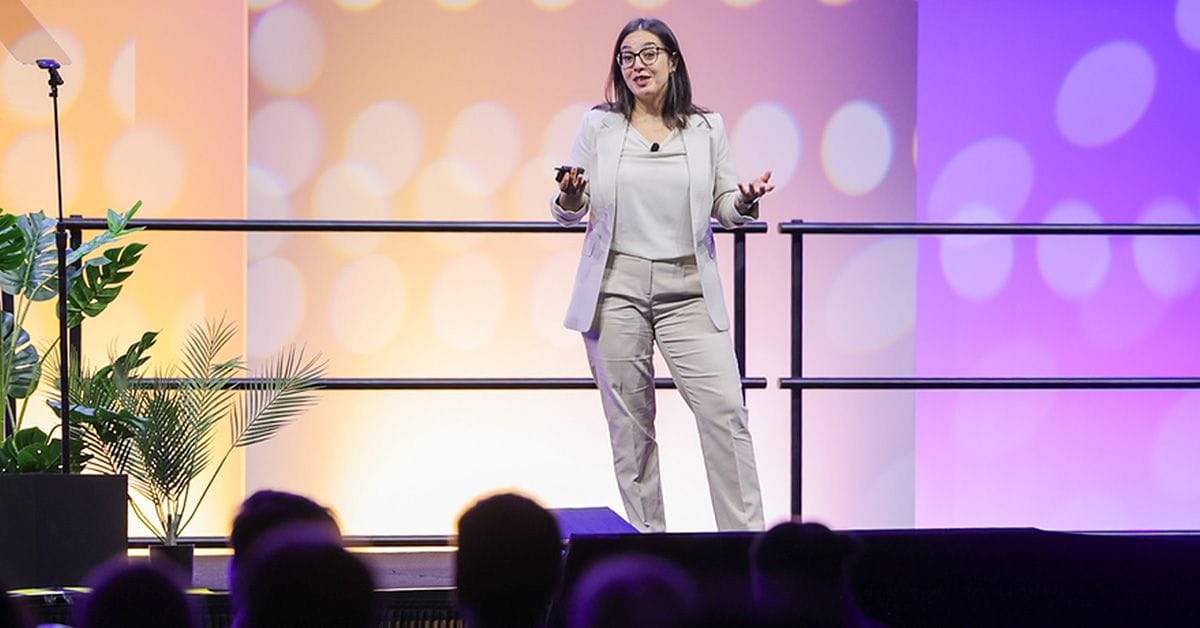
Image: Prof. Sahika Inal presents the Kavli Foundation Emerging Leader in Chemistry Lecture, “Semiconducting Polymers for Next-Generation Bioelectronic Interfaces," at ACS Fall 2025.
ACS Spring 2026, taking place March 22-26 in Atlanta, GA and online, will once again bring together leading voices in chemistry from across the globe. The meeting will feature esteemed keynote speakers, whose award‑winning work continues to shape the future of chemistry at every scale. Below is an overview of each speaker alongside a curated selection of their published articles in ACS journals.
We hope to see you this year at ACS Spring 2026, either in person or online! Be sure to visit our Know Before You Go blog post to browse all of the ACS Publications events and activities taking place at the meeting.
Prof. Jennifer A. Doudna
The Priestley Medal Award Address: "The Chemistry of Genome Editing: Transforming Human and Planet Health with CRISPR"
Sunday, March 22 | 4:00 – 6:00 PM ET, doors open 3:30 PM
Prof. Jennifer A. Doudna is a biochemist at the University of California, Berkeley. Her groundbreaking development of CRISPR-Cas9 — a genome engineering technology that allows researchers to edit DNA — with collaborator Prof. Emmanuelle Charpentier earned the two the 2020 Nobel Prize in Chemistry and forever changed the course of human and agricultural genomics research. She is also the Founder of the Innovative Genomics Institute, the Li Ka Shing chancellor’s chair in Biomedical and Health Sciences, and a member of the Howard Hughes Medical Institute, Lawrence Berkeley National Lab, Gladstone Institutes, the National Academy of Sciences, and the American Academy of Arts and Sciences.
She is a leader in the global public debate on the responsible use of CRISPR and has co-founded and serves on the advisory panel of several companies that use the technology in unique ways. Prof. Doudna is the co-author of “A Crack in Creation,” a personal account of her research and the societal and ethical implications of gene editing.
Selected Research Highlights
Oligomeric State and Drug Binding of the SARS-CoV-2 Envelope Protein Are Sensitive to the Ectodomain
Noah H. Somberg, Iva Sučec, João Medeiros-Silva, Hyunil Jo, Richard Beresis, Abdullah M. Syed, Jennifer A. Doudna, and Mei Hong*
DOI: 10.1021/jacs.4c07686
Site-Specific Bioconjugation through Enzyme-Catalyzed Tyrosine–Cysteine Bond Formation
Marco J. Lobba, Christof Fellmann*, Alan M. Marmelstein, Johnathan C. Maza, Elijah N. Kissman, Stephanie A. Robinson, Brett T. Staahl, Cole Urnes, Rachel J. Lew, Casey S. Mogilevsky, Jennifer A. Doudna*, and Matthew B. Francis*
DOI: 10.1021/acscentsci.0c00940
Receptor-Mediated Delivery of CRISPR-Cas9 Endonuclease for Cell-Type-Specific Gene Editing
Romain Rouet, Benjamin A. Thuma, Marc D. Roy, Nathanael G. Lintner, David M. Rubitski, James E. Finley, Hanna M. Wisniewska, Rima Mendonsa, Ariana Hirsh, Lorena de Oñate, Joan Compte Barrón, Thomas J. McLellan, Justin Bellenger, Xidong Feng, Alison Varghese, Boris A. Chrunyk, Kris Borzilleri, Kevin D. Hesp, Kaihong Zhou, Nannan Ma, Meihua Tu, Robert Dullea, Kim F. McClure, Ross C. Wilson, Spiros Liras*, Vincent Mascitti*, and Jennifer A. Doudna*
DOI: 10.1021/jacs.8b01551
Prof. Omar M. Yaghi
The ACS150 Anniversary Keynote Address: "Organic Chemistry and AI for Our Planet"
Wednesday, March 25 | 5:00 – 6:00 PM ET, doors open 4:45 PM
Prof. Omar M. Yaghi, a Professor at the University of California, Berkeley, is widely recognized by the scientific community as the father of metal-organic frameworks, for which he received the 2025 Nobel Prize in chemistry. His work has been published in over 300 scientific papers and a textbook on reticular chemistry, receiving more than 300,000 citations. He received numerous awards, including the American Chemical Society's Materials Chemistry Award, Materials Research Society's Von Hippel Award, Balzan Prize, BBVA Prize, Vin Future Prize, King Faisal Science Prize, Tang Prize for Sustainability, and Wolf Prize.
Prof. Yaghi is a founder or co-founder of several institutes focusing on breaking barriers in chemistry: BASF-California Research Alliance, Kavli Energy Nanoscience Institute, Bakar Institute of Digital Materials for the Planet, and the Global Science Institute. These institutions support young scholars with the opportunity to discover, learn, and do good globally.
Selected Research Highlights
Shaping the Water-Harvesting Behavior of Metal–Organic Frameworks Aided by Fine-Tuned GPT Models
Zhiling Zheng, Ali H. Alawadhi, Saumil Chheda, S. Ephraim Neumann, Nakul Rampal, Shengchao Liu, Ha L. Nguyen, Yen-hsu Lin, Zichao Rong, J. Ilja Siepmann, Laura Gagliardi, Anima Anandkumar, Christian Borgs, Jennifer T. Chayes, and Omar M. Yaghi*
DOI: 10.1021/jacs.3c12086
ChatGPT Research Group for Optimizing the Crystallinity of MOFs and COFs
Zhiling Zheng, Oufan Zhang, Ha L. Nguyen, Nakul Rampal, Ali H. Alawadhi, Zichao Rong, Teresa Head-Gordon, Christian Borgs, Jennifer T. Chayes, and Omar M. Yaghi*
DOI: 10.1021/acscentsci.3c01087
ChatGPT Chemistry Assistant for Text Mining and the Prediction of MOF Synthesis
Zhiling Zheng, Oufan Zhang, Christian Borgs, Jennifer T. Chayes, and Omar M. Yaghi*
DOI: 10.1021/jacs.3c05819
Prof. Rachel Carter
The Kavli Foundation Emerging Leader in Chemistry Lecture: Understanding Interactions between Temperature and Battery Phenomena
Monday, March 23 | 5:00 – 6:00 PM ET, doors open 4:45 PM
Prof. Rachel Carter recently joined the Department of Mechanical Engineering at the University of Kansas as an Associate Professor. Before this role, she conducted research at the U.S. Naval Research Laboratory, where she focused on safer and more effective uses of conventional Li-ion batteries.
In 2019, she was recognized by Nature as one of the top 5 emerging material scientists. In 2024, she was honored among the C&EN News’ Talented Twelve. In 2025, Prof. Carter received the Presidential Early Career Award for Scientists and Engineers.
Selected Research Highlights
Mechanistic Insight into Solid Electrolyte Interphase Interactions for Sodium Metal Electrodes
Susmita Sarkar, Bairav S. Vishnugopi, Aditya Singla, Pooja Ranganathan, Yixian Wang, John Watt, Rachel Carter, Corey T. Love, David Mitlin, and Partha P. Mukherjee*
DOI: 10.1021/acsaem.5c03601
Lithium Plating Characteristics in High Areal Capacity Li-Ion Battery Electrodes
Venkatesh Kabra, Rachel Carter, Mengya Li, Conner Fear, Robert W. Atkinson III, Corey Love*, and Partha P. Mukherjee*
DOI: 10.1021/acsami.4c02516
Nanoscale Polycyclosiloxane Interlayer for Enhanced Lithium Plating on Copper
R. Blake Nuwayhid, Junghoon Yeom, John Watt, Hunter O. Ford, Jeffrey W. Long, Rachel Carter, and Corey T. Love*
DOI: 10.1021/acsaem.3c02293
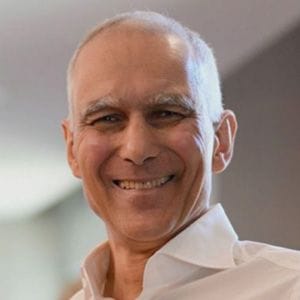
Prof. Moungi Bawendi
The Fred Kavli Innovations in Chemistry Lecture: "Quantum Dots: From Curiosity to Technology"
Tuesday, March 24 | 5:00 PM – 6:00 PM ET
Prof. Moungi Bawendi has spent his career pushing the boundaries of science at the smallest scales. After earning his B.A. from Harvard and his Ph.D. from the University of Chicago, he began exploring nanomaterials while conducting postdoctoral research at Bell Labs. In 1990, he joined the Massachusetts Institute of Technology, where his work shaped the future of chemistry and materials science. In 2023, he was honored with the Nobel Prize in chemistry for his pioneering contributions to quantum dots — tiny, engineered particles that revolutionized fields from medicine to electronics.
In this talk, Prof. Bawendi will share the origin story of quantum dots, explain how they work and why their size matters, describe the breakthrough synthesis that made them widely accessible, and highlight real-world applications ranging from cutting-edge displays to advanced medical imaging.
Selected Research Highlights
Oxygen Vacancy Formation in ZnSeTe Blue Quantum Dot Light-Emitting Diodes
Shaun Tan, Sujin Park, Seung-Gu Choi, Oliver J. Tye, Ruiqi Zhang, Jonah R. Horowitz, Tanguy Terlier, Heejae Chung, Vladimir Bulović, Jeonghun Kwak, Jin-Wook Lee*, Taehyung Kim*, and Moungi G. Bawendi*
DOI: 10.1021/jacs.5c13973
Neural Ordinary Differential Equations for Forecasting and Accelerating Photon Correlation Spectroscopy
Andrew H. Proppe*, Kin Long Kelvin Lee, Weiwei Sun, Chantalle J. Krajewska, Oliver Tye, and Moungi G. Bawendi*
DOI: 10.1021/acs.jpclett.4c03234
A-Site Cation Influence on the Structural and Optical Evolution of Ultrathin Lead Halide Perovskite Nanoplatelets
Chantalle J. Krajewska, Matthias Kick, Alexander E. K. Kaplan, David B. Berkinsky, Hua Zhu, Tara Sverko, Troy Van Voorhis, and Moungi G. Bawendi*
DOI: 10.1021/acsnano.3c12286

Connect with ACS Publications at ACS Spring 2026!
Learn about the many exciting ACS Publications events taking place at ACS Spring 2026—and visit the ACS Booth to network with editors, learn more about our newest journals, and gain insights into the entire publishing process.

ACS 150th Anniversary
Celebrating ACS150: Chemistry is Everything
Throughout 2026, ACS will mark 150 years of advancing chemistry — a historic milestone built on discovery, innovation, and community.