
Learn about each of the newly appointed Early Career Board members and what they hope to bring to the journal.

Chemical Research in Toxicology is excited to announce the formation of its inaugural Early Career Board (ECB), a vibrant group of seven emerging researchers whose expertise spans the diverse landscape of toxicology.
The ECB is more than an advisory group—it reflects our commitment to generational collaboration and equitable science. These rising stars will collaborate closely with our Editorial Advisory Board to help guide the journal’s strategic direction, ensuring we remain at the cutting edge of scientific innovation while championing inclusivity, mentorship, and community engagement. Take some time to get to know each of the exceptional members of this inaugural board.
You can read more about this announcement in a recently published editorial.
Meet the Chemical Research in Toxicology Early Career Board
Andi Alijagic
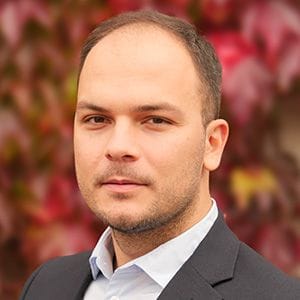
Andi Alijagic is a toxicologist at Örebro University (Sweden) with a focus on understanding the health impacts of particle and chemical pollutants, including micro- and nanoplastics and plastic-associated chemicals. His research combines cell-based models, high-content imaging, and multi-omics to investigate mechanisms of toxicity. He is actively developing New Approach Methodologies such as Cell Painting-based phenomics for screening emerging pollutants. In addition to his research, Andi is engaged in teaching, student supervision, and science communication. He also serves on the editorial boards of several international journals in the fields of toxicology and environmental health.
What do you hope to bring to the journal with your experiences?
With my background in in vitro and mechanistic toxicology, and a focus on particle and plastic-associated chemical pollutants, I hope to contribute to the journal by promoting the integration of New Approach Methodologies, including high-content imaging and phenomics, into chemical toxicology, supporting editorial content that reflects emerging environmental health challenges, and helping to enable a more inclusive, interdisciplinary, and forward-looking toxicology community.
Yisheng He
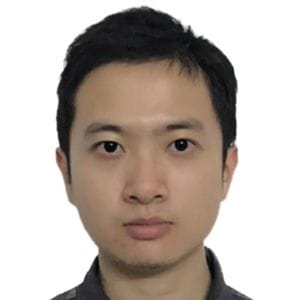
Professor Yisheng He graduated from the School of Biomedical Sciences at The Chinese University of Hong Kong. He worked as a postdoctoral researcher and research assistant professor at The Chinese University of Hong Kong before joining the School of Medicine at The Chinese University of Hong Kong (Shenzhen) in September 2022.
His research objectives are to delineate the cellular and molecular basis for the mode-of-action of environmental/natural/chemical toxins, develop and translate chemical-based or genome-based molecular biomarkers for clinical and public health use to identify human diseases related to drug misuse or natural toxin exposure, profile pharmacokinetics of therapeutic biologics and toxicokinetics of natural/chemical toxins, and utilize modeling and simulation approaches to optimize precision risk assessment/prediction on safety issues of drugs and environmental toxins.
What do you hope to bring to the journal with your experiences?
My research integrates mechanistic toxicology with pharmacokinetics/toxicokinetics (PK/TK) to address clinical challenges like drug-induced liver injury. I hope to bring a translational perspective, championing manuscripts that link mode-of-action to exposure for real-world risk assessment. I will also advocate for modern computational approaches and leverage my position to attract high-quality submissions.
Luise Henneberger
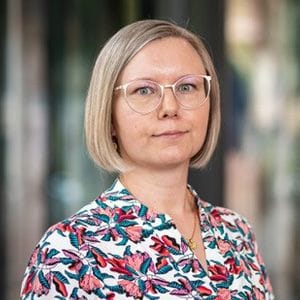
Dr. Luise Henneberger holds a diploma in food chemistry from the Martin Luther University Halle-Wittenberg (2012) and a PhD from the Helmholtz Centre for Environmental Research (UFZ) under the supervision of Kai-Uwe Goss (2016). Her dissertation focused on the equilibrium sorption of ionogenic organic chemicals (IOCs) to selected proteins, like serum albumin. In December 2015, she joined the Department of Cell Toxicology at UFZ and worked in two industry-funded research projects on the development and implementation of methods for quantitative in vitro-to-in vivo extrapolation (QIVIVE). Since February 2020 she has lead her own research group in the Department.
What do you hope to bring to the journal with your experiences?
I am hoping to build bridges between the research fields of chemistry, toxicology and biology.
Rui Hou
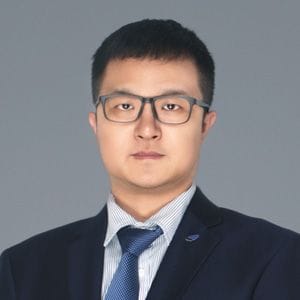
Dr. Rui Hou is a Professor at the School of Ecology, Environment and Resources, Guangdong University of Technology. His research focuses on the environmental behavior and ecological effects of emerging marine pollutants, including their migration, transformation, and ecological risks. He has led several national and regional research projects and published over 30 papers in leading journals. His work has earned him multiple honors, including the Youth Innovation Award from the Chinese Society of Environmental Sciences and the Guangdong Natural Science Award.
What do you hope to bring to the journal with your experiences?
Based on my research background, I will promote the journal's focus on ecological receptors (e.g., terrestrial/aquatic organisms), particularly elucidating the molecular mechanisms of chemical bioaccumulation; concurrently, I advocate for developing effect prediction models to enhance the proactivity of ecotoxicological risk assessment.
Feng Tang
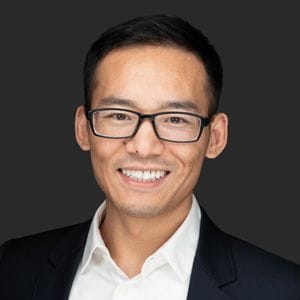
Dr. Feng Tang is an Assistant Professor of Chemistry at the University of Florida. He received his B.S. and Ph.D. in chemistry from Wuhan University, China, and completed his postdoc work in Dr. Yinsheng Wang’s group at UC, Riverside. Tang lab aims to create an integrated platform—combining analytical chemistry, chemical biology, sequencing, and bioinformatics—for multidimensional profiling of DNA damage (chemical structure, abundance, location, and time-resolved dynamics) in the human genome. This platform will reshape DNA damage research and accelerate advances in cancer biology, aging, environmental toxicology, and gene-editing safety.
What do you hope to bring to the journal with your experiences?
I will bring a chemist's rigor to toxicology—linking molecular mechanisms to health relevance. I aim to broaden the journal's scope in omics-enabled toxicology, advanced mass spectrometry, and sequencing for data interpretation and risk assessment. I also value rapid, constructive peer review and inclusive editorial practices, and will actively mentor early-career authors to raise the clarity and impact of chemical toxicology research.
Kun Yang
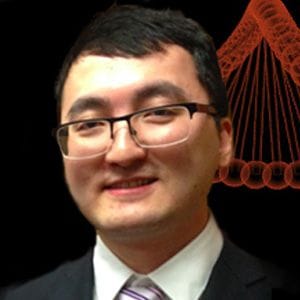
Dr. Kun Yang is an assistant professor in Division of Chemical Biology and Medicinal Chemistry at College of Pharmacy, University of Texas at Austin. He obtained his B.S. in Biology from Sichuan University in 2010. In 2016, he received his Ph.D. in Biochemistry from University of Delaware under the supervision of Dr. Zhihao Zhuang. Thereafter, he joined Dr. Marc Greenberg’s group in the Department of Chemistry at Johns Hopkins University as a postdoctoral fellow. He started his independent research career at UT Austin in 2019. His research interest focuses on DNA damage & repair.
What do you hope to bring to the journal with your experiences?
I am committed to applying my expertise in protein and nucleic acid biochemistry to contribute to the manuscript review and development of Journal front matter material including Editorials and ToxWatch articles. Topical areas that I can contribute to include DNA damage, epigenetic DNA modifications, mutagenesis, and DNA repair.
Qingfei Zheng
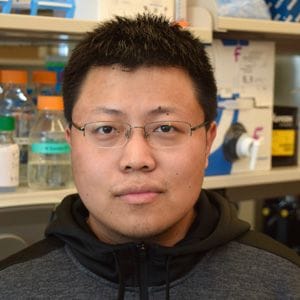
Dr. Qingfei Zheng is an Assistant Professor in the Department of Medicinal Chemistry and Molecular Pharmacology at Purdue University. Before this, he served as an Assistant Professor in the School of Medicine at the Ohio State University (2021-2024). He obtained his B.S. from Tsinghua University in 2012. Qingfei earned his Ph.D. at Shanghai Institute of Organic Chemistry, Chinese Academy of Sciences in 2017. Qingfei pursued his postdoctoral research at Memorial Sloan Kettering Cancer Center (2017-2021). Dr. Zheng's research interests include non-canonical histone post-translational modifications that are induced by toxins as a new link between environmental stress and epigenetic regulation.
What do you hope to bring to the journal with your experiences?
I hope to attract and contribute high impact research articles and review papers in terms of chemical toxicology and chemical epigenetics to provide more insights into the links between environmental stress and epigenetic regulation.

Get e-Alerts
Stay Connected with Chemical Research in Toxicology
Never miss an issue again! Sign up now for email updates on future calls for papers, the latest articles, and other content from Chemical Research in Toxicology.