Learn more about the 2025 winners and their exceptional contributions to the field of environmental and sustainable chemistry.

The Editors of ACS Sustainable Chemistry & Engineering, working in partnership with the ACS Green Chemistry Institute, are proud to announce the winners of the 2025 ACS Sustainable Chemistry & Engineering Lectureship Award:
- Asia–Pacific: Dr. Hong Chen, Southern University of Science and Technology, China, honored for his innovative application of clean technologies, notably electrochemical and photochemically driven processes to address pollution control and circular processing of technical materials.
- Europe/Middle East/Africa: Dr. Athina Anastasaki, Eidgenössische Technische Hochschule Zürich, Switzerland, honored for her pioneering contributions demonstrating low temperature radical depolymerization of vinyl polymers.
- The Americas: Dr. Milad Abolhasani, North Carolina State University, United States, honored for his pioneering work on "Self-Driving Labs"— integrating flow reactors, online reaction monitoring, and autonomous experimentation.
This annual award recognizes the research contributions of scientists, working in green chemistry, green engineering, and sustainability in the chemical enterprise, who have completed their academic training within the past 10 years. Lectureship award winners are selected for three regions: The Americas, Europe/Middle East/Africa, and Asia-Pacific. View the corresponding Editorial for more information about the award.
Read on to learn more about each of the three winners.
Dr. Hong Chen
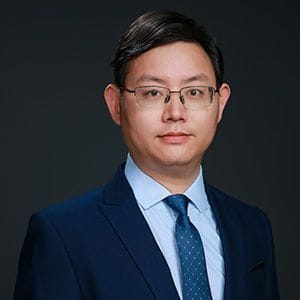
Dr. Chen has a multidisciplinary background in environmental chemistry, environmental engineering, inorganic chemistry, materials chemistry, and applied physics. His main research interest is green energy-driven resource recovery and environmental pollution control. He received his doctoral degree in inorganic chemistry from the Department of Environmental and Material Chemistry at Stockholm University in 2014, working with Prof. Junliang Sun and Xiaodong Zou. He continued his postdoc training at KTH-Royal Institute of Technology with Prof. Licheng Sun, Stanford University with Prof. Michael F. Toney, and University of California, Berkeley with Prof. Peidong Yang. In September 2018, he joined the Southern University of Science and Technology (SUSTech), where he is now an associate professor at the School of Environmental Science and Engineering.
He has applied for more than 30 patents and published around 160 peer-reviewed papers with an h-index of 57 and more than 11200 Google Scholar citations. More than half of them were published in prestigious journals, including Nature Materials, Science Bulletin, Fundamental Research, PNAS, Science Advances, Nature Communications, Journal of the American Chemical Society, Angewandte Chemie International Edition, Nano Letters, ACS Nano, Environmental Science & Technology, Inorganic Chemistry, Environmental Science & Technology Letters, ACS EST Engineering/Water, etc. He serves as an associate editor of Environmental Chemistry Letters; board member of Sustainable Horizons, Environmental Surfaces and Interfaces, and Environmental Functional Materials; and young editorial committee member of Fundamental Research, Chinese Chemical Letters, Chemical Engineering Journal Advances, Industrial Wastewater Treatment (in Chinese), and Engineering Science & Technology (in Chinese). He serves as a regular reviewer for more than 40 journals, including Nature and Nature Sub-journals.
Tell us about yourself.
I am an associate professor at the School of Environmental Science and Engineering, Southern University of Science and Technology, leading a research group that develops green and low-carbon technologies for pollution control and the circular utilization of critical elements within various industrial waste streams.
What does this award mean to you?
This award addresses the importance of our research efforts over the past few years. It is a great honor for me and our group members.
What are you working on now?
I am currently integrating sustainable solar energy to develop novel electrochemical and photochemical technologies and equipment for the selective recovery and pollution control of critical elements from urban mines, natural mining industrial wastes, industrial wastewater, and saline water.
What advances are you hoping to see in your field in the next decade?
I hope that we can integrate green solar energy with various electrochemical and photochemical mechanisms to drive the low-carbon and green circularity of critical elements, thereby transitioning their circulation and pollution control processes from traditional, hazardous, energy- and greenhouse gas-intensive emission chemical processes to a sustainable, energy-driven, and clean process. We anticipate that our green energy-driven critical elements circulation techniques will be widely adopted in the future, leading to the establishment of sustainable and low-carbon critical elements circulation industrial parks over the next few decades.
What advice would you give to young investigators who aspire to be where you are now?
Think critically about the ab initio chemistry principle and its implications for future societal needs. Working smart to integrate lab-scale mechanism discovery with device and equipment innovations for future sustainable technological needs.
Dr. Athina Anastasaki
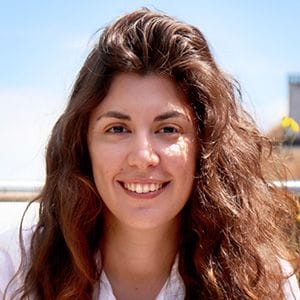
Dr. Anastasaki was born and raised in Athens, Greece (with a very proud origin from Crete) and obtained her B.S. in Chemistry at the University of Athens. During her time as an undergraduate, she began research in polymer chemistry under the supervision of Prof. Marinos Pitsikalis, with whom she had her first publication. Thinking that publishing a paper was a good sign, she did her best to convince Prof. Dave Haddleton to accept her for a Ph.D. position at the University of Warwick, in the UK. Despite the tremendous weather difference between Greece and the UK (sunshine versus continuous rain), Dr. Anastasaki very much enjoyed her stay at Warwick and graduated in late 2014 with the Jon Weaver Award for the best Ph.D. in Polymer Chemistry in the UK. In early 2015, she accepted a Monash-Warwick research fellow position between the Pharmaceutical department at Monash University and the University of Warwick, jointly supervised by Prof. Thomas Davis and Prof. Dave Haddleton. She then received an Elings Fellowship, followed by a Global Marie Curie Fellowship, to conduct research with Prof. Craig Hawker and return to the sun at the University of California, Santa Barbara. Dr. Anastasaki joined the Materials department of ETH in January 2019 as an Assistant Professor, and she was promoted to Associate Professor in 2025.
Tell us about yourself.
I am a proud Greek, and I am currently an Associate Professor in the Department of Materials at ETH Zurich, where I lead the Laboratory of Sustainable Polymers. My research focuses on depolymerization, specifically breaking down polymers to recover their original monomers. Our goal is to develop efficient and lower temperature methods to promote polymer circularity and ultimately reduce plastic waste.
What does this award mean to you?
Winning the ACS Sustainable Chemistry & Engineering Lectureship Award is an incredible honor, and it holds special significance for me as a polymer chemist focused on depolymerization. This recognition not only validates the hard work and dedication my team and I have invested in advancing sustainable polymer technologies but also highlights the collective progress our field is making towards a more sustainable future.
What are you working on now?
Currently, my research is focused on expanding the scope of depolymerization to include new classes of polymers, particularly those that are more commercially relevant. While we have made significant strides in breaking down specific types of polymers back to their constituent parts, our goal now is to develop strategies that can be applied to a broader range of materials, thereby increasing the practical impact of our work in real-world applications.
Another exciting direction we are exploring is the concept of controlled depolymerization. This approach allows us to tailor the molecular weight of the resulting materials during the depolymerization process itself. By fine-tuning the breakdown pathways, we can potentially generate polymer fragments of specific sizes, which opens up new opportunities for repurposing the products in targeted applications.
What advances are you hoping to see in your field in the next decade?
In the next decade, I hope to see significant advances in catalysis for polymer degradation and depolymerization. While we have made considerable progress, there is still much potential to develop more efficient, selective, and scalable catalytic systems. Improving the precision and efficiency of catalytic processes would greatly enhance our ability to break down a wider range of polymer materials. Another promising direction is the advancement of enzymatic and biomimetic chemistry for polymer degradation. Nature has evolved highly efficient enzymatic systems for breaking down complex biopolymers, and mimicking these mechanisms could offer novel solutions for synthetic polymers. Designing catalysts inspired by enzymes or directly utilizing engineered enzymes might improve the specificity and efficiency of degradation/depolymerization processes, particularly for polymers that are traditionally resistant to chemical breakdown. Additionally, I am excited to see how the recent rapid advancements in machine learning and artificial intelligence will influence the field. These technologies could revolutionize how we discover and optimize systems by enabling predictive modelling, high-throughput screening, and deeper insights into degradation mechanisms.
What advice would you give to young investigators who aspire to be where you are now?
My advice to young investigators is to choose a research topic that truly excites you, something you are genuinely passionate about. Passion is essential because research is often challenging and unpredictable. When you are working on something that inspires you, it becomes much easier to push through setbacks and stay motivated.
At the same time, do not be afraid to take risks. Some of the most impactful discoveries come from venturing into uncharted territory or trying unconventional approaches. However, it is important to balance this with more reliable or "easier" strategies. Having a mix of high-risk, high-reward projects alongside more straightforward, steady progress areas can help ensure that you continue to make meaningful contributions while also allowing room for bold exploration.
Building a successful career in research also means being resilient and persistent. Science is full of failures, and it is crucial to learn from them rather than be discouraged. Stay curious, stay passionate, and surround yourself with mentors and collaborators who challenge and support you. That combination of passion, calculated risk, and perseverance is what will ultimately drive you forward.
Dr. Milad Abolhasani
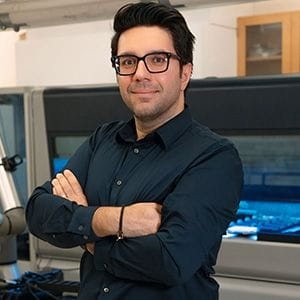
Dr. Abolhasani is the ALCOA Professor and a University Faculty Scholar in the Department of Chemical and Biomolecular Engineering at North Carolina State University, where he also serves as Director of the Graduate Program. Additionally, he leads as the Director of Accelerated Technologies for NC State’s pioneering Integrative Sciences Initiative, driving next-generation innovation in science and technology. Dr. Abolhasani holds a B.Sc. (2008) and M.A.Sc. (2010) in Mechanical Engineering from Sharif University of Technology and the University of British Columbia, respectively, and earned his Ph.D. (2014) from the University of Toronto, with a cross-disciplinary focus encompassing Mechanical and Industrial Engineering, Chemistry, and Chemical Engineering. Prior to joining NC State University in 2016, he was an NSERC Postdoctoral Fellow in the Department of Chemical Engineering at MIT (2014-2016).
Dr. Abolhasani leads a dynamic and interdisciplinary research team dedicated to revolutionizing materials science and chemistry through the development of Self-Driving Fluidic Labs—autonomous robotic experimentation platforms for the accelerated discovery and scalable manufacturing of advanced functional materials and molecules.
A distinguished recipient of numerous awards, Dr. Abolhasani’s accolades include the NSF CAREER Award, the 2024 AIChE CRE Early Career Investigator Award, Machine Learning in Chemical Sciences & Engineering Award from The Camille & Henry Dreyfus Foundation, 2022 AIChE NSEF Young Investigator Award, and recognition as one of the AIChE 35 Under 35 (2020). His groundbreaking contributions to chemical engineering and materials science have earned him recognition as an Influential Researcher (I&EC Research 2021), as well as the ACS-PRF Doctoral New Investigator Award, AIChE Futures Scholar, and The John C. Chen Young Professional Leadership Scholarship (AIChE). His work has been featured as an Emerging Investigator in leading journals including Nanoscale, Lab on a Chip, Reaction Chemistry & Engineering, Digital Discovery, and Journal of Flow Chemistry.
Tell us about yourself.
I'm the ALCOA Professor and Director of the Graduate Program in the Department of Chemical and Biomolecular Engineering at NC State University. I also serve as Director of Accelerated Technologies within NC State's Integrative Sciences Initiative. My academic journey began with a B.Sc. and M.A.Sc. in Mechanical Engineering, followed by a Ph.D. at the University of Toronto. After a postdoctoral stint at MIT, I joined NC State University and launched the Self-Driving Fluidic Lab group. Our team studies the science and engineering of autonomous robotic experimentation integrated with flow chemistry to reshape how materials and molecules are discovered, synthesized, and optimized.
What does this award mean to you?
It’s a true honor to receive this recognition from ACS Sustainable Chemistry & Engineering and the ACS Green Chemistry Institute. This award celebrates the incredible work of my research group and our shared mission to accelerate the development of sustainable materials with sustainable technologies through innovation in chemical engineering, materials science, automation, and AI. It also inspires me to continue pushing the boundaries of what’s possible at the intersection of chemistry, engineering, and AI.
What are you working on now?
We’re developing the next generation of multi-purpose self-driving labs to accelerate the sustainable development and manufacturing of advanced functional materials. Our goal is to build accessible, intelligent robotic collaborators for human scientists to make chemical and materials research faster, more efficient, and more sustainable.
What advances are you hoping to see in your field in the next decade?
Over the next decade, I hope to see self-driving labs become a foundational tool for sustainable innovation across academia and industry. I envision modular, user-friendly, and globally accessible platforms enabling rapid progress in clean energy, green manufacturing, and sustainable materials. This democratization of intelligent robotic collaborators could fundamentally reshape how we approach research and development.
What advice would you give to young investigators who aspire to be where you are now?
Stay curious, and don’t be afraid to cross disciplinary boundaries; some of the most exciting ideas emerge at the interface of fields! Build a team and community that shares your passion, and let real-world challenges guide your research. And above all, be patient and persistent; impactful science takes time.