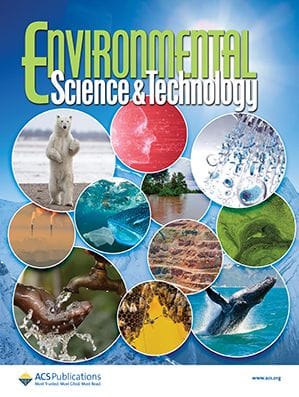
Recognizing early career researchers leading the fields in new directions through creative, new ideas consistent with Morgan's early contributions to environmental chemistry.

The James J. Morgan Early Career Award is presented annually by Environmental Science & Technology (ES&T), Environmental Science & Technology Letters (ES&T Letters), and the Environmental Chemistry Division of the American Chemical Society (ACS). This award, named after the first Editor-in-Chief of ES&T, recognizes those early career researchers who are leading the fields of environmental science and technology in new directions through creative, new ideas consistent with Morgan’s early contributions in environmental chemistry.
This year, the award recognizes four young investigators who reside in and have a professional appointment in the Americas region of the world. We received a large number of nominations from the Americas, and the selection committee was impressed by the exceptionally high quality of the candidates, including their publications in ES&T and ES&T Letters.
We are excited to announce the 2024 James J. Morgan Environmental Science & Technology Early Career Award winners:
- Markus Brinkmann, University of Saskatchewan, Canada
- Kimberly Parker,Washington University in St. Louis, United States
- Hui Peng, University of Toronto, Canada
- Collin Ward, Woods Hole Oceanographic Institution, United States
Congratulations to the 2024 award recipients! The winners will receive an award plaque, honorarium, and travel/accommodation funding to attend and present at an award symposium during ACS Spring 2024 in New Orleans, Louisiana, USA, March 17-21, 2024. Learn more about them and their leading-edge research below.
Markus Brinkmann
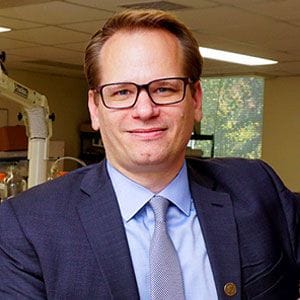
Tell us about yourself.
I was born and raised in Germany, specifically in the heavily industrialized federal state of North Rhine-Westphalia. Witnessing firsthand the environmental degradation caused by human activities sparked my desire to pursue a career as an Aquatic Toxicologist. I fulfilled this ambition by earning a master's degree in Ecotoxicology from RWTH Aachen University in 2011, followed by a Ph.D. in Biology in 2015. In 2016, I joined the University of Saskatchewan after being awarded a Banting Postdoctoral Fellowship to conduct research in the field of predictive toxicology. My work focused on exploring the potential impacts of toxic substances on aquatic ecosystems.
This experience paved the way for me to become a faculty member in 2018 through the Global Water Futures program, which is considered the largest university-led water research program in the world. In recognition of my expertise and contributions to the field of toxicology, I was appointed as the Director of the University of Saskatchewan's esteemed Toxicology Centre in 2022. This center is internationally renowned for its interdisciplinary research, education, training, and outreach efforts in toxicology. Leading this institution has provided me with the incredible opportunity to collaborate, be creative, and drive innovation—an experience that has been extremely fulfilling for me.
What does this award mean to you?
I am honored and excited to witness the recognition of my team of students, staff, and collaborators through the James J. Morgan Early Career Award. It is truly inspiring and empowering to know that our unwavering dedication to conducting research that benefits the environment and society has been acknowledged with one of the most prestigious awards for early-career environmental toxicologists and chemists. While this award allows me to pause, celebrate, and express gratitude to the many mentors, supporters, colleagues, and friends who have accompanied me on this research journey, it also serves as a reminder that our work as environmental scientists is far from complete. The urgency to find solutions for the numerous environmental challenges we face today, as well as our commitment to training the next generation of researchers to tackle the complex issues confronting society, drives me to persevere each day. Moreover, I firmly believe in the importance of sharing our scientific discoveries not only within the scientific community through publications and other academic channels but also with the general public through science communication efforts.
What are you working on now?
Our team is fully dedicated to identifying the mode of toxic action of 6PPD-quinone, with a particular focus on understanding the species-specific differences in toxicity. The mass deaths of spawning coho salmon in the Pacific Northwest following rainstorms triggered by this compound have been a perplexing and alarming phenomenon for researchers, environmentalists, and locals for over a decade. When researchers from the University of Washington first discovered the highly toxic and previously unknown 6PPD-quinone, an environmental transformation of the tire preservative 6PPD, we recognized the urgency to contribute our expertise and utilize the unique infrastructure available at the Toxicology Centre to tackle this problem. Notably, our team was the first to identify another species that is susceptible to the toxicity of 6PPD-quinone, apart from coho salmon. Through our work, we have successfully convinced numerous other research teams to recognize the widespread relevance of this compound to inland bodies of water and to actively engage in this investigation. Today, we employ increasingly sophisticated molecular, analytical, and computational tools to unravel the enigma surrounding the pronounced toxicity of this chemical. Using these tools, we also aim to help the chemical industry and tire manufacturers develop replacement chemicals for 6PPD in tires while avoiding regrettable substitutions and risks to passenger vehicle safety.
What advances are you hoping to see in your field in the next decade?
As we progress and develop more and more sophisticated tools in support of the environmental risk assessment of chemicals, I hope that we will advance swiftly and decidedly towards approaches and methods that rely less on animal experiments and instead harness the power of molecular tools and predictive models. This transition will require us to radically rethink how we are conducting risk assessments, and instead of testing the hazards associated with new chemicals and products after their technical development is completed, toxicity testing using animal-free high-throughput methods should form an integral part of product development pipelines from the start. I look forward to contributing to this transition through my research.
What advice would you give to young investigators who aspire to be where you are now?
Albert Einstein once said, "I have no special talents. I am only passionately curious." I love this quote because it highlights the importance of passion, curiosity, and an endless desire for discovery and lifelong learning as the foundation of his genius. Certainly, completing post-secondary education, graduate school, and achieving success on the tenure track requires hard work, dedication, grit, and discipline. But for me, it is my curiosity and passion that drive me to push the boundaries of our knowledge. My advice to aspiring young investigators is to never lose sight of this goal, and everything else will seem to fall into place naturally.
Kimberly Parker

Tell us about yourself.
My research group works at the intersection of environmental chemistry and engineering. We investigate the reactions and interactions of contaminants in environmental systems to understand and reduce their risks to human and environmental health. We apply our skills in chemistry to build fundamental rationale to describe key molecular-scale processes, and then use our engineering knowledge to characterize the importance of these processes in the systems in which they function.
While my own specific expertise centers on chemical contaminants, I have been fortunate to work with students and colleagues to expand our research in new and innovative directions at the interface of chemistry and biology. Through these collaborations, we have been able to work on emerging topics like characterizing the environmental impact of products enabled by recent innovations in genetic engineering and synthetic biology, including novel biomolecular pollutants and genetically engineered microbes.
What does this award mean to you?
I greatly admire the excellent work of the prior recipients of the James J. Morgan Early Career Award. It is a tremendous personal honor to count myself among them. This award is also a wonderful recognition for my mentees, who have dedicated themselves to producing meaningful and innovative research. I am privileged to have worked with each of them.
What are you working on now?
Several current projects in my group are focused on understanding how the inclusion of new traits in genetically engineered crops affects chemical inputs into the agroecosystem and what those changes mean for human and environmental health. For example, we have seen that the availability of crops capable of tolerating an herbicide can change the amount, timing, and location of applications of that herbicide, which impacts its entry into the environment and ultimately its effects on other vegetation.We work to characterize the environmental fate of these chemicals under these altered use scenarios to better understand their potential impacts and to develop solutions so that they can be used more safely.
What advances are you hoping to see in your field in the next decade?
I hope that the environmental chemistry and engineering community will continue to strive to address emerging challenges outside of our traditional scope. For my group’s work, collaboration with researchers in very different fields than our own has been critical to enable us to address these new questions. This requires us to learn new things outside of our training but can have great opportunities to make impacts beyond what would be possible alone.
What advice would you give to young investigators who aspire to be where you are now?
I think it is important to measure our own success in research by what we have been able to learn during the process rather than external outcomes. In my research group, we define a successful experiment as one that is well-designed and gives us confidence to make decisions about our next step, regardless of the specific result. Similarly with papers and proposals, we focus on what we have learned during the writing and review process rather than whether that version of the work is accepted or rejected. By setting ongoing learning as our priority, my group has been able to enthusiastically seek out new areas where we can make contributions beyond topics that we already know well.
Hui Peng
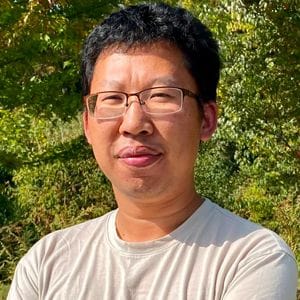
Tell us about yourself.
I obtained my BSc and PhD degrees at Peking University in China. After completing postdoctoral work in Canada, I started my independent research career at the University of Toronto in 2017. Solving environmental questions demands interdisciplinary expertise, and I am very fortunate to regularly collaborate with many colleagues in Toronto who are world-leading experts in their respective fields. Beyond research, I enjoy spending time with my family and playing soccer.
What does this award mean to you?
I am deeply honored to have received the James J. Morgan Early Career Award. Since the research direction of my group is quite unique, our journey in forging our work over the past five years has been somewhat solitary. To me, the reception of this award represents a turning point, and signifies that our work is beginning to gain recognition.
What are you working on now?
My research is focused on building the environmental Chemical-Protein Interaction Network (eCPIN). To achieve this, we are pursuing two directions: 1) We aim to identify the physical protein targets of toxic chemicals within the vast human proteome (1 chemical vs multiple proteins); 2), We aim to identify the toxicity-driving chemicals, within environmental mixtures consisting of thousands of chemicals, that bind to human proteins (1 protein vs multiple chemicals). While establishing eCPIN is an extremely challenging and ambitious task, diving into toxicology and chemistry at the protein level will provide answers to many longstanding questions in the field. I believe our investment of time and effort will eventually pay off.
What advances are you hoping to see in your field in the next decade?
It has been long hypothesized that many diseases are associated with chemical contaminants. However, due to the nature of chemical complexity, this hypothesis has not yet been supported by much solid evidence. It will be extremely impactful to identify toxicity-driving chemicals from environmental mixtures that cause adverse health effects. However, this will only be achieved if we go in-depth to the fundamental level, through bridging chemistry and toxicology, and develop novel research approaches. I hope to see more advancements in this direction over the next several years.
What advice would you give to young investigators who aspire to be where you are now?
I would like to share two pieces of advice from my colleagues that have particularly inspired me:
- “Above all, do the research you think is right” (Frank Wania and Jonathan Abbatt).
- “Do good work, and everything else will follow” (Elizabeth Edwards).
This has motivated me to pursue the research that I deem important, rewarding, and enjoyable, without getting overly distracted by ‘hot’ research topics, publications, or funding applications.
Collin Ward

Tell us about yourself.
I live in Plymouth, MA with my wife, Katie, two daughters, Maren and Sadie, and dog, Lenny. I’m a scientist in the Department of Marine Chemistry and Geochemistry at Woods Hole Oceanographic Institution. Broadly speaking, my group studies how and how fast organic molecules, like those in natural organic matter, crude oil, and plastics, are transformed in the environment. Outside of work I dream about having time to pick up all the hobbies I had before having kids.
What does this award mean to you?
There is a lot of failure and rejection in science and academia. Experiments that don’t work out, papers and proposals that are rejected, etc. It’s tough sometimes to ride the emotional roller coaster that comes with this career. But being recognized by my peers, the ACS, and the ES&T family of journals is a tremendous honor. It’s humbling to know that my group’s research has resonated strongly with the broader community, particularly this one that I hold with such high regard.
What are you working on now?
I spend about half my time working towards a better understanding of the fate of plastics in the environment and how to design materials that demonstrably degrade if leaked. The other half is split between oil spill science and developing new methods and building new instruments to make science simpler, cheaper, and higher throughput, without sacrificing data quality.
What advances are you hoping to see in your field in the next decade?
I have great hope that we will see progress in addressing plastic pollution over the coming decade. There is a lot of motivation right now, and very promising technologies and alternative materials are on the rise. I don’t think it’s too far-fetched to see meaningful change in this space on a relatively short timeline.
What advice would you give to young investigators who aspire to be where you are now?
I have three pieces of advice.
- Let the questions guide you. Identify important and interesting scientific questions first, then worry about how you’ll answer them later. I think this approach accelerates the pace of discovery and the impact of the science.
- Block off time to write every day. I suggest doing this early in the morning when your brain is freshest. Then do all the less challenging tasks later in the day.
- When offered opportunities, take some time to weigh the pros/cons before responding. Consult with a trusted mentor if you have to. It’s OK to say NO, I promise.