Four studies in ACS journals reveal new ways scientists are working to understand and protect bees, with insights into disease detection, nutrition, pesticide exposure, and brain metabolism.

Bees play an essential role in global food systems, but their survival depends on a delicate balance of nutrition, environmental exposures, disease resistance, and internal biology. Recent research is uncovering how these factors intersect, from the quality of food inside the hive to pesticide transfer pathways and even the chemical activity inside the bee brain. These four studies highlight how advanced analytical tools and interdisciplinary approaches are helping scientists better understand what bees need to thrive.
Sniffing out bee disease before it spreads
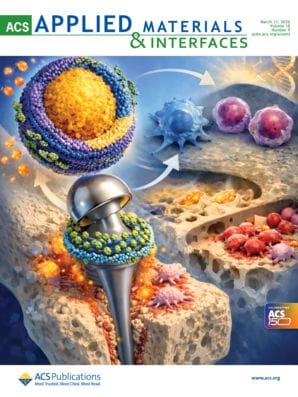
Early detection is critical for managing diseases that threaten bee colonies, but traditional methods can be slow and labor-intensive. Researchers reporting in ACS Applied Materials & Interfaces have developed a bioelectronic “nose” that mimics honey bee olfactory receptors to detect a key odor produced by chalkbrood-infected larvae. Built on a carbon nanotube transistor platform, the device can identify trace amounts of the disease marker and even distinguish it from similar floral compounds, enabling faster, on-site diagnostics that could help beekeepers intervene sooner.
Read the Full Article
Direct Diagnosis of Chalkbrood Disease by Smelling Infected Honey Bee Larvae via Bioelectronic Noses with a Single-Carbon-Atomic Resolution
Yoonji Choi, Dain Lee, Seungha Lee, Danmin Choi, Sang-Eun Lee, Seunghun Hong*, and Hyung Wook Kwon*
DOI: 10.1021/acsami.5c26088
DOI: 10.1021/acsami.5c26088
Why bee bread matters for colony health
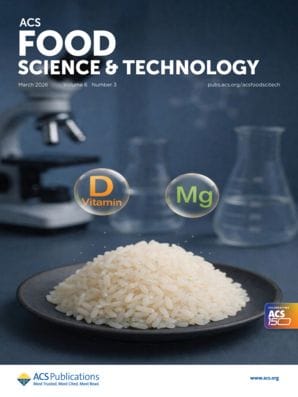
Not all bee diets are created equal. Bee bread — the fermented mixture of pollen, honey, and enzymes stored in the hive — serves as the primary food source for developing bees. This recent study in ACS Food Science & Technology shows that natural bee bread contains higher nutrient concentrations and stronger antioxidant capacity compared to commonly used artificial feeds. As environmental pressures reduce access to diverse floral resources, understanding these nutritional differences could help improve feeding strategies and support healthier colonies.
Read the Full Article
Nutritional and Physical Characterization of Bee Bread of Honeybee (Apis mellifera) and Artificial Food as Diet for Bees
Xymena Corona-López, Diego Hernández-Martínez, Daniel Ruíz-Juárez, Mayra L. González-Félix, Martín Pérez-Velázquez, Francisco H. González-Gutiérrez, Mariana Valencia-Dávila, Yaeel I. Cornejo-Ramírez*, and Betzabe E. López-Corona*
DOI: 10.1021/acsfoodscitech.5c00913
DOI: 10.1021/acsfoodscitech.5c00913
Hidden pesticide risks for solitary bees
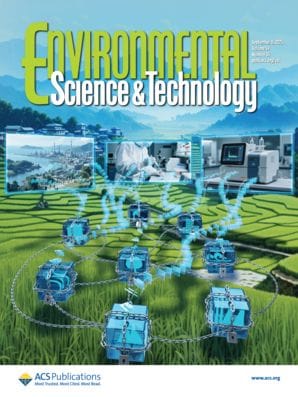
For solitary bees, exposure to pesticides can come from sources beyond foraging, such as the materials they use to build their nests. A study published in Environmental Science & Technology demonstrates that pesticides present in soil and plant materials can transfer into the food provisions stored for larvae, potentially increasing their exposure. The findings suggest that current risk assessments, which often focus on honey bees, may underestimate threats to solitary species with different nesting behaviors.
Read the Full Article
Pesticide Transfer between Solitary Bee Nesting Materials and Provisions─Implications for Larval Exposure
Calvin Luu, Kimberly J. Hageman*, Theresa L. Singer, Diana L. Cox-Foster, and Kelsey K. Graham
DOI: 10.1021/acs.est.5c08032
DOI: 10.1021/acs.est.5c08032
Hive mind: a look inside the honeybee brain
Honeybees are a powerful model for studying brain function and aging, with queen bees living far longer than workers despite sharing nearly identical genetics. Using mass spectrometry imaging, researchers mapped how metabolites are distributed across different regions of the honeybee brain. The results, published in Analytical Chemistry, reveal distinct chemical signatures tied to specific brain functions and highlight differences between queens and workers, offering new insight into how metabolism may shape longevity and brain function.
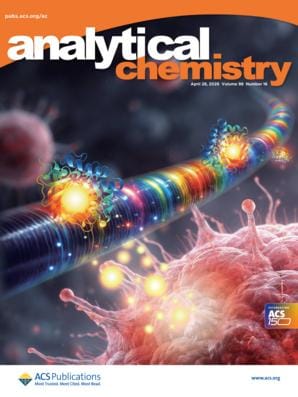
Read the Full Article
Mapping the Fine-Scale Metabolic Heterogeneity of the Honeybee Brain by Mass Spectrometry Imaging
Liangliang Qu, Zhuozhen Li, Ruiyue Wang, Yijiao Qu, Lili Chen, Jing Han, Huihui Liu, Xiali Guo, Wenjie Yu, Jinwang Li, Baoguo Sun, Kai Wang, Zongxiu Nie*, and Liping Luo*
DOI: 10.1021/acs.analchem.5c07561
DOI: 10.1021/acs.analchem.5c07561