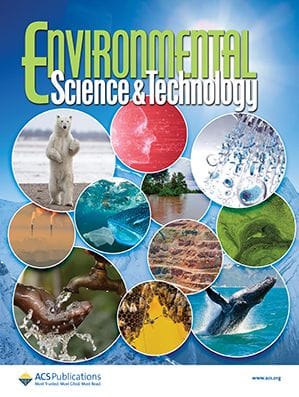
This Special Issue aims to define the boundaries of chemicals safety knowledge and identify critical knowledge gaps for future research directions to fully assess and understand the impacts of chemicals to humans, ecosystems, and the environment. Submit your manuscript by March 31, 2027.
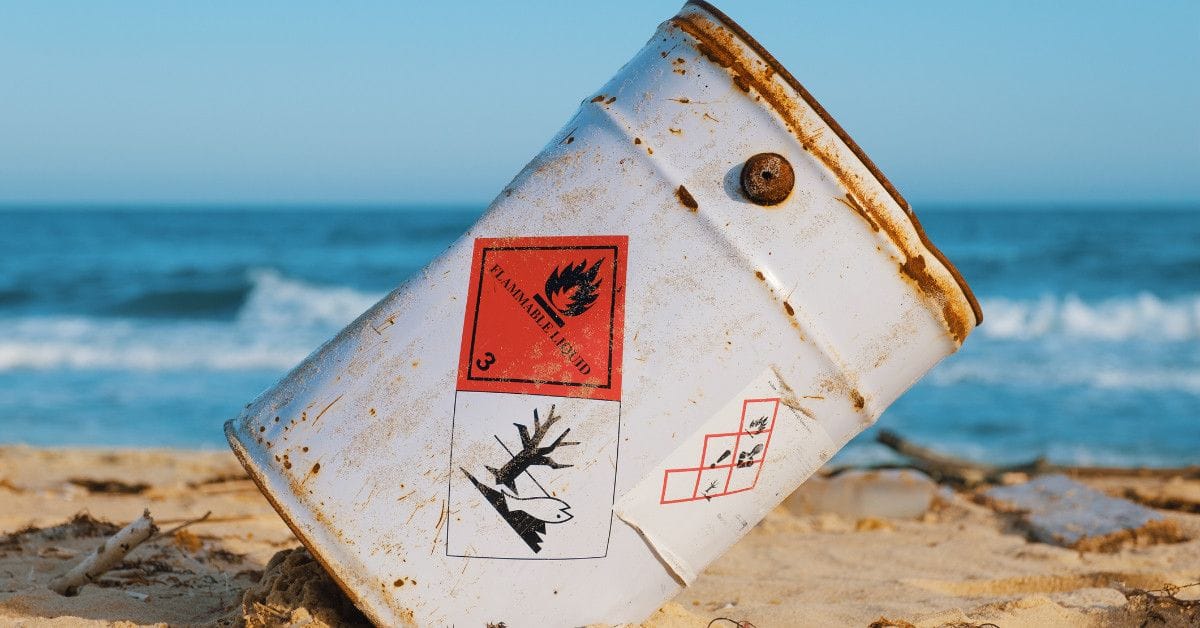
Estimates of the number of chemicals with potential for human and ecosystem exposure suggest that more than 350,000 chemicals and mixtures of chemicals have been registered for production and use in commerce, with varying degrees of evidence that these chemicals have ultimately reached the environment. Multiple chemicals have been detected in air, water, soil, food, consumer products, wildlife, and the human body. Yet for many of these chemicals, we still cannot answer a fundamental question: how much do we know about their safety?
Over the past several decades, enormous advances have been made in environmental chemistry, exposure science, toxicology, computational modeling, and risk assessment. At the same time, the chemical landscape has continued to expand in both size and complexity. The result is a growing need not simply to generate more data, but to understand the current state of knowledge across the chemicals to which humans and ecosystems are exposed.
The focus of this Special Issue across Environmental Science & Technology (ES&T), ES&T Letters, and ACS ES&T Toxicology is to examine the chemical safety knowledge landscape through a series of papers that map what is known and what remains unknown about chemical properties, environmental fate, occurrence, toxicokinetics, toxicodynamics, adverse outcomes, hazard, exposure, and risk. Advances in the use of artificial intelligence models to estimate and reduce uncertainties in exposure and toxicity will also be highlighted, reducing our reliance upon animal testing. Together, these contributions will provide a snapshot of our collective understanding, identify critical knowledge gaps, and establish a foundation for measuring future progress.
At its core, this effort is about accountability. Scientific progress should not be measured solely by the number of studies we publish, but by how effectively we build the knowledge needed to protect human health and the environment. Understanding the boundaries of what we know may be one of the most important steps toward discovering what we need to know next.
Questions this Special Issue aims to answer:
- What chemicals are out there?
- Where are they found?
- What do we know about their behavior?
- What do we know about their effects?
- What do we know about exposure and risk?
- Where are the most consequential gaps?
- How can AI, new approach methods, and better data systems close those gaps faster?
Topics include, but are not limited to:
- Chemical universe / inventory-mapping
- Defining intrinsic chemical properties with impact on environmental and toxicological behaviors
- Occurrence and exposure landscape analyses
- Chemicals’ structure and properties related to relevant chemical behaviors (e.g. persistence, bioaccumulation, toxicity)
- Transformation products and mixtures
- Toxicokinetics, toxicodynamics and internal dose
- AOPs
- Regional and global risk assessment approaches, decision-making, and prioritization
- Knowledge-gap mapping across safety-relevant domains
- Computational toxicology and AI/ML
- Chemical-class specific “state of knowledge”
- Environmental justice, vulnerable populations, susceptible species
- Data infrastructure, FAIR data, and interoperability
Organizing Editors
Prof. Julie B. Zimmerman, Editor-in-Chief, ES&T
Yale University, United States
Prof. Daniel Schlenk, Executive Editor, ES&T; Associate Editor, ES&T Letters
University of California Riverside, United States
Prof. Michael Bertram, Associate Editor, ES&T
Swedish University of Agricultural Sciences, Sweden
Prof. Bryan W. Brooks, Editor-in-Chief, ES&T Letters
Baylor University, United States
Prof. Kyungho Choi, Guest Editor, ES&T and ES&T Letters
Seoul National University, South Korea
Satoshi Endo, Guest Editor, ACS ES&T Toxicology
National Institute for Environmental Studies, Japan
Prof. Beate I. Escher, Editor-in-Chief, ACS ES&T Toxicology
Helmholtz Center for Environmental Research, Germany
Prof. Mingliang Fang, Associate Editor, ACS ES&T Toxicology
Fudan University, China
Prof. Peter Fantke, Guest Editor, ACS ES&T Toxicology
Substitute ApS, Denmark
Prof. Pablo Gago-Ferrero, Executive Editor, ES&T
Institute of Environmental Assessment and Water Research (IDAEA-CSIC), Spain
Luise Henneberger, Guest Editor, ACS ES&T Toxicology
Helmholtz Center for Environmental Research, Germany
Prof. Atsuko Ikeda, Associate Editor, ES&T and ES&T Letters
Hokkaido University, Japan
Prof. Frederic Leusch, Executive Editor, ES&T
Griffith University, Australia
Prof. Melissa Maurer-Jones, Associate Editor, ES&T
University of Minnesota, United States
Prof. Huahong Shi, Associate Editor, ES&T and ES&T Letters
East China Normal University, China
Prof. Wei Shi, Associate Editor, ES&T
Nanjing University, China
Prof. Martine Vrijheid, Associate Editor, ES&T
Barcelona Institute for Global Health, Spain
Prof. Bin Wang, Associate Editor, ES&T
Peking University, China
Prof. Zhanyun Wang, Associate Editor, ES&T and ES&T Letters
University of Southern Denmark, Denmark
Prof. Elvis Genbo Xu, Associate Editor, ES&T
University of Southern Denmark, Denmark
Tong Yang, Topic Editor, ACS ES&T Toxicology
Harvard University, United States
Prof. Xiaowei Zhang, Associate Editor, ES&T
Yunnan University, China
Submission Information
We welcome submissions for this Special Issue through March 31, 2027. For more information on submission requirements, please visit the respective journal’s author guidelines pages:
Acceptable manuscript types for consideration in this Special Issue will include all manuscript types available across all three journals. Papers accepted for publication for this Special Issue will be available ASAP (as soon as publishable) online as soon as they are accepted. After all submissions have been published, they will then be compiled online on a dedicated landing page to form the Special Issue. Manuscripts submitted for consideration will undergo the full rigorous peer review process expected from ACS journals.
Open Access: There are diverse open access options for publications in American Chemical Society journals. Please visit our Open Science Resource Center for more information.
How to Submit
- Log in to the ACS Publishing Center and select Environmental Science & Technology, Environmental Science & Technology Letters, or ACS ES&T Toxicology.
- Select your manuscript type; upload your manuscript and related files.
- Review the title and abstract fields to ensure any pre-populated information has uploaded correctly.
- Under "Special Issue Selection," select The Chemical Safety Knowledge Landscape: Mapping What We Know and What We Need to Know.
- Confirm all other information has uploaded correctly.
- Submit your article.
If you have any general questions regarding submission to this Special Issue, please contact the managing editor (managing.editor@est.acs.org).