
Recent research published in ACS journals capture innovations and breakthroughs in solar, biomass, water, and moisture-based energy production, highlighting exciting possibilities for a more sustainable global energy future.
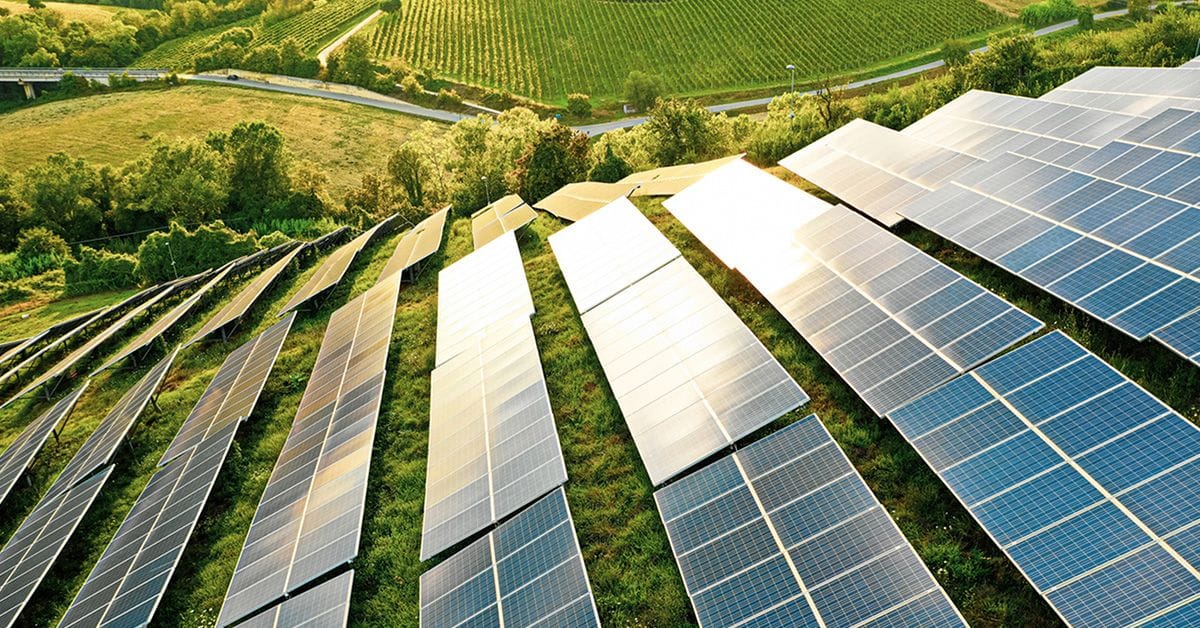
Sustainability is one of the core values of ACS, and it’s a key focus as the ACS150 theme for April as we celebrate 150 years of advancing chemistry.
Chemistry is already helping drive sustainability across many sectors, including energy. Recent research published in ACS journals capture innovations and breakthroughs in solar, biomass, water, and moisture-based energy production, highlighting exciting possibilities for a more sustainable global energy future.
Boosting Solar Harvesting with Nanoparticles
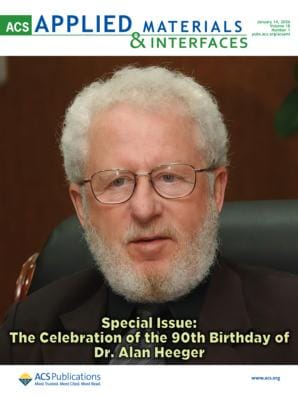
Solar energy is the world’s most abundant renewable energy source, and recent research suggests we may be able to harvest far more of it than we do today. Scientists in Korea found that applying gold nanospheres, or supraballs, on existing converters nearly doubled solar energy absorption. Their findings, reported in ACS Applied Materials & Interfaces, point to a scalable path toward next-generation solar harvesting technologies.
Related science release: Tiny gold spheres could improve solar energy harvesting
Research Article
Plasmonic Supraballs for Scalable Broadband Solar Energy Harvesting
Kyung Hun Rho, Jaewon Lee*, and Seungwoo Lee*
DOI: 10.1021/acsami.5c23149
DOI: 10.1021/acsami.5c23149
Turning Banana Peels into Energy
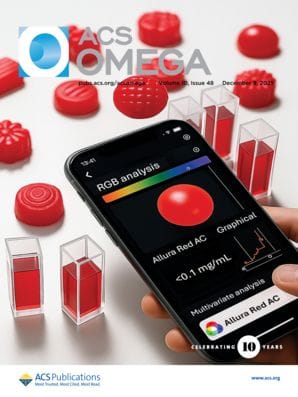
As one of the world’s leading producers and consumers of bananas, Brazil could turn this crop into a valuable energy resource, according to a study published in ACS Omega. Researchers investigating banana peel biomass successfully converted it into syngas, a combustible fuel gas mixture. Using banana peels as a raw material for energy production could help Brazil and other major banana-consuming nations reduce reliance on nonrenewable fuels while adding value to agricultural waste.
Research Article
Thermochemical Evaluation of Banana Peel Biomass for Syngas Production: Thermal and Electrical Energy Production Potential
Shirlene T. O. Santos*, Deivson C. S. Sales*, Adalberto F. Nascimento Júnior*, and Sergio P. R. Silva*
DOI: 10.1021/acsomega.5c06767
DOI: 10.1021/acsomega.5c06767
Harvesting Raindrops for Electricity
In Singapore, researchers demonstrated the potential to generate electricity from rainwater. Publishing in ACS Central Science, they reported that channeling raindrop-sized water through a narrow vertical tube produced enough electricity to power up to 12 LEDs. This innovative mechanism, which harvests energy from falling and smoothly flowing water, could one day offer a clean, renewable electricity option in places without access to hydropower dams.
Related blog post: Harvesting Clean Energy From Rainwater Using Plug Flow

Research Article
Plug Flow: Generating Renewable Electricity with Water from Nature by Breaking the Limit of Debye Length
Chi Kit Ao, Yajuan Sun, Yan Jie Neriah Tan, Yan Jiang, Zhenxing Zhang, Chengyu Zhang, and Siowling Soh*
DOI: 10.1021/acscentsci.4c02110
DOI: 10.1021/acscentsci.4c02110
Harnessing Human Breath for Electricity
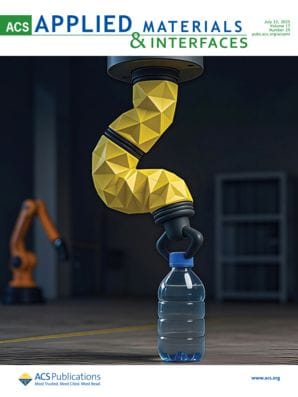
Meanwhile, scientists in India developed a device capable of generating electricity from human breath. The system uses specially designed materials to significantly improve moisture-harvesting technology for clean energy. Writing in ACS Applied Materials & Interfaces, the researchers highlighted the potential for this technology to power off-grid autonomous systems, wearable electronics, and low-power medical devices.
Research Article
High-Performance Biocompatible Moisture-Enabled Nanogenerators Using a Gelatin-SnS2 Composite for Sustainable Energy Harvesting
Subhamay Pramanik, Sovanlal Mondal, Riya Sadhukhan, Shiv Prakash Verma, Ajoy Mandal, Chandan Sengupta, and Dipak Kumar Goswami*
DOI: 10.1021/acsami.5c04325
DOI: 10.1021/acsami.5c04325
ACS Journals: Publish Environmental Research with Global Impact
ACS Publications offers a diverse portfolio of environmental and sustainability journals—spanning chemistry, engineering, health, and earth systems—designed to match your research goals and maximize real‑world influence. Whether your work is foundational, applied, interdisciplinary, or time‑sensitive, ACS journals provide a clear path to publication that helps your findings reach the audiences that matter.