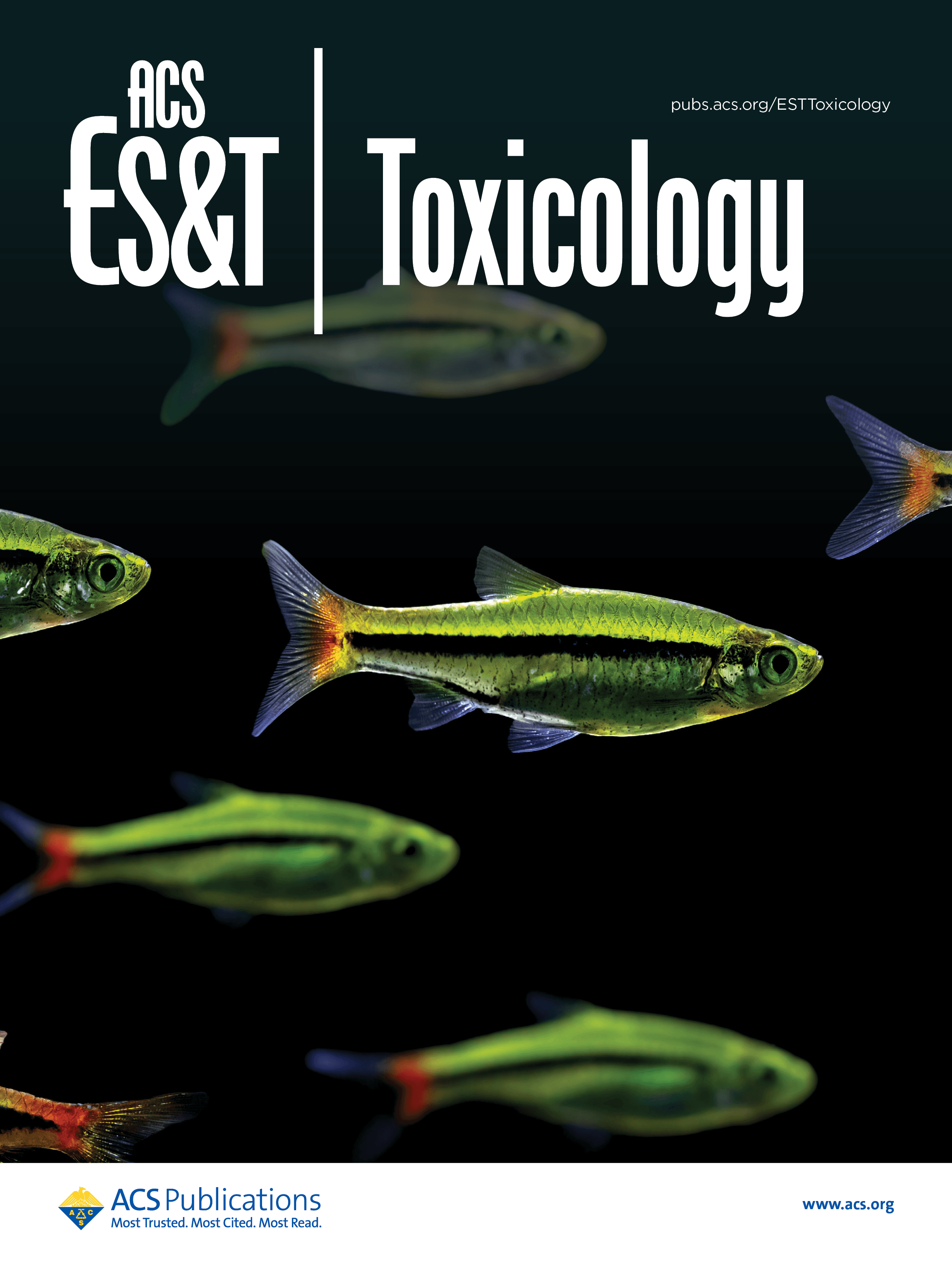
Led by founding Editor-in-Chief Professor Beate Escher, ACS ES&T Toxicology is a new journal launching in June 2026 that will publish significant new research results at the intersection of human toxicology, ecotoxicology, and risk assessment.
The Publications Division of the American Chemical Society (ACS) is proud to announce ACS ES&T Toxicology, a peer-reviewed journal that will publish significant, novel, and globally relevant high-quality science on all aspects of the effects of harmful substances and other anthropogenic impacts on environmental and human health, ecosystems, and ecosystem services.
The journal will be led by Professor Beate Escher, its inaugural Editor-in-Chief, and it will feature transparent and mechanistic toxicological science that drives safer chemicals development, hazard assessment, regulation, and use, as well as healthier ecosystems and more equitable human health outcomes for all.
"Introducing ACS ES&T Toxicology is a point of pride for us, as it will provide home for trusted science in the areas of environmental toxicology and ecotoxicology that enables earlier detection of risks and improved preventative chemical design and management,” said ACS Publications Senior Vice President and Chief Publishing Officer Sarah Tegen, Ph.D. “We’re delighted that Professor Escher, a world-renowned expert who has been a pioneer in this field, will be joining us to lead this exciting new journal and help us serve the community of researchers in this area.”
Prof. Escher is internationally recognized for her work on chemical pollution and the (eco)exposome, revealing how chemical mixtures, even at undetectable levels, can collectively cause toxic effects in humans and the environment.
She pioneered a paradigm shift in risk assessment by focusing on mixture effects using high-throughput in vitro bioassays and computational models. Her “something from nothing” finding demonstrated that combined chemicals in blood and the environment can cause harm even when individual levels appear safe.
"My vision is for the journal to pioneer the use of data science and systems thinking to integrate toxicology and chemistry in order to protect planetary and human health amid accelerating environmental change,” said Prof. Escher. “ACS ES&T Toxicology will sit at the intersection of environmental and human health, engaging in chemistry-oriented dialogue with environmental sciences, chemical risk assessment, ecology, public health, and epidemiology.”

Prof. Escher obtained her Ph.D. from the Swiss Federal Institute of Technology ETH, Zürich, Switzerland. She is head of the Department of Cell Toxicology at the Helmholtz Centre for Environmental Research in Leipzig, Germany, affiliated with the German Center for Child and Adolescent Health (DZKJ). She is also professor of Environmental Toxicology at the Eberhard Karls University Tübingen, Germany; a lecturer at ETHZ, Switzerland; and holds both an honorary professorship at the University of Queensland and an adjunct professorship at Griffith University, Australia.
ACS ES&T Toxicology will begin accepting submissions in June 2026 and will publish its first issue in early 2027. The journal will publish original, peer-reviewed research articles, reviews, and perspectives, and will encourage debate via viewpoints and policy analyses.
If you’re a reporter who would like to write about this announcement, please reach out to the ACS Newsroom: newsroom@acs.org.
---------------
The Publications Division of the American Chemical Society (ACS Publications) is a leader in providing access to chemistry-related information and research through over 90 peer-reviewed journals, as well as digital books, reference materials, and educational tools. It thus provides its members and the worldwide scientific community with a comprehensive collection of high-quality information products and services for the practice and advancement of the chemical and related sciences.