Recognizing early career researchers leading the fields in new directions through creative, new ideas consistent with Morgan's early contributions to environmental chemistry.

The James J. Morgan Early Career Award is presented annually by Environmental Science & Technology (ES&T) and Environmental Science & Technology Letters (ES&T Letters), and the Environmental Chemistry Division of the American Chemical Society (ENVR). This award, named after the first Editor-in-Chief of ES&T, recognizes those early career researchers who are leading the fields of environmental science and technology in new directions through creative, new ideas consistent with Morgan’s early contributions in environmental chemistry.
This year, the award recognizes four early career investigators based in the Asia Pacific Region.
We are excited to announce the 2026 winners:
- Chiheng Chu, Zhejiang University, China
- Ling Jin, The Hong Kong Polytechnic University, China
- Zhe Yang, Hong Kong University of Science and Technology, China
- Yanyan Zhang, Westlake University, China
Congratulations to the 2026 award recipients! Each winner will receive their award and present a lecture during a special ES&T Journals Award Session at ACS Spring 2026 on Monday, March 23. Come and join us in congratulating them.
Learn more about them and their leading-edge research below.
Chiheng Chu
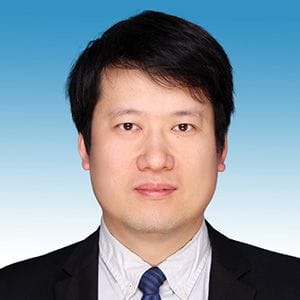
Tell us about yourself!
I was born and raised in Jiangsu, China, and completed my undergraduate studies at Peking University in Beijing. I then pursued my master’s degree at the University of Tokyo and my Ph.D. at ETH Zürich, followed by three years as a postdoctoral researcher at Yale University. I am now a faculty member at Zhejiang University in Hangzhou, China. Outside the lab, I enjoy hiking and skiing with my family, which helps me stay energized and connected to nature.
How would you describe your research to someone outside your field?
My research focuses on reactive oxygen species (ROS), a class of highly reactive oxidants that play essential roles in natural environments and engineered purification systems. ROS can transform organic compounds and metals, influence key biogeochemical cycles such as the global carbon cycle, and drive processes central to air, water, and soil quality. By understanding how ROS are generated, distributed, and consumed, especially at complex environmental interfaces, we can better assess their environmental impacts and develop greener, more efficient technologies for pollution control and sustainable remediation.
What inspired you to pursue your area of research and what keeps you motivated?
I have always been fascinated by the remarkable self-regulating power of nature and the ability to drive element cycles and maintain environmental balance through elegant chemical processes. Traditionally, in the field of environmental science, natural and engineered systems are often studied separately, even though they share many fundamental mechanisms. What motivates me is the opportunity to bridge these two worlds: to learn from natural chemistry and translate those insights into practical purification and sustainability solutions. The possibility that fundamental discoveries can eventually drive transformative environmental technologies keeps me passionate about my work.
What does winning this award mean to you?
It is a great honor to be named a recipient of the James J. Morgan Early Career Award. Much of the work my group does explores emerging and high-risk areas, where progress often requires persistence, creativity, and resilience in the face of uncertainty. To me, this award recognizes the dedication of my research team and the collective effort we have invested in advancing this young field. It is both an encouragement and a reminder of our responsibility to continue pushing scientific boundaries.
What advances are you hoping to see in your field in the next decade?
I hope to see significant advances in the understanding and application of interfacial ROS processes, including:
- New analytical tools capable of resolving nm-µm ROS dynamics at fast timescales.
- Deeper mechanistic understanding of ROS production and reactions at environmental interfaces, and their implications for biogeochemical cycles and pollutant transformation.
- Interface-inspired technologies that harness ROS chemistry to create highly efficient, green, and scalable environmental purification solutions.
What is the best piece of advice that you received early on in your career?
I have been fortunate to receive generous guidance from mentors and senior scientists, and several lessons have stayed with me:
- Ask good questions. Identifying important, meaningful scientific questions is just as valuable as solving them.
- Build strong collaborations. Future environmental challenges require interdisciplinary perspectives. Learn from other fields and cultivate partnerships with top scientists.
- Stay patient and embrace failure. Innovative research is rarely straightforward. Setbacks are part of the process; treat them as learning opportunities. With persistence and curiosity, your efforts will eventually be recognized.
Ling Jin
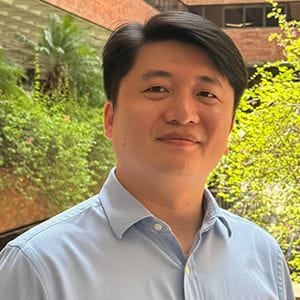
Tell us about yourself!
I am an assistant professor jointly appointed in the Department of Civil and Environmental Engineering and the Department of Health Technology and Informatics at the Hong Kong Polytechnic University. My work has been recognized through honors such as the Asian Young Aerosol Scientist Award and selection to the American Academy of Environmental Engineers and Scientists “40 Under 40.”
Outside the lab, I enjoy singing, swimming, hiking, reading, and playing card and board games. I appreciate sharing a good drink and bountiful food at gatherings with students, colleagues, collaborators, and friends to unwind and stay connected. Mentoring students, both in their scientific journeys and in their personal growth, remains one of the most meaningful parts of my work.
How would you describe your research to someone outside your field?
I study how chemicals and microbes interact in the environment and how those interactions affect human health, wildlife health, and overall ecosystem functioning—an integrated perspective often referred to as One Health. In reality, we never encounter a single chemical or a single microbe in isolation; real environments are mixtures, and these mixtures behave in unexpected ways. My research explores what happens inside these complex systems: how chemicals reshape microbial communities, how microbes transform chemicals, and how their combined effects ripple across ecosystems and ultimately influence health. The goal is to build tools and models that help us understand these interactions more clearly and guide decisions that protect the environment and all forms of life connected through it.
What inspired you to pursue your area of research and what keeps you motivated?
As a strong believer in the Oriental philosophies of the Unity of Heaven and Humanity (in Chinese: 天人合一) and Dependent Origination and Emptiness (in Chinese: 緣起性空), the understanding that humans and nature are deeply interconnected, that all phenomena arise from causes and conditions, and that nothing possesses an independent essence, I wanted my work to reflect these principles. I enjoy thinking in the mountains and by the sea, where the vastness and quiet make the connection between people and the environment feel especially vivid.
Early in my career, I became captivated by the invisible ways chemicals and microbes interact across air, water, soil, and living organisms, shaping health at every level. I am also continually amazed by the serendipity both within science and beyond it, the unexpected insights, the interpersonal chemistry, and the interdisciplinary connections that arise simply from engaging with diverse people and ideas. This curiosity eventually led me to an integrated One Health approach that brings together environmental chemistry, toxicology, microbiology, and data science. What keeps me motivated is the sense of purpose embedded in this work. These questions matter for human wellbeing, wildlife protection, and the resilience of ecosystems. I am energized by my students and collaborators, whose curiosity and growth provide both inspiration and aspiration. And because the field evolves so rapidly, there is always something new to learn, discover, and contribute to, making the journey endlessly meaningful and alive.
What does winning this award mean to you?
Receiving an award bearing Jim Morgan’s name is both humbling and inspiring, reminding me that our work is not about science for its own sake but about improving the wellbeing of people and safeguarding the integrity of ecosystems, just as he articulated so powerfully in the earliest days of ES&T. For me, this award is also a mission: it strengthens my commitment to integrative research that connects chemicals, microbes, and hosts in ways that protect environmental and public health, and it motivates me—just as Jim Morgan championed early career voices—to support and empower the next generation so they can go further, see more clearly, and lead with wisdom even before experience fully arrives.
Above all, this award is a moment of deep gratitude for the mentors who set my compass, the students and collaborators who share this journey, and the community that continues to carry forward Jim Morgan’s vision of science with purpose.
What advances are you hoping to see in your field in the next decade?
In the next decade, I hope to see our field break free from fragmented perspectives and move toward genuine, predictive integration of chemical, microbial, and host processes. What excites me most is the possibility of building quantitative, cross-scale models that reveal why systems shift and can anticipate resilience thresholds, tipping points, and net toxicity rather than simply cataloging correlations.
I hope we commit to generating large, standardized, interventional datasets from real-world mixtures, because without them we cannot uncover the causal logic that governs pathogen selection, chemical detoxification, and health outcomes. I am also optimistic about AI frameworks that are mechanistically grounded, multimodal, and actionable that help us move from observing problems to shaping safer and more resilient systems. Ultimately, I hope our science gains the clarity and predictive power needed to make a meaningful difference for both ecosystems and public health.
What advice would you give to someone just starting out in the field?
If I were to offer advice to someone just starting out, I would share a few reflections that have truly helped me:
First, build your inner foundation before chasing visible achievements. When your mind is steady and your energy is aligned, opportunities and progress often unfold more naturally.
Second, respect differences and move with the momentum of things. Everyone walks a unique path, so focus on getting things done first, then refine them. Don’t let the pursuit of perfection at the beginning hold you back.
Third, keep accumulating quietly: read deeply, do good, build genuine connections, and take care of your body and mind. When the invisible foundations are strong, the visible outcomes tend to follow. Stay consistent and time will reward you in ways you may not yet imagine.
Zhe Yang
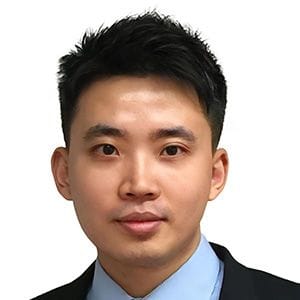
Tell us about yourself!
My academic journey began at East China University of Science and Technology where I completed a B. Eng. in chemical engineering, followed by an M.Sc. in chemical engineering from and University of Missouri-Columbia. In 2018 I received a Ph.D. from the University of Hong Kong in environmental engineering. After continuing postdoctoral research in my PhD mentor’s lab for several years, I secured a competitive Australia fellowship in 2023—Discovery Early Career Researcher Award (DECRA)—which offered me great opportunity to initiate a three-year contract in School of Chemical Engineering/Dow Centre for Sustainable Engineering Innovation at the University of Queensland as an independent researcher. I am now an assistant professor in the School of Engineering, Department of Civil and Environmental engineering at the Hong Kong University of Science and Technology (Clear Water Bay campus).
My hobbies outside the lab include running, badminton, and table tennis. I frequently participate in half-marathons and have completed one full marathon. Running keeps me energized and refreshed, which in turn helps improve my work efficiency.
How would you describe your research to someone outside your field?
My research focuses on developing a new membrane technology that will lower costs and increase productivity for key industries, including water, food, dairy, mining, and energy. Conventional membrane technology is inefficient and therefore consumes high amounts of energy but generates a low-quality product. The goal of my research is to address this challenge by developing new membrane materials and processes that allow better filtration using less energy. Many industries, particularly pharmaceutical purification companies and major resource recovery industries, will be able to take advantage of these new membranes and processes.
What inspired you to pursue your area of research and what keeps you motivated?
My current research builds upon my experiences throughout my research career, beginning at University of Missouri-Columbia where I wrote my master’s thesis on fabricating high-performance reverse osmosis (RO) membranes based on thin-film composite (TFC) structure. It fascinated me that with an ultra-thin rejection layer (~10 to 500 nm) fabricated on a porous substrate, I was able to fabricate a dense membrane (i.e. RO membrane) to reject ~> 95% NaCl as well as other small toxic contaminants that could do harm to human health. I was then motivated by my PhD supervisor to unveil more fundamental transport mechanisms of these TFC membranes. In my postdoctoral period, I further extended the materials-level analysis to a process-level investigation and surprisingly found that high-performance in the lab does not always translate into good results in process. These discrepancies further motivated me to perform more analysis to bridge the gaps between lab-scale and process-scale performances.
What does winning this award mean to you?
It is very humbling to receive this award which recognizes outstanding performance and leadership potential in early career researchers. I’m also very flattered to receive this award, as ES&T and ES&T Letters have been widely recognized as the leading journals in environmental science and technology. Receiving this early career award motivates me to continue to conduct world-class fundamental science of leveraging membrane technology to solve environmental issues.
What advances are you hoping to see in your field in the next decade?
Despite TFC membranes being invented over half a century ago, they are still dominating membrane technology in the context of seawater desalination and water reuse. The fundamental transport mechanisms remain a mystery without direct experimental evidence. Future advances are expected to conduct truly in situ and operando direct experimental evidence to unveil the transport mechanisms of water molecules and solutes through membranes.
In the meantime, advances in developing novel computational simulations tools, AI approaches, and analytical instrumentation are also highly encouraged. More importantly, I hope that the gaps between lab-scale high-performance membranes and industrial-scale demands can be addressed in certain application scenarios, enabling the upskilling and translation of fundamental membrane science into practical technologies. Moreover, membrane technology can be further extended to other applications beyond water purification, such as the mining industry and resource recovery.
What advice would you give to someone just starting out in the field?
I hesitate to offer advice at this stage of my academic career, but if I had to highlight one element that has shaped my progress, it would be resilience.
Whether you are an experimentalist (where 90% of experiments may fail) or a theorist or modeler encountering similar setbacks, failure is an inherent part of research. Even after graduation/postdoctoral training, when applying for industry or academic positions, rejection is common. In these disappointing but normal situations, resilience becomes essential, both in mindset and in practice.
When you face setbacks and make mistakes, the most important thing is to try again. Resilience along with tenacity and perseverance matters. Do not give up or give in; keep going, keep improving, and keep trying, even if you fail repeatedly, until you make some progress.
Yanyan Zhang
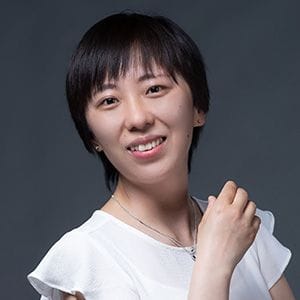
Tell us about yourself!
I have been an assistant professor at Westlake University in Hangzhou, China, since 2021. I earned my PhD in environmental geography from Peking University in 2015. During my doctoral studies, I spent a year at the Connecticut Agricultural Experiment Station in the United States through a joint PhD program in environmental chemistry, which was a formative experience. From 2016 to 2020, I was a postdoctoral researcher in environmental engineering at McGill University in Canada. Outside the lab, I enjoy hiking, planting, and occasionally playing card games.
How would you describe your research to someone outside your field?
My work focuses on pollution control of fluorochemicals, which contain extremely stable carbon-fluorine bonds and can contaminate natural environments, threatening drinking water and food safety. These compounds, especially per- and polyfluoroalkyl substances (PFAS), are also indispensable to advanced materials, clean energy, firefighting, and other high‑tech industries. I address this global challenge by developing destructive technologies at emission sources and by creating green alternatives that enable the sustainable growth of fluorine‑intensive industries. Achieving this requires answering fundamental questions—which structures can be degraded, to what extent, and why? —and my contributions to understanding PFAS defluorination by elucidating structure-dependent mechanisms at the molecular level led to this award.
What inspired you to pursue your area of research and what keeps you motivated?
I began working on PFAS degradation in 2016, driven by a fascination with breaking the “unbreakable” carbon–fluorine bonds in these “forever chemicals.” Over time, I recognized their essential role in high-tech industries and broader society, and I embraced my responsibility as a scientist to balance their utility with the protection of the environment and human health by developing solutions that enable truly sustainable development.
What does winning this award mean to you?
This recognition is deeply encouraging and makes the hard work, occasional frustration, and uncertainty feel worthwhile. It also strengthens my confidence to advance deployable technologies through pilot testing and reassures my collaborators as we build closed loop solutions for PFAS pollution.
What advances are you hoping to see in your field in the next decade?
I hope we can translate our lab-developed technologies into real-world applications to decontaminate water and soil. I also hope that environmental scientists could collaborate with experts in chemical engineering, materials science, clean energy, and other fields that use fluorochemicals to develop sustainable strategies, by wisely applying these potentially harmful compounds with careful attention to functionality, toxicity, degradability, and cost.
What advice would you give to someone just starting out in the field?
My advice is to always find ways to cheer yourself up during the long and often lonely academic journey. It might be an intriguing research question, a practical problem you want to solve, an experimental technique you learn, a writing or communication skill you master, a piece of software or code that interests you, or a conversation with an established scientist who offers insight. These small achievements enrich and sustain our academic lives.
Learn About Last Year’s Winners

Celebrate 150 Years of Chemistry and Community

ACS 150th Anniversary
Celebrating ACS150: Chemistry is Everything
Throughout 2026, ACS will mark 150 years of advancing chemistry — a historic milestone built on discovery, innovation, and community.