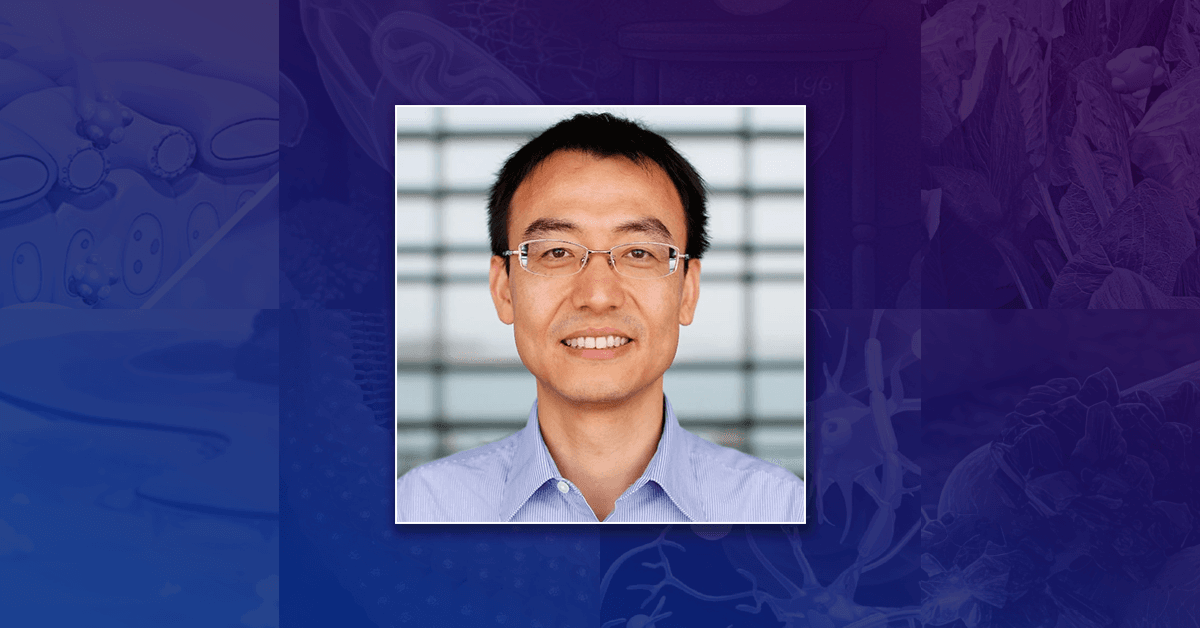
Prof. Wang Peng shares insights from his personal experience as an Executive Editor, his impressions on impactful research trends, and advice for young researchers preparing to submit their manuscripts.
Celebrating 60 Years of ES&T
In 2026, Environmental Science & Technology (ES&T) marks the 60th anniversary of its founding. Over the past 60 years, environmental science research in China and the community of Chinese scholars have continued to develop. We have therefore specially invited a number of Chinese editors and reviewers for conversations, asking them to share their observations and visions from their own perspectives.
We are pleased to launch the first interview of this series: a conversation with ES&T Executive Editor Professor Wang Peng from Sun Yat-sen University.
Sun Yat-sen University, China
How did you become an ES&T editor? What does this role mean to you?
I was invited to serve as ES&T Associate Editor in February 2020, and since May 2021 I have served as Executive Editor.
This role is exceptionally meaningful to me. It has not only allowed me to move from being an "author" to being a "steward;" it has also given me the opportunity to observe, at close range, the most cutting-edge developments in the global environmental field and to help young researchers bring high-quality research to the world stage. Whenever a manuscript I have handled is published, which is truly innovative and socially valuable, I feel sincere joy. It is an academic responsibility and also brings me a sense of professional accomplishment.
Special Issue
Materials Science and Environmental Applicability
Prof. Wang served as one of the organizing editors of this Joint Special Issue in ES&T and ES&T Letters, which showcases the expanding toolbox of advanced materials and underscores their increasingly important role in reshaping environmental research and, more broadly, the field of sustainability.
During ES&T’s development, which research directions or trends have left the deepest impression on you?
Over the past decade, three trends in ES&T have impressed me most:
- The gradual shift from "pollution control" to "resource recovery and the circular economy." In the past, research often focused on "how to meet the standards" or "how to remove pollutants." Now, more work has turned toward "how to recover high-value resources from waste." This shift has not only significantly improved (or is improving) the economics of these technologies but has also made environmental science and technology a true pillar of the circular economy.
- At the same time, the rapid development of artificial intelligence (AI) and machine learning, and their deep integration into every direction of environmental science and technology, have also left a deep impression on me. From high-throughput screening of materials and prediction of reaction pathways to intelligent simulation and optimization of complex environmental systems, AI is significantly accelerating innovation in environmental science and technology.
- In addition, interdisciplinary integration has become a new paradigm for solving traditional environmental problems. Methods from a single field are no longer sufficient to address complex challenges such as climate change, water scarcity, and carbon neutrality. Only by deeply integrating materials science, environmental engineering, chemical engineering, data science, and even the social sciences can we propose solutions that are truly systematic and scalable.
During your time as ES&T editor, have there been any memorable experiences or personal achievements?
During my time as an ES&T editor, it just so happened to also be the years when Chinese research communities significantly increased their number of publications in ES&T. When I first became an Associate Editor, the proportion of manuscripts from China was still relatively limited. Now, about half of the papers published by ES&T each year come from China. As an editor from China, I am truly happy and proud to see the Chinese environmental community demonstrating ever stronger capability and influence in a top international journal. It strengthens my belief that Chinese academic communities are making important contributions to solving global environmental problems.
Another experience that has deeply impressed me is the professionalism and selfless dedication shown by ES&T reviewers. They not only point out problems, but often also propose ways to improve the work and suggest new research directions. This rigorous, responsible, and generous spirit has deeply moved me over and over again, and it let me truly understand what an "academic community" means.
In terms of personal achievements, editorial work has made me more inclusive and patient. In the past, as an author, I focused more on my own research. Now, as an editor, I need to take a broader view and understand the thinking and limitations of authors from different cultural backgrounds and at different stages of research. When facing a manuscript that has potential but is not yet perfect, I have learned how to offer encouragement and guidance in constructive language rather than simply rejecting it. This process has not only broadened my academic perspective; it has also helped me to better respect differences, listen patiently, and view problems with a more inclusive mindset.
In short, serving as an ES&T editor has been one of the most valuable journeys in my career.
What advice do you have for young researchers who are preparing to submit to ES&T?
Three sincere suggestions:
- Tell a complete and important story, rather than simply presenting a new material or a new method. Clearly answer: "Why is this work important? How does it advance the frontier of the field?"
- Make sure the data is solid and the mechanisms are clear. ES&T readers come from different backgrounds, so please ensure that your core innovation can be understood by the broad readership of ES&T.
- Do not be afraid of rejection. After a rejection, absorbing the reviewers' comments and carefully revising the manuscript can bring considerable improvements to the manuscript.
How do you envision the next 60 years of ES&T and environmental chemistry research?
I firmly believe that over the next 60 years, environmental chemistry will truly transform from a "problem solver" into a "future shaper." ES&T will continue to lead this transformation. I look forward to ES&T continuing to maintain its rigor and high standards while further strengthening dialogue with policymakers and industry, so that more frontier research can truly be translated into solutions for global sustainable development.
Thank you again to ES&T for providing me with this platform. I wish ES&T continued success over the next 60 years as a beacon in the field of environmental science and engineering, influencing and inspiring more young minds.
Browse ES&T 60th Anniversary Collections
Featured Collection
The Global Impact of 60 years of ES&T
Throughout 2026 ES&T will commemorate its 60th diamond anniversary by launching a year-long series of monthly themed collections. The collections will focus on some of the impactful research topics or ‘facets’ of the ES&T diamond that have shaped six decades of the journal, from ecotoxicology to drinking water, chemical persistence to sustainable design, biogeochemical cycles to remediation, air quality to climate solutions.