
This joint Special Issue aims to highlight recent advances in the expanding scope and fundamental understanding of cluster-based Metal-Organic Framework (MOF) chemistry within the field of inorganic chemistry. Submit your manuscript by October 31, 2026.
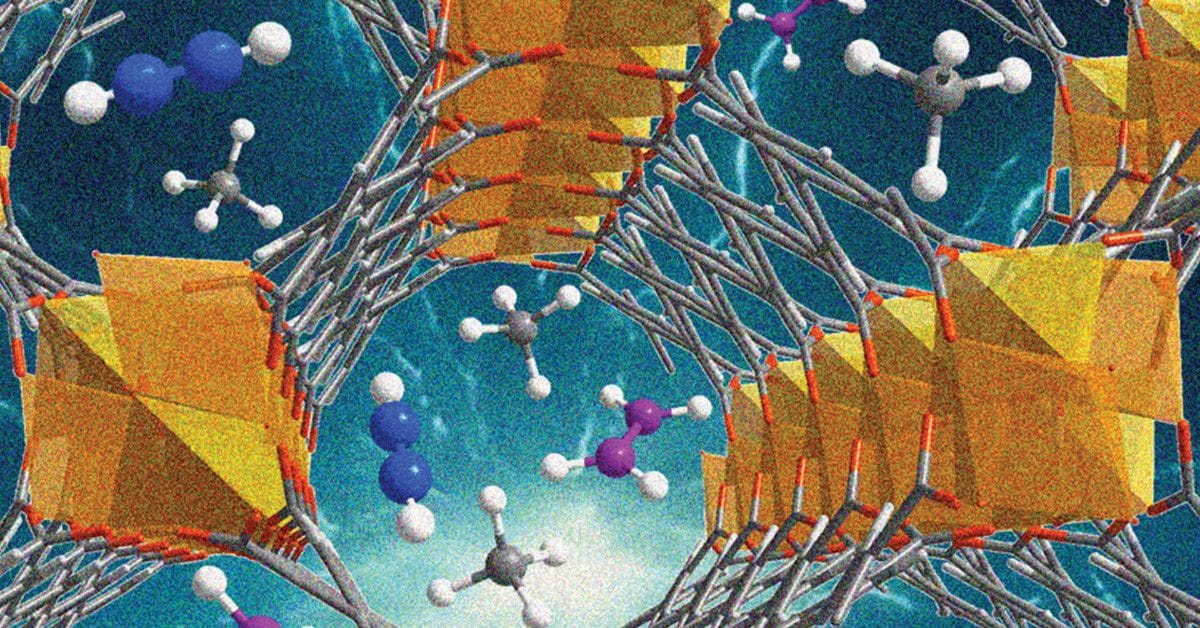
Metal clusters play a uniquely important role in MOF construction, serving not merely as structural nodes but as well-defined inorganic modules with tunable nuclearity, geometry, oxidation state, and electronic structure. The growing global emphasis on sustainable technologies and advanced functional materials has brought cluster-based metal-organic frameworks (MOFs) to the forefront of inorganic chemistry research. Their unique ability to integrate well-defined inorganic clusters with tunable architecture enables unprecedented control over structure-property relationships, making them especially relevant for addressing pressing challenges in catalysis, energy conversion, and environmental remediation.
This joint Special Issue, “Cluster-Based Metal-Organic Frameworks,” hosted by Inorganic Chemistry and ACS Organic & Inorganic Au, will showcase contributions from researchers who are advancing the design, understanding, and application of cluster-based MOFs through innovative synthesis, detailed mechanistic studies, and exploration of structure-property relationships.
Topics of interest include, but are not limited to:
- Design and synthesis of metal clusters as secondary building units (SBUs), their coordination chemistry, structural diversity, and bonding characteristics.
- Mechanistic insights, structure-property relationships, spectroscopic and crystallographic characterization, and theoretical investigations.
- Studies demonstrating how precise control over inorganic cluster nodes enables tailored reactivity and functionality in catalysis, gas storage and separation, magnetism, photophysics, and related applications.
Organizing Editors
Prof. Sukhendu Mandal, Guest Editor
IISER Thiruvananthapuram, India
Prof. Di Sun, Guest Editor
Shandong University, China
Prof. P. Shiv Halasyamani, Associate Editor, Inorganic Chemistry & ACS Organic & Inorganic Au
University of Houston, United States
Prof. Banglin Chen, Associate Editor, Inorganic Chemistry
Fujian Normal University, China
Submission Information
We welcome submissions for this Special Issue through October 31, 2026. For more information on submission requirements, please visit each journal's Author Guidelines page:
Accepted manuscripts for consideration in this Special Issue will include all manuscript types available in Inorganic Chemistry and ACS Organic & Inorganic Au. Papers accepted for publication for this Special Issue will be available ASAP (as soon as publishable) online as soon as they are accepted. After all submissions have been published, they will then be compiled online on a dedicated landing page to form the Special Issue. Manuscripts submitted for consideration will undergo the full rigorous peer review process expected from ACS journals.
Open Access: There are diverse open access options for publications in American Chemical Society journals. Please visit our Open Science Resource Center for more information.
ACS Organic & Inorganic Au is a fully open access journal, and therefore your paper will be available to anyone, at anytime, anywhere in the world. Please see our website for more information on Open Access Pricing, our ACS Country Discount & Waiver Policy, and ACS Read and Publish agreements.
How to Submit
- Log in to the ACS Publishing Center and select either Inorganic Chemistry or ACS Organic & Inorganic Au.
- Select your manuscript type and upload your manuscript and related files.
- Review the title and abstract fields to ensure any pre-populated information has uploaded correctly.
- Under "Special Issue Selection," select “Cluster-Based Metal-Organic Frameworks."
- Confirm all other information has uploaded correctly.
- Submit your article.
If you have any general questions regarding submission to this Special Issue, please contact eic@inorg.acs.org or masson-office@orginorgau.acs.org.
Get e-Alerts
Stay Connected With Inorganic Chemistry
Never miss an issue again! Sign up now for email updates on future calls for papers, the latest articles, and other content from Inorganic Chemistry.
Get e-Alerts
Stay Connected With ACS Organic & Inorganic Au
Never miss an issue again! Sign up now for email updates on future calls for papers, the latest articles, and other content from ACS Organic & Inorganic Au.
