
This Special Issue aims to highlight the latest innovations and emerging directions in the molecular chemistry of heavier main-group elements across the p-block, spanning fundamental bonding and reactivity through catalysis and functional materials. Submit your manuscript by April 30, 2027.
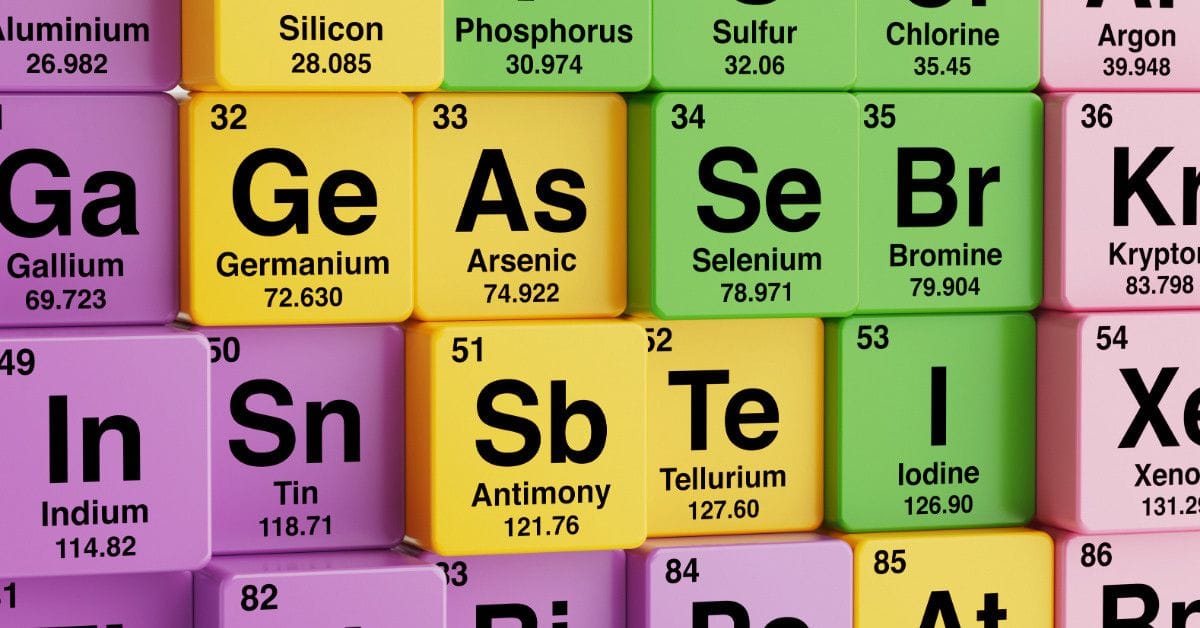
The chemistry of heavier main-group elements offers a rich platform for discovering unusual bonding motifs, reactive intermediates, catalytic transformations, and functional materials. Advances involving the heavier elements of Groups 13–16 are reshaping established ideas about structure and reactivity while opening new opportunities across homogeneous catalysis, small-molecule activation, cluster chemistry, and materials design.
This Special Issue of Inorganic Chemistry, “Current Avenues for Heavier Main Group Elements — From Catalysis to Material,” will showcase recent innovations and emerging trends across the chemistry of heavier main-group elements. Contributions are invited from researchers who attended the 18th International Conference on the Coordination and Organometallic Chemistry of Germanium, Tin and Lead (ICCOC-GTL 2026), held in Oldenburg, Germany, as well as from the broader scientific community working across heavier main-group chemistry. Building on the conference’s focus on germanium, tin, and lead, the special issue aims to extend to molecular compounds of the heavier p-block elements more broadly and seeks to connect fundamental molecular insight with applications in catalysis and materials chemistry.
Topics include, but are not limited to:
- New molecular compounds and bonding motifs of heavier p-block elements
- Low-valent, low-coordinate, and multiply bonded heavier main-group species
- Reactive intermediates, radicals, ions, and unusual oxidation states
- Coordination and organometallic chemistry of heavier main-group elements
- Homogeneous catalysis and catalyst design involving heavier main-group elements
- Activation and functionalization of small molecules
- Main-group/transition-metal cooperativity and bimetallic reactivity
- Clusters, cages, Zintl ions, polyhedral compounds, and heterometallic assemblies
- Heavier main-group compounds for optoelectronic, energy, sensing, and other functional-material applications
- Molecular precursors and synthetic approaches to semiconductors, thin films, nanomaterials, and extended solids
- Mechanistic, spectroscopic, electrochemical, and computational studies
- Sustainable synthesis, resource-efficient transformations, and recovery or recycling strategies involving heavier main-group elements
Submissions are welcome through April 30, 2027. All manuscripts will undergo rigorous peer review and must fit the scope of the Special Issue and meet the high publishing standards of Inorganic Chemistry.
Organizing Editors
Prof. Stefanie Dehnen, Editor-in-Chief, Inorganic Chemistry
Karlsruhe Institute of Technology, Germany
Prof. Thomas Müller, Guest Editor
Carl von Ossietzky University of Oldenburg, Germany
Prof. Jens Beckmann, Guest Editor
University of Bremen, Germany
Submission Information
We welcome submissions for this Special Issue through April 30, 2027. For information on manuscript preparation and submission requirements, please consult the Inorganic Chemistry Author Guidelines.
Accepted manuscript types may include Articles, Communications, Viewpoints, and Reviews, in accordance with the journal’s requirements. While Viewpoints and Reviews are typically invited directly by the Editor-in-Chief, proposals for submissions are welcome at eic@inorg.acs.org. Papers accepted for publication for this Special Issue will be available ASAP (as soon as publishable) online as soon as they are accepted. After all submissions have been published, they will then be compiled online on a dedicated landing page to form the Special Issue. All submissions will undergo the full peer-review process expected of ACS journals.
Open Access: There are diverse open access options for publications in American Chemical Society journals. Please visit our Open Science Resource Center for more information.
How to Submit
- Log in to the ACS Publishing Center.
- Select your manuscript type; upload your manuscript and related files.
- Review the title and abstract fields to confirm any pre-populated information has transferred correctly.
- Under “Special Issue Selection,” select Current Avenues for Heavier Main Group Elements — From Catalysis to Material.
- Confirm all other information is correct.
- Submit your article.
If you have general questions regarding submission to this Special Issue, please contact eic@inorg.acs.org.
Get e-Alerts
Stay Connected With Inorganic Chemistry
Never miss an issue again! Sign up now for email updates on future calls for papers, the latest articles, and other content from Inorganic Chemistry.
