
This Special Issue aims to highlight the latest advances in the fundamental materials chemistry, spectroscopy & microscopy, and device applications of halide perovskites. Submit your manuscript by November 30, 2026.
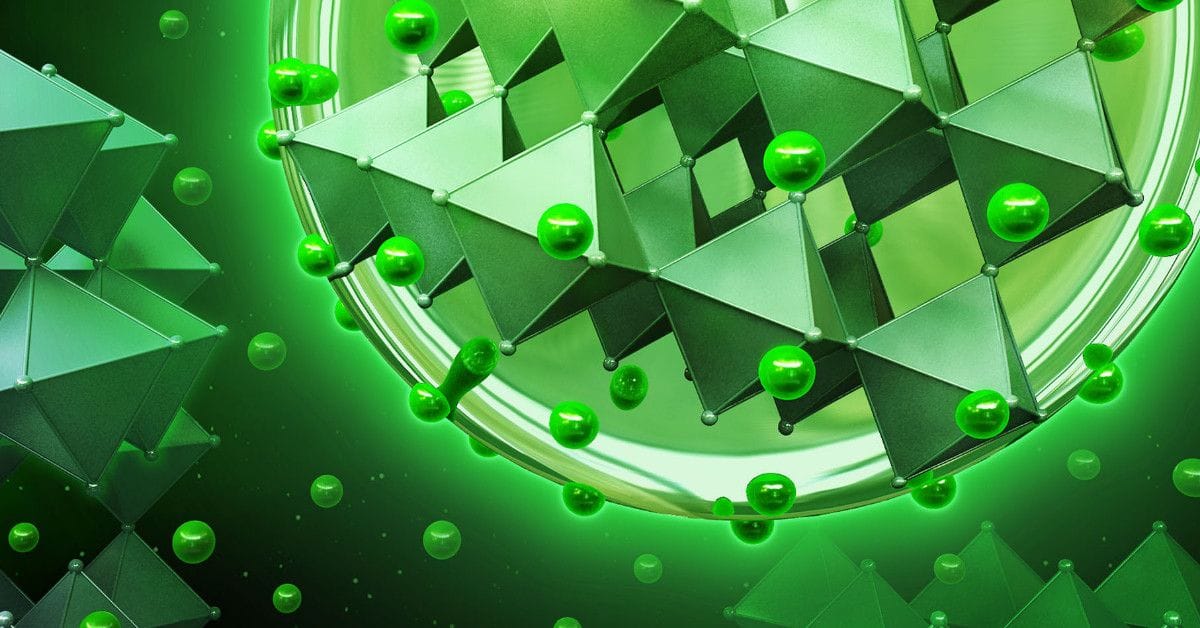
Halide perovskites have rapidly emerged as one of the most exciting classes of materials in modern chemistry and materials science. Their exceptional optoelectronic properties, solution processability, and structural tunability have enabled breakthroughs in photovoltaics, light-emitting diodes, photodetectors, and emerging quantum and neuromorphic devices. At the same time, their rich chemical complexity — spanning composition, dimensionality, defect chemistry, and dynamic structural behavior — presents both challenges and opportunities for precise materials design.
Advances in precision chemistry provide powerful tools to control halide perovskite materials at the molecular and atomic levels. Through rational synthesis, compositional engineering, defect control, and interface design, researchers are gaining unprecedented ability to tune the structure, stability, and functionality of these materials. Coupled with state-of-the-art spectroscopy, microscopy, and theoretical approaches, precision chemistry enables deeper understanding of fundamental processes such as charge generation and transport, exciton dynamics, ion migration, and degradation mechanisms.
This Special Issue of Precision Chemistry aims to highlight the latest advances in the fundamental materials chemistry, spectroscopy & microscopy, and device applications of halide perovskites. We welcome both invited contributions from leading experts and submissions from emerging researchers reporting original research and perspectives that advance precision chemistry approaches in this rapidly evolving field.
We particularly encourage submissions that explore innovative strategies including, but not limited to:
- Molecular and compositional engineering of halide perovskites
- Precision synthesis and crystal growth of perovskite materials and nanostructures
- Defect chemistry and passivation strategies
- Interface and heterostructure engineering
- Advanced spectroscopy and microscopy revealing structure–property relationships
- Theoretical and computational insights into perovskite chemistry
- Perovskite-based devices, including solar cells, LEDs, photodetectors, and emerging optoelectronic technologies
- Stability and degradation mechanisms studied through precision chemical approaches
This Special Issue will feature invited contributions from distinguished experts and emerging researchers, together with original research articles highlighting cutting-edge developments in the precision chemistry of halide perovskites.
Organizing Editors
Letian Dou, Guest Editor
Emory University, United States
Yi Hou, Guest Editor
National University of Singapore, Singapore
Sascha Feldmann, Guest Editor
École Polytechnique Fédérale de Lausanne, Switzerland
Xiangfeng Duan, Executive Editor, Precision Chemistry
University of California, Los Angeles, United States
Submission Information
Manuscripts accepted for inclusion in this Special Issue will be highlighted as a significant contribution to this expanding field. If accepted, publications will go online as soon as possible with a DOI, and will be published in one of the next available issues. Publications on this topic will be assembled into a Special Issue and widely promoted.
Submissions are welcome through November 30, 2026. All articles will be peer reviewed prior to acceptance to ensure they fit the scope of the Special Issue and meet the high scientific publishing standards of Precision Chemistry. The peer review process for all papers will be managed by the journal editors to ensure rigor is maintained.
Precision Chemistry is an open access journal.
How to Submit
- Log in to the ACS Publishing Center.
- Select the "Journals" tab.
- Choose Precision Chemistry.
- Click "Submit."
- Select your manuscript type, and, under "Special Issue Selection," choose “Precision Chemistry for Halide Perovskites."
If you have any general questions regarding submission to this Special Issue, please contact duan-office@pc.acs.org.
Get e-Alerts
Stay Connected With Precision Chemistry
Never miss an issue again! Sign up now for email updates on future calls for papers, the latest articles, and other content from Precision Chemistry.