Learn how scientists have developed food-safe, eco-friendly mycelial coatings that could one day replace single-use plastic packaging.
Microplastics: An Urgent Challenge
Microplastics—fragments less than 5 mm—are a growing environmental and health concern.1 Each year, around 3 million metric tons enter the environment, and the average person consumes or inhales over 200,000 particles annually.2,3 These tiny plastics can carry pollutants and heavy metals, compounding their risks. Despite recycling efforts, only about 9% of plastic products are reclaimed; the remainder accumulates in ecosystems and waterways.4,5
A major obstacle to replacing single-use plastics is their layered barrier properties—resistance to oil, water, and air—which are difficult to replicate with sustainable materials. If we can match these barriers, we stand a better chance of moving beyond traditional plastics.
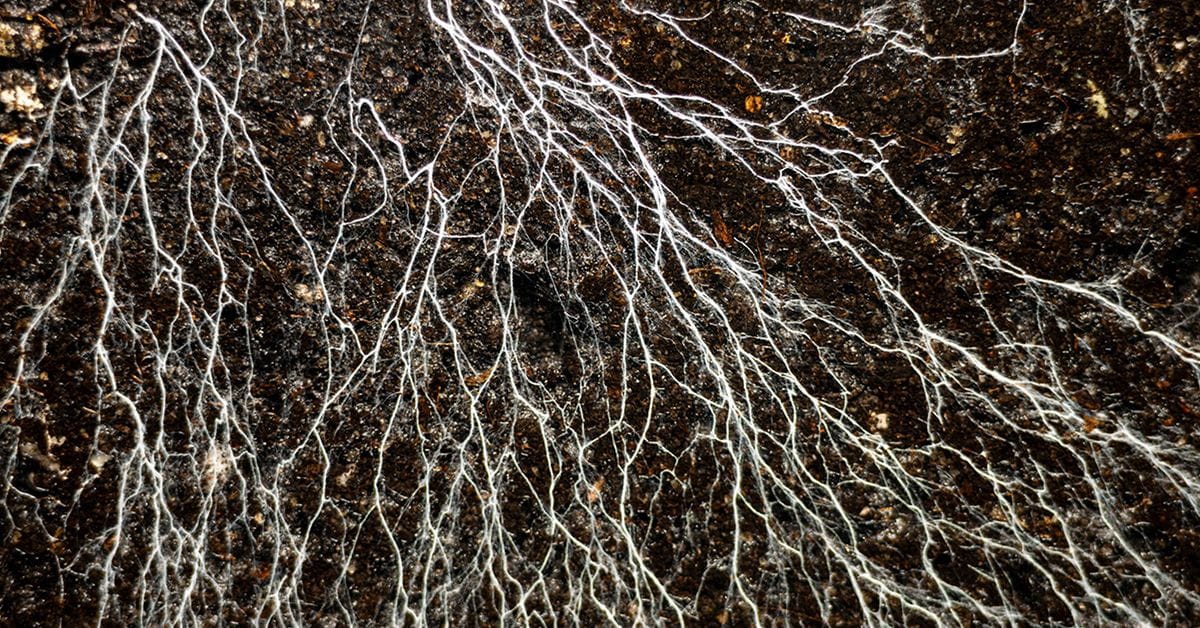
Cellulose nanofibrils (CNFs), derived from wood pulp, are emerging as a promising option due to their strength, biodegradability, and natural barriers against oxygen, oil, and grease. However, their hydrophilic nature limits their effectiveness as water barriers. Researchers have now explored combining CNFs with fungal mycelia, the root-like structures of fungi that produce hydrophobic proteins called hydrophobins.
In new work published in Langmuir, scientists grew coatings of edible fungal mycelia directly onto paper and textile substrates using a CNF matrix.6 This low-energy process avoids non-food-safe chemicals, making it suitable for food packaging and other applications.
Enhanced Water Resistance and Beyond
The mycelial coatings significantly improved water resistance, achieving a water contact angle of 139° (compared to 27° for CNF alone) and reducing water uptake to about 30 g/m² (from 80 g/m² for CNF alone) after just three days of growth. Additionally, these coatings retained excellent oil and grease barrier properties, air permeability, and oxygen transmission rates. The CNF matrix also enabled faster, more uniform growth than pulp.
The research demonstrates that both the structure of the mycelia and their hydrophobic proteins contribute to the water barrier effect. The edible nature of the fungus further suggests utility in food-safe packaging. This approach offers a scalable, biodegradable solution for creating water-resistant barriers on paper and textiles, potentially replacing plastic coatings in packaging, textiles, and beyond.
Explore related research in ACS journals:
High-Strength and Biodegradable Mycelial Leather Materials Cross-linked with Dialdehyde Carboxymethyl Cellulose
Rongquan Xu, Wei Wu, Yi Zhong, Linping Zhang, Hong Xu, Zhiping Mao*, and Bolin Ji*
DOI: 10.1021/acssuschemeng.5c02119
Biovegan Leather Sensor: A Mycelium Functionalized Material for Electrophysiological Signal Monitoring
Rui Zhang, Siyuan Cheng, Zaifeng Pan, Fenghui Yang, Yunqing Liu, Ruifa Su, Baoli Zha, Ruijie Xie, Bing Zheng, Jiansheng Wu*, and Fengwei Huo*
DOI: 10.1021/acsami.5c05377
Characterization of Mycelium Biocomposites under Simulated Weathering Conditions
Nicholas Schultz, Ajimahl Fazli, Sharmaine Piros, Yuritzi Barranco-Origel, Patricia DeLa Cruz, and Dr Yanika Schneider*
DOI: 10.1021/acsabm.4c01192
Sustainable Mycelium-Bound Biocomposites: Design Strategies, Materials Properties, and Emerging Applications
Joseph Kinyanjui Muiruri, Jayven Chee Chuan Yeo, Qiang Zhu, Enyi Ye*, Xian Jun Loh*, and Zibiao Li*
DOI: 10.1021/acssuschemeng.3c00831
References:
- Chartres, N. et al. Effects of Microplastic Exposure on Human Digestive, Reproductive, and Respiratory Health: A Rapid Systematic Review. Environ. Sci. Technol. 2024, 58, 52, 22843–22864.
- Statista. Sources of microplastics entering the environment worldwide as of 2022. https://www.statista.com/statistics/1192550/sources-of-microplastics-entering-environment-worldwide/ (accessed December 2025).
- Statista. How we eat, drink, and breathe microplastics. https://www.statista.com/chart/18299/how-we-eat-drink-and-breathe-microplastics/ (accessed December 2025).
- Dhandapani, A. et al. Degradation of Microplastics and Nanoplastics: An Underexplored Pathway Contributing to Atmospheric Pollutants. ACS Earth Space Chem. 2025, 9, 10, 2338–2353.
- Sen, K. and Dey, S. Microplastics in Aquatic Ecosystems: A Multitiered Framework for Ecological Risk Assessment and Mitigation. ACS EST Water 2025, 5, 8, 4322–4342.
- Zier, S. et al. Growing Sustainable Barrier Coatings from Edible Fungal Mycelia. Langmuir 2025, 41, 39, 26751–26759.