
Adhesive labels such as produce stickers are notoriously difficult to recycle and compost. A new bioinspired material aims to solve that problem without sacrificing performance.
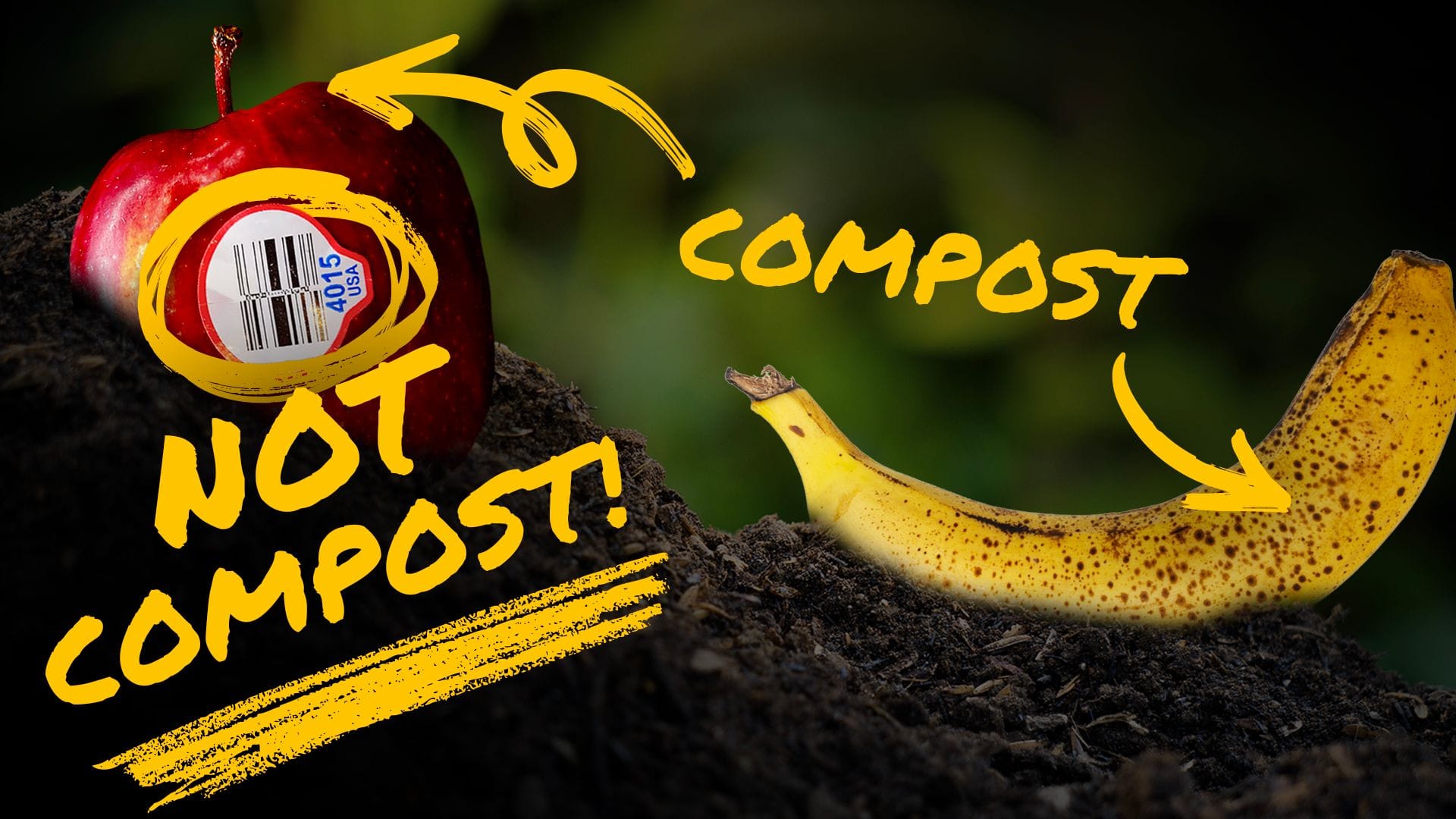
The Chemistry Behind a Less Pesky Produce Sticker
Produce stickers seem small enough to ignore, but they can create big problems in composting systems. In addition to helping identify and track fresh produce, these labels often end up attached to fruit peels and other food scraps. Once they reach composting facilities, they can become a persistent contaminant that is difficult to remove.
In this Headline Science video, we explore a new adhesive material, inspired by silkworm silk and mussels, that might make these stickers and other packaging labels easier to compost.
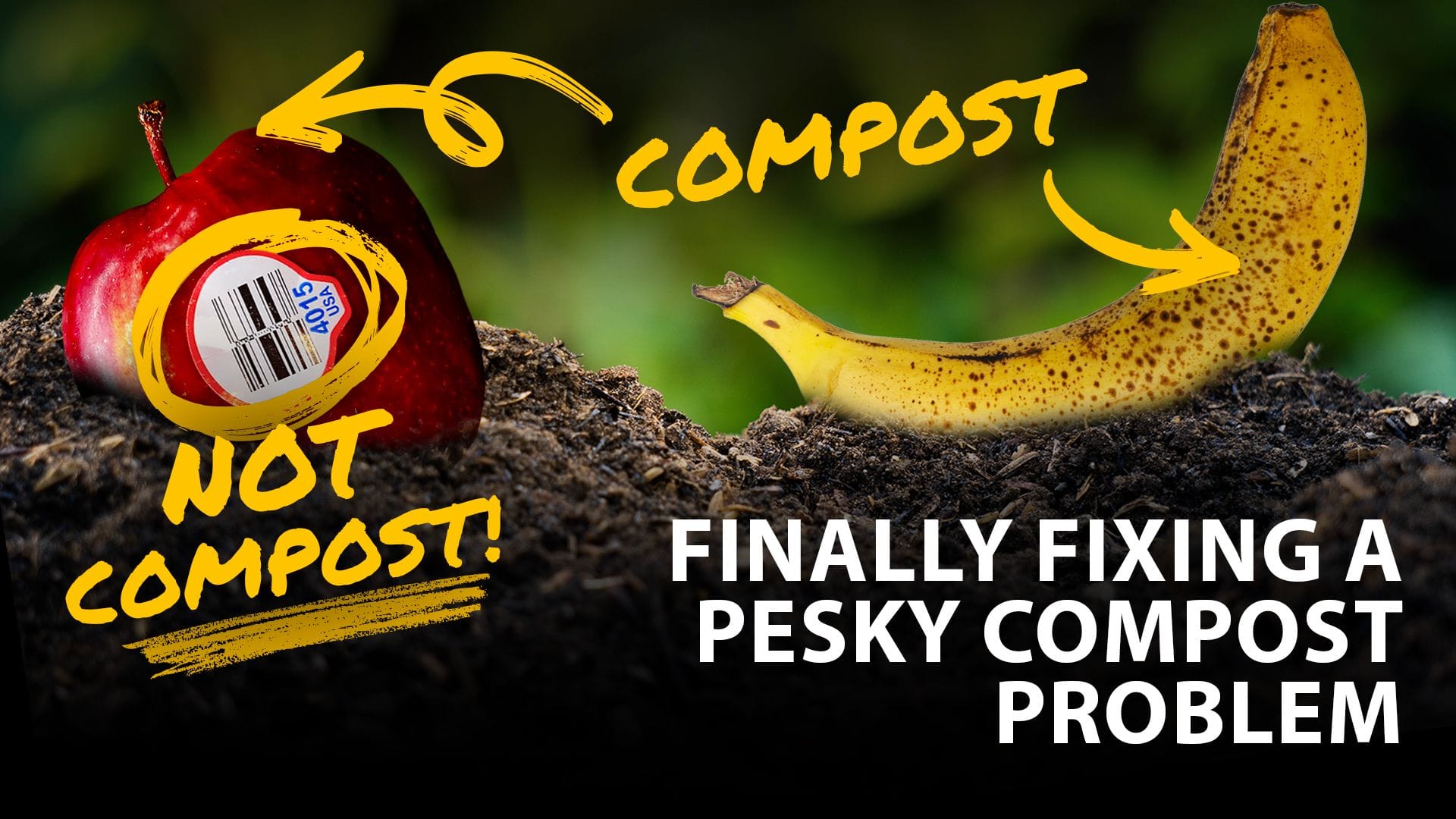
Inspired by Silk and Mussels
Researchers reporting in ACS Applied Materials & Interfaces developed biodegradable adhesive films designed for labeling applications, including produce stickers and packaging labels.
The team focused on silk fibroin, a protein derived from silkworm cocoons that is already known for its biodegradability and tunable properties. On its own, however, silk fibroin is not particularly sticky. To improve adhesion, the researchers turned to mussels for inspiration. These marine animals anchor themselves to rocks using proteins rich in catechol-containing molecules. The team incorporated dopamine, a compound that contains similar chemical groups, into silk fibroin films. The resulting material absorbed water more readily and became flexible and adhesive when exposed to moisture.
Unlike conventional pressure-sensitive adhesives, the films remained largely non-tacky until activated by humidity or a light mist of water. Once hydrated, they adhered to a variety of surfaces, including paper, plastics, and even fruit peels.
Designed to Stick, Then Break Down
The researchers also found ways to tune the material's performance. Adding glycerol improved water resistance and flexibility, while iron salts strengthened adhesion after the films dried. Depending on the formulation, the adhesive could be adjusted to provide different levels of strength and durability.
The films peeled away cleanly with little residue compared with conventional adhesives, which can leave behind traces that complicate recycling and composting. The material could also be formed into standalone labels or laminated onto other substrates while remaining compatible with printing and labeling processes.
Compostability tests showed that simpler formulations dissolved rapidly, while more durable versions still lost nearly all of their mass within about a month in soil tests. The researchers also found no evidence that degradation products interfered with seed germination.
The result is a biodegradable labeling platform whose adhesive strength, water resistance, and degradation rate can be tailored for different applications. Commercial use is still some way off, but the work shows how borrowing from nature can take on a small, surprisingly stubborn contaminant in the compost stream.
Watch more Headline Science on YouTube!
The video above is brought to you by the ACS Science Communications team. To watch more exciting videos and shorts covering some of the latest research in ACS journals, visit the Headline Science page on YouTube.
Video Credits:
Written and produced by Anne Hylden
Editing and animations by Janali Thompson
Hosted by Anne Hylden
Series produced by Vangie Koonce, Anne Hylden, Andrew Sobey, Janali Thompson, Darren Weaver, Elaine Seward, and Jefferson Beck
Executive produced by Matthew Radcliff
Research videos from Marco Lo Presti, Ph.D., Letizia Bartolone, Ph.D., and Alessio Carcano
Explore related articles from ACS journals
Silk-Fibroin-Based Adhesive Hydrogels: Mechanistic Insights and Biomedical Applications─A Review
Jirasak Jitpibull; Nopparuj Soomherun; Juthamas Ratanavaraporn
DOI: 10.1021/acsomega.6c02513
Development of a Simple and Efficient Method for the Micropatterning of Silk Fibroin
Heena Bholaram Choudhary; Sohini Das; Narayana Rao Gurram; Venkateswaran Rajagopalan; Srinivasa Prasad Kommajosyula; Ramendra Kishor Pal
DOI: 10.1021/acsomega.5c08840
Bioinspired by Mussels: Construction of an Ultrasalt-Tolerant, Tunable-Viscosity Slickwater Fracturing Fluid for the Reuse of Deep Coalbed Methane Flowback Fluids
Pingli Liu; Chengwei Zuo; Juan Du; Jiahao Li; Xin Zhang; Renyin Zhao; Xiang Chen
DOI: 10.1021/acs.langmuir.6c01692
α‑1,3-Glucan-Palmitate: A Thermoplastic Biomaterial with Potential Use in Packaging
Simon Velasquez Morales; Douglas Adelman; Natnael Behabtu; Alysha Bell; Yefim Brun; Abby Harders; Khanh Le; Christian Lenges; Mark B. Shiflett; Kyle J. Stephens; Erin R. Sturd; John Styers; Alan M. Allgeier
DOI: 10.1021/acssuschemeng.5c13288
Fabrication and Performance of PBAT Composite Films Reinforced with High-Molecular-Weight Lignin Nanoparticles for Sustainable Packaging
Zhongshan Wang; Changgeng Li; Xiaodi Liu; Wenchao Jia; Lingzhi Huang; Lu Wu; Pedram Fatehi; Haiqiang Shi
DOI: 10.1021/acssuschemeng.5c01706
