New research reveals that common antibiotics can prompt gut bacteria to produce immune-modulating compounds, highlighting a complex interplay between drugs, microbes, and human health.
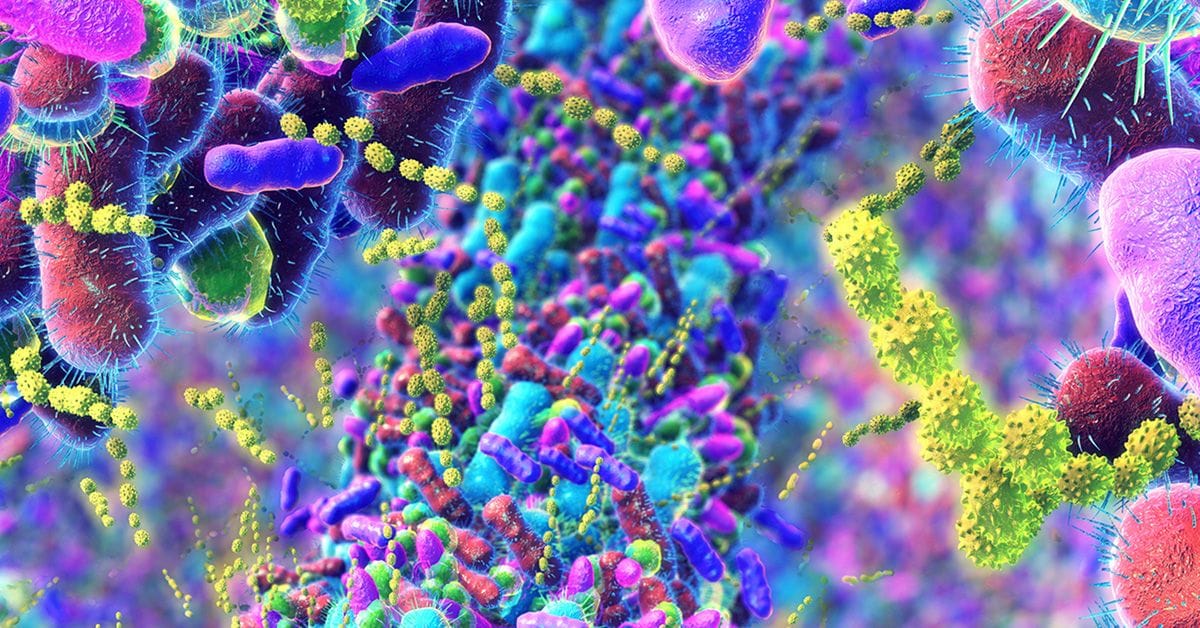
The human gut is home to trillions of microorganisms—mostly bacteria—that play a vital role in our health. Far from being a contained system, these microbes help digest food, produce essential metabolites, and influence everything from immunity to metabolism. Yet, despite their importance, much remains unknown about how our gut microbiota respond to modern medicines, especially antibiotics.
Bacteroides dorei: A key gut microbe
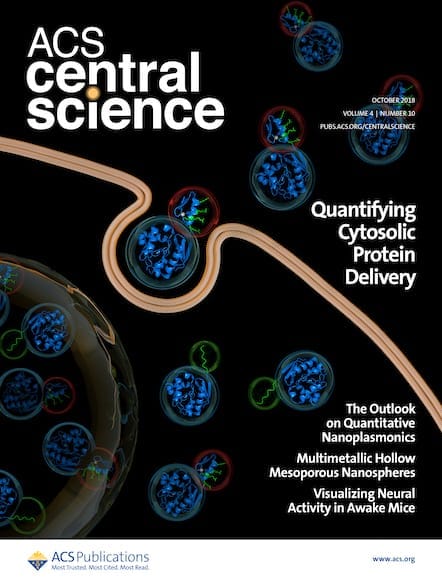
A recent study in ACS Central Science sheds light on this knowledge gap by focusing on Bacteroides dorei, a prominent member of the gut microbiome. Using high-throughput elicitor screening (HiTES) and advanced metabolomics, the team exposed B. dorei to hundreds of FDA-approved drugs, including antibiotics, to observe changes in the bacterium’s chemical output. The team also leveraged MetEx, a software previously developed in house, to explore and map multidimensional datasets.
Tetracycline antibiotics and metabolite production
Their findings revealed that low doses of tetracycline antibiotics—commonly prescribed for a range of infections—prompt B. dorei to produce previously hidden metabolites: a family of serine-glycine dipeptide lipids called doreamides, and N-acyladenosines. These compounds were shown to trigger human immune cells to release pro-inflammatory cytokines, such as TNFα and several interleukins. Doreamides also induced the production of cathelicidin, an antimicrobial peptide that inhibits the growth of several gut bacteria, but not B. dorei itself.
Immune system responses to gut microbiome metabolites
This work highlights a secondary effect of antibiotics beyond their direct action against pathogens. By altering the metabolic activity of beneficial gut bacteria, antibiotics can influence immune responses and potentially reshape the microbial balance in the gut. While persistent inflammation is linked to disease, acute immune activation can help defend against infection and maintain microbial equilibrium.
The study was conducted in vitro, and further research in animal models will be needed to understand the full implications for human health. Still, discoveries like these may inform future approaches to antibiotic stewardship and inspire new strategies for harnessing microbial chemistry in medicine.
Explore related research in ACS journals:
Impact of Host and Bacterial Metabolism on Antibiotic Susceptibility
Bonnie L. Hyatt, M. Kalindu D. Rodrigo, and Timothy C. Barnett*
DOI: 10.1021/acs.biochem.5c00436
Role of the Gut Bacteria-Derived Metabolite Phenylacetylglutamine in Health and Diseases
Naveen Kumar Krishnamoorthy, Manjunath Kalyan, Tousif Ahmed Hediyal, Nikhilesh Anand, Pavan Heggadadevanakote Kendaganna, Gurudutt Pendyala, Sowmya V. Yelamanchili, Jian Yang, Saravana Babu Chidambaram, Meena Kishore Sakharkar*, and Arehally M. Mahalakshmi*
DOI: 10.1021/acsomega.3c08184
Targeted Discovery of Cryptic Enediyne Natural Products via FRET-Coupled High-Throughput Elicitor Screening
Esther J. Han, Seoung Rak Lee, Craig A. Townsend, and Mohammad R. Seyedsayamdost*
DOI: 10.1021/acschembio.3c00281
Antimicrobials Shape the Gut Microbiome Structure and Digestive Profile of Invertebrates
Alexander Feckler*, Eric Bollinger, Sven Katzenmeier, Ondrej Adamovsky, Hana Vespalcova, Eva Budinska, Thorsten Stoeck, and Mirco Bundschuh
DOI: 10.1021/acs.est.5c04159
Composition, Antibiotic Resistance, and Functionality of the Gut Microbiome in Urban Cats
Ricardo David Avellán-Llaguno, An Xie, Alex Ujong Obeten, Zhizhen Pan, Yiyue Zhang, GuoZhu Ye, Xin Sun*, and Qiansheng Huang*
DOI: 10.1021/acs.est.5c05156
Machine Learning in Microbiome Research and Engineering
Ryan De Sotto, Nikhil Aggarwal, Elizabeth Huiwen Tham, and Matthew Wook Chang*
DOI: 10.1021/acssynbio.5c00273

Stay Connected with ACS Central Science
Never miss an issue again! Sign up now for email updates on the latest articles and other content from ACS Central Science.