
These annual awards are given to young investigators who have displayed impact and/or promise of impact to the field of medicinal chemistry. Learn more about this year's winners, Peter H. Fuller and H. Rachel Lagiakos.

The Editors of Journal of Medicinal Chemistry, ACS Medicinal Chemistry Letters, and the ACS Division of Medicinal Chemistry (MEDI) are pleased to announce the winners of the 2023 Philip S. Portoghese Journal of Medicinal Chemistry/ACS Medicinal Chemistry Letters/Division of Medicinal Chemistry Joint Lectureship Awards:
- Dr. Peter H. Fuller, Merck & Co., Inc.
- Dr. H. Rachel Lagiakos, Schrodinger
These annual awards are named in honor of Professor Philip Portoghese, who served as Editor-in-Chief of Journal of Medicinal Chemistry from 1972 to 2011. The awards are given to young investigators who have displayed impact and/or promise of impact to the field of medicinal chemistry and are presented yearly at the ACS Fall Meeting.
The awards will be presented at ACS Fall 2023 in San Francisco, from August 13-17, where the winners will each present a lecture along with other prominent researchers in the field. Join us for the award lecture as part of the MEDI Award Session on August 13 at 2pm (PDT) in the Moscone Center South building, Room 4.
Learn more about the winners and their research below.
Dr. Peter H. Fuller
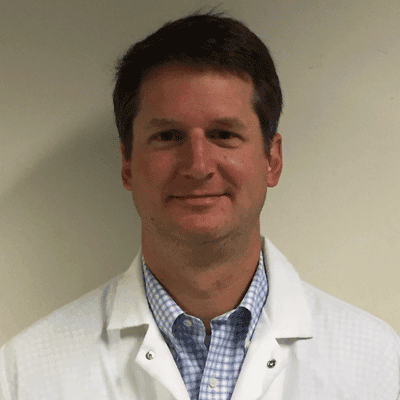
“Peter is an exceptional early career medicinal chemist that quickly rose through the ranks at Merck, and was promoted to Senior Director, Medicinal chemistry in 2022,” says Journal of Medicinal Chemistry Editor-in-Chief Craig Lindsley. “Peter’s work in the kinase field, for both oncology and CNS indications (especially LRRK2), has been exemplary and highly impactful.”
What advice would you give to students who aspire to be where you are now?
I’ve been fortunate to have received guidance from some amazing mentors, brilliant researchers, and supportive family and friends throughout my career. A few things I’ve learned from them and/or advice that has stuck with me are, enjoy what you do, seek mentors with diverse perspectives, make time to focus and think deeply about your research, and challenge assumptions. Drug discovery is exceedingly difficult, so let’s embrace it and aim to learn and improve every day for the patients!
What do you consider to be the most exciting advances in medicinal chemistry in the past five years?
I think there have been a number of exciting advances in medicinal chemistry over the last five years! Like many, I’m intrigued by targeted protein degradation, but I’d have to say I am most inspired by the peptide field. There have been some tremendous advances made across the industry over the last five years, including innovations by colleagues at Merck, and I look forward to seeing where and how else we can leverage this modality.
What’s next for your group?
Good question! Honestly, I can’t tell you how grateful I am to be able to work with such an amazing team and department in Discovery Chemistry at MRL-Boston. We are currently focused on exciting opportunities across oncology, neuroscience, and immunology leveraging multiple modalities. I am confident we will bring innovation and creativity to our relentless pursuit of medicines for patients, and we’ll have fun doing it!
Dr. H. Rachel Lagiakos
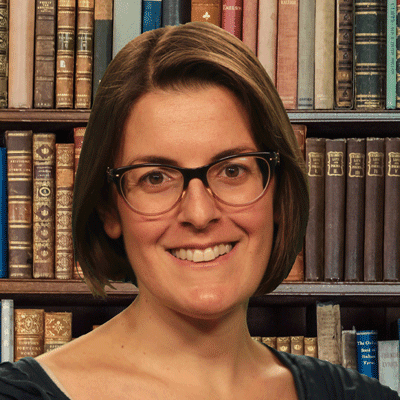
“Rachel is a thought leader at Schrodinger, where she engages in structure-based design and integrates computational tools with classical medicinal chemistry, says Journal of Medicinal Chemistry Editor-in-Chief Craig Lindsley. “Rachel has been impactful in oncology, epigenetics (e.g., MYST histone acetyltransferases), and infectious disease drug discovery, while also informing the field on computational approaches to predict Kp,uu.”
What advice would you give to students who aspire to be where you are now?
Drug discovery requires a tremendous amount of dedication and perseverance. It is a challenging field and though the reality is most programs we work on will be unsuccessful, we still pick ourselves up and keep trying, driven by our united mission to better human health by bringing transformative treatments to patients. That same grit and passion will get you through your studies. And for the young women out there, stick with it. The field only gets stronger by having more diverse voices in it.
What do you consider to be the most exciting advances in medicinal chemistry in the past five years?
From recent success in drugging the ‘undruggable’ KRAS, the growth of new modalities like heterobifunctional degraders, to the surge in computational technologies like de novo protein structure predictions - it is an exciting time to be a medicinal chemist.
For me, a medicinal chemist working at the interface of two disciplines, medicinal and computational chemistry, I’ve seen first hand the advances that have been made in computational tools over the past five years. The enormous growth in compute power allows us to greatly expand our reach. Groundbreaking programs like AlphaFold mean we can now predict, visualize then exploit the 3D structures of proteins that were previously inaccessible. When designing compounds, instead of being limited by one's imagination, we can now survey the vastness of chemical space in silico with enumeration tools that take into account synthesizability coupled with advanced algorithms for handling very large datasets. Prior to investing in the synthesis of a compound, significant improvements to the speed and accuracy of physics-based molecular simulations and machine learning models enables predictions of a wide range of useful parameters like binding affinities, ADME properties and safety endpoints. This empowers more informed choices before investing our time and resources into the preparation of each molecule. Focusing efforts on the compounds most likely to be successful offers tremendous opportunity to reduce costs and accelerate the discovery process.
What’s next for your team?
I lead a very talented team of multi-disciplinary scientists who are dedicated to discovering inhibitors for a target associated with neurodegenerative disease. We thought deeply about the structure-function relationship of this protein to determine how we want to approach drugging it. Then we set out to develop chemical matter to modulate the target in a way that aims to ameliorate the disease while limiting potential for adverse effects.
Designing effective compounds is an exercise in multiparameter optimization and working in the neurology space where we need to get drugs to their site of action in the brain adds an extra layer of complexity to the already challenging process. To tackle this, we interweave computational technologies with med chem design principles to guide us. For example, applying our recent work on predicting the ability of compounds to cross the blood brain barrier allowed for 97% of the ligands we advanced to in vivo studies to be brain penetrant. This model proved incredibly impactful in guiding decision making and progress on the program. With each hurdle we encounter, we’ll continue to implement innovative approaches to support our goal of developing therapeutics for neurological disorders of significant unmet medical need.