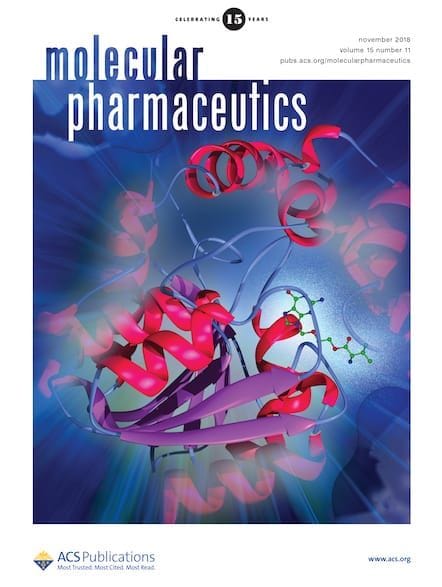
This award recognizes three early-career authors, highlighting their exceptional research published in the journal and the profound impact it has had on the field of molecular pharmaceutics. Learn about the 2025 winners and their research.

We are pleased to announce the winners of the 2025 Molecular Pharmaceutics Early Career Best Paper Award. The winners were selected based on the quality and potential impact of their research recently published in Molecular Pharmaceutics. Our winners are early career scientists (<10 years post Ph.D.) from one of three major geographical regions (the Americas, Europe/Middle East/Africa (EMEA), and Asia Pacific).
We received a significant number of nominations. The selection committee was impressed by the exceptionally high quality of the candidates. We thank everyone who submitted nominations for the 2025 Molecular Pharmaceutics Early Career Best Paper Award.
We are excited to announce the 2025 winners from each region:
- Dr. Sergio Martin Saldaña (EMEA)
- Ms. Thu A. Hoang (Asia Pacific)
- Dr. John Gleeson (Americas)
As part of the award, the winners will present their research as part of ACS Publications' Winners Week 2025 webinar series in June 2025 (details to come).
Read on to learn more about each recipient and read their winning papers.
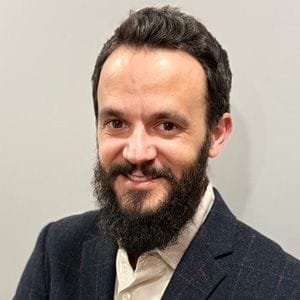
Dr. Sergio Martin Saldaña
Winning Article: Therapeutic Polymer-Based Cannabidiol Formulation: Tackling Neuroinflammation Associated with Ischemic Events in the Brain
Dr. Sergio Martin Saldaña is currently a researcher at the Centro de Investigación Biomédica en Red in Madrid, Spain (Biomaterials Group at Instituto de Ciencia y Tecnología de Polímeros – CSIC).
What does this award mean to you?
This award is a significant milestone in my scientific career resulting from an outstanding team effort and the support of my mentor Prof Abhay Pandit, founding Director of CÚRAM. It motivates me to contribute more significantly to our research community.
How did your team come together to collaborate on this research?
We conceived the idea of the project putting together my previous experience with the endocannabinoid system and Dr. Merari Tumin Chevalier background on PLGA-based nanoparticle development. Hence, we involved other peers with different backgrounds like Mansoor Al-Waeel, Dr. Amir M Alsharabasy, and Dr. Ana Lúcia Rebelo to build-up the team. All was orchestrated under the direction of Prof. Abhay Pandit at CÚRAM Research Ireland Center for Medical Devices, at the University of Galway.
What is next in your research?
To test our engineered nanoparticles in more complex scenarios, particularly in vivo, and assess their performance in delivering CBD to the injured site.
What would your advice be to someone just starting out in the field?
To stay curious and be critic with their own project. Moreover, collaborating with colleagues from different disciplines always brings different perspectives and help overcoming problems for a successful outcome.
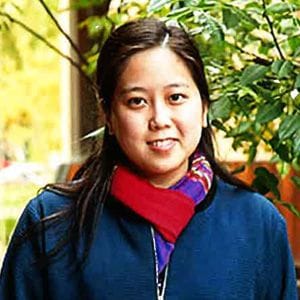
Ms. Thu A. Hoang
Winning Article: Quantifying the Lymphatic Transport of Model Therapeutics from the Brain in Rats
Ms. Thu A Hoang is currently a Ph.D. candidate at Monash University and a clinical pharmacist at the Royal Women’s Hospital, both in Melbourne, Australia.
What does this award mean to you?
It is a delightful surprise and a great honour to receive this award from such a prestigious publication. My winning paper is part of my PhD research and this award feels particularly meaningful to me as it coincides with the conclusion of my work on my thesis—a high note to end with! I share this award with my friends and collaborators Dr. Gracia, Dr. Enyuan Cao and my wonderful supervisors Associate Professor Natalie Trevaskis and Professor Joe Nicolazzo.
How did your team come together to collaborate on this research?
The research was part of my PhD work and a collaboration with my supervisors Associate Professor Natalie Trevaskis and Professor Joe Nicolazzo, who specialize in lymphatic drug delivery and drug delivery to the brain, respectively. I worked closely with then-Trevaskis lab members Dr. Gracia and Dr. Enyuan Cao, who both have extensive experience with lymphatic drug transport animal models.
What is next in your research?
My thesis manuscript has been submitted for examination recently. In the meantime, I've taken a step away from research and am currently working as a NICU clinical pharmacist at a specialist hospital in Melbourne, Australia. Excitingly, the Trevaskis lab group has a funded project that extends from my work with $3M from ARPA-H to develop nano-drug delivery systems that target the brain-draining lymphatics to treat ischemic stroke. It is a collaboration with Yale University (Anne Eichmann and Jean-Leon Thomas). As part of the grant, the Trevaskis lab group are also profiling differences in brain-draining lymphatics in male and female human patients using magnetic resonance vessel wall imaging (MR-VWI). Differences in meningeal lymphatic vessel density may potentially explain why some people, and particularly women, are more predisposed to developing neurodegenerative diseases. Another Trevaskis lab member Hefeng Song is also studying obesity-induced changes to the brain-draining lymphatics for her PhD. The Trevaskis group have also received funding to develop and optimise mRNA therapeutics and peptide vaccines for respiratory disease (NHMRC Synergy) and investigate skeletal muscle lymphatics (ARC Discovery grant).
What would your advice be to someone just starting out in the field?
Everyone's experience starting in research is unique but I think it was crucial for me to surround myself with smart and supportive research collaborators who were happy to share their knowledge and experience. In particular, I learnt a lot from my supervisors Nat and Joe—their work ethic and knowledge of their respective areas of expertise is truly awe-inspiring but at the same time they were generous and patient educators and fostered my development as an early career researcher.
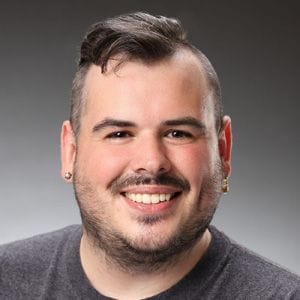
Dr. John Gleeson
Winning Article: Head-to-Head Comparison of Caco-2 Transwell and Gut-on-a-Chip Models for Assessing Oral Peptide Formulations
Dr. John Gleeson is an Associate Principal Scientist at Merck in Rahway, New Jersey, United States.
What does this award mean to you?
I’m delighted that others see the value in the work we are doing. It’s also wonderful to recognized in the field of Pharmaceutics as someone who’s been working on permeation enhancers and intestinal models since I started my PhD in 2013.
How did your team come together to collaborate on this research?
This has truly been a collaborative piece of work across our Development Sciences and Clinic Supply organisation that enabled and supported us to look towards developing superior and more predicative in vitro tools for our growing peptide portfolio. In industrial research, working in silos is uncommon and it was great to have support from Analytical and Discovery colleagues to help drive forward this work, which we now implement as part of our Biopharmaceutics toolkit in-house.
What is next in your research?
Caco-2 cells are the gold standard for permeability assays and listed in the ICH M9 guidance for permeability assessment but we know they aren’t the best for low permeability molecules. So we have been working with intestinal organoids to see if we get better predictions with these that also represent different regions of the intestinal tract.
What would your advice be to someone just starting out in the field?
You don’t always need to chase after the shiniest newest technology and you can make an impact with strong iterative methodology-centric research, and those skills translate to industry really well.
Learn About Last Year's Winners

Meet the Winners of the 2024 Molecular Pharmaceutics Early Career Best Paper Award
ACS Publications is proud to announce Dr. Atabak Ghanizadeh Tabriz, Dr. Huyen Tran, and Dr. Piyushkumar Gondaliya as the winners of the 2024 Molecular Pharmaceutics Early Career Best Paper Award.