
In conjunction with a new webinar, ACS Publications highlights the critical importance of understanding coronavirus biology to advance more effective therapies for current and future viral outbreaks.
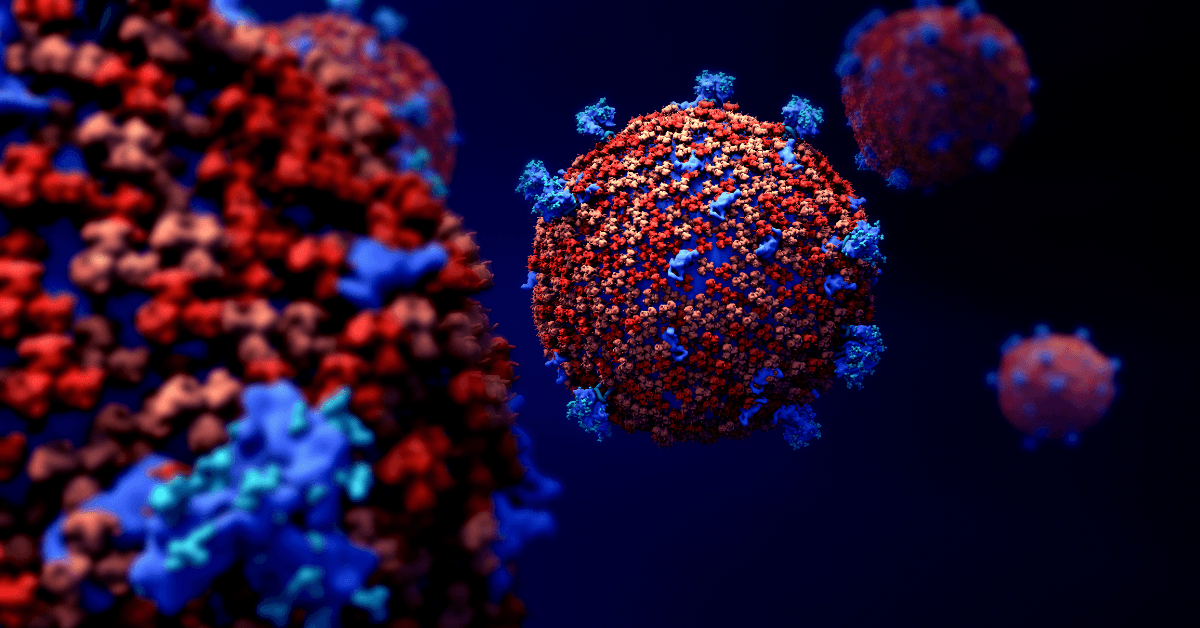
COVID-19 research has been critical in advancing our molecular understanding of viral mechanisms, therapeutic targets, and drug resistance, while accelerating the development of antivirals, vaccines, and delivery technologies such as mRNA nanoparticles. Collectively, these studies not only address immediate challenges posed by SARS-CoV-2 but also provide insights that strengthen global preparedness for future infectious disease outbreaks.
ACS Publications is partnering with the ACS Webinars team to host a FREE webinar on Thursday, August 6, 2026 (11:00am to 12:30pm ET).
Prof. Wenshe Liu at Texas A&M University will discuss the discovery of novel regulatory mechanisms and antiviral strategies targeting the SARS-CoV-2 main protease, including a unique SONOS crosslink, highly potent isoquinoline inhibitors, and dual covalent bond formation with the catalytic dyad. Prof. Jayasri Das Sarma at the Indian Institute of Science Education and Research, Kolkata how decades of murine β-coronavirus research have revealed the mechanisms of viral neuroinvasion, host neuroimmune responses, and shared pathways underlying COVID-19–associated neurological complications, pointing toward novel therapeutic strategies. This webinar is moderated by Prof. Scott Pegan from University of California, Riverside.
Register now for the free webinar to gain an understanding of how coronavirus biology, from CNS invasion and neuroimmune responses to protease-targeted antiviral discovery, can lead to cutting-edge therapeutic strategies for COVID-19.
In conjunction with this webinar, ACS Publications has curated a collection of recent, high-impact research articles covering a wide range of topics, including:
- Antiviral drug discovery and resistance
- Structural biology and viral mechanisms
- Spike protein pathology and neurodegeneration links
- Antibody and vaccine development
- RNA and mRNA delivery technologies delivery platforms for RNA therapeutics feature prominently.
- Materials and protective technologies
- Comparative and translational COVID-19 insights
We invite you to explore this collection to discover the rapidly evolving innovations shaping the future of COVID-19 research and therapeutics.
Explore Recent COVID-19 Research from ACS Journals
PEG-free Lipid Nanoparticles for mRNA Delivery: Superhydrophilic Sulfoxide Polymer Coatings
SARS-CoV-2 Spike Protein Amyloid Fibrils Impair Fibrin Formation and Fibrinolysis
Simulation Insights into the Assembly of Polyplexes for RNA Delivery
5 Years of COVID Research: Highlights from Outbreak to the Present
Spike Protein–Fibrinogen Interaction: A Novel Immune Evasion Strategy of SARS-CoV-2?
Duplex Unwinding Mechanism of Coronavirus MERS-CoV nsp13 Helicase
An Investigation of Nirmatrelvir (Paxlovid) Resistance in SARS-CoV-2 Mpro
Fragment-Based Screen of SARS-CoV-2 Papain-like Protease (PLpro)
New Strategies for Responding to SARS-CoV-2: The Present and Future of Dual-Target Drugs
Advancing mRNA Therapeutics: The Role and Future of Nanoparticle Delivery Systems
Cathepsin-Targeting SARS-CoV-2 Inhibitors: Design, Synthesis, and Biological Activity
3D Holo-tomographic Mapping of COVID-19 Microclots in Blood to Assess Disease Severity
Interactions between SARS-CoV-2 N-Protein and α-Synuclein Accelerate Amyloid Formation
Polymer Materials for Respiratory Protection: Processing, End Use, and Testing Methods