
Learn more about the 2023 winners of our ACS Nano Awards and what inspires their research in this series of interviews.
2023 ACS Nano Lectureship
This award honors two outstanding early career investigators conducting research in the areas of nanoscience and nanotechnology. We are pleased to announce the 2023 winners:
Deep Jariwala, University of Pennsylvania, USA
Nako Nakatsuka, ETH Zürich, Switzerland
The awards will be presented at ACS Fall 2023 taking place in August in San Francisco, where the winners will be invited to speak.
Hear from each of our winners in their own words below:
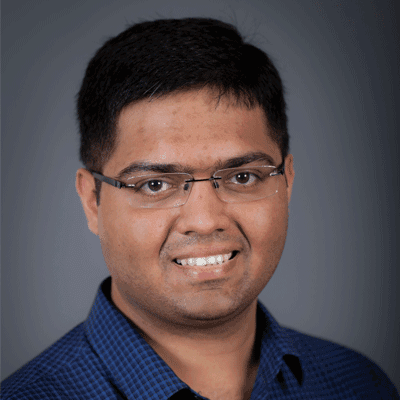
Deep Jariwala, University of Pennsylvania USA
What inspired you to pursue your area of research?
Since I was a teenager, I was fascinated by computers largely because in middle-income society of India they were considered a new and a luxury item at the time. To become more familiar with computers without having much access to them, I started reading a lot of encyclopedia type books and technology magazines. At that time, it was fascinating to me that at the heart of computers lie chips which are very intricate pieces of engineering with very tiny electronic parts that could be controlled down to the scale of a few hundred atoms (at least at that time, it's much smaller now). Inspired by those facts and books, I decided to pursue an education in engineering and settled for a bachelor's degree metallurgical engineering and later a PhD in materials science and engineering. All through my education I was fascinated and determined to study materials that made computers and that ultimately led me to study nanoelectronic and nanophotonic materials and devices which remains the focus of our research group to date. It may sound cliched, but that fascination from my teenage days of how something so small as a few atoms can influence something so profound and sophisticated as modern computing hardware remains very much alive and kicking in my thoughts.
What advances has your lab made in the past five years?
Our lab is engaged in two major areas namely nanoelectronics and nanophotonics. In nanoelectronics our lab has made significant advances in ferroelectric memory devices and tunneling field effect transistors over the past 2 years. Both these devices are critical to the future of computing hardware since they operate at very low energies and the world of computing hardware is in dire need of a breakthrough in such devices. In nanophotonics, our group has made advances in a new class of metamaterials which we like to call "excitonic metamaterials". Over the past two decades metallic nanostructures have been cleverly used to create plasmonic metamaterials and metasurfaces. However, the availability of strongly excitonic semiconductors which are stable, tunable and scalable over wafer-scales opens up a whole new world of possibility in metamaterials. Given these are based on semiconductors and semiconductors are highly tunable via strain, doping etc. they are much more versatile and could likely open many new applications.
What’s next for your research?
Our research is going into many different exciting directions. But one major direction I see which is very exciting personally is extreme environment electronics. I think this is an exciting area because we are not used to thinking about challenges that come about in materials, interfaces and electronic transport in extreme environments such as high temperatures or high pressures or high radiation environments. I think we have identified a unique niche and opportunity in this area and are determined to make a big headway with both scientific and technological breakthroughs. Another area which excites me, is the idea of changing the computing paradigm all together from digital to analog and going from more logic-centric to memory-centric. I think with the rise of AI (and ChatGPT is just a glimpse of what's to come), computing will never be the same and will fundamentally change to being mostly data centric. This is where approximate computing that uses machine learning and inference models can be made much more efficient with analog and memory-based computing architectures. This will likely stay at the frontier of classical computing research for a decade or more and so are very excited to be contributing to this area.
What advice would you give to students who aspire to be where you are now?
My one sentence advice to students is to be unafraid, curious, and hard-working. There are few substitutes to working hard and trying various things in research. You can never know or predict what is going to work and in what way, especially in experimental research. Connected to that is being curious. Only if you are curious, you can try various things and find out what leads to what. The curiosity part should not be just limited to your own area of research but also extend outside it and this is where the being unafraid part comes in. Just because you are not familiar in a particular field, or a particular topic doesn't mean you shouldn't attend a seminar on it or take a course in it or ask a question to an expert in it for fear of sounding uninformed. In fact, in my short career, I have found my best ideas and collaborations by diving into fields and topics where I had little prior knowledge or experience. This fearlessness of venturing into the unknown is often the greatest strength or virtue a young researcher possesses that can lead them to places.
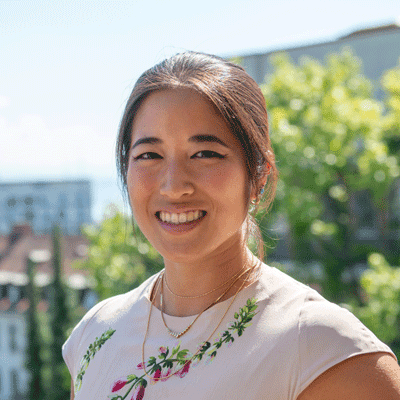
Nako Nakatsuka, ETH Zürich, Switzerland
What inspired you to pursue your area of research?
Discovering the fundamental functions of the human brain drives my scientific research and thinking. I believe it is important to take a step back and question how healthy brain cells, or neurons, communicate to advance our limited understanding of how diseases such as Alzheimer’s, Parkinson’s, and depression develop. The 100 billion neurons in the brain talk to each other using both electrical and chemical pathways. While researchers place a significant focus on electrical recordings from neurons (e.g., Neuralink), there remains gaps in the capability to record chemical signaling. Chemical signaling is an essential and missing piece of the puzzle in the mission to understand brain function. The limited advancement of neurochemical sensing is due to the challenge of differentiating similarly structured neurochemicals in a sea of interfering molecules in the complex brain environment. It was exciting to tackle this challenge during my PhD by using aptamers, artificial DNA sequences that can capture specific neurochemicals with high selectivity. I was fascinated by this molecular recognition behavior and started to pursue the mechanisms of the interactions and how the dynamics of the aptamer-target binding influences the sensor response. I truly enjoy bridging gaps and facilitating communication between diverse research fields. Our multidisciplinary approach allows us to develop innovative strategies to tackle complex biological challenges.
What advances has your lab made in the past five years?
Working at the intersection of chemistry, engineering, and neuroscience, we recently invented a novel biosensor that can monitor neurotransmitters such as serotonin and dopamine released from human neurons at concentrations that were previously impossible to measure at nanoscale resolutions. Aptamers that undergo large conformational rearrangements upon capture of specific neurotransmitters were confined inside of glass pipettes with nanoscale (10 nm) openings (nanopipettes). The structure-switching behavior of the negatively charged aptamers inside the nanopore alters the way ions flux through the nanopipette, enabling electronic signal transduction in a target-specific manner. The power of this invention is the capacity to detect neurotransmitters in complex media that have many interfering molecules. The nanoscale opening occluded by DNA aptamers restricts access of these nonspecific biomolecules (often proteins larger than 10 nm) that can create false positive signals. Our research has focused on understanding how these biosensors function by conducting experimental and theoretical characterization of aptamer conformational dynamics. Mechanistic understanding enables generalization of our strategy to hypothetically detect any small molecule of interest, regardless of size or charge, in clinically relevant environments. Further, we envisioned dissemination of our nanotools to diverse research groups and applications. The nanopipettes can be directly integrated into patch clamp setups and scanning probe methodologies. The modular nature of our sensors has allowed translation to detecting neurochemicals in parallel with electrical recordings, a step closer towards the grand challenge of unraveling how the brain communicates.
What’s next for your research?
My research vision is to contribute towards understanding brain function to lay the groundwork for future preventative medicine and treatment strategies for brain diseases. I approach this goal through two routes: fundamental research and technological translation. The aptamer-modified nanopipettes are mobile and can be positioned precisely over live interacting neurons to create a visual map of neurotransmitter release in real time. The nanoscale opening of these biosensors implies that we can monitor flux near synapses – the ~20 nm gap between individual neurons where communication occurs. We can conduct such measurements while monitoring electrical activity of the neurons in tandem. I believe that such recordings will lead to answering fundamental questions such as how neuronal communication evolves over time, how memory is stored in neuronal networks, and how alterations in these networks lead to brain disorders. In parallel, our sensors can quantify neurotransmitters at unprecedented concentrations (femtomolar) in complex biofluids such as blood and brain fluid. Therefore, we have an extremely exciting opportunity to participate in a clinical study to monitor dopamine levels in the blood vs. brain of healthy vs. Parkinson’s patients. Thus, our next steps involve upscaling our technology to enable high-throughput and robust quantification of clinically relevant analytes in patient samples.
What advice would you give to students who aspire to be where you are now?
I want to emphasize to students that what you see as publications or accomplishments are just the very tip of the iceberg – there are many “failed” projects that are unseen and not talked about beneath the surface of the water. I put the “failed” in quotation marks though, because I have learned so much from these endeavors that I like to think of it more as laying the groundwork prior to realizing your vision. I find it important to pick a challenge you’re passionate about, but then to tackle it through different routes. For example, before the aptamer-modified nanopipettes became a promising technology, there were at least five other research routes I tried that did not live up to the expectations I had set for myself that constituted a sensor that made significant advances. I also want to share the importance of teamwork and collaboration. Especially for multidisciplinary projects, it has been both critical and extremely enjoyable to work with team members from diverse backgrounds and other research groups. I advise students to be open about sharing their knowledge and to learn to communicate their work to scientists from different fields as well as to the general public. As researchers and educators, we have the responsibility to share the impact and importance of scientific research for our society.
2023 ACS Nano Impact Award
This award is presented to a team of authors of a paper—or papers— published in ACS Nano in the two calendar years immediately prior to the year the award will be presented.
We are pleased to announce the 2023 winning team:
Prof. Jingyu Sun, Prof. Guifu Zou, and Zhaodi Fan, Soochow University, China
The awards will be presented at ACS Fall 2023 taking place in August in San Francisco, where the winners will be invited to speak.

Read their Winning Article:
How did this team come together to collaborate on this research?
Prof. Jingyu Sun: Both Prof. Zou and I are PIs in the College of Energy, Soochow University - We have readily established close collaboration by co-supervising students. The success of this research is the outcome of such a collaboration, where Zhaodi was a co-supervised Master student mainly working in my lab, focusing upon the design of 3D-printable ink on the basis of graphene and MXene materials.
What challenges did you overcome on the way to getting the results you reported in your paper?
- The feasibility of designing a universal gelation strategy to produce additive-free 3D-printable MXene inks.
- The development of characterization techniques for understanding electrochemical ion-storage processes.
What new research are you doing to build on the findings you described in your paper?
My research group centers on the synthesis, processing, and energy application of 2D materials, especially commercializing graphene materials through scalable CVD equipment design and printing method development. Based on the findings in this study, we have been continuously working on the material exploration and ink formulation in the realm of printable energy storage, aiming to evaluate the pros and cons of related materials and technologies in the sense of scaling-up.
What advice would you give to research teams who aspire to be where you are now?
- Keep learning (from supervisors and collaborators, also from teammates and colleagues).
- Being creative and self-confidence: Guiding the entire team from "Impossible" to "I'm possible".
Want More from This Journal?
Stay Connected
Sign up today for email updates on the latest research, issues, and other content from ACS Nano.