
In this interview, Prof. Thevenon reflects on publishing open access under his institution’s agreement, his experience submitting to JACS, and how preprints and open data are shaping both his research workflow and the broader chemistry community.
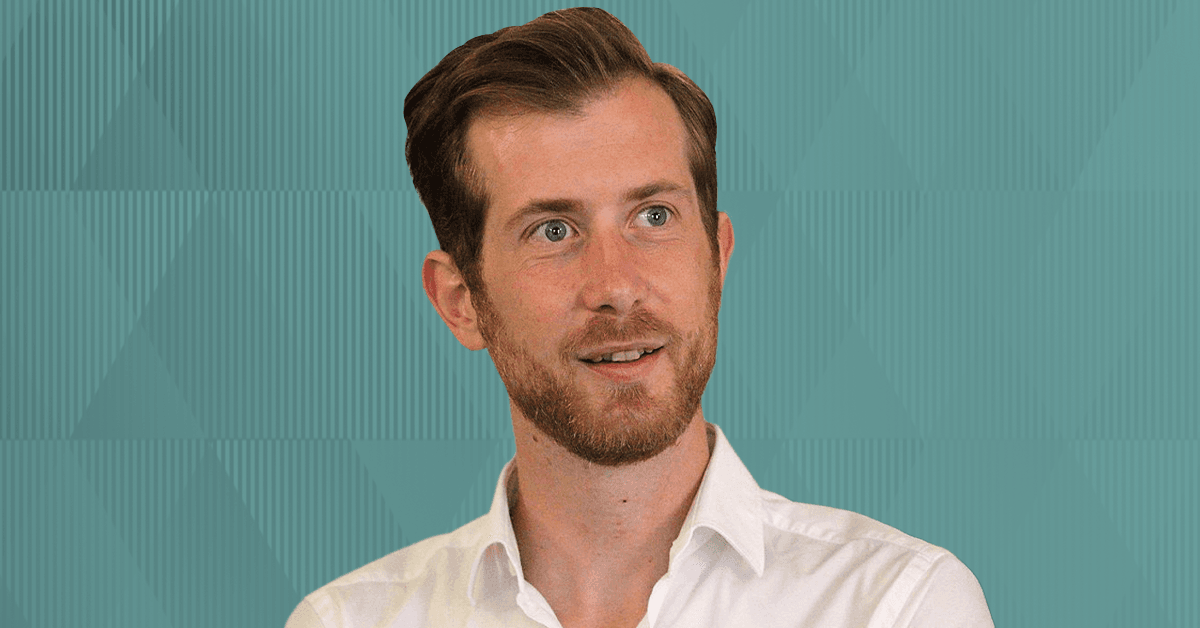
As part of an ongoing series here on ACS Axial, we’re interviewing authors and librarians from around the world to find out more about their research, their published work, and the impact that open science is having on a changing landscape of research communication. This time, we spoke with Arnaud Thevenon, Assistant Professor at Utrecht University, Netherlands.
I think that the open sharing of science for everyone is really important, for both the research community and society in general.
What can you tell me about the current focus of your research group?
Our research group is focused on developing molecular catalysts for small molecule conversion and biomass and waste valorization. This could be plastics, or really any other type of waste — as well as developing methods for making either new polymers, or recycling existing polymers into more sustainable materials.
Tell me about the work covered in your article, "Post-Polymerization Modification of Polyethylene through Photochemical Oximation and Consecutive Ketonization."
When I was preparing some lectures for an organic chemistry course, I came across a process from the 1960s described by researchers from Toray Industries — they were using photochemical methods to introduce oxime groups into cyclohexane, and they used it to form caprolactam.
The idea was to make it more sustainable, but it didn't work out — they managed to make it at scale, but the process wasn't profitable at the time, so they stopped using it.
That was a nice starting point for us: we saw that it works on aliphatic carbon bonds and wondered what would happen if it was tried on polymers. Our initial tests worked to introduce those groups onto the polymer. The idea behind this is twofold: firstly as a way of tuning the properties of the material. Polyethylene is quite apolar, meaning it's not very compatible with other polymers, so you need usually some types of additive to improve adhesion or mixing with other polymers. If you add some of these groups onto the polymer chain, then you can increase its compatibility with other materials.
So that was one aspect of it, and that's what we discussed most in the paper — but the second idea behind it is to try to introduce these reactive handles into the polymer chain, so that later we can try to break it down into smaller units for easier recycling or improved biodegradability. That's something that we are investigating now.
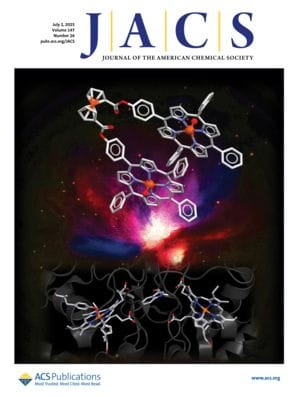
Post-Polymerization Modification of Polyethylene through Photochemical Oximation and Consecutive Ketonization
Maartje Otten, Inèz Klein Gebbink, Patrick J. Schara, Željko Tomović, Martin Lutz, Pieter C.A. Bruijnincx*, and Arnaud Thevenon*
DOI: 10.1021/jacs.5c05212
DOI: 10.1021/jacs.5c05212
What kind of impact do you think this work has had since its publication?
There's already been some interest from industry. We're in the process of setting up a project to introduce those reactive handles using photochemistry, and see if we can make the polymers more biodegradable.
Within the research community, it was interesting to see that another group based in Bordeaux published almost the same strategy as us a few months after our paper was published in JACS, so it means that there's also a lot of interest in the field for these methods.
We've been happy with the feedback that we've received so far. There was also some interest from the general community in the Netherlands, so we wrote a short advertisement into one of the scientific journals for the public. That was quite cool to see.
This article was published in the Journal of the American Chemical Society — what can you tell me about the experience?
I was very happy with it — the way the editorial process was handed was very nice, and the response time was fast. Everything was handled very nicely and professionally. It was a good experience overall.
This was published open access under your institution’s OA agreement - how did you discover this was available?
Our institution's library has a good website that tells us what journals are covered by institutional open access agreements. I saw that ACS journals were included on that list, meaning we could submit for JACS and publish open access. This is a requirement for our grants, so it's something we need to check and follow.
What are your thoughts on open access?
I think it's the way to move science forward. I think that the open sharing of science for everyone is really important, for both the research community and society in general.
Ultimately we receive money from the government for our research, and that's provided by taxpayers, so it's good that people can see how their money is used and read the papers that come out of that funding.
In general, I think it's a very good thing, but then it's more about the business model behind it. My main concern is that university budgets are quite tight at the moment and they're trying to find ways to cut costs. I'm worried that we may not be able to continue publishing where we want in future if these cuts affect these open access agreements.
Do you have any thoughts on open science workflows (e.g. open data, preprints) more generally?
We actually use preprints in my group. Before submitting to a journal we'll upload a copy of the manuscript to ChemRxiv or other relevant preprint servers. I think it's good for the community to see what we're working on.
For open data, we produce a data package from our research, so all the raw data are merged into a single file and put online with a DOI, and that's linked to within our manuscripts. This means that everyone can have access to this data package and look at all the data: if they want to integrate the spectrum, or do their own analysis of the data, they can do whatever they want. We have a platform at the university where we can upload those documents for free, and I hope that will continue.
You mentioned earlier how another group was working on a similar process, and they published their results not long after yours. Do you find that pre-printing is useful from that perspective of putting your stake in the ground early?
I was a bit surprised when I talked with this other group because they were not aware that we were working on it, even though our preprint had been online for about six months before the final paper was published. I presume that not everybody is routinely checking preprints at the moment, so there is a bit of a learning curve. I think the chemistry community is moving more towards embracing preprints, but it's not very well established yet. I would think that in a few years this will change, at which point maybe preprinting would be a kind of stamp on the work that we're doing.
What do you think are the biggest recent developments in open science and open access?
I think that preprinting is a big step forwards. At the beginning, I was a bit reluctant to post a preprint because I thought that it could result in exposing work that wasn't quite final — preprints aren't peer reviewed before they're posted but they can result in some feedback on the science. Now I have a bit more experience, and greater confidence in the work we're doing, so there's no reason to be afraid.
I think it's also nice to be at the forefront of what's happening, because some journals have a long time to publication. Preprinting means that you can have a glance of what's happening in the field without having to wait quite so long for the final papers.
Where do you see OA in 10 years' time?
What I hope is that the community will really start to embrace preprints as a primary source of sharing what they're working on. Perhaps this could a new way of publishing, where professional societies will be the ones responsible for publishing, so it becomes really community-driven. I could see the current economic situation being a driver of that change.
I guess what holds people back is a need to get their paper in high-impact journals for promotion purposes or for increasing the visibility of their group. What I like in the Netherlands is that when you've applied for a promotion or a research grant, the journal impact factor and journal-level metrics cannot be used. We are judged by the quality of our science, rather than where we choose to publish. It's a good step forward, that's for sure.
What do you think you'd be doing if you weren't a researcher?
If I wasn't a researcher, I don't know — maybe I would work doing R&D at a company. I really feel my energy level bumping up when I discuss science. When students come to my office and we discuss data, and then we try to puzzle out what's happening… the rest of the work can be a bit of an energy drain because it's very administrative in nature, but then you have this nice moment during the day where you see a beautiful spectrum and feel a spark of understanding, that's what gives me motivation.
View the Entire Series

Open Science Conversations: An Interview Series
This series features interviews with authors and librarians from around the world, providing insights into the importance of open science on the landscape of research communication.