
In this interview, Prof. Ledesma-Amaro discusses his research on sustainable bioengineering, reflects on publishing under an ACS institutional open access agreement, and shares his perspective on how preprints and funder mandates are shaping the future of open science.
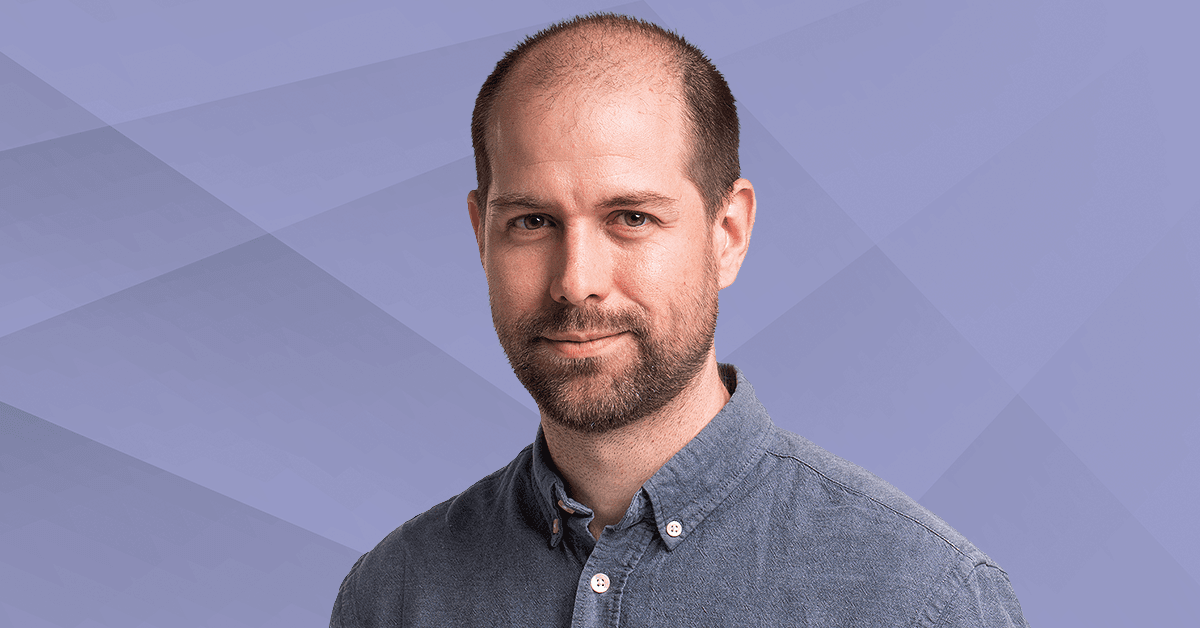
As part of an ongoing series here on ACS Axial, we’re interviewing authors and librarians from around the world to find out more about their research, their published work, and the impact that open science is having on a changing landscape of research communication. This time, we spoke with Prof. Rodrigo Ledesma-Amaro, Professor and Academic Lead in the Department of Bioengineering and the Centre for Synthetic Biology and Innovation at Imperial College London.
I believe science should be open by definition. Researchers need to know what others in their field are doing, because that is how we make progress as a community.
What can you tell me about your group's research focus?
My research group works at the intersection of biotechnology, synthetic biology, and metabolic engineering. We engineer microorganisms to produce sustainable products including food ingredients, chemicals, materials and biofuels.
How would you summarize the work in your paper, "Investigating the Potential of Division of Labor in Synthetic Bacterial Communities for the Production of Violacein"?
In this study, we investigated the use of microorganisms to produce a molecule of interest, in this case violacein, which has several potential uses including as a colorant and for its antibacterial properties.
The cost of production often prevents microbially produced molecules from reaching the market. We explored whether dividing the work between two microorganisms could make the process more efficient, therefore reducing the cost of production of the target compound, an important consideration when moving sustainable products towards commercial use.
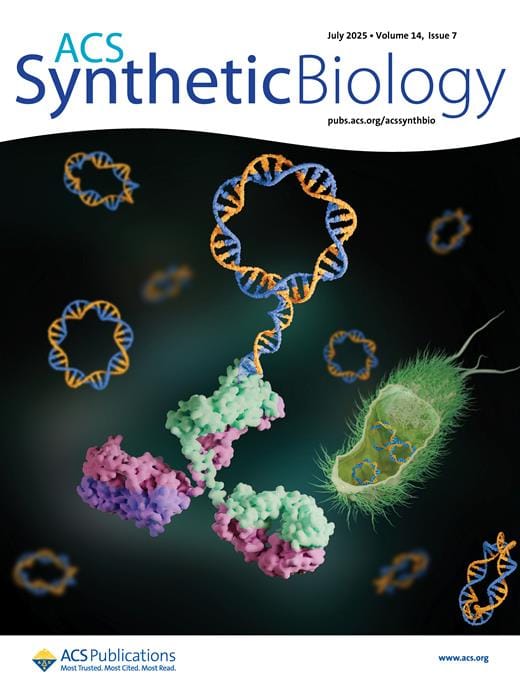
Read the Article
Investigating the Potential of Division of Labor in Synthetic Bacterial Communities for the Production of Violacein
Harman Mehta; Jose Jimenez; Rodrigo Ledesma-Amaro*; Guy-Bart Stan*
DOI: 10.1021/acssynbio.5c00120
DOI: 10.1021/acssynbio.5c00120
This was published in ACS Synthetic Biology; what can you tell me about the experience?
It was a very positive experience. ACS Synthetic Biology has been a flagship journal for the synthetic biology community for many years. As an author, I have always found the editors and reviewers constructive, and the publication process has been smooth and professional.
The paper was published in 2025 — what kind of impact do you think it's had since then?
Several researchers have already contacted us, requesting data and materials so that they can explore the concept of distribution of labor further. It is encouraging to see interest from the research community and to know that others want to build on our work.
It was published open access under your institution's agreement — how did you discover this option was available to you?
We have an open access champion in our department who monitors publication policies from different funders and journals and shares updates with colleagues. Additional support is provided by the Imperial Library, which manages the open access process on our behalf. Through these updates, we learned about Imperial's open access agreement with ACS Publications.
What are your thoughts on open access?
I believe science should be open by definition. Researchers need to know what others in their field are doing, because that is how we make progress as a community.
We publish open access whenever possible or use internal repositories when that is the available route. Agreements such as Imperial's arrangement with ACS Publications make it easier for us to share our work openly.
Open access is also required by many funders. That is not our only reason for choosing it, but these mandates are helping to move the research community towards greater openness.
How do you feel about open science workflows more generally?
We have posted several preprints. They allow us to share findings quickly, establish an accessible record of work and receive visibility before the journal review process is complete. This can be particularly valuable when supporting students' progression, postdoctoral applications or grant applications.
Preprints can also be linked to the final peer reviewed articles, allowing readers to see how the work developed through review and publication.
What do you think are the biggest recent developments in open science and open access?
As I mentioned many funders now require open access, and that has been a major driver of its growth. Most scientists support the principle that research should be available to everyone. It has not always been the main consideration when choosing where to publish, but funder requirements have made it a much more important part of that decision.
Where do you see OA in 10 years' time?
It is difficult to predict but I expect open access to become common and the processes to become simpler. Importantly, I hope the model becomes more fair and equitable, so researchers without access to the level of funding available at many UK institutions can publish openly.
What do you think you'd be doing if you weren't in academia or research?
I think I already have my dream job! But if this type of research were not an option, my second dream job would probably be archaeology. I would love to investigate ancient ruins and discover the past.
Open Science Conversations: View the Series

Open Science Conversations: An Interview Series
This series features interviews with authors and librarians from around the world, providing insights into the importance of open science on the landscape of research communication.