
In this interview, Dr. Wacharasindhu describes his group’s move into enzymatic catalysis and lab automation, recalls his experience publishing open access in Organic Letters, and explains why he expects institutional agreements to make cost less of a barrier for researchers.
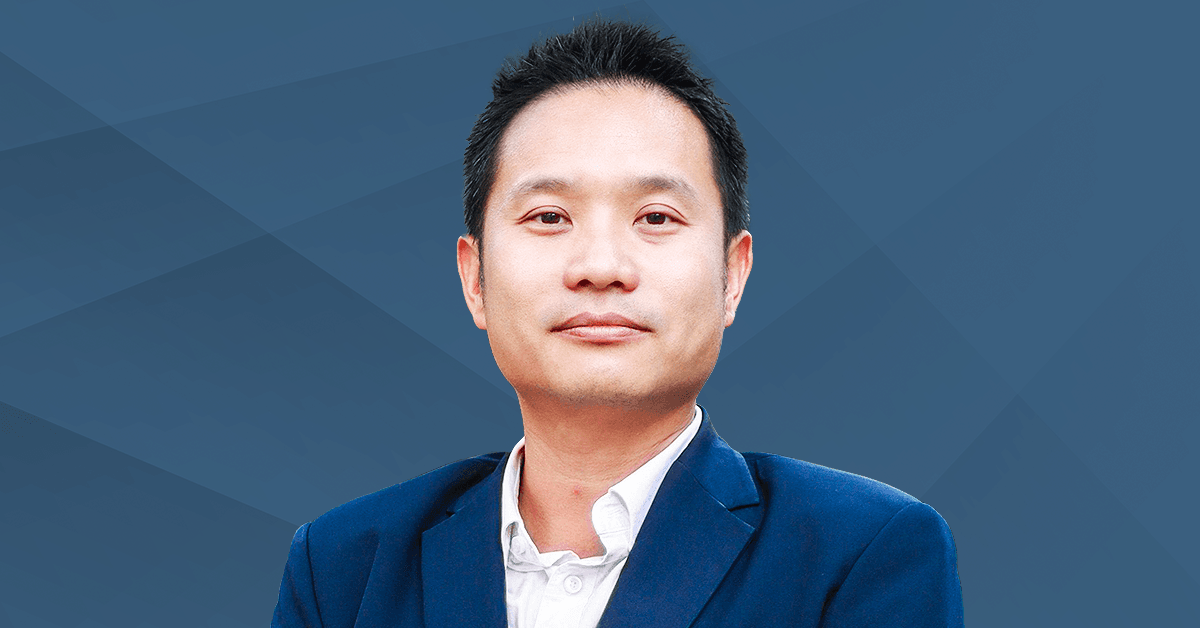
As part of an ongoing series here on ACS Axial, we’re interviewing authors and librarians from around the world to find out more about their research, their published work, and the impact that open science is having on a changing landscape of research communication. This time, we spoke with Sumrit Wacharasindhu, a professor at Chulalongkorn University, Thailand.
It’s very important that the latest articles become available not just to specialist researchers, but also to a much wider audience — even non-chemists.
What can you tell me about your research group’s current focus?
My group is focused on the development of new synthetic methods. Previously we used electrochemistry and photochemistry, and recently we began exploring a new area: enzymatic catalysts and automation. We’re still mainly a synthetic group, but we’re interested in bringing new tools and approaches to our research.
How would you summarize the work in your paper “Bromination of Cannabinoids from Cannabis sativa L.: A Comparative Study Using an Enzymatic Catalysis Approach”?
In this paper, we studied bromination of six different cannabinoids, micellar-assisted enzymatic catalysis, and then we compared this with conventional methods, such as NBS and Oxone. We got a good selectivity under mild conditions, and we can control the degree of bromination by changing the enzyme concentrations. For us, this enzymatic catalyst is an alternative method that lets us functionalize the natural product.
Read the Article
Bromination of Cannabinoids from Cannabis sativa L.: A Comparative Study Using an Enzymatic Catalysis Approach
Thao Nguyen Thanh Huynh; Khoa-Anh Nguyen; Rung-Yi Lai; Preecha Phuwapraisirisan; Thammarat Aree; Mongkol Sukwattanasinitt; Sumrit Wacharasindhu
DOI: 10.1021/acs.orglett.6c01788
DOI: 10.1021/acs.orglett.6c01788
The article was published in Organic Letters — what can you share about the publishing experience?
I’ve been very familiar with Organic Letters since my PhD in the United States, both as a reader and now as an author. The publication process was really smooth, and reviewer comments are always constructive. The revision process is really straightforward, and everything is handled in a good timeframe. Overall, publishing in Organic Letters is a really good experience.
What kind of feedback have you received from the community, either relating to the journal article or any earlier sharing of results (e.g., at conferences)?
The feedback we’ve had so far has mainly come from the Thai synthetic chemistry community. Not many people in our country work on enzymatic catalysts — we’re probably among the first groups to do so, but there’s a lot of interest in this approach for natural products, which is a big thing in our country.
The article was published as open access (OA) under your institution’s agreement with ACS Publications — how did you discover this option was available to you?
I didn’t know this option when we first submitted, but after the paper was accepted, I received an email directly from ACS Publications which explained that our university is covered by an ACS read and publish agreement. This meant that our paper was eligible for open access without additional cost.
What are your thoughts on open access as a way of disseminating research?
The big advantage of this is that more people can read our work. If we publish open access in a well-established journal, and we’re getting the same high-quality peer review and the quality of the journal is trusted, it’s a big advantage. When the cost is supported through the kind of agreement we have with ACS Publications, that’s very helpful.
Do you have any experiences of, and thoughts about, open science workflows more generally (e.g., preprints, open data, etc.)?
In chemistry, I believe that we share much of the underlying data and code for articles through the supporting information, like NMR FID files, and uploading X-ray crystallography to the Cambridge Crystallographic Data Centre (CCDC), which we did with this paper. We also use GitHub to share our code. I think this open sharing of data and code is an interesting part of open science.
What do you think the biggest recent developments in open science and open access are?
I think it’s very important that the latest articles become available not just to specialist researchers, but also to a much wider audience — even non-chemists. With open access and AI tools, people can better understand scientific work which might otherwise be hard for them to benefit from. I think that the combination of open science, open access, and AI is definitely a key advantage today.
Where do you see OA in 10 years’ time?
I think it will become more and more common. I believe open access agreements will also help shift things so that researchers can make their work more widely accessible without worrying about the cost. That would be a key part of the future for me. And related to that, AI and digital tools will help people understand and benefit from science when they can access that information without needing to pay for it.
What do you think you’d be doing if you were not working as a researcher?
I haven’t thought about what my life would look like without research! Working in research has opened opportunities for me to connect with industry to commercialize the processes we identify, and we also use AI tools as part of our teaching. AI has also helped with automation in the lab and for learning across a wider research base. So if I wasn’t researching in a university, I think I would either be working in industry or helping teach with these tools.
Open Science Conversations: View the Series

Open Science Conversations: An Interview Series
This series features interviews with authors and librarians from around the world, providing insights into the importance of open science on the landscape of research communication.