This Joint Special Issue highlights recent advances in boron chemistry spanning synthesis, catalysis, materials science, and biomedical applications. Submit your manuscript by March 1, 2027.
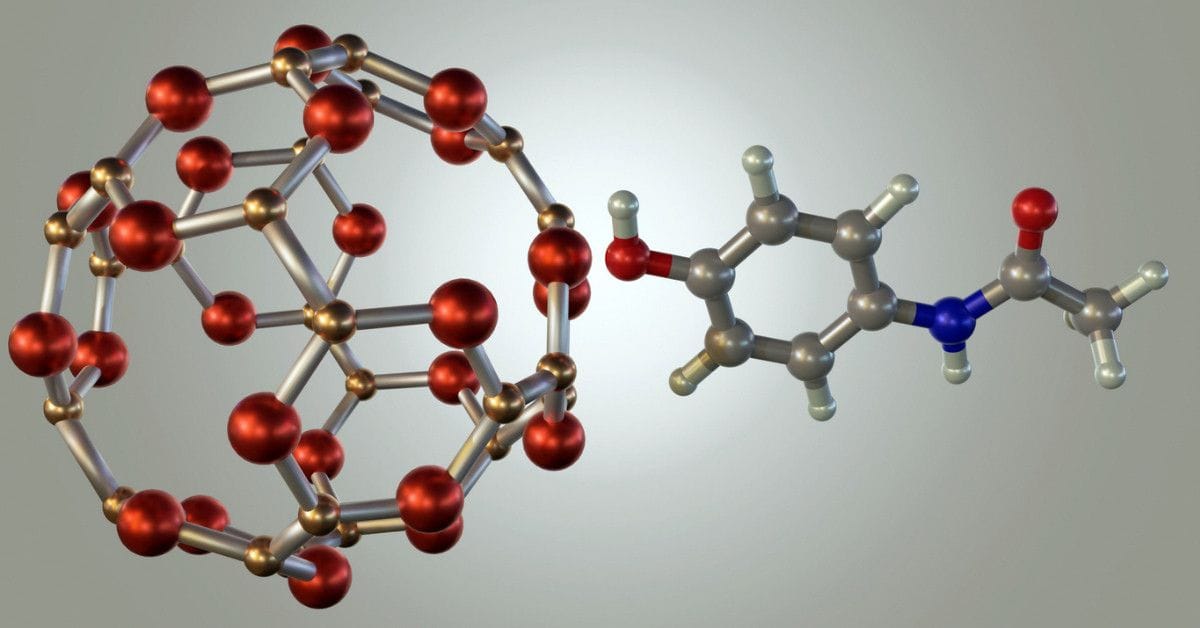
Boron chemistry continues to drive innovation across modern chemical sciences, owing to the unique electronic structure and versatile reactivity of boron-containing compounds. From catalytic bond-forming reactions and frustrated Lewis pair chemistry to functional materials and biomedical applications, boron-based molecules have become indispensable tools in both fundamental research and emerging technologies.
To showcase recent advances in this rapidly evolving field, Inorganic Chemistry, Organometallics, and ACS Organic & Inorganic Au invite submissions to the Joint Special Issue, “Recent Advances in Boron Chemistry: Structure, Reactivity, and Function.”
This collection aims to highlight cutting-edge developments spanning molecular design, synthesis, mechanistic studies, catalysis, materials science, and medicinal chemistry. The issue welcomes contributions from researchers worldwide and will also feature work presented at the 18th International Meeting on Boron Chemistry (IMEBoron-18), held in Tokyo, Japan.
Topics include, but are not limited to:
- Boron in synthesis and molecular transformations
- Structure, bonding, and reactivity of boron compounds
- Boron-based main-group and organometallic chemistry
- Boron in catalysis and small-molecule activation
- Cluster boron chemistry and carboranes
- Boron-containing functional molecules and materials
- Biological, medicinal, and healthcare applications of boron compounds
Organizing Editors
Professor Holger Braunschweig, Guest Editor
Julius-Maximilians-Universität Würzburg, Germany
Professor Warren E. Piers, Guest Editor
University of Calgary, Canada
Professor Makoto Yamashita, Topic Editor, Organometallics
Institute of Science Tokyo, Japan
Submission Information
We welcome submissions for this Special Issue through March 1, 2027. For more information on submission requirements, please visit the respective journal’s author guidelines pages:
Manuscript types considered for this Special Issue include Research Articles, Communications, Letters, Reviews, and Perspectives. All submissions will undergo the full, rigorous peer review process expected from ACS journals.
Papers accepted for publication in this Special Issue will be available online ASAP (as soon as publishable). Once all accepted papers are published, they will be compiled on a dedicated landing page to form the Special Issue.
Open Access: There are diverse open access options for publications in American Chemical Society journals. Please visit our Open Science Resource Center for more information. ACS Organic & Inorganic Au is a fully open access journal; thus, your paper will be available to anyone, at anytime, anywhere in the world.
How to Submit
- Log in to the ACS Publishing Center and select either Inorganic Chemistry, Organometallics, or ACS Organic & Inorganic Au.
- Select your manuscript type; upload your manuscript and related files.
- Review the title and abstract fields to confirm any pre-populated information has transferred correctly.
- Under “Special Issue Selection,” select Recent Advances in Boron Chemistry: Structure, Reactivity, and Function.
- Confirm all other information is correct.
- Submit your article.
If you have any general questions regarding submission to this Special Issue, please contact Dr. Michael Hurst (managing.editor@orgmet.acs.org).
Get e-Alerts
Stay Connected With Inorganic Chemistry
Never miss an issue again! Sign up now for email updates on future calls for papers, the latest articles, and other content from Inorganic Chemistry.

Get e-Alerts Stay Connected With Organometallics
Stay Connected With Organometallics
Never miss an issue again! Sign up now for email updates on future calls for papers, the latest articles, and other content from Organometallics.
Get e-Alerts
Stay Connected With ACS Organic & Inorganic Au
Never miss an issue again! Sign up now for email updates on future calls for papers, the latest articles, and other content from ACS Organic & Inorganic Au.