
Read interviews with the winners below to learn more about their research and their hopes for future advances in physical chemistry.

The Journal of Physical Chemistry and PHYS Division Lectureship Awards honor the contributions of investigators who have made a major impact on the field of physical chemistry in the research areas associated with each section of the journal – The Journal of Physical Chemistry A, The Journal of Physical Chemistry B, and The Journal of Physical Chemistry C.
We are pleased to announce the winners:
Basile Curchod, University of Bristol, UK
Konrad Meister, Boise State University, USA
Justin Caram, University of California, Los Angeles, USA
The awards will be presented at ACS Fall 2023 taking place in August in San Francisco, where the winners will be invited to speak as part of the PHYS division programing.
Hear from each of our three winners in their own words below:
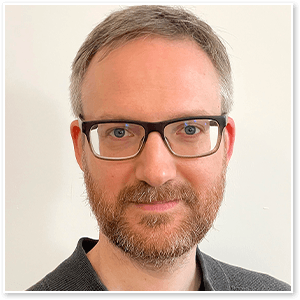
Basile Curchod
Winner, The Journal of Physical Chemistry A Award
The Journal of Physical Chemistry A award honors an investigator in the areas of molecules, clusters, and aerosols.
What inspired you to pursue your area of research?
I believe that this was the infectious passion and excitement of scientists working in the field of computational photochemistry that inspired me in the first place to work in this area. I did particularly enjoy the idea of shaking some of the chemist’s paradigms I was taught by considering the influence of non-Born-Oppenheimer effects. Another appealing aspect of this research field was the possibility of tackling theoretical questions at the interface between physics and chemistry while still having opportunities to apply these methods in a chemical context to support the work of experimentalists.
What advances has your lab made in the past five years?
Over the past five years, our group has focused on developing and applying theoretical methods to unravel the photochemistry of gas-phase molecules. Using these techniques, our group spotlighted the potential importance of athermal ground-state dynamics following nonradiative processes to understand the formation of specific photoproducts on short timescales. These results stimulated our collaborative work with ultrafast spectroscopists and also atmospheric chemists, forcing us to question further the assumptions of our theoretical protocols and improve them to offer the best possible theoretical description of photochemical processes. An example of that process can be found in our most recent work on the atmospheric photochemistry of transient volatile organic compounds and the challenge of determining reliable photolysis observables in silico. This iterative loop between theory and experiment towards the calculation of observables has been the most stimulating and rewarding process for the theoretical developments made in our group!
What’s next for your research?
Our group’s dream is to bring the role of a complex environment into the experiment/theory loop mentioned above. How would the photochemistry of an atmospheric volatile organic compound be altered if it absorbs a photon at a water-ice interface or in a droplet? How can we generalize our textbook gas-phase understanding of photochemistry to a complex environment?
What physical chemistry problems are you hoping to see solved in the next decade?
I hope that combining the achievements in experimental and theoretical physical chemistry will offer transformative tools to support the development of strategies for CO2 uptake and transformation.
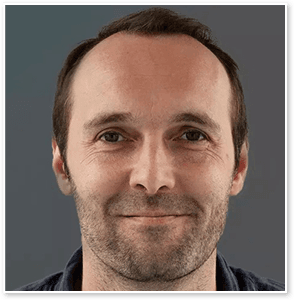
Konrad Meister
Winner, The Journal of Physical Chemistry B Award
The Journal of Physical Chemistry B award honors an investigator in the areas of biophysics, biomaterials, liquids, and soft matter.
What inspired you to pursue your area of research?
From a young age, I have been captivated by the wonders of the natural world, and the thrill of research for me lies in discovering nature’s secrets and sharing those discoveries with others. During my PhD, I was fortunate to meet Art DeVries, the pioneering scientist who discovered antifreeze proteins. This encounter was a defining moment for me, sparking a deep fascination with these remarkable biomolecules and their incredible abilities. Today, my research focuses on investigating how organisms can survive in extreme environments and how they design biomolecules that can perform seemingly impossible tasks. I find it endlessly fascinating to explore the ways in which living systems have evolved to adapt to their surroundings, and to uncover the molecular mechanisms behind these adaptations using physical chemical approaches.
What advances has your lab made in the past five years?
Progress made in our lab in understanding the mechanisms of environmental ice control by proteins were only made possible thanks to fabulous collaborators and a highly interdisciplinary approach that encompasses a wealth of techniques. By utilizing high-throughput freezing assays, we have systematically studied the behavior of biological ice nucleators in response to various environmental factors, and combined these measurements with biochemical and advanced physicochemical techniques to uncover novel information on structure and working mechanism of ice-active biomolecules, as well as the conditions that influence their activity.
What’s next for your research?
Freeze-tolerant organisms have evolved mechanisms to regulate ice formation, using protein building blocks to construct extended functional domains. Despite evolving independently across biological kingdoms, these mechanisms seem to rely on the common principle of functional protein aggregation. Next, we aim to study the process of protein assembly and regulation that cold-adapted organisms use to control ice formation, with the goal of uncovering fundamental principles that are applicable across diverse biological systems. By studying these mechanisms, we hope to advance our understanding of the molecular basis of ice formation and to inspire new tunable freezing technologies.
What physical chemistry problems are you hoping to see solved in the next decade?
I truly hope that physical chemists succeed in understanding the solvation properties of ions in water and other solvents, along with the mechanisms that control ion transport and separation. Advancing our knowledge of these fundamental processes would be key to enable efficient and cost-effective desalination technologies, which would have far-reaching benefits for society and the environment.

Justin Caram
Winner, The Journal of Physical Chemistry C Award
The Journal of Physical Chemistry C award honors an investigator in the areas of energy, materials, and catalysis.
What inspired you to pursue your area of research?
I am fascinated by the limits and extremes of chemical physics. Questions like- “What is the reddest emissive chromophore”, and “what is the narrowest electronic absorption linewidth” have become central themes in my research program. Pursuing these requires the flexibility afforded by chemical training, a willingness to make new materials and build new instruments to study them. Since I have a short attention span, these types of questions let me jump between spectroscopy, synthesis and theory, hopefully communicating some useful general principles to the world.
What advances has your lab made in the past five years?
Over the last 5 years we’ve made strides in a number of complementary directions. We have tried to understand the limits of quantum yields of short-wave infrared (SWIR, 1000-2000 nm) organic chromophores, and find ways to overcome these limits through molecular aggregation and transition dipole moment coupling. In that goal we have worked to better understand the structure (and resultant excitonic bands) of 2D and tubular chromophore aggregates hopefully helping researchers to better categorize photophysics of these materials. In parallel, we have also explored 2D semiconductor nanoplatelets (NPLS), which can be synthesized to interact with light across the visible and SWIR spectral windows. Here we are working on developing devices derived from “mesoscale” colloidal NPLs, whose extent exceeds 1 micron and can be manipulated in analogy to more conventional 2D materials.
Finally, we are working on developing chemical intuition on molecular analogs to atomic qubits, systems which can undergo state-preparation via photon scattering. Using alkaline earths radicals and lanthanides we hope to bridge physics and chemistry communities to develop “quantum functional groups.” All of these efforts are united by spectroscopic efforts which seek to time/energy resolve all emitted photons from a molecular/material system, as a probe of its underlying Hamiltonian. Here we have developed shortwave infrared photodetection schemes and adapted interferometric methods to study photoluminescence.
What’s next for your research?
We are really excited about the possibility to make molecular analogs to atomic vapor cells by developing “ultranarrow” linewidth molecules and materials.We hypothesize that we can leverage chemistry tools (like solubility and molecular recognition) to build accessible quantum devices amenable to room temperature state preparation and readout. Along similar lines, we are on the hunt for new materials which are emissive well-beyond the bandgap of silicon. We think we can get there using better control over the vibronic and photonic environment of chromophores to access highly unusual photophysics. Finally, I hope to develop invert the spectroscopic study of molecular chromophore aggregates into general probes self-assembly in molecular and crystalline contexts. Can we better control crystallization if we can measure it in real time?
What physical chemistry problems are you hoping to see solved in the next decade?
I think there has to be a way to slow down thermalization in complex molecular systems. We have decades of research into intramolecular vibrational energy relaxation (IVR), but we have not tried extensively to invert the problem, designing systems that pathologically avoid dissipating energy and information into their baths. I hope that physical chemists find ways to leverage molecular, photonic, solvent and even vacuum degrees of freedom to control energy/information flow at a quantum mechanical level, avoiding the tyranny of thermodynamic equilibration.