The ACS journals ACS Macro Letters, Biomacromolecules, and Macromolecules, in partnership with the Division of Polymer Chemistry, are proud to announce the winners of the 2023 ACS Macro Letters/Biomacromolecules/Macromolecules Young Investigator Award:
Athina Anastasaki, ETH Zurich, Switzerland
Dominik Konkolewicz, Miami University of Ohio, USA
Professors Anastasaki and Konkolewicz will be honored during the ACS Macro Letters/Biomacromolecules/Macromolecules Young Investigator Award Symposium at ACS Fall 2023 on August 16 at 2pm (PDT) in the San Francisco Marriott Marquis, Nob Hill A room.

Athina Anastasaki, ETH Zurich
Professor Anastasaki was selected for this award in recognition of her pioneering work in constructing and deconstructing polymers by controlled radical polymerization. Her work includes developing modern strategies to control polymer dispersity, end-group fidelity and self-assembly as well as establishing highly efficient depolymerization protocols where the starting materials can be retrieved in a near quantitative fashion.
Can you give us a short overview of the research you are currently undertaking?
Our lab is working across the areas of polymer synthesis, polymer self-assembly and chemical recycling. Key to our research is to challenge conventional thinking and reconsider fundamentals in both polymerization and depolymerization. For example, we are interested in controlling polymer dispersity without compromising the livingness of the resulting materials. We are also interested in reversing controlled radical polymerization with the aim to fully regenerate the starting materials.
What do you consider to be the most important advances in polymer science in the past five years?
I am very impressed by our field’s efforts in self-healing materials, sustainable polymers, polymer recycling, organic solar cells and 3D printing. I also like the application of C-H activation to polymers as well as the ground-breaking developments in imaging techniques. Last but not least, I highly value recent work on determining the molecular weight through alternative methodologies such as DOSY NMR.
What advice would you give to students who aspire to be where you are now?
I would advise younger colleagues to not limit themselves by looking at where other people are. Aiming to fulfil goals imposed by family, mentors, friends or society can be a dangerous trap. My advice would be to follow their heart and pursue their dreams to achieve their own, unique goals. As the journey matters more than the destination itself, they should enjoy the ride and make as many friends and allies as possible along the way.
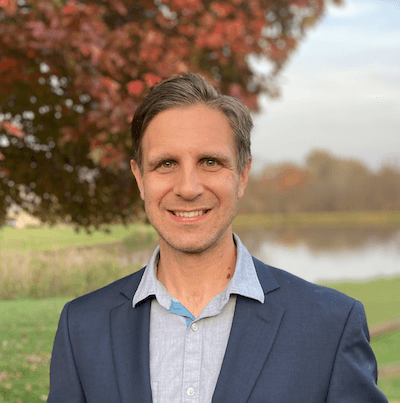
Dominik Konkolewicz, Miami University of Ohio
Professor Konkolewicz was selected for this award to honor his research that emphasizes the importance of fundamental science for new polymer-based materials. The hallmark of his work is to provide fundamental insights that make critical contributions to drive the field forward in a wide range of topics, including polymerization kinetics, light-driven processes, bioconjugates, and dynamic materials. Professor Konkolewicz is also an outstanding mentor to early career researchers through his leadership in ACS POLY and PMSE divisions educational and outreach efforts.
Can you give us a short overview of the research you are currently undertaking?
Our group is primarily working on the fundamentals of precision polymerization, with long term applications in the responsive materials, sustainability, and biohybrids. We investigate how to perform reversible deactivation radical polymerizations more efficiently, and how to use polymers made by these methods in materials applications. Our team works on a variety of projects, including fundamental polymerization kinetics, development of chemistries for responsive and reprocessable networks, and polymers that interact and self-assemble with biological molecules. The recurring themes within the group are fine tuning polymer architectures to make materials with unusual properties.
What do you consider to be the most important advances in polymer science in the past five years?
I am really impressed with the emphasis on sustainability in polymer science. Recent work highlighting polymer degradation and reprocessing is a very exciting area of research. On a fundamental level, there has been a new focus on controlling the structure of the macromolecule at a very fine level, focusing on aspects such as specific polymer sequence and stereochemistry. It is also very excited to see materials applications of the polymers with complex structure. In the past 5 years there has been both a focus on synthesis of complex polymers, but a parallel effort on new materials that take advantage of these new synthetic capabilities.
What advice would you give to students who aspire to be where you are now?
I have really benefited from developing productive mentorship and peer networks. Mentors will include your graduate and postdoc advisor, but also can include people who may only be a few years ahead in their own career. I also have found collaborative opportunities to be highly rewarding, in part because we learn about new areas of science that we are less familiar with, and in part because it offers the chance to expand our network. Having a strong network of peers and mentors can be really helpful when obstacles in research come up.
Learn About Last Year's Winners