Scientists test a plant‑based alternative to traditional cosmetic polymers, showing how a fruit–algae biopolymer settles onto hair to form a protective coating that limits environmental damage.
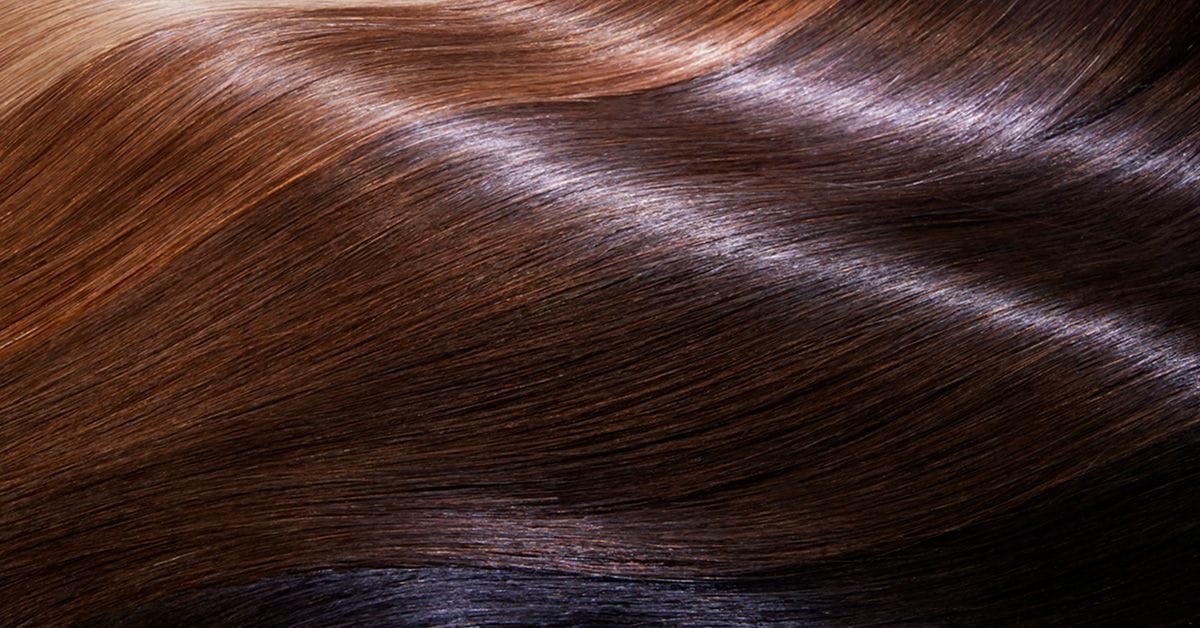
Air pollution, UV light, humidity, and other environmental stressors all contribute to hair damage. Airborne particles can penetrate hair's keratin structure, triggering oxidative stress in the follicle and leading to scalp irritation, dryness, and pigment degradation. Since hair fibers lack active metabolism and cannot regenerate, researchers are increasingly focusing on formulations that protect hair by forming a barrier at the surface.
A plant-based approach to film formation
Most biopolymers studied for hair applications, such as chitosan, keratin, and collagen, function as conditioning or repair agents. What's been less explored are film-forming ingredients specifically designed for daily protection against environmental damage.
To help fill this gap, researchers in Brazil investigated a biopolymer derived from tara fruit and red algae as a film-forming ingredient for hair care products. As evidenced by the team's previous research on topical formulations, the galactomannans from tara combined with sulfated galactans from red algae produce a polysaccharide-rich network capable of forming a nonocclusive coating on biological surfaces.
To test whether this protective effect can extend to hair, the researchers developed three formulations—a shampoo, a rinse-off conditioner, and a leave-in treatment—and evaluated their physical stability, texture, and rheological behavior over 28 days. Then, they tested how the products performed on standardized human hair tresses, examining properties such as shine, smoothness, combability, fiber diameter, and mechanical strength before and after treatment.
Read the Article
Tara and Red Algae Biopolymer as a Film-Forming Substance for Hair Protection
Rafaela A. Zito, Rafaela B. Zanin, Leticia Kakuda, and Patricia M. B. G. Maia Campos*
DOI: 10.1021/acsomega.5c08778
DOI: 10.1021/acsomega.5c08778
What changed at the hair surface?
The results, published in ACS Omega, showed that formulations containing the biopolymer recovered their viscosity more quickly after application. This behavior is consistent with effective film formation, helping the product stay on the hair itself rather than drip or rinse away too easily.
The biopolymer interacted with the hair keratin through hydrogen bonding, altering the fiber's structure. Hair diameter increased by roughly 16%, likely due to enhanced water absorption from the hydroxyl-rich biopolymer. This same interaction led to a 10% reduction in tensile strength, a trade-off the researchers attribute to the film altering the fiber's mechanical behavior. The authors note that even though the biopolymer slightly reduces mechanical strength, the protective film may help limit more severe degradation from environmental exposure over time.
Turning heads
Despite the slight decrease in strength, treated hair showed marked improvements in appearance and texture compared with controls. Shine increased by about 29%, and smoothness improved by 22%. High-res imaging revealed better cuticle alignment in treated tresses, with the biopolymer film flattening the outermost scales and reducing surface friction. The formulations also improved combability, requiring less force to comb through treated hair.
Many protective hair treatments marketed as “natural” still rely on animal-derived polymers or are limited to salon use. By contrast, the tara–algae biopolymer is entirely plant-based and was tested in formulations intended for regular, at-home application. While the work remains at the laboratory formulation stage, it offers a clear example of how materials chemistry can be applied to reduce hair–environment interactions by design.
Explore related articles in ACS journals:
Sustainable Biopolymer Based on Tung Oil and Tung Free Fatty Acids for Hair Tensile Enhancement
Xuejiao Cao, Yanting Yin, Jonathan A. Campbell, Xuan Luo, Youhong Tang, and Colin L. Raston*
DOI: 10.1021/acsabm.5c02572
Adsorption of Surfactants and Polymers to Biomimetic Hair Model Surfaces
Serena Cozzolino, Philipp Gutfreund, Inger Odnevall, Raam Ibrahim, Alexei Vorobiev, Rebecca J. L. Welbourn, Francesca Zuttion, Andrew Greaves, Gustavo S. Luengo*, and Mark W. Rutland*
DOI: 10.1021/acs.langmuir.5c06252
Optimizing Lubricant Deposition on Hair-like Substrates Using Cationic Polymer/Anionic Surfactant Complexes
Nikol K. Dimitrova, Mihail T. Georgiev, and Svetoslav E. Anachkov*
DOI: 10.1021/acs.langmuir.5c00837
Core–shell Particle Embedding into Human Hair: A Novel Approach for Surface Modification and Long-Lasting Hair Coloration
Keiji Fujimoto*, Megumi Nishimura, and Yuuka Fukui*
DOI: 10.1021/acsomega.5c01305
Recyclable Polymerizable Deep Eutectic Solvent-Based Three-Dimensional-Printed Dissolving Microneedles with pH-Responsive Delivery of ZIF-8-Loaded Minoxidil for Hair Loss Therapy
Nail Aminov, Huan Liu, Decheng Meng, Liran Zhu, Xiaohan Guo, Cong Li, Xiaoqing Ye, and Huanjun Li*
DOI: 10.1021/acsami.6c01834
Get e-Alerts
Stay Connected With ACS Omega
Never miss an issue again! Sign up now for email updates on future calls for papers, the latest articles, and other content from ACS Omega.