

New editors bring new experiences, perspectives, and ideas to their publications. Get to know some of ACS Publications' latest senior, associate, and topic editors and the unique gifts they bring to their respective journals.
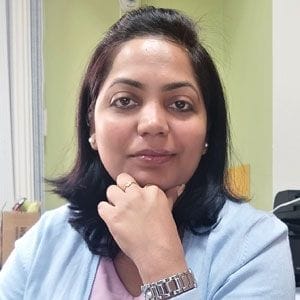
Shabana Khan, Topic Editor, Organometallics
What is your research focus? What initially attracted you to your field?
The research ambitions of my group lie in developing new and fundamentally important areas of main group chemistry, which challenge previously held views on the structure, bonding, and stability of low coordination number/low oxidation state compounds and their metal complexes. We want to explore these low-valent main-group compounds as catalysts in various organic transformations to develop metal-free catalysis. Our group also explores these low-valent compounds as ligands in different applications, e.g., catalysis, materials, nanochemistry, etc. I was fascinated by the unexpected reactivity pattern of low-valent main-group compounds.
What do you hope to bring to your journal?
I hope to promote Organometallics and attract more and more high-quality papers from the organometallic community.
What are the major challenges facing your field today?
Developing low-valent main group compounds which could perform redox catalysis is one of the major challenges.
What do you think is the most interesting and/or important unsolved problem in your field?
The most exciting part for me is using low-valent main group catalysts as an alternative to transition metals to develop novel methodologies for the green and sustainable chemical industry.
Do you have a recent paper in an ACS journal that you'd like to highlight?
First-Row Transition Metal Complexes of a Phosphine–Silylene-Based Hybrid Ligand
Ruksana Akhtar, Sandeep H. Kaulage, Mayur P. Sangole, Srinu Tothadi, Parameswaran Parvathy, Pattiyil Parameswaran, Kirandeep Singh, and Shabana Khan
Inorg. Chem. 2022, 61, 34, 13330–13341
DOI: 10.1021/acs.inorgchem.2c01233
Anything else you'd like readers to know about you?
I was born and raised in a small town in northern India. I did my Ph.D. from IIT Delhi in 2008. I subsequently did postdoctoral studies with Prof. Herbert W. Roesky at the University of Goettingen, followed by a second postdoc at Max Planck Institute for Coal Research with Prof. Manuel Alcarazo. My journey as an independent researcher started in 2013 when I joined IISER Pune as an assistant professor. Currently, I am an associate professor at IISER Pune. I like music, love cooking, and enjoy traveling.
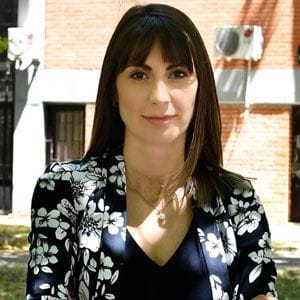
Dušica Rodić, Associate Editor, Journal of Chemical Education
What is your research focus? What initially attracted you to your field?
The focal point of my work is understanding the teaching and learning of chemistry at all levels of education. I use a variety of qualitative and quantitative research methods to examine the factors that affect how students learn chemistry. In particular, I have directed my work at developing tools for measuring meaningful learning and identification of student misconceptions by focusing on the cognitive dimension of learning. My latest research is related to Knowledge Space Theory applications in chemistry education. From the very beginning of my research career, I have been involved in CER. The institution I work at has a long tradition of educating chemistry teachers through undergraduate and graduate programs. So, what initially attracted me to the CER field was the fact that within those programs I could apply the results of my own and other CER research and thus directly give a boost to the quality of initial teacher education.
What do you hope to bring to your journal?
As an Associate Editor, I am looking forward to promoting the Journal in European countries and particularly to increasing the Journal's visibility in the developing region I am from. I am excited to serve as an intermediary between authors and reviewers in the process of publishing cutting-edge work in the field of CER thus helping the journal to maintain a high standard and remain the world’s premier source of information on teaching and learning chemistry, open for new insights and new research directions.
What are the major challenges facing your field today?
The major challenge derives from the very complex nature of studies in the field of chemical education. Since a large number of studies in the CER field include evidence of application with students, due to the human factor it can be challenging to create valid instruments, conduct measurements and perform data analysis that will lead to unequivocal conclusions free from any limitations and errors.
What do you think is the most interesting and/or important unsolved problem in your field?
One of the most interesting and promising research ideas to pursue in CER concerns the possibility of applying machine learning models to bolster current efforts in making valid and reliable measurements with student populations.
Do you have a recent paper in an ACS journal that you'd like to highlight?
Plans vs Reality: Reflections on Chemical Crystallography Online Teaching During COVID-19
Marko V. Rodić and Dušica D. Rodić*
J. Chem. Educ. 2020, 97, 9, 3038–3041
DOI: 10.1021/acs.jchemed.0c00585
This paper was published in a Special Issue of the Journal of Chemical Education on Insights Gained While Teaching Chemistry in the Time of COVID-19. We were glad to be able to share insights about useful methods that could be used in chemical crystallography courses to alleviate the concerns resulting from the shift from face-to-face to online instruction.
Anything else you'd like readers to know about you?
I live in Serbia in the city of Novi Sad with my husband and son.
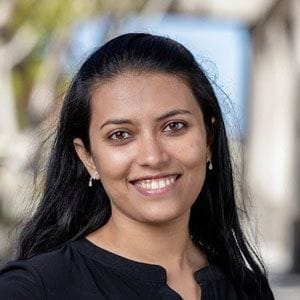
Apoorva Sarode, Topic Editor, Bioconjugate Chemistry
What is your research focus? What initially attracted you to your field?
My research focus revolves around drug delivery, aiming to transform drugs into effective medicines by addressing the challenges related to stability, solubility, and targeting. A drug molecule becomes valuable only when it can safely, timely, and effectively get to where it is needed. With drug delivery strategies, we can modify the biological fate of drug molecules and achieve the therapeutic levels at the right place at the right time. I explore various formulation strategies including nanoparticle encapsulation and conjugation to targeting ligands for achieving this goal. By harnessing these approaches, I aim to enhance the therapeutic efficacy of drugs and optimize their delivery to specific tissues or cells, ultimately improving patient outcomes and revolutionizing the field of medicine.
As a chemical engineer with a strong passion for medicine, I was drawn to the field of drug delivery due to the opportunity it offers to work at the interface of material science and biology, with the ultimate goal of enhancing patient treatment. The prospect of addressing the complex problems associated with drug development and exploring numerous possible approaches is what makes this field both challenging and immensely rewarding. I am excited and grateful for being able to contribute to the development of innovative drug delivery systems that can positively impact patient care and advance the boundaries of science.
What do you hope to bring to your journal?
I am delighted to see Bioconjugate Chemistry taking proactive steps to encourage industrial contributions, as there are significant research advances in bioconjugation that occur within the industry. Industrial research is inherently connected to market and societal trends, as well as the latest scientific developments. It also plays a crucial role in applying fundamental research towards solving real-world challenges, while achieving performance metrics related to purity, scalability, and processibility of the bioconjugates. It is unfortunate that many learnings from the development process of such clinical therapeutics and diagnostics often go unreported, which limits the dissemination of valuable knowledge to the wider scientific community.
My aim is to raise awareness and promote our journal among my industrial peers and encourage them to share and publish their findings, thus advancing the field. By bringing an industrial perspective to the journal, we can diversify the journal’s content and showcase translational innovations in bioconjugate research. This will not only enhance the journal's reputation but also expand its readership. To this end, I look forward to providing strategic guidance to the journal and highlighting the outstanding bioconjugate research being conducted in the industry.
What are the major challenges facing your field today?
Over the past few years, my research has primarily revolved around nanoparticle-based drug delivery systems. Despite the extensive literature on nanoparticles spanning several decades, the translation of these breakthroughs into clinical products has been notably limited. The challenges encountered during the scale-up of manufacturing processes as well as the transition of nanoparticle technologies across various animal models and ultimately to human subjects have hindered their progress from bench to clinic. To bridge this gap effectively, it is imperative to adopt a holistic approach that integrates multidisciplinary fields of expertise. Collaboration across academia and industry is essential to address these challenges and drive a robust development of nanoparticle-based medicines.
What do you think is the most interesting and/or important unsolved problem in your field?
Undoubtedly, the field of drug delivery presents numerous unsolved mysteries that continue to intrigue researchers. However, what particularly captivates my interest is unraveling the intricate structure-activity relationship of dynamic therapeutic modalities. I am fascinated by the possibility of predicting and manipulating this relationship, enabling us to understand and control the behavior of synthetic drug delivery carriers when they interact with the intricate biological environment. By establishing such correlations, we can unlock valuable insights that will aid in optimizing the design and performance of innovative drug delivery systems. Additionally, this understanding can expedite the development of novel therapeutics, making efficient use of resources in the process.
Do you have a recent paper in an ACS journal that you'd like to highlight?
Yes, I am really proud and thrilled to share that my latest work has been recently accepted for publication in ACS Nano. In this study, we have leveraged a high-throughput workflow involving small-angle X-ray scattering to understand the structure-activity behavior of lipid nanoparticles (LNPs) in interaction with neuronal cells. This study is not only an attempt towards unraveling the structural mysteries of LNPs, but it also demonstrates the value of collaboration across industry and national laboratories/ academia.
Correlating the Structure and Gene Silencing Activity of Oligonucleotide-Loaded Lipid Nanoparticles Using Small-Angle X-ray Scattering
Michal Hammel*, Yuchen Fan, Apoorva Sarode, Amy E. Byrnes, Nanzhi Zang, Ponien Kou, Karthik Nagapudi, Dennis Leung, Casper C. Hoogenraad, Tao Chen, Chun-Wan Yen*, and Greg L. Hura*
DOI: 10.1021/acsnano.3c01186
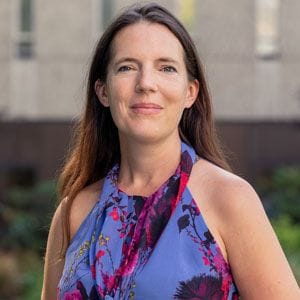
Molly Stevens, Senior Editor, ACS Central Science
What is your research focus? What initially attracted you to your field?
My research focuses on designing biomaterials-based solutions for disease diagnostics, advanced therapeutics and regenerative medicine. I lead a very diverse multidisciplinary team and together we devise transformative healthcare technologies while keeping a global health agenda. I was initially attracted to the bioengineering field from hearing Prof Bob Langer speak at a conference about how his lab translates scientific principles into real world applications that help people. It was very exciting to build on my PhD in Biophysics with a postdoctoral training at MIT in Bob's lab focusing on nanomaterials and regenerative medicine.
What do you hope to bring to your journal?
I am excited to look at chemistry developments through the "bio" and "nano" perspectives. Through my career I have combined fundamental research with applied and translational work including founding several spin-out companies. I'm fascinated by cross-disciplinary initiatives where chemistry plays a key role.
What are the major challenges facing your field today?
The interaction between chemistry and bioengineering fields has great momentum with terrific innovations, from new vaccine modalities to bioengineered organs all building on innovation in materials chemistry. However, as scientists we should remain conscious of the geographical and economical divide that separates those who can access healthcare from those who cannot. The great challenge is to engineer healthcare solutions that will be safe, effective, and accessible to all.
What do you think is the most interesting and/or important unsolved problem in your field?
We still need to understand more about the molecular interactions between living and non-living matter at the nanoscale so that we can extrapolate to the improved design of nanomedicines and biomaterials.
Do you have a recent paper in an ACS journal that you'd like to highlight?
I have been proud to publish extensively in ACS journals. Amongst the many works, I could highlight an ACS Nano paper published in 2018 where we presented an ultrasensitive paper-based lateral flow test for HIV based on a platinum core-shell nanozyme. The test detected HIV biomarker p24 at the low femtomolar range opening the diagnostic window to include very early stages of the disease at the point of care.
Platinum Nanocatalyst Amplification: Redefining the Gold Standard for Lateral Flow Immunoassays with Ultrabroad Dynamic Range
Colleen N. Loynachan, Michael R. Thomas, Eleanor R. Gray, Daniel A. Richards, Jeongyun Kim, Benjamin S. Miller, Jennifer C. Brookes, Shweta Agarwal, Vijay Chudasama, Rachel A. McKendry, and Molly M. Stevens*
ACS Nano 2018, 12, 1, 279–288
DOI: 10.1021/acsnano.7b06229
More recently, we also published a new approach for non-destructive, automated characterisation of single nanoparticles using our in-house developed technique SPARTA™ that allows us to precisely determine the cargo location and even the monitoring of real-time chemical reactions. Our developed analytical framework is now being translated for use by academia and industry as a tool for design and quality control of nanomedicines.
Revealing Population Heterogeneity in Vesicle-Based Nanomedicines Using Automated, Single Particle Raman Analysis
Catherine Saunders, James E. J. Foote, Jonathan P. Wojciechowski, Ana Cammack, Simon V. Pedersen, James J. Doutch, Hanna M. G. Barriga, Margaret N. Holme, Jelle Penders, Mohamed Chami, Adrian Najer*, and Molly M. Stevens*
ACS Nano 2023, 17, 12, 11713–11728
DOI: 10.1021/acsnano.3c02452
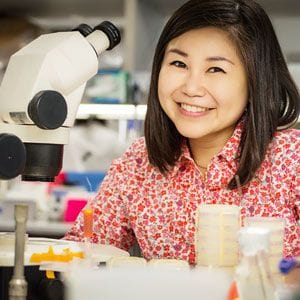
Ee Phie Tan, Topic Editor, ACS Chemical Neuroscience
What is your research focus? What initially attracted you to your field?
My research focus revolves around aging research, with a particular emphasis on the role of autophagy, a cellular recycling process, in mitigating age-related health deterioration and the development of novel drugs to enhance this process. My fascination with this field was sparked by a deep curiosity about the underlying mechanisms of aging, why we age differently, and how some of us could experience significant health deterioration, such as neurodegeneration. When I learned about autophagy and how this process plays a pivotal role in maintaining cellular health by recycling damaged components and supporting overall longevity, I became intrigued by the possibility of harnessing its power to enhance the quality of life in older individuals.
What do you hope to bring to your journal?
I aspire to provide ACS Chemical Neuroscience with a platform that showcases undergraduate research, amplifies the work of early-career investigators, and fosters inclusivity for diverse perspectives. My intention is to nurture budding talents, promoting critical thinking, and cultivate a love for science from an early age. I am hoping to contribute to a narrative of empowerment, inclusivity, and a promising scientific future.
What are the major challenges facing your field today?
In the dynamic field of aging research, the intricate nature of autophagy, comparable to navigating a complex maze, stands as a major challenge that engrosses my focus. Further amplifying this intricacy is the variability of autophagy among different cell types. Similar to numerous other biological processes, autophagy involves a multitude of intricate signaling pathways and regulatory mechanisms. Untangling and modeling the intricate interplay between these components across diverse cell types poses a formidable puzzle, demanding meticulous exploration and understanding to advance our field.
What do you think is the most interesting and/or important unsolved problem in your field?
One of the most intriguing and significant unsolved problems in my field is how to develop more effective strategies for modulating autophagy to enhance health during the aging process. Although we appreciate the pivotal role autophagy plays in overall well-being and its potential in combating age-related diseases, our current methods for influencing autophagy remain limited. Given the intricate nature of this process, pinpointing a more precise approach to optimize autophagy, particularly in the context of aging, stands out as a paramount challenge.
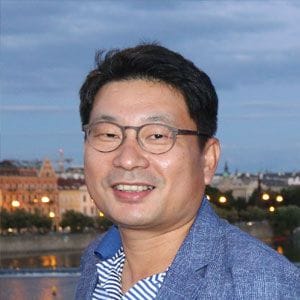
Kwang-Geun (James) Lee, Associate Editor, ACS Food Science & Technology
What is your research focus? What initially attracted you to your field?
My research focus is to characterize the physicochemical properties of low molecular weight compounds such as volatiles. During my undergraduate and master's courses, I was very interested in biotechnology, so I wrote a thesis on developing a microbial process for antibiotic production and worked as a researcher at a biotechnology company (CJ Corp.). However, techniques for analyzing bioprocess products have had a great influence on my current research. During my doctoral course, I selected volatile substances as my research topic and this led me to where I am today.
What do you hope to bring to your journal?
Research on the characterization of traditional food components and new alternative food materials is increasingly being submitted to our journal. I hope to bring my expertise on these areas to help expand the scope and development of ACS Food Science & Technology.
What are the major challenges facing your field today?
The development of new alternative foods and their materials is increasing at an incredible rate, but research on their exact functionality and safety is not keeping up with the pace. My primary goal is to publish research results in this field quickly and accurately in our journal.
What do you think is the most interesting and/or important unsolved problem in your field?
Research on the correlation between food preference and safety of food materials that have gone through various processes will be my lifelong research.
Do you have a recent paper in an ACS journal that you'd like to highlight?
Recently, we published a paper on the generation of furan according to the production process of ramen, which is loved by people around the world, as shown below.
Effects of the Frying and Drying Conditions on the Furan Formation in Instant-Noodle Manufacturing
Junho Hwang, Hye-Yeon Lee, and Kwang-Geun Lee*
J. Agric. Food Chem. 2022, 70, 34, 10400–10404
DOI: 10.1021/acs.jafc.1c08307
Anything else you'd like readers to know about you?
My hometown is Jinhae, a small town in southern part of Korea. Ever since I was young, I had a dream of escaping this small country and traveling around the world to expand my horizons. I would like to share the dreams and hopes of the many researchers around the world who submit to this journal.