
Professor Omowunmi Sadik has built her career at the crossroads of scientific discovery, innovation, and environmental responsibility. In this interview, she explores the principles that guide her research, the technologies developed in her lab, and the vital role scientists play in shaping a more sustainable world.
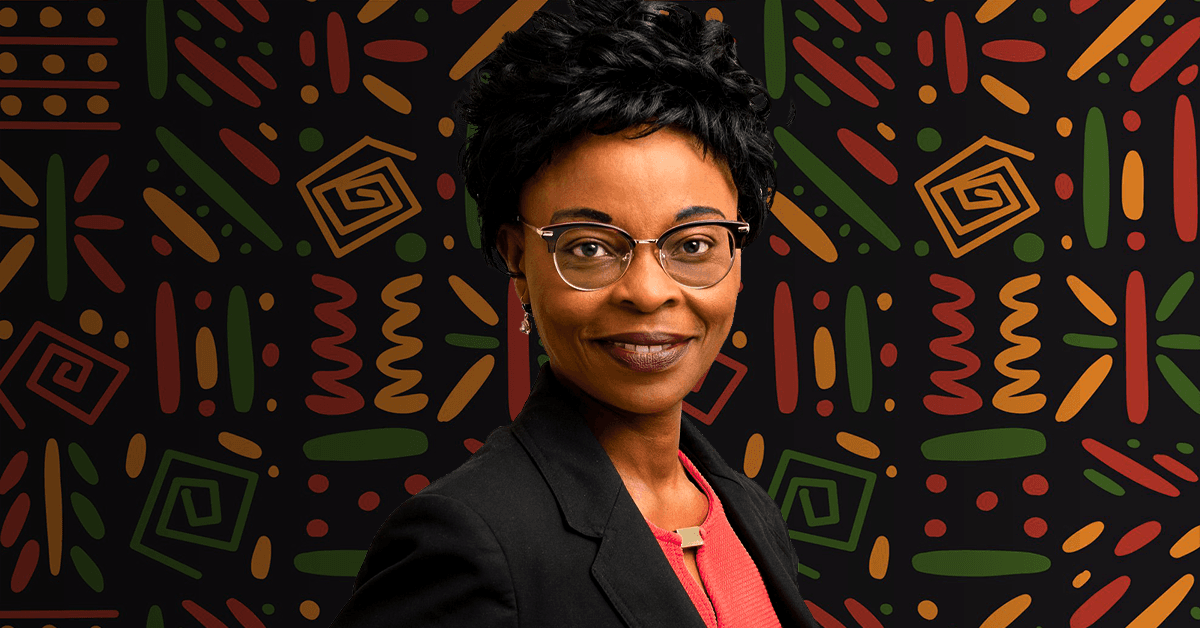
Professor Omowunmi “Wunmi” Sadik, a Nigerian-American chemist, inventor, and academic leader, serves as Vice Provost for Faculty Affairs and Distinguished Professor of Chemistry and Environmental Science at the New Jersey Institute of Technology (NJIT). She directs the NJIT BioSensors Materials for Advanced Research & Technology (The BioSMART Center), where her work advances biosensors, surface chemistry, and sustainable nanotechnology. Prof. Sadik earned her Ph.D. in Chemistry from the University of Wollongong in Australia and completed a National Research Council postdoctoral fellowship at the U.S. Environmental Protection Agency.
Her career spans some of the most respected institutions, including State University of New York, Binghamton University, Harvard University, Cornell University, and the Naval Research Laboratory, where she has tackled challenges as varied as detecting drugs and explosives to transforming industrial waste into valuable resources.
With more than 200 publications in leading journals such as ACS Nano, Langmuir, and ACS Catalysis, over 350 invited talks, and 5 U.S. patents, Prof. Sadik has built a research legacy that bridges discovery and real‑world impact. Her team at Binghamton University transformed cutting‑edge biosensor science into the U‑PAC™ portable sensing device, uncovered an entirely new class of nanostructured polymers (PAA) with tunable electrochromatic behavior, and engineered eco‑friendly flavonoid‑based nanoparticles boasting diverse morphologies and antibacterial performance exceeding 99.9%.
Beyond research, Prof. Sadik co-founded the Sustainable Nanotechnology Organization in 2012. She has been honored as a Fellow of the National Academy of Inventors (2023), the Royal Society of Chemistry (2010), the American Institute for Medical and Biological Engineering (2012), and the American Chemical Society (2023).
Prof. Sadik continues to shape sustainable chemistry through pioneering science, mentorship, and global collaboration. She also founded the Sustainability and Green Technology division within ACS, further advancing the integration of environmental responsibility into chemical innovation.
In Conversation with Prof. Omowunmi Sadik
What inspired you to pursue a career in chemistry, particularly in sustainability and green technology?
My inspiration for pursuing chemistry started long before I ever stepped into a professional lab. In fact, when I first declared chemistry as my major, I had never even met a practicing chemist! My first real "ally" in the field was my older brother. I remember him coming home and excitedly sharing the chemistry principles he was learning at school. I loved hanging around him, and I'd find myself tucked away reading his textbooks, fascinated by how the world worked at a molecular level.
Eventually, that spark was fanned into a flame by incredible teachers and mentors who showed me that chemistry is so much more than rote memorization or complex equations. I began to see it as the "central science" that touches every single aspect of our daily lives, from the pharmaceuticals that heal us to the sensors that keep us safe, and the food systems that sustain us.
I became particularly focused on sustainability and green technology because I saw a significant opportunity to reinvent how we create materials. Rather than using harsh, toxic chemicals, I was inspired by the idea of "sustainable-by-design" using nature's own building blocks, like plant-derived flavonoids, to create things like biosensors or antibacterial nanoparticles.
Whether I was working at Harvard, Cornell, or the Naval Research Laboratory, the goal remained the same: to advance the chemistry enterprise in a way that benefits both the earth and its people.
Which of your recent publications do you feel has had the greatest impact, and why?
Choosing a "favorite" is like picking a favorite student, each represents a unique breakthrough. But if I had to pinpoint the core of my work, it's our discovery of a new class of nanostructured, organic π-electron polymers and biosensors. We found a way to make these materials "tunable," meaning we can precisely control their electronic and mechanical properties to fit specific needs. A great example is our work on Sustainable Design. Back in 2011 and 2012 (published in ACS Catalysis and Environmental Science & Technology) , we tackled the removal of Hexavalent Chromium. Instead of using harsh industrial chemicals, we used plant-based flavonoids as stabilizers. It was a game-changer. We achieved 99.9% efficiency in water and 90% in soil, proving you don't need toxic solvents to fix toxic problems.
Another highlight would be our synthesis of functionalized polyphenol derivatives, specifically regioselective phosphorylated, acetamide, and sulfonamide variants, by strategically modifying natural polyphenolic cores with heteroatoms. Historically, flavonoids were complex to use because they don't dissolve well. By strategically modifying their cores with heteroatoms, we fixed those solubility issues. With support from the Bill & Melinda Gates Foundation and the NSF, we used that science to build low-cost, paper-based biosensors. We didn't just keep it in the lab; we went to Jamaica and trained hundreds of farmers to diagnose crop diseases like Colletotrichum gloeosporioides right in the field. Moving that diagnostic power from a high-tech lab into a farmer's hands is incredibly rewarding.
More recently, our team has been looking at how to degrade persistent environmental pollutants like PFAS and 1,4-Dioxane. These are "forever chemicals" that are notoriously hard to remove from water. By using core-shell bimetallic nanocatalysts, we're not just sensing these toxins; we're figuring out how to destroy them. I think that shift—from simply detecting a problem to providing a sustainable solution, is what truly defines impactful research,
How did your journey lead to becoming an ACS Fellow in 2023?
I believe what the ACS recognized was this consistent record of pioneering science combined with a dedication to the chemical community. Over the years, I've worked at some of the world's most respected institutions, from Harvard and Cornell to the Naval Research Laboratory, tackling diverse challenges like detecting explosives or turning industrial waste into valuable resources.
On the research side, my team has published over 200 papers and secured 5 U.S. patents, developing things like the U-PAC™ portable sensing device and eco-friendly nanoparticles with massive antibacterial performance. But just as importantly, I've focused on building the "scaffolding" for the future of the field by co-founding the Sustainable Nanotechnology Organization and establishing the Sustainability and Green Technology (SGT) subdivision within the ACS itself.
How do you balance your research, publishing, and leadership responsibilities?
I actually don't view research, publishing, and leadership as separate silos to be balanced. I see them as an integrated ecosystem where each part feeds the others. In my role as Vice Provost, the leadership skills I use to shape university policy are the same ones I use to direct the BioSMART Center.
For instance, my research in sustainable nanotechnology often informs my administrative approach. Just as I look for systems-level optimization in the "food-agriculture-green tech" nexus, I look for systematic ways to support our faculty and students. So, I have tried to stay active in the trenches, with over 200 publications and 5 patents.
Because I'm still actively publishing in journals like ACS Omega and Langmuir, I understand the daily realities my colleagues face, from the grind of securing grants to navigating the peer-review process. This gives me a level of "earned credibility" in administration.
When I'm making high-level decisions, they aren't theoretical; the live experience informs them of running a lab that transforms industrial waste into resources or develops portable biosensors for pain biomarkers. I've built a phenomenal team at NJIT and the BioSMART Center. I don't try to be the center of every decision; I've trained my team to think strategically so I can focus on high-level scientific direction and institutional policy.
Everything I do is filtered through a single mission: Real-World Impact. Whether I'm developing the U-PAC™ portable sensing device or working in the Vice Provost's office, I'm building "scaffolding." In the lab, that scaffolding helps create eco-friendly nanoparticles; in administration, it helps other faculty succeed. It's a feedback loop: my leadership gives my research a platform, and my research gives my leadership authenticity.
What challenges do you encounter when mentoring early-career researchers and students, and how do you help them navigate the path toward impactful scientific careers?
In mentoring over 40 graduate students and 100 undergraduates, I've found the primary hurdle isn't technical ability, it's the "Identity Transition." Most researchers begin as "executors" used to known answers; to achieve real impact, they must become "strategists" who can navigate ambiguity. I facilitate this by reframing failure as "the data of unexpected results."
In chemistry, things fail constantly, and teaching students that resilience is a scientific skill, not just a personality trait, builds the emotional durability required for innovation. I also challenge my mentees to become "T-Shaped" professionals: pairing deep vertical expertise in chemistry with the horizontal ability to speak the languages of policy, economics, and industry. In the green-tech nexus, impact is impossible if you cannot communicate your science to a farmer or a CEO.
This leads to my core belief in Sponsorship over Supervision. While a mentor gives advice, a sponsor uses their influence to advocate for a mentee's potential. In my leadership role, I don't just check data; I open doors by involving researchers in grant writing and ensuring they lead their own projects.
Ultimately, Impact Lives is at the intersection of technical excellence and social relevance. My goal is to provide the scaffolding so that my students don't just solve chemical problems; they become leaders capable of deploying global solutions.
What motivated you to establish the Sustainability and Green Technology subdivision within ACS?
The primary driver behind establishing the Sustainability and Green Technology (SGT) subdivision was a noticeable gap in the ACS landscape. While there are many divisions doing vital work, none were specifically dedicated to the intersection of sustainability and green tech.
We realized that the most important breakthroughs in food security and environmental health aren't going to happen in isolation; they require a "systems-level" approach. For example, there has been incredible independent progress in wireless nanosensors for agriculture, but these research communities don't always talk to one another. We wanted to create a home that identifies those synergies and brings scientists, engineers, and industry partners together into one focused niche.
Ultimately, SGT is about moving the chemistry enterprise forward in a way that is economically viable while serving the planet and its people. Establishing this subdivision was a strategic response to that critical gap; it's about building the bridge between fundamental chemistry and global solutions.

ACS 150th Anniversary
Celebrating ACS150: Chemistry is Everything
Throughout 2026, ACS will mark 150 years of advancing chemistry — a historic milestone built on discovery, innovation, and community.