In these exclusive interviews, learn more about the journal's inaugural Early Career Board members, what inspires their research, and their visions for the journal's future.
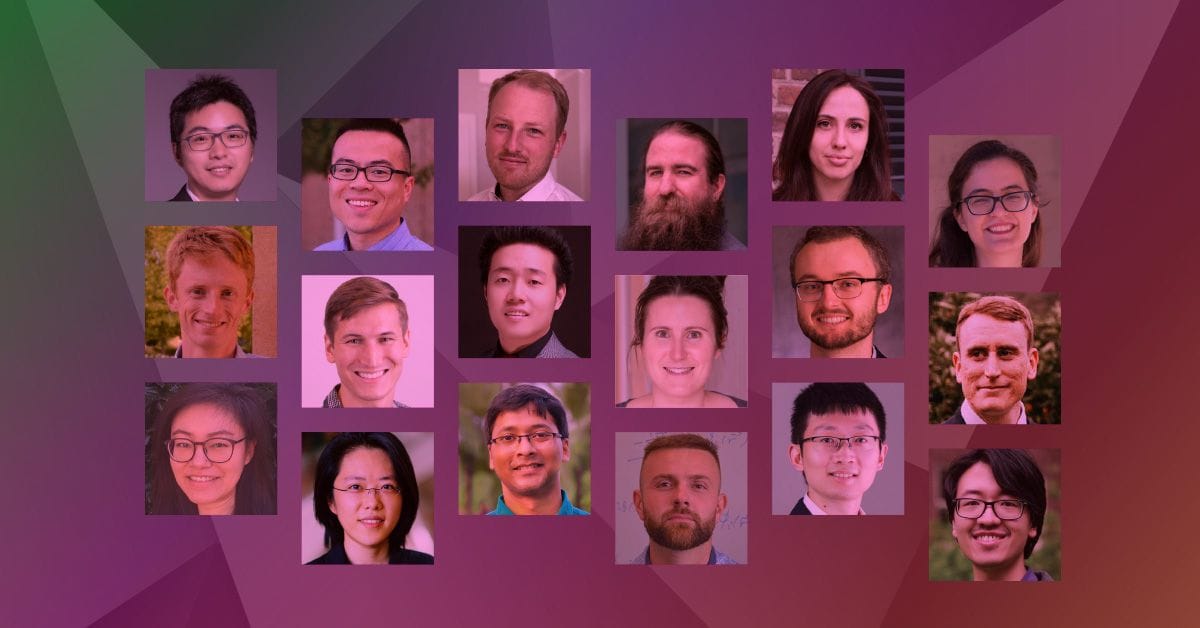
The Journal of Chemical Theory and Computation (JCTC) is excited to announce its inaugural Early Career Board (ECB). The first of its kind for the journal, the ECB initiative provides young investigators with guidance and insight into the editorial process as they pursue their independent research careers. The members of the ECB will play an influential role in shaping the growth and evolution of JCTC, building upon the success of the journal to date.
The ECB members will provide input on the journal strategies, act as ambassadors of the journal in the scientific community, drive the journal's scope into new and emerging areas, and ensure the journal is the home for world-class computational chemists and theorists.
We invite you to learn more about each of JCTC's ECB members and their visions for shaping the journal over the next two years.
Hugh Burton
Please tell us a little about yourself.
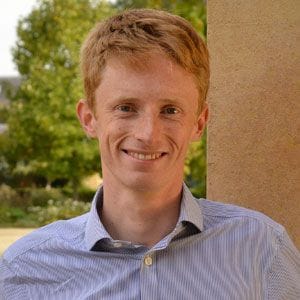
I am a theoretical chemist based in the Yusuf Hamied Department of Chemistry at the University of Cambridge. My primary research involves understanding the breakdown of electronic structure approximations for strongly coupled electrons and developing new methods to predict the electronic properties of molecules using emerging technology such as quantum computing. I currently hold the prestigious Kim and Julianna Silverman Research Fellow at Downing College, Cambridge.
I completed my undergraduate studies in Natural Sciences at the University of Cambridge, graduating with a BA and MSci (2012-2016). I stayed in Cambridge to complete my PhD in Chemistry (2016-2020) under the supervision of Dr Alex Thom, during which I pioneered the holomorphic Hartree-Fock approach and participated in a 2-month internship at Q-Chem. I then began my independent research career as the Astor Junior Research Fellow in Chemistry at New College, Oxford and a visiting researcher in the Department of Chemistry, University of Oxford (2020-2023), before returning to Cambridge to take up my current position.
Away from my research, I enjoy hillwalking, playing the piano, and a variety of sports such as golf, cycling, and squash.
Describe your current research (or areas of interest).
The quantum mechanics of electrons in molecules underpins all chemical structure and reactivity. I am interested in developing theoretical and computational methods to model strong electronic coupling, where current techniques fail to satisfy both accuracy and efficiency. This strong coupling is associated with unpaired electrons that occur when chemical bonds are broken, in molecular excited states, and for chemically reactive radicals.
My research focuses on mathematically understanding why current approximations fail and using these insights to develop more accurate modelling techniques. In particular, I have developed the energy landscape perspective of electronic structure, where ground and excited states are found as minima, saddle points, or maxima of the electronic energy. Furthermore, I am currently investigating how new models of molecular electronic wave functions can be derived to harness the potential of future quantum computers.
What do you hope to bring to the Journal of Chemical Theory and Computation and the Early Career Board?
The Journal of Chemical Theory and Computation (JCTC) is the leading journal at the forefront of theoretical and computational chemistry. I look forward to supporting the continued growth and success of JCTC by bringing together fresh perspective on scientific research and publishing, acting as an ambassador within my academic community, and exploring ways that JCTC can support early career researchers who want to get involved in publishing and peer review.
Sijia Dong
Please tell us a little about yourself.
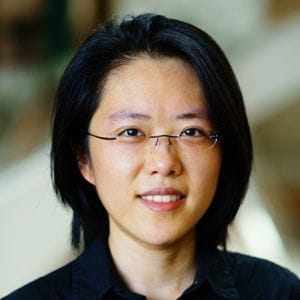
I am an assistant professor in theoretical and computational chemistry at Northeastern University in Boston, MA, USA. I am passionate about accelerating science using computation and automation. I received my PhD in Chemistry from California Institute of Technology in 2017, advised by Prof. William A. Goddard III. I carried out my postdoctoral research at the University of Minnesota with Prof. Donald G. Truhlar and Prof. Laura Gagliardi, and then at Argonne National Laboratory with Prof. Giulia Galli. I started my independent career at Northeastern University in 2021. I have been involved in the development of open-source software packages such as OpenMolcas and WEST.
Describe your current research (or areas of interest).
My current research focuses on using data-driven methods and quantum computing to accelerate molecular simulations and chemical discovery. I am particularly interested in problems where both quantum mechanics and statistical mechanics need to be used. My group develops computational tools to allow high-throughput quantum chemical and multiscale simulations of biomacromolecules, polymers, and heterogeneous systems, and to use insights from first principles simulations to design molecules and materials for energy, biomedical, and quantum information applications.
What do you hope to bring to the Journal of Chemical Theory and Computation and the Early Career Board?
I hope to bring my perspective on theoretical and computational chemistry, AI, quantum computing, and open science and become a liaison between both early-career and senior researchers and the journal to shape JCTC to better serve our scientific community.
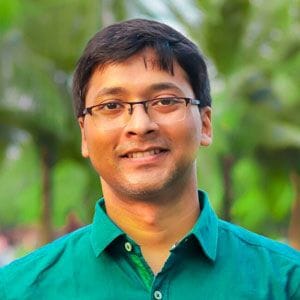
Soumen Ghosh
Please tell us a little about yourself.
I am an Assistant professor at the Department of Chemistry at Indian Institute Technology Madras. My research mainly focuses on the development of quantum mechanical electronic structure methods and applying them to problems related to energy materials, spectroscopy and noncovalent interactions. I completed my BSc in chemistry from Calcutta University and MSc from Indian Institute of Technology Bombay. I obtained my PhD from University of Minnesota in 2018. I continued my research as an Alexander von Humboldt postdoctoral fellow at the Max-Planck-Institute for Coal Research in Germany. Later, I joined as a postdoctoral researcher at Pacific Northwest National Laboratory. I joined the Department of Chemistry at IIT Madras in October 2023.
Describe your current research (or areas of interest).
My current research focuses on the development of quantum, classical and hybrid approaches to model complex chemical problems. Quantum chemical electronic structure methods developed in my group range from computationally cheap semiempirical Hartree-Fock methods to ab-initio multireference wave function and density functional methods. We apply these methods to study valence and core-level spectroscopic properties both in gas and condensed phase to understand electron transfer processes. In my group, electronic structure methods are also applied to understand properties of existing energy materials and to predict new systems.
What do you hope to bring to the Journal of Chemical Theory and Computation and the Early Career Board?
The Journal of Chemical Theory and Computation (JCTC) has been the home for the cutting-edge research articles in the field of theoretical and computational chemistry since its inception. As an Early Career Board member, I would like to propose the journal to consider manuscripts from more diverse and emerging fields in theoretical chemistry and chemical physics. It is also important for the journals to encourage young students and researchers towards the field of theoretical and computational chemistry.
I would like to recommend JCTC to organize and sponsor lecture series and workshops for young scientists in different colleges and universities all over the world. It can be encouraging to young authors if JCTC can promote interesting work through short videos or blogs on their website. As a member of the board, I shall promote the journal in different social platforms and conferences. As a researcher from India, I shall promote the journal and its vision for theoretical and computational chemistry in the Indian scientific community. Along with other committee members, I would like to discuss possible emerging areas where the journal can expand its scope and develop a roadmap for the future growth of the journal.
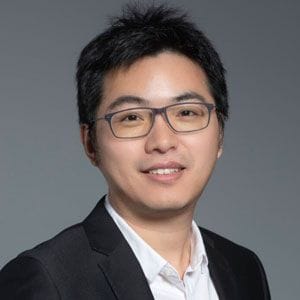
Bing Gu
Please tell us a little about yourself.
I am currently working as an Assistant Professor at Westlake University in China, in the Department of Chemistry and Department of Physics. I earned my BS in Chemical Physics in the University of Science and Technology of China in 2011. In 2016, I obtained my Ph.D. in Theoretical and Computational Chemistry from the University of South Carolina, Columbia, under the supervision of Sophya Garashchuk. After completing my Ph.D., I worked as a postdoctoral fellow at the University of Rochester under the guidance of Ignacio Franco, and later with Shaul Mukamel at the University of California, Irvine, between 2018-2022. In 2023, I joined the faculty at Westlake University.
Describe your current research (or areas of interest).
My research interests primarily focus on exploiting light-matter interaction to probe and control molecular events. This includes theory and modeling of nonlinear time-resolved molecular spectroscopy, nonadiabatic quantum dynamics, and molecular polaritons.
Ultrafast Spectroscopy provides a direct means to observing electronic and nuclear dynamics in molecules in real time. Quantum light opens a new revenue to develop novel spectroscopic signals that can overcome the limitation of classical light and unveils more information of matter inaccessible by classical means.
The key to understand ultrafast spectroscopy and photochemistry of molecules is to model the correlated electron-nuclear motion upon photoexcitation. We are developing a new theoretical framework for nonadiabatic wave packet dynamics that can remove the singularities associated with topologically nontrivial potential energy surfaces and meanwhile alleviate the exponential scaling of computation cost with system size.
Molecular polaritons are hybrid light-matter states that emerge in the strong coupling regime between molecular transitions and confined cavity modes. This quasiparticle can profoundly alter the physicochemical and optical properties of molecules and materials, and hence, can be exploited to control material function and catalyze molecular reactivity. We are developing new theories and methodologies to understand and predict how molecules behave inside an optical cavity.
What do you hope to bring to the Journal of Chemical Theory and Computation and the Early Career Board?
I am excited about the opportunity to contribute to the Journal of Chemical Theory and Computation (JCTC) and the Early Career Board. My background and skills align well with the goal of this esteemed journal.
Firstly, my extensive academic and research experience in the fields of ultrafast spectroscopy, quantum molecular dynamics, and molecular polaritons has equipped me with a deep understanding of the latest advancements and challenges in chemical theory and computation. I am committed to staying abreast of emerging trends and technologies, and I am eager to contribute insightful perspectives and innovative ideas to the journal.
Moreover, my passion for fostering collaboration and communication among early-career researchers makes me an ideal fit for the Early Career Board. I have a proven track record of successfully organizing and participating in interdisciplinary research projects, workshops, and conferences. I am confident that I can leverage my network and interpersonal skills to enhance the engagement of early-career scientists with the journal and facilitate a dynamic exchange of ideas internationally.
In addition, my commitment to promoting diversity and inclusion aligns with the mission of JCTC. A diverse range of voices and perspectives is crucial for advancing scientific discourse and innovation. I am dedicated to actively supporting initiatives that promote diversity, equity, and inclusion within the scientific community.
Overall, I am eager to bring my passion for research, collaboration, and inclusivity to the Journal of Chemical Theory and Computation and the Early Career Board. My unique combination of skills and experiences will contribute to the growth and success of JCTC.
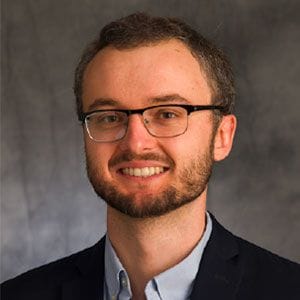
Nicholas Jackson
Please tell us a little about yourself.
I am presently an Assistant Professor of Chemistry at UIUC. I received my B.A. in Physics from Wesleyan University and my Ph.D. in Chemistry from Northwestern University. I subsequently did a post-doc and then scientist position joint between Argonne National Laboratory (Materials Science Division) and the University of Chicago (Pritzker School of Molecular Engineering).
Describe your current research (or areas of interest).
My research group focuses on theory and computation for electronic processes in soft materials, including those that exhibit useful semiconducting, energy storage, energy generation, bioelectronic, or degradable functionality. There is a strong effort devoted to multiscale method developments that enable electronic predictions at the mesoscale, as well as the use of machine learning to accelerate the design and understanding of soft materials.
What do you hope to bring to the Journal of Chemical Theory and Computation and the Early Career Board?
I have a broad definition of what constitutes a theoretical or computational chemist. Provided the intrinsically chemical or materials nature of most grand scientific challenges, in the present era you can find practicing theoretical and computational chemists in every Chemistry-adjacent field: Chemical Engineering, Molecular Engineering, Materials Science, Biology, Physics, Mechanical Engineering, Nuclear Engineering, and Computer Science.
I believe that the future of theoretical chemistry is in connecting to the length and time scales of other disciplines, and as such I will aim to bring a strong emphasis to multiscale simulation across disciplines.
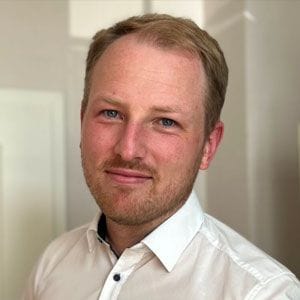
Daniel Keefer
Please tell us a little about yourself.
I started studying chemistry and biochemistry at LMU Munich in 2009. At that time, I did not know that theoretical chemistry existed. When I walked into the well-equipped chemistry labs at the modern Großhadern campus, I could not conceive how one would choose to sit in front of a computer all day instead of experimenting with all the colorful chemicals at our disposal. Three years later, my opinion had completely changed. I completed my undergraduate degree in Theoretical Chemistry, feeling that by simulating and visualizing molecular orbitals, properties and dynamics, one could gain a much more fundamental understanding of chemical concepts and reactivity.
After completing my PhD at LMU in 2019 with Regina de Vivie-Riedle, I moved to UC Irvine, just south of Los Angeles, to work on time-resolved spectroscopy. I greatly enjoyed the highly international and stimulating research atmosphere in Shaul Mukamel's group. Aside from publishing research articles, I explored the highly diverse nature that California and the US have to offer, learned to surf, and became a father.
In 2023 I moved back to Germany to start my independent research group at the Max Planck Institute for Polymer Research in Mainz, supported by the Department of Molecular Spectroscopy, the Max Planck Society and an ERC Starting Grant.
Describe your current research (or areas of interest).
In my research group, we simulate the dynamics of photoinduced molecular processes in the electronic ground and excited states. We then simulate spectroscopic signals, ranging from infrared to X-ray, to probe these dynamics and predict new signatures of elementary chemical events. A particular focus is on time-resolved X-ray spectroscopy that is enabled by free-electron lasers and high-harmonic generation setups. These open exciting new windows into coupled nuclear and electronic dynamics on unprecedented temporal, spectral and spatial scales. Finally, we use quantum optimal control theory to shape the pump and probe laser pulses of multidimensional spectroscopic pulse sequences to substantially enhance their sensitivity.
Using these core methods, we foster curiosity-driven explorations into adjacent research areas such as quantum computing, nanoscience and others to find novel applications for coherently controlled chemistry and its spectroscopic probing.
What do you hope to bring to the Journal of Chemical Theory and Computation and the Early Career Board?
Thanks to the continuous method development over the past decades, electronic structure theory has found applications in many research areas beyond traditional chemistry, such as quantum information, spectroscopy, material science, machine learning and chemical biology. One of my main tasks will be to stay informed about emerging research areas, communicate theoretical chemistry as a valuable and powerful tool, and highlight JCTC as a flagship platform for publishing theoretical method development and simulation applications.
I also hope to contribute a fresh perspective on the peer-review process. From frequent discussions with colleagues, I often find that certain aspects of the peer-review process can cause frustration among authors and reviewers. I have ideas for potential improvements that I would like to discuss with my fellow Early Career Board members and the senior editors of JCTC. I am very curious to learn about their experiences and perspectives, as well as the potential for testing and implementing improvements. I am also looking forward to interacting with the theoretical chemistry community in my new role, as their feedback and requests will be crucial to any improvements.
Yangyi Lu
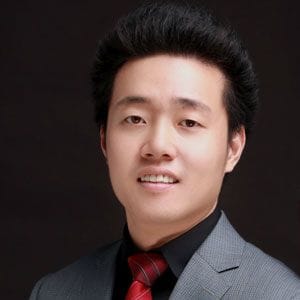
Please tell us a little about yourself.
I graduated from Peking University (China) with a bachelor's degree in Materials Chemistry. My undergraduate research, on the study of electronic structures of heavy-metal molecules, was carried out in Tsinghua University (China), supervised by Dr. Jun Li. Then, I went to Ohio State University (USA) and pursued my PhD degree in Physical Chemistry, supervised by Dr. Dongping Zhong. During this period, my research focus was on theoretical understanding of ultrafast photo-induced reaction dynamics in biological systems. After two years of postdoc training with Dr. Zhong, I joined Shenzhen Bay Laboratory in China.
Describe your current research (or areas of interest).
My current research focuses on development of excited-state electronic-structure methods. I, in collaboration with Dr. Jiali Gao from University of Minnesota, recently established the multi-state density functional theory (MSDFT), which treats ground and excited states on an equal footing. MSDFT is an exact theory for simulation of a finite number of lowest eigenstates in the density functional formulation, which takes into account both static and dynamic correlation. We are making exciting progresses on the development of MSDFT and expecting it to become a universal approach for excited-state simulations in the future. We are also developing a novel approach for simulations of nuclear quantum dynamics based on MSDFT.
What do you hope to bring to the Journal of Chemical Theory and Computation and the Early Career Board?
I hope to bring my various insights gathered over previous and current experiences to the Early Career Board. As an early career member, I can help discover emerging research of interest and bring in new techniques and concepts to readers of JCTC. I was trained as a PhD student in an experimental group and had the opportunity to work closely with spectroscopists and biochemists. I will contribute a unique perspective on identifying scientific questions whose answers are valuable to a diverse group of readers, thereby expanding the impact of JCTC. I also want to facilitate interdisciplinary research inside the theoretical and computational community, lowering the practical and cognitive barriers between various areas of the field. I can also help organize special issues, perspectives, and reviews for the journal.
Jacob I. Monroe
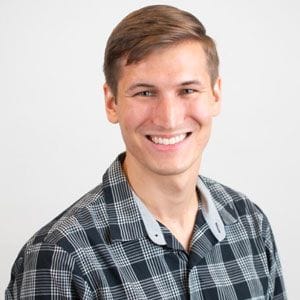
Please tell us a little about yourself.
I received a B.S. in Chemical Engineering from the University of Virginia in 2014. As an undergraduate, I was already active in research related to molecular simulation and statistical thermodynamics, publishing two first-author, peer-reviewed articles in that area before completing my undergraduate studies. In my graduate work at the University of California, Santa Barbara, I used molecular-level simulations to develop rational strategies for manipulating solvent-mediated interactions. My graduate research led to an AICHE Computational Molecular Science and Engineering Forum (CoMSEF) Graduate Student Award.
In 2019, I obtained my Ph.D. in Chemical Engineering and started a National Research Council Postdoctoral Fellowship at the National Institute of Standards and Technology in Gaithersburg, MD. In that role, I developed techniques to accelerate molecular simulations by tying state-of-the-art machine learning methods to statistical mechanics. I started as an assistant professor at the University of Arkansas in January of 2023, receiving a DOE Early Career Research Program Award in the same year.
Describe your current research (or areas of interest).
My group merges machine learning techniques into statistical mechanical theories to accelerate molecular simulations and free energy calculations. We apply our methods to explore biological and soft-matter systems that exhibit strong coupling across multiple length scales and hence require simulations at multiple resolutions. Specifically, we explore the physics of solvent-mediated interactions, self-assembly, and the nanoscale design of materials interfacing with water.
What do you hope to bring to the Journal of Chemical Theory and Computation and the Early Career Board?
My interest in joining the JCTC Early Career Board stems from a sense of responsibility to the molecular simulation research community. I view membership as a service in facilitating imminent decisions facing this community. I look forward to guiding informed discourse on the scope of machine learning in computational chemistry and statistical mechanics, the use of artificial intelligence in writing manuscripts and code, and the journal's policies and guidelines for sharing code.
Bo Peng
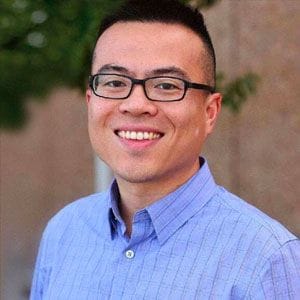
Please tell us a little about yourself.
I am a computational staff scientist at the Pacific Northwest National Laboratory (PNNL), one of the 17 DOE national laboratories. I obtained my PhD in Theoretical Chemistry from the University of Washington in 2016 and subsequently joined PNNL as a Linus Pauling Postdoctoral Fellow. In 2019, I transitioned to the role of staff scientist.
Describe your current research (or areas of interest).
My research interests primarily focus on the development of many-body theories and their associated advanced computing techniques. My previous contributions cover a broad spectrum of topics, including coupled cluster theory, many-body Green's function theory, time-dependent calculations, advanced classical and quantum computing techniques, and high-performance quantum chemical software development.
What do you hope to bring to the Journal of Chemical Theory and Computation and the Early Career Board?
The evolution of scientific journals is inextricably linked to the diverse voices that participate in shaping their direction. Early career members, infused with fresh perspectives and attuned to contemporary academic and industrial shifts, are uniquely poised to drive the growth and evolution of the Journal of Chemical Theory and Computation (JCTC).
From my experience since obtaining my PhD in Theoretical Chemistry from the University of Washington in 2016, I've noticed that early career researchers often stand at the crossroads of traditional methodologies and emerging paradigms. My own journey in the field, encompassing Green's function theory, coupled cluster theory, time-dependent calculations, advanced computing techniques, and the development of high-performance quantum chemical software, serves as a testament to this dynamic interplay. By integrating such cutting-edge research topics into JCTC, we ensure that the journal remains at the forefront of chemical theory and computation.
Moreover, as digital natives, early career members can harness modern communication tools and platforms to bolster the journal's outreach and engagement. We can expand JCTC's readership and foster a more interconnected and interdisciplinary community by leveraging social media, open-access platforms, and collaborative online forums.
Our adaptability also primes us to innovate within the peer review process, ensuring a rigorous yet efficient evaluation of contributions. With close ties to academic institutions, early career researchers like myself can further embed JCTC's significance in curricula, workshops, and seminars, nurturing its importance for the next generation.
In conclusion, the involvement of early career members like me in JCTC's editorial processes and strategic planning is imperative. By drawing from our unique experiences, innovative outlooks, and passion, we can collaboratively steer the journal towards continued growth, relevance, and excellence.
Elisa Pieri

Please tell us a little about yourself.
I am an Italian scientist with a profound dedication to computational photochemistry, a passion ignited during my master's studies in Siena, Italy, under the exceptional mentorship of Massimo Olivucci. His guidance was instrumental in shaping my early career and research interests, which revolved around bio-inspired molecular photoswitches and motors. My academic journey then took me to Marseille, France, where I earned my PhD in Nicolas Ferre's group modeling pH-dependent photochemical properties in biomolecules. In Stanford, California, I undertook a postdoctoral appointment in Todd Martinez's group, which expanded my computational horizons in several directions. I engaged in the development of computational tools for photoreaction discovery, modeled fluorescent proteins, and studied nonadiabatic dynamics in nucleotides. Additionally, I worked on making computational chemistry pipelines more accessible to the scientific community.
In July 2023, I embarked on a new chapter at the University of North Carolina at Chapel Hill, joining their Chemistry Department as an Assistant Professor. I believe that diverse sets of experiences, preferences and ideas fuel the best science, and I intend to offer support and kindness to students in the classroom, the department, and my group by providing a space for listening and a friendly, demystifying attitude.
Describe your current research (or areas of interest).
Our research develops and leverages the tools of computational and theoretical chemistry to pioneer advancements in the field of photoreaction discovery, shifting the focus from confirmation and/or analysis of experimental results to the realm of predictions. We seek to understand and forecast the complex processes initiated by photon absorption in small molecules and proteins, and develop rational design principles to build bio-imaging and optogenetics agents. We will initially focus on tuning the fluorescence and photochromic properties of biliproteins using hypothesis-free frameworks and high throughput methods, and eventually scan large numbers of mutants and molecules without any a priori knowledge to design improved biotechnological tools.
What do you hope to bring to the Journal of Chemical Theory and Computation and the Early Career Board?
I am excited and thankful to be given the chance to contribute my perspective to this great journal. Some topics that I believe could grant fruitful discussions are:
- Support initiatives for early-career faculty members in their publication endeavors, understanding the unique challenges and opportunities they face in the current academic landscape.
- Development/strengthening of initiatives that foster the growth of new generations into well-informed scientific authors and capable, constructive reviewers.
- The promotion of clear communication, ensuring that complex scientific ideas are conveyed effectively and accessibly.
- Significance of research at the interface with other scientific disciplines, recognizing the increasingly interdisciplinary nature of science.
Through my participation on the board, I aspire to contribute to these diverse yet interconnected facets, enhancing the journal's impact and reach across the scientific community.
Peter Spackman
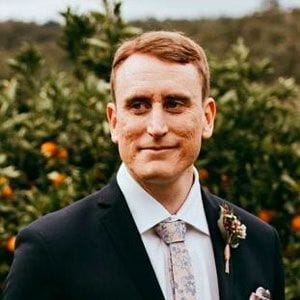
Please tell us a little about yourself.
I'm a postdoctoral research fellow in computational chemistry at Curtin University in Perth, Western Australia. After completion of my PhD in chemistry at the University of Western Australia, I spent two years working with in the UK as part of the Leverhulme Research Centre for Functional Materials Discovery before returning home to sunny Perth in 2020. I like writing software, and sharing it with the community in the hope that it will find use all over the world.
Describe your current research (or areas of interest).
My own research areas of interest are the intersection of quantum chemistry and materials discovery, primarily focused on crystalline materials. Over the last few years I've been developing new methods to predict the energetics that determine crystal growth from solution using low cost methods. Throughout my research, I'm primarily interested in what I see as the two main avenues of computation in chemistry: things you can do with a laptop, and things that run on a high performance supercomputer.
What do you hope to bring to the Journal of Chemical Theory and Computation and the Early Career Board?
While I hope to help the journal remain a premier destination for great science in computational and theoretical chemistry, there are two primary areas of growth and development I hope to aid in facilitating:
- Data accessibility: This is not only crucial for reproducibility and peer review but particularly relevant for the ever-growing machine learning applications in chemistry and the benchmarking it necessitates. The journal has the capacity to facilitate and expand the association of datasets with publications, along with APIs for easier extraction and utilisation.
- Code/software availability: As a result of my own experience and background in software developmentI have first-hand knowledge of the importance of making computational methodologies transparent and reusable, enabling not only validation but also building the foundations for future research.
Morgane Vacher
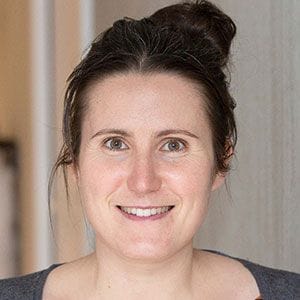
Please tell us a little about yourself.
After graduating from École Normale Supérieure de Cachan (France) with first class honors, I have obtained my PhD in the Chemistry Department of Imperial College London with Profs. M. Bearpark and M. Robb, in the context of a large project on electron dynamics in molecules in close collaboration with experimentalists. I was then recruited in the Theoretical Chemistry Program at Uppsala University by Prof. R. Lindh to support the effort of his group to simulate non-adiabatic dynamics in combination with multi-configurational electronic structure theory. I was recruited as a CNRS Associate Researcher at the CEISAM laboratory in Nantes (France) in November 2019 following a highly challenging national competition, from which I came out top.
Since then, I am now developing a novel research line in the Modelling and Spectroscopy (ModES) team mainly on the simulation of photochemistry and attosecond science, a young discipline that has recently been honored by the Nobel Academy. I am currently the PI of an ERC grant on the topic.
Describe your current research (or areas of interest).
What I find fascinating is understanding, in the most fundamental way, how electrons and nuclei move in molecules after interaction with light. Over the years, I have specialized in the modelling of electronic and nuclear dynamics on the attosecond-femtosecond time scale with a wide range of methods. I have myself expertise in electronic structure theory, a wide range of mixed quantum-classical and quantum dynamics methods, and have contributed to several codes. Attosecond science, rewarded by the 2023 Nobel Prize of Physics, opens new avenues for observing electron motion on its intrinsic time scale and for controlling photochemical processes. I am currently the PI of an ERC grant on the topic. I have also tackled the modelling of X-ray spectroscopy, and have experience in machine learning.
What do you hope to bring to the Journal of Chemical Theory and Computation and the Early Career Board?
The emerging areas of attosecond science and X-ray spectroscopy challenge theoretical chemists and I foresee they will stimulate the development of novel theories and methodologies in our communities. The aim of the journal is to go beyond established areas and I would propose to drive the journal's scope into these emerging fields. Besides, ACS helps researchers increasing transparency and accessing works through open science. Although authors are encouraged to make their data and code freely available, there is still some way to go. In this framework, I believe JCTC, which reports many numerical data and codes, could play a pioneering role in particular by reshaping the SI.
Stefan Vuckovic
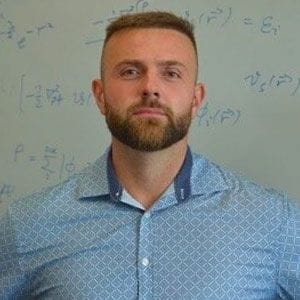
Please tell us a little about yourself.
I am an assistant professor at the University of Fribourg in Switzerland, where I lead a trully interdisciplinary group in chemical theory. Following my BS in Chemistry in Belgrade, Serbia (the country of my origin), I was directly admitted into a Ph.D. program at Vrije Universiteit Amsterdam, supervised by Prof. Paola Gori-Giorgi. I obtained my Ph.D. in 2017 and received the Dick Stufkens Prize from the Holland Research School of Molecular Chemistry (HRSMC), a consortium of leading chemical research groups in the country. My postdoctoral journey began in 2018 at the University of California, Irvine, with Prof. Kieron Burke, funded by the NWO Rubicon fellowship. This was followed by postdocs in Germany and Italy, under Humboldt and Marie Curie grants, at the University of Saarland and CNR respectively.
My research focuses on developing rigorous (quantum) chemical theories and transforming them into practical and robust approximations, to address fundamental issues in current quantum-chemical simulations. Furthermore, my research efforts are intertwined with community efforts aiming at strengthening under-represented groups in academia, with a focus on promoting the visibility and authenticity of LGBTQ+ individuals within research communities.
Describe your current research (or areas of interest).
My research is focused on transforming advanced quantum-chemical theories into practical computational methods to address key challenges in chemistry. A central aspect of this work is tackling the issue of 'strongly correlated systems' in Density Functional Theory (DFT), a fundamental tool in simulations across diverse fields such as biology and materials science. By broadening the mathematical framework for DFT approximations, I am creating innovative models that integrate crucial features of strong electronic correlations. This enables simulations of complex systems previously inaccessible to standard DFT methods.
Another vital part of my research is improving simulations of weak interactions by developing electronic structure-based models, moving beyond traditional heuristic correction methods in DFT. This is essential for enhancing quantum-chemical simulations of large systems, charge-transfer processes, and novel complexes. Recently, my research has pivoted towards the critical application of AI in quantum chemistry. This integration is intended to challenge existing paradigms, aiming to make quantum chemistry a more predictive and powerful tool for chemical discovery.
What do you hope to bring to the Journal of Chemical Theory and Computation and the Early Career Board?
As a JCTC member, I anticipate steering the journal's growth by channeling the advancements of artificial intelligence (AI) in quantum chemistry, drawing from my extensive experience in chemical theory fundamentals and my recent work on the critical application of AI in this field. Additionally, I aim to enhance the inclusivity and diversity efforts of both JCTC and ACS.
David Williams-Young
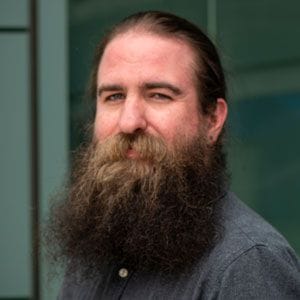
Please tell us a little about yourself.
I am an electronic structure theorist with a passion for the development of high-performance, open-source software. For the past three years, I've been a scientist at Lawrence Berkeley National Laboratory, which has allowed me to work on a diverse set of challenging science and software problems relevant to the development of energy technologies. I am also heavily involved in the open-source quantum chemistry community and the primary developer of several open-source libraries which facilitate high-performance methods development in a variety of quantum chemistry software packages.
Describe your current research (or areas of interest).
My research lies at the intersection of quantum chemistry, computer science, and applied mathematics. My primary area of current research is in the development of high-performance and reduced scaling electronic structure methods capable of leveraging the latest advances in modern supercomputing to solve challenging problems in quantum chemistry. Practically, these endeavors also involve the development of high-performance, modular, open-source software to enable a more sustainable quantum chemistry software ecosystem in the years to come.
What do you hope to bring to the Journal of Chemical Theory and Computation and the Early Career Board?
As a researcher with diverse interests, both within and external to the field of quantum chemistry, I hope to bring a wholistic perspective to chemical theory and computation research and to encourage multidicplinary research efforts to facilitate meaningful cross-pollination between fields.
Zhongyue (John) Yang
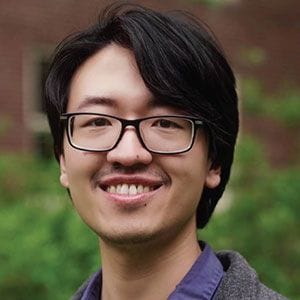
Please tell us a little about yourself.
I was born in Tianjin, renowned as a musical city in China, and reside in Nashville, often referred to as the music city in the US. I find it amusing how life has come full circle. I completed my undergraduate studies in the inaugural Chemistry Po-Ling class at Nankai University in 2013, earned my Ph.D. in Theoretical and Computational Chemistry with Ken Houk at UCLA in 2017, and undertook postdoctoral training with Heather Kulik in the Department of Chemical Engineering at MIT from 2018 to 2020. In the fall of 2020, I started on my independent research journey as an Assistant Professor of Chemistry and Data Science Institute at Vanderbilt, and I am currently serving as the SC Family Dean's Faculty Fellow in the College of Arts and Science. My experiences with Ken and Heather make me believe that mentoring the next generation of researchers is the most effective way to achieve research productivity.
I'm extremely fortunate to work with a talented group of individuals whose enthusiasm and insight for science constantly inspire me. Thanks to their groundbreaking works, I was recognized by the NIH Maximizing Investigators' Research Award in 2022 and the ACS OpenEye Cadence Molecular Science Outstanding Junior Faculty Award in 2023. Outside of work, I enjoy my moment of Zen playing German-style board games with friends, because victory, just like scientific discovery, always unfolds in unexpected ways.
Describe your current research (or areas of interest).
I envision a future where creating beneficial protein variants is as effortless as using Amazon Alexa. My research centers on creating Mutexa, a computational ecosystem aiming to revolutionize protein engineering. This approach, termed "intelligent protein engineering", integrates bioinformatics, high-throughput computation, quantum chemistry, and multiscale simulations, to predict and design function-enhancing mutants for biocatalysis, peptide therapeutics, and synthetic biology materials.
Toward this vision, my lab has been developing core-modules of Mutexa to lay the technical foundation for intelligent protein engineering. We have established a database that enables easy curation of enzyme structure and function data (IntEnzyDB), software tools for high-throughput construction and modeling of enzymes (EnzyHTP) and lasso peptides (LassoHTP), and scoring functions to predict the impact of mutations on substrate-positioning dynamics, enzymatic kinetic resolution (EnzyKR), and peptide antimicrobial activity (DeepLasso). Leveraging Mutexa, we hope to advance chemical theories to address society's growing needs in biomanufacturing and sustainability.
What do you hope to bring to the Journal of Chemical Theory and Computation and the Early Career Board?
I'm motivated to join the Early Career Board of JCTC, contributing to evolve the scope of JCTC for biomolecular theories and modeling in protein engineering. A holy-grail challenge in the field is to unravel the impact of mutations on protein functions and to innovate design principles of protein variants with enhanced physicochemical properties for industrial applications. Realizing this mission hinges on collective efforts from the community to develop fundamental theories and methodologies in quantum chemistry, molecular modeling, and deep learning. I believe this is the frontier where JCTC can prosper and lead the way.
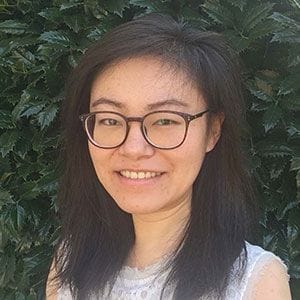
Shuwen Yue
Please tell us a little about yourself.
I am an Assistant Professor in the Robert Frederick Smith School of Chemical and Biomolecular Engineering at Cornell University and Affiliated Faculty at the Cornell AI for Science Institute. Prior to Cornell, I was a postdoctoral associate in the Department of Chemical Engineering at MIT working with Prof. Heather J. Kulik, completed my PhD in the Department of Chemical and Biological Engineering at Princeton University working with Prof. Athanassios Z. Panagiotopoulos, and received my BS in Chemical Engineering and Chemistry from the Department of Chemical and Biological Engineering at the University of Alabama.
Describe your current research (or areas of interest).
My research group at Cornell works on the application of multi-scale modeling, machine learning, and statistical mechanics towards the design of novel electrolytes and materials for energy and separation processes. We develop and apply neural network-based simulation and inference tools to enable large-scale thermodynamic and transport property predictions at first-principles accuracy. Furthermore, we construct ML structure-property mappings to unveil chemical trends rooted in molecular patterns. And lastly, we harness generative models for inverse design and optimization of electrolyte/materials properties.
What do you hope to bring to the Journal of Chemical Theory and Computation and the Early Career Board?
I hope to help broaden JCTC's scope towards the new and emerging areas of research at the intersection of AI and computational chemistry/physics. I am also excited to promote the journal to communities in statistical thermodynamics and molecular simulations, computational chemistry, chemical engineering, and AI for Science to bring outstanding and diverse research to the journal!
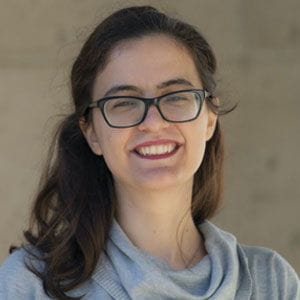
Gül H. Zerze
Please tell us a little about yourself.
I'm a computational biomolecular scientist working at the interface of physics, chemistry, engineering, and life. I'm an assistant professor of Chemical Engineering at the University of Houston (UH) and running a 100% computational lab.
I started in the UH in January 2022 as a CPRIT Scholar in cancer research. Our work spans diverse areas, from investigating the folding dynamics of RNA to intrinsically disordered proteins (IDPs) and their condensed forms. We provide fundamental insights into the thermodynamics, kinetics, and structure of biomolecular assembly that will enable the design and discovery of new modalities, diagnostics tools, and prevention strategies. We are strongly committed to advancing the understanding of complex biological processes through computational microscopy. On the technical side, we work both on improving sampling techniques and modeling strategies on a daily basis, which will enable us to resolve the complexity of biomolecular systems that are over-ambitious to the current computing power.
Describe your current research (or areas of interest).
There currently are three main themes in the lab:
- Aberrant biomolecular condensates in cancer;
- Crystallization of small molecule biologics;
- Protein structural disorder in the immune system.
What do you hope to bring to the Journal of Chemical Theory and Computation and the Early Career Board?
Early career researchers are often at the forefront of emerging trends and technologies. By playing editorial roles and publishing groundbreaking research more often in JCTC, we can advance the journal's reputation and impact, attracting a wider readership. In addition to that, I'm also hoping to bring:
- Interdisciplinary Collaboration: We have the opportunity to bridge gaps between different subfields of theoretical and computational chemistry. Most of the novel computational techniques are transferable to study a wide range of research problems but unfortunately, this is not always easily visible.
- Diversity and Inclusivity: Promoting diversity and inclusivity within the journal's leadership and content is essential. Early career members can advocate for equitable representation, ensuring that a wide range of voices and perspectives are heard. This might be more particularly true for computational molecular scientists like myself, who are more particularly underrepresented in the field.
- Outreach and Education: We can actively engage in outreach efforts to promote the journal to a broader audience, including students and researchers who may be less familiar with computational chemistry. This can involve organizing webinars, workshops, and social media campaigns to highlight JCTC's contributions.
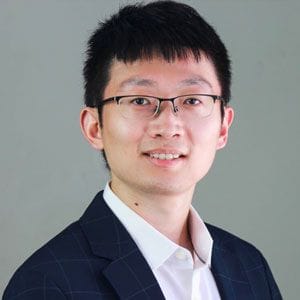
Tianyu Zhu
Please tell us a little about yourself.
I received my bachelor's degree in chemical physics from University of Science and Technology of China (USTC) in 2013. After that, I conducted my doctoral research at MIT on the development of electronic structure theories and quantum chemical simulation of organic light-emitting diode materials, under the guidance of Troy Van Voorhis. In 2018, I joined Garnet Chanâ's group at Caltech as a postdoctoral researcher, focusing on quantum many-body methods for simulating correlated electron materials. In January 2022, I started my independent research group in the Department of Chemistry at Yale University.
Describe your current research (or areas of interest).
My current research focuses on developing electronic structure theories and algorithms to investigate complex quantum phenomena in condensed phase systems, particularly solid-state materials and solid-liquid interfaces. Specifically, my group aims at creating many-body quantum chemical tools for accurate descriptions of excited-state properties in strongly correlated systems and mechanisms in heterogeneous catalytic reactions. We also have an interest in leveraging machine learning to accelerate high-level correlated quantum chemistry calculations.
What do you hope to bring to the Journal of Chemical Theory and Computation and the Early Career Board?
I hope to contribute to connecting researchers outside the field of theoretical and computational chemistry with JCTC, especially the closely related areas of materials modeling and condensed matter theory. I also hope to build connections with many other early career researchers in theoretical and computational chemistry, to learn how JCTC can better support their needs in publishing and advocate for them.
Want More from This Journal?

Stay Connected
Sign up now for email updates on future calls for papers, the latest issues, and other content from the Journal of Chemical Theory and Computation.