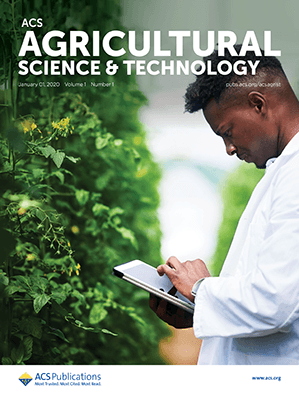
This joint Special Issue will highlight cutting-edge research and reviews that advance the frontier of agri-derived bioactives from molecular discovery to translational application. Submit your manuscript by March 1, 2027.
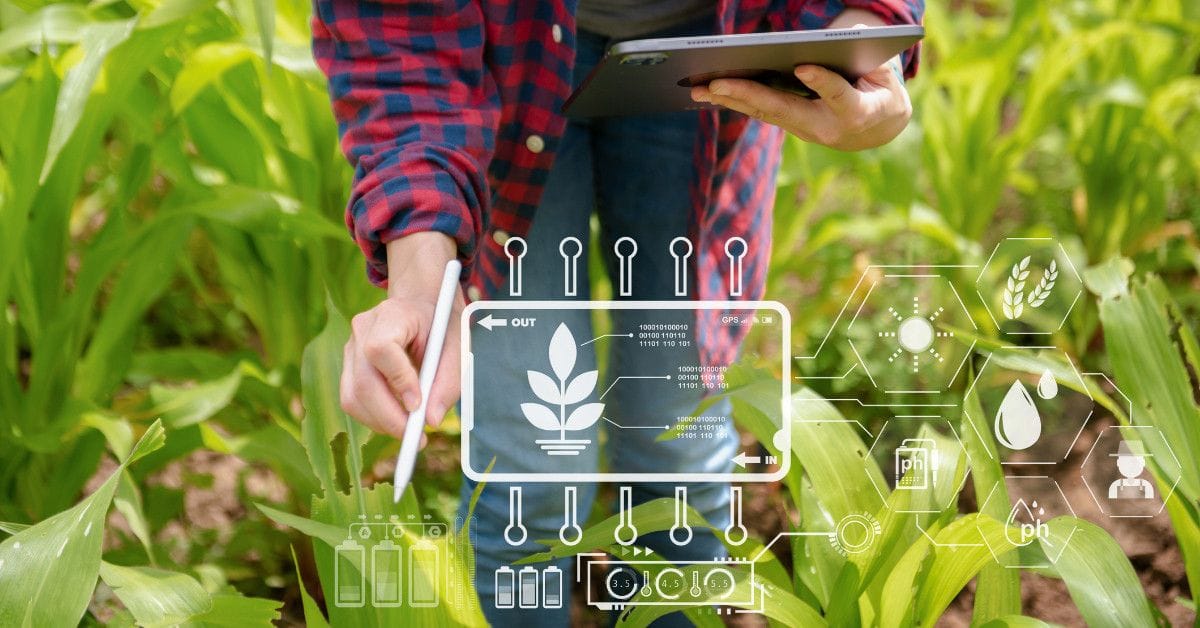
The convergence of agricultural science, natural product chemistry, digital agriculture, and translational medicine represents one of the most dynamic and rapidly evolving frontiers in modern biomedical research. Agri-derived bioactive compounds—including polyphenols, flavonoids, alkaloids, glucosinolates, and phytosterols—continue to yield therapeutic leads of remarkable structural diversity and biological relevance. Increasingly, their discovery and characterization are being enhanced by data-driven approaches, sensor-enabled crop intelligence, and precision agriculture platforms, enabling a deeper understanding of how environmental, genetic, and processing variables shape bioactive profiles. Yet, despite this progress, significant gaps persist between initial discovery and clinically actionable outcomes.
This Special Issue addresses a critical need for an integrative, technology-enabled, and mechanistically rigorous platform that bridges upstream crop science with downstream pharmaceutical and nutraceutical development, while embedding artificial intelligence, digital agriculture interfaces, and advanced sensing systems across the value chain—from field to function. Such integration is essential to transition from descriptive bioactivity to predictive, reproducible, and scalable innovation pipelines.
We seek cutting-edge, hypothesis-driven, and mechanistically rigorous contributions that advance the frontier of agri-derived bioactives from molecular discovery to translational application. Submissions should emphasize novelty, quantitative depth, and interdisciplinary integration across chemistry, biology, and engineering.
Topics of Interest
Priority themes include (but are not limited to):
Advanced Discovery & Molecular Characterization
- High-resolution isolation and structural elucidation using integrative platforms (LC–MS/MS, NMR, cryo-EM where applicable)
- Discovery of previously uncharacterized or low-abundance bioactives from agricultural matrices
- Chemodiversity mapping of crops, landraces, and underutilized species
Next-Generation Extraction & Processing Technologies
- Green, solvent-free, or low-energy extraction systems (e.g., supercritical fluids, deep eutectic solvents, pulsed electric fields, ultrasound/microwave intensification)
- Process intensification and AI-assisted optimization of extraction parameters
- Scale-up strategies linking lab discovery to industrial feasibility
Waste-to-Value and Circular Bioeconomy Innovations
- Upcycling of agri-food residues into high-value, functionally validated bioactives
- Integrated biorefinery approaches combining material, energy, and bioactive recovery
- Life-cycle and sustainability metrics embedded within bioactive production pipelines
- Sustainable packaging solutions (Advanced Bio-Based Packaging from Waste Streams)
- Digital tools for Circular Bio-economy Optimization (Use of AI, IoT, and data analytics to optimize waste collection, processing, and valorization in circular bioeconomy systems)
Structure–Activity Relationships & Mechanistic Biology
- Quantitative structure–activity relationship (QSAR) modeling
- Target identification and validation using:
- Omics technologies
- Molecular docking and simulation
- Gene expression and pathway analysis
- Mechanistic elucidation at:
- Cellular
- Tissue
- Systems biology levels
Bioavailability, Delivery, and Metabolic Fate
- Advanced studies on:
- ADME (absorption, distribution, metabolism, excretion)
- Microbiome–bioactive interactions
- Nano formulations, encapsulation, and targeted delivery systems
- Strategies to overcome bioavailability bottlenecks
- Smart formulation strategies for enhanced absorption
- In vivo and in vitro modeling of bioavailability and metabolism
Translational and Clinical Science
- Robust in vitro–in vivo correlation (IVIVC) studies
- Preclinical validation using disease-relevant models
- Well-designed human clinical trials with mechanistic endpoints
- Biomarker-driven efficacy evaluation
Functional Foods, Nutraceuticals & Cosmeceuticals (Deep Science Focus)
- Evidence-based development of next-generation functional products
- Integration of bioactives into food matrices with retained efficacy
- Mechanistic validation of health claims beyond descriptive studies
Systems Biology, Metabolomics & Digital Agriculture Interfaces
- Metabolomics, fluxomics, and integrative omics for bioactive profiling
- AI/ML-driven prediction of bioactive potential and functionality
- Linking plant metabolism to environmental, genetic, and processing variables
Biosensing, Diagnostics & Precision Detection
- Development of high-sensitivity biosensors for:
- Bioactive quantification
- Food safety and authenticity
- Real-time monitoring tools integrating nanotechnology and digital platforms
- Metabolomics-based quality control for Agri-derived products
Participating Journals
Submit your manuscript to the journal that best fits your research:
ACS Agricultural Science & Technology
Agricultural science, technology, and engineering
Author Guidelines
ACS Food Science & Technology
Food science, technology, and engineering
Author Guidelines
ACS Nutrition Science
Nutrition science, technology, and engineering
Author Guidelines
Journal of Agricultural and Food Chemistry
The chemistry and biochemistry of agriculture and food
Author Guidelines
ACS Sustainable Resource Management
Sustainable management of natural and waste resources towards a circular, net-zero chemical economy
Author Guidelines
Organizing Editors
C. Anandharamakrishnan, Guest Editor
CSIR- National Institute for Interdisciplinary Science and Technology (NIIST), India
Veda Krishnan, Guest Editor
Indian Agricultural Research Institute, India
Aiswarya Girija, Guest Editor
Aberystwyth University, United Kingdom
Tarun Belwal, Guest Editor
7 Continents Natural Products, United States
Alisdair R. Fernie, Guest Editor
Max Planck Institute of Molecular Plant Physiology, Germany
Submission Information
We welcome submissions for this Special Issue through March 1, 2027. For more information on submission requirements, please review the Author Guidelines for:
- ACS Agricultural Science & Technology
- ACS Food Science & Technology
- ACS Nutrition Science
- Journal of Agricultural and Food Chemistry
- ACS Sustainable Resource Management
Manuscript types considered for this Special Issue include all types available in either journal. All submissions will undergo the full, rigorous peer review process expected from ACS journals. Papers accepted for publication in this Special Issue will be available ASAP (as soon as publishable) online. Once all accepted papers are published, they will be compiled on a dedicated landing page to form the Special Issue.
Open Access: There are diverse open access options for publications in American Chemical Society journals. Please visit our Open Science Resource Center for more information.
How to Submit
- Log in to the ACS Publishing Center or go directly to your journal’s submission page:
- Select your manuscript type; upload your manuscript and related files.
- Review the title and abstract fields to confirm any prepopulated information has transferred correctly.
- Under “Special Issue Selection,” select Sustainable Agri-derived Products for Next-Generation Healthcare.
- Confirm all other information is correct.
- Submit your manuscript.
If you have any general questions regarding submission to this Special Issue, please contact managing.editor@jafc.acs.org.