Six research articles in ACS journals explore apple chemistry in the orchard, during storage, and in the kitchen.
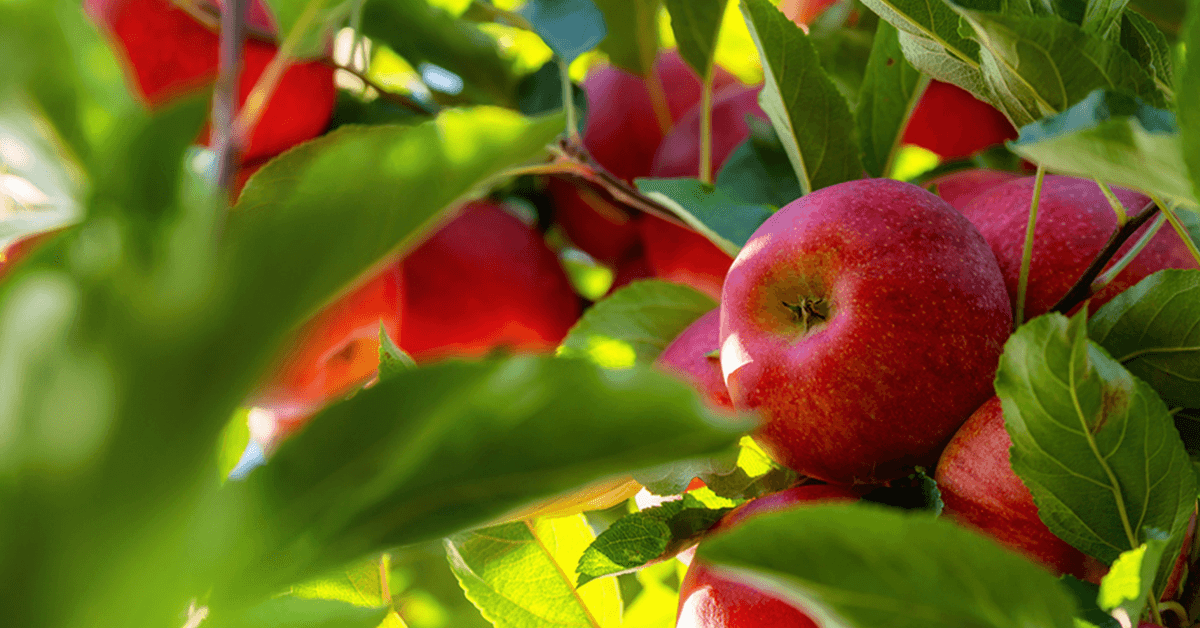
For many of us, fall brings apples into season and into our kitchens as sauces, preserves, dessert ingredients, or on their own as a nutritious snack. And inside that crisp exterior is plenty of chemistry that scientists continue to explore.
Why does a stored apple eventually turn soft? What happens to its fiber during digestion? Can apple pectin set into a gel without sugar? Six recent studies from ACS journals take a closer look at apple chemistry, including how minerals relate to an apple’s polyphenols, why stored fruit breaks down, how cooking changes aroma and fiber, and more.
Mining Apples for Mineral Clues
Polyphenols shape an apple’s color, astringency, and browning, but how these compounds track with a fruit’s mineral content across cultivars has been unclear. A study in the Journal of Agricultural and Food Chemistry compared five minerals and 13 polyphenol variables in 140 dessert apple cultivars grown in the same orchard. Even after accounting for the other minerals, potassium was most closely linked to chlorogenic acid, a common apple polyphenol. The associations don’t establish cause and effect, but they suggest mineral content is worth factoring in when researchers compare the polyphenol makeup of different cultivars.
Read the Full Article
Associations between Fruit Mineral Composition and Polyphenol Profiles across 140 Dessert Apple Cultivars (Malus domestica)
Eleonora Zickenheiner*
DOI: 10.1021/acs.jafc.6c06394
DOI: 10.1021/acs.jafc.6c06394
When Good Apples Go Soft
As apples age after harvest, programmed cell death contributes to their decline. This controlled process is marked by the collapse of the cell’s central vacuole. Reporting in the Journal of Agricultural and Food Chemistry, researchers identified a transcription factor, MdERFd4, that binds to a gene encoding a vacuolar processing enzyme, which helps trigger that collapse. Both genes respond to ethylene, the hormone that drives apple ripening, and boosting either one sped up ripening and cell death in apples and tomatoes. The authors say a clearer picture of these molecular steps could eventually help stored apples stay fresh longer.
Read the Full Article
Ethylene Response Factor MdERFd4 Regulates Programmed Cell Death in Postharvest Apple Fruit Partially by Interacting with Vacuolar Processing Enzyme Gene MdVPEγ2
Sijie Dong, Jingyi Lv*, Ze Cai, Dingbo Liu, Yanxia Qiu, and Yonghong Ge
DOI: 10.1021/acs.jafc.6c06267
DOI: 10.1021/acs.jafc.6c06267
Same Apple, Different Digestive Fate
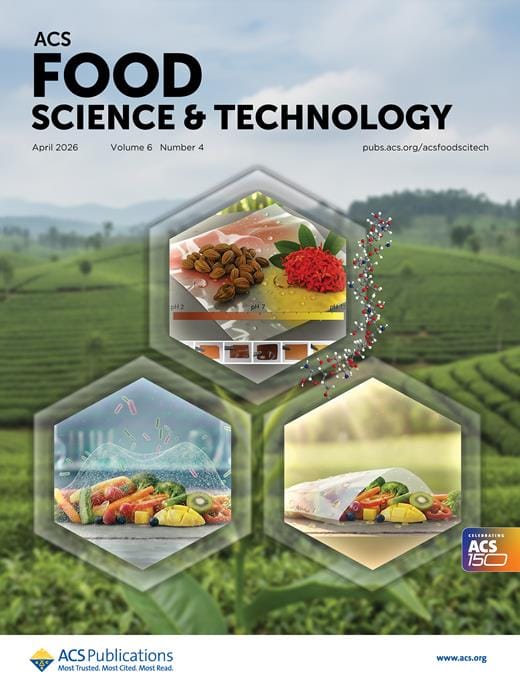
Pectin, the main fiber in apples, has been linked to gut health benefits, but most studies of how it holds up during digestion use purified pectin rather than whole fruit. To see how real fruit tissue compares, researchers ran simulated digestions on fresh Golden Delicious pulp and on a heat-treated, homogenized apple product. Pectin from the fresh pulp lost most of its arabinose-rich side chains and shrank about tenfold in molecular size. Pectin from the processed apples stayed largely intact, as did purified pectin digested on its own. The authors, reporting in ACS Food Science & Technology, suggest that the apple’s own enzymes may be responsible. Processing would inactivate those enzymes, but the idea still needs testing.
Read the Full Article
Matrix-Dependent Remodeling of an RG-I-Rich Pectin Fraction during INFOGEST Digestion of Golden Delicious Apples: Intact Pulp vs Processed Homogenate
Clara Comuzzi*, Marilisa Alongi, Umberto Lanza, Asja Brovedani, Erica Moret, Lara Manzocco, and Maria Cristina Nicoli
DOI: 10.1021/acsfoodscitech.6c00023
DOI: 10.1021/acsfoodscitech.6c00023
Turning Up the Heat on Apple Puree Aroma
Aroma is a big part of apple puree’s appeal, and it depends on volatile organic compounds (VOCs) that shift as the fruit is ground and cooked. In a study published in ACS Food Science & Technology, researchers tracked 15 of these compounds while making Golden Delicious puree at different temperatures and grinding speeds. Cooking at 95 °C instead of 70 °C lowered levels of most VOCs, while furfural, which forms during heating, increased only at 82.5 °C and above. Faster grinding boosted some aldehydes, such as hexanal. Notably, modeling suggested that most of the losses came from compounds reacting within the puree, not escaping as vapor.
Read the Full Article
Monitoring Changes in Volatile Organic Compounds during Apple Puree Processing by Varying Thermomechanical Conditions
Ahmadou Moustapha Dieng, Sylvie Bureau*, David Page, Christian Ginies, Raphaël Plasson, Isabelle Souchon, and Alexandre Leca
DOI: 10.1021/acsfoodscitech.5c01235
DOI: 10.1021/acsfoodscitech.5c01235
Jam Science, Minus the Sugar
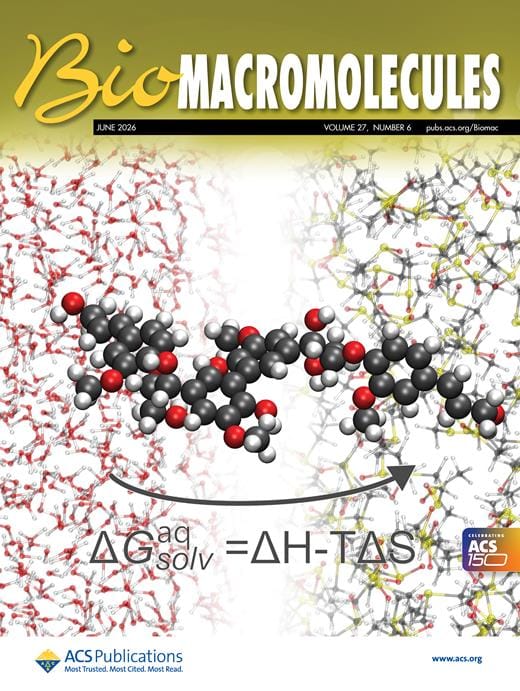
Jam sets because pectin forms a gel, but high-methoxyl apple pectin usually needs plenty of sugar and an acidic pH to do so, and the resulting gels can weep liquid over time. Research in Biomacromolecules now shows that poly(ethylene glycol) (PEG), a water-soluble polymer, can take sugar’s place. Mixing apple pectin and PEG solutions produced gels within seconds at room temperature, with no added sugar or acid. PEG appears to work much like sugar, tying up water so pectin chains can link together. Adjusting the concentrations of the two let the team tune gel stiffness and water retention.
Read the Full Article
Molecular and Rheological Insights into Apple Pectin—Poly(ethylene glycol) Gelation in Aqueous Media
Nora Chelfouh, Gabrielle Foran, Mickaël Dollé*, and Audrey Laventure*
DOI: 10.1021/acs.biomac.6c00047
DOI: 10.1021/acs.biomac.6c00047
Fighting Fire Blight with Oregano and Clay
Fire blight, a bacterial disease that enters apple and pear trees through their flowers, can destroy up to 95% of an orchard’s yield. In some countries, including the US, growers spray the antibiotic streptomycin during bloom, raising concerns about antibiotic resistance. Researchers reporting in the Journal of Agricultural and Food Chemistry took an antibiotic-free approach, loading essential oils such as oregano onto bentonite nanoclay, a carrier that stayed on flowers for more than a week. In 2023 field trials, the oregano–clay formulation reduced disease by 76%, close to streptomycin’s 81%. Its performance dropped in 2024, a cooler and drier season, and the authors call for testing across more seasons.
Read the Full Article
Advanced Nanoencapsulated Essential Oil Materials as Novel Antimicrobials for the Control of Fire Blight in Apple
Andrea Brunelli*, Cástor Salgado, José Francisco Fernandez, Nubia Zuverza-Mena, Jason C. White, and Quan Zeng*
DOI: 10.1021/acs.jafc.6c02932
DOI: 10.1021/acs.jafc.6c02932