This annual award recognizes outstanding research work in the areas of agrochemicals and food chemistry. Learn more about the 2023 awardees and their winning research.
The Journal of Agricultural and Food Chemistry (JAFC) and the ACS Divisions of Agrochemicals (AGRO) and Agricultural and Food Chemistry (AGFD) are delighted to announce the winners of the 2023 Journal of Agricultural and Food Chemistry Research Article of the Year Award. Launched in 2013, this award annually recognizes outstanding research work in the areas of agrochemicals and food chemistry with the support of the ACS Division of Agrochemicals and Division of Agricultural and Food Chemistry.
Congratulations to this year’s award recipients! The awards will be presented at ACS Fall 2023. Each award consists of an honorarium, a plaque, and travel expenses to attend the ACS National Meeting to present their research. The AGFD Division Award will be presented at 8:00-8:40 AM on Tuesday 15 August 2023 in Room 3010, West Building, Moscone Center, San Francisco, and the AGRO Division Award will be presented on the same day at 11:00-11:55 AM in neighboring Room 3014.
Winner: AGRO Division Best Research Article
Read the Article
Novel Plant Growth Regulator Guvermectin from Plant Growth-Promoting Rhizobacteria Boosts Biomass and Grain Yield in Rice
By Chongxi Liu, Lu Bai, Peng Cao, Shanshan Li, Sheng-Xiong Huang, Jidong Wang, Lei Li, Ji Zhang, Junwei Zhao, Jia Song, Peng Sun, Yanyan Zhang, Hui Zhang, Xiaowei Guo, Xilang Yang, Xinqiu Tan, Wende Liu, Xiangjing Wang, and Wensheng Xiang
Plant growth regulators (PGRs) play an essential role in improving crop yield and quality. This exceptional research article reports a new PGR, guvermectin (GV), isolated from plant growth-promoting rhizobacteria, which can promote root and coleoptile growth, tillering, and early maturing in rice. A four-year field trial involving 28 rice varieties showed that seed-soaking treatment with GV increased yields by 6.2 to 19.6%, outperforming other PGRs.
Winner: AGFD Division Best Research Article
Read the Article
Sweet Biotechnology: Enzymatic Production and Digestibility Screening of Novel Kojibiose and Nigerose Analogues
By Shari Dhaene, Amar Van Laar, Marc De Doncker, Emma De Beul, Koen Beerens, Charlotte Grootaert, Jurgen Caroen, Johan Van der Eycken, John Van Camp, and Tom Desmet
Excessive sugar intake is a global problem linked to the global obesity pandemic and related metabolic diseases. In this outstanding research article, the authors report the enzymatic production and in vitro digestibility of three novel glycosides. These new sugars showed a reduced digestibility and a limited impact on energy metabolism, indicating their promise as potential future sweeteners with healthier properties.
Accepting the Research Article of the Year Award (AGRO Division) on behalf of all co-authors: Dr. Shanshan Li and Dr. Wensheng Xiang

Dr. Shanshan Li is a professor at the Institute of Plant Protection, Chinese Academy of Agricultural Sciences (IPPCAAS, China). Her research interests are focused on agricultural natural product discovery from Streptomyces and strain engineering for production enhancement of valuable chemicals, including isolation and screening of useful strains in the agricultural field, elucidation of general metabolic and regulatory mechanisms of biosynthesis of target natural chemicals, and development of useful approaches to construct high-yield cell factories of target natural products.
What inspired you to pursue your particular area of research?
Food security is crucial for the survival of people worldwide. According to data from the Food and Agriculture Organization of the United Nations, plant diseases cause global economic losses exceeding 220 billion US dollars annually. Pesticides are effective means for pest and disease control, and with the demand for sustainable agriculture worldwide, the development of green pesticides has become an important research direction. Natural product pesticides are an integral part of green pesticides due to their strong targeting ability, good biological activity, and ecological friendliness. Avermectin, jinggangmycin, and kasugamycin are commonly used natural product pesticides in the agricultural field. Streptomyces is a well-known species for its ability to produce a large number of active natural products, which is responsible for the industrial production of over 60% of natural product drugs. Therefore, conducting research on natural product pesticides derived from Streptomyces holds significant research significance in building a green pest and disease control system for crops and reducing food losses.
What’s next for your research?
As secondary metabolites of Streptomyces, natural products have very low yields and typically reach only milligram levels in wild-type strains, which are insufficient to meet agricultural needs. Therefore, construction of efficient Streptomyces cell factories for high yield of target compounds is an important aspect of natural product research. Streptomyces possess complex metabolic and regulatory networks, which tightly control the biosynthesis of natural products, while currently, our understanding of these intricate processes is quite limited. Therefore, in future work, I will leverage the enabling technologies of synthetic biology to advance our understanding of the complex metabolic regulation mechanisms in Streptomyces. Based on this knowledge, we aim to facilitate the discovery and industrial application of new natural product pesticides.
What do you consider to be the most important advances in your field in the past five years?
I believe that in the field of microbial natural product pesticide research, artificial intelligence and enabling technologies of synthetic biology have made significant advancements in the past five years.
Using artificial intelligence to mine novel natural products on a large scale has revolutionized the traditional approach of strain selection and natural product isolation in drug discovery. By establishing accurate small molecule prediction methods through machine learning, this technology strategy greatly enhances the efficiency of screening target natural products.
By leveraging the enabling technologies of synthetic biology, it is now possible to design and reconstruct efficient biosynthetic metabolic networks for natural products. The discovery of synthetic biology components, construction of efficient functional modules, research on strain adaptability mechanisms, and the use of high-efficiency gene editing technologies such as CRISPR have advanced the design, reconstruction, and metabolic optimization of efficient heterologous pathways. These advancements significantly enhance the development of efficient cell factories for natural product production and hold great importance for the industrial application of natural product drugs.
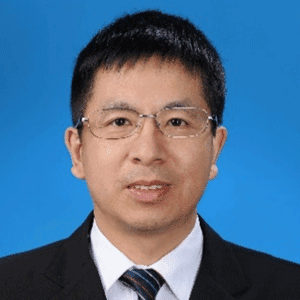
Dr. Wensheng Xiang is a professor at Northeast Agricultural University (NEAU, China) and Institute of Plant Protection, Chinese Academy of Agricultural Sciences (IPPCAAS, China). His research interests are agricultural natural product discovery and industrialization. He has implanted industrialization of four biopesticides including milbemycins as well as the novel plant growth regulator guvermectin. Moreover, he has received four National and Provincial Science and Technology Awards.
Accepting the Research Article of the Year Award (AGFD Division) on behalf of all co-authors: Dr. Shari Dhaene

Shari Dhaene is currently a postdoctoral researcher at the Centre for Synthetic Biology (Glycodirect) at the Faculty of Bioscience Engineering, Ghent University, Belgium where she currently fulfils the role as industrial liaison with the focus on rare sugar production. After finishing her higher education at Ghent University in 2017 as Master of Science in Bioscience Engineering in Chemistry and Bioprocess technology, she started as a Ph.D. researcher at the Centre for Synthetic Biology sponsored by the Flemish government with a “Strategic Basic Research” (SBO) grant funded by FWO Flanders (Glycoprofit). During this period, she was a member of the Glycodirect group where she focused on the production and evaluation of rare (and novel) disaccharides.
What inspired you to pursue your particular area of research?
To complete my Master's in Bioscience Engineering, with a specialization in Chemistry and Bioprocess Technology, I chose to pursue a master's thesis that integrated chemistry and biotechnology, specifically focusing on the glycosylation of beta-lactams. Throughout this final year of my studies, I discovered a strong preference towards the field of biotechnology. There are two main reasons behind this: firstly, my desire to contribute to the development of a more biobased economy with the help of enzymes, and secondly, my fascination with the vast world of carbohydrates, which extends far beyond the realm of our ordinary table sugar. The potential for discovering novel and intriguing compounds is extensive and largely unexplored.
What’s next for your research?
Currently, my research revolves around the utilization of enzymes and their remarkable capacity to generate novel sugars. While initially focused on disaccharides, my primary emphasis has now shifted towards exploring trisaccharides.
What do you consider to be the most important advances in your field in the past five years?
Currently, a collection of over 248 million sequences exists, with the number growing (UniProt). This uncharted terrain for exploring enzymes, offers limitless opportunities to discover novel enzymes and to delve into their potential in captivating reactions. Furthermore, by harnessing extensive datasets, we have the capacity to unlock exciting possibilities by means of training. This evolution has tremendously increased in the past years leading to user-friendly predication tools (solubility, thermostability, fold, etc.). Additionally, as we witness the exciting emergence of AI, we're barely scratching the surface of its immense potential.