This annual award recognizes outstanding research work in the areas of agrochemicals and food chemistry. Learn more about this year's awardees and read their winning research articles.

The Journal of Agricultural and Food Chemistry (JAFC) and the ACS Divisions of Agricultural and Food Chemistry (AGFD) and Agrochemicals (AGRO) are delighted to announce the winners of the 2025 Journal of Agricultural and Food Chemistry Research Article of the Year Award. Launched in 2013, this annual award recognizes outstanding research work in the areas of agrochemicals and food chemistry.
We are excited to announce the 2025 winning papers and the authors who are accepting the awards on behalf of their teams:
- Winning Article, AGRO Division: Electrochemical Generation of Hydroxide and Hydrogen Peroxide for Hydrolysis of Sulfuryl Fluoride Fumigant
Award Recipient: Dr. William (Bill) Mitch, Stanford University, United States - Winning Article, AGFD Division: Reactivity of the 2-Methylfuran Phase I Metabolite 3-Acetylacrolein Toward DNA
Award Recipient: Dr. Verena Schäfer, GlaxoSmithKline, Germany
Congratulations to this year’s award recipients, who were selected from more than 80 nominated articles! The winners will receive their awards and present their research at ACS Fall 2025. Each winner receives an honorarium, a plaque, and travel expenses to attend the ACS National Meeting.
Winning Article: AGRO Division Research Article of the Year Award
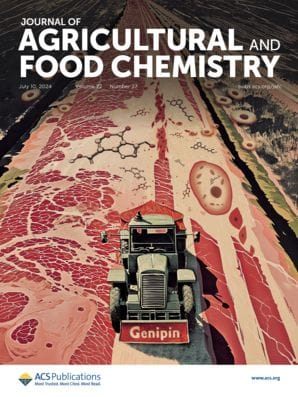
Read the Full Article
Electrochemical Generation of Hydroxide and Hydrogen Peroxide for Hydrolysis of Sulfuryl Fluoride Fumigant
Cindy Weng, Cade Napier, Cedric Katte, Spencer S. Walse, and William A. Mitch*
DOI: 10.1021/acs.jafc.4c00864
DOI: 10.1021/acs.jafc.4c00864
Sulfuryl fluoride (SO2F2) is a strong greenhouse gas, much more potent than carbon dioxide and methane. This article reports on an electrochemical approach to produce the reagents needed to capture and neutralize SO2F2 fumes from post-harvest fumigation chambers, turning them into harmless salts. This new method provides an easier, cheaper solution for producing the chemicals needed to neutralize SO2F2 fumes, rather than purchasing them directly.
Accepting the AGRO Division Research Article of the Year Award on behalf of all co-authors: Dr. William (Bill) Mitch

Dr. Mitch is a Professor in the Department of Civil and Environmental Engineering at Stanford University. His research focuses on conventional drinking water and potable reuse of municipal wastewater. He obtained a BA in Archaeology from Harvard University and MS and PhD degrees in Civil and Environmental Engineering from the University of California at Berkeley. He received the 2004 Outstanding Doctoral Dissertation Award from the Association of Environmental Engineering and Science Professors and Parsons Engineering, and a NSF Career Award in 2007. He served as the Chair of the 2017 Disinfection Byproducts Gordon Conference. He holds a PE license in California.
What inspired you to pursue your particular area of research?
This project was motivated by practical challenges faced by agricultural producers exporting crops, such as grains, dried fruits, and nuts. These products must be fumigated prior to export to prevent the spread of pests. Currently, fumigants are vented to the atmosphere after the treatment. Sulfuryl fluoride has emerged as the only viable fumigant for such products after the use of methyl bromide was phased out over concerns that its emissions contribute to ozone depletion. However, with a global warming potential nearly 5000-fold higher than CO2, concerns about emissions of sulfuryl fluoride are increasing. For example, the E.U.’s Implementing Regulation 2017/270 threatens to preclude use of sulfuryl fluoride within the E.U. over these concerns. Exports to the E.U. also could be prevented if registration of sulfuryl fluoride in the E.U. is halted, because of concerns over sulfuryl fluoride residues within imported products.
The overall goal of the project is to develop a technology to capture and destroy sulfuryl fluoride fumes after the treatment. While previous research demonstrated that sulfuryl fluoride fumes could be captured by venting through a counter-current scrubbing system and then hydrolyzed to sulfate and fluoride by hydroxide at high pH, our project partner at the Connecticut Agricultural Experiment Station (Dr. Joseph Pignatello) recently demonstrated that the conjugate base of hydrogen peroxide (HOO-) is far more efficient than HO-. Together with our other project partner at the USDA in Parlier, California (co-author Dr. Spencer Walse), Dr. Pignatello has been conducting pilot-tests of the scrubber treatment using ~400 g/L hydrogen peroxide at pH ~12. While effective, this requires purchase and transport of chemicals, as well as safety concerns. For example, mixing these reagents on-site released so much heat that portions of the pilot unit melted.
The objective of our study was to develop an electrochemical technique to safely generate high pH solutions of hydrogen peroxide on-site, avoiding reagent purchase and transport.
What do you consider to be the most important advances in your field in the past five years?
Dr. Pignatello’s discovery that HOO- is far more effective than HO- for hydrolysis of sulfuryl fluoride was certainly important. Regarding electrochemistry, several factors have hindered the development of environmental applications, despite its promise for on-site reagent generation. However, this particular application is very promising for moving towards a full-scale implementation.
First, a substantial portion of prior research has targeted the degradation of low-concentration contaminants in freshwater matrices. Targeting low concentration (mg/L) constituents can be inherently inefficient, since other high-concentration constituents (e.g., natural organic matter) can outcompete the low concentration targets for the electrochemical reactions. In our application, we are targeting the production of hydrogen peroxide at g/L scales. The efficiency of electrochemical processes increases with solution conductivity, such that working in freshwater matrices (e.g., drinking water) is inherently inefficient. However, the cost of salts needed to raise the solution ionic strength typically dwarfs the cost of the electricity. For our project, we are using the sulfate produced as a product of sulfuryl fluoride hydrolysis as a free source of salt that accumulates with each reuse of the scrubbing solution, rendering the process more efficient with each scrubbing cycle.
Electrochemical research also frequently focuses on anodic (oxidative) systems, which typically require expensive electrode materials (e.g., boron-doped diamond) and can produce toxic byproducts (e.g., chlorate from oxidation of chloride). Our project is using low-cost carbon-based cathodes to produce hydrogen peroxide and hydroxide by reduction of oxygen, thereby avoiding the production of toxic oxidation products.
What’s next for your research?
Our paper fleshed out how hydrogen peroxide and hydroxide production rates and electricity consumption changes with variations in basic operating conditions (e.g., sulfate concentration) using a laboratory-scale, batch electrochemical system. Under our optimal conditions, our initial cost estimates indicate that the operating costs would be nearly half those associated with purchase of hydrogen peroxide and sodium hydroxide, while avoiding the hazards associated with mixing these reagents on-site. We are currently working on scaling this system up towards a small-scale pilot unit for testing in concert with a pilot-scale scrubbing unit.
In addition to further optimizing the conditions to increase reagent production rates while minimizing electricity consumption, we are working on identifying cheaper, but effective materials for the electrodes, particularly the anode. We are also evaluating electrochemical reactor configurations to convert from our current batch system towards a flow-through configuration to facilitate continuous passage of the scrubbing solution through the electrochemical system to maintain steady-state concentrations of the hydrogen peroxide and hydroxide reagents.
Winning Article: AGFD Division Research Article of the Year Award
Read the Full Article
Reactivity of the 2-Methylfuran Phase I Metabolite 3-Acetylacrolein Toward DNA
Verena Schäfer, Simone Stegmüller, Hanna Becker, and Elke Richling*
DOI: 10.1021/acs.jafc.4c07280
DOI: 10.1021/acs.jafc.4c07280
This study explores how 2-methylfuran (2-MF), a chemical found in foods such as coffee and cereal, can form 3-acetylacrolein (AcA) in the body and bind to certain parts of DNA, potentially leading to mutations and increasing the risk of diseases such as cancer. This work helps us to better understand and assess the potential health risks associated with consuming foods containing 2-methylfuran.
Accepting the AGFD Division Research Article of the Year Award on behalf of all co-authors: Dr. Verena Schäfer

Dr. Schäfer holds a PhD in Food Chemistry from RPTU University Kaiserslautern-Landau (2022). Her research focused on the metabolism and toxicological evaluation of heat-induced food contaminants, particularly 2-methylfuran. She investigated metabolic pathways, identified biomarkers of exposure, and studied structure–activity relationships to better understand the mechanisms behind toxicity. In 2021, she completed a certified program in Clinical Research Management at the HGA – Gesundheitsakademie Hessen, with a focus on clinical trial conduct, GxP compliance, and medical communication. She currently works in the pharmaceutical industry (GlaxoSmithKline), where she is involved in the interpretation, and scientific communication of clinical study data.
What inspired you to pursue your particular area of research?
Our health is closely linked to environmental exposures, especially through diet—making it essential to identify both beneficial and harmful food compounds.
Furan, a process-related food contaminant, has been classified by the International Agency for Research on Cancer (IARC, 1995) as possibly carcinogenic to humans (Group 2B), based on sufficient evidence in rodents but inadequate evidence in humans. In 2017, the European Food Safety Authority (EFSA) published a comprehensive review of furan and related compounds such as 2-methylfuran, 2,5-dimethylfuran, and 2-ethylfuran. They highlighted significant uncertainties in the assessment of exposure but also toxicity, which remains a key challenge in evaluating risk.
While exposure is a crucial aspect, we aimed to deepen the understanding of the metabolism of these compounds to uncover the mechanisms behind their toxicological effects. Understanding the mechanism of action not only explains the basis of these effects but also helps predict potential risks, identify detoxification pathways, and distinguish between harmful and safe substances. Furthermore, this knowledge enhances the predictive accuracy for structurally similar compounds, improving in silico screening approaches.
What’s next for your research?
The research group of Prof. Elke Richling at the RPTU University in Kaiserslautern continues to focus on understanding how heat-induced contaminants are metabolized and whether their metabolites pose health risks. Key areas of interest include the kinetics of metabolite formation and the identification of biomarkers of exposure. Additionally, elucidating the mechanism of action remains essential for evaluating the safety of these substances.
Part of the research will focus on the metabolism of 2,5-dimethylfuran in more detail. At the same time, the research is expanding to other alkylfurans, particularly since our colleague, Prof. Humpf from the University of Münster (Germany), recently identified pentylfuran and ethylfuran in breakfast cereals for the first time.
What do you consider to be the most important advances in your field in the past five years?
One significant advancement has been the development of omics technologies, especially untargeted metabolomics using time-of-flight mass spectrometry. These techniques allow for more comprehensive profiling of metabolic changes and the identification of novel metabolites resulting from exposure to harmful substances. This has greatly enhanced our understanding of complex biological responses.
Another important development is the growing recognition of the need to investigate potentially harmful food contaminants. This awareness is driving more targeted research, ultimately contributing to efforts aimed at reducing harmful substances in food and improving public health.
Learn About Last Year's Winners

Information About Nominations and Winner Selections
Nominations for these awards may be made by AGRO Division members, AGFD Division members, and members of the Editorial Board and Editorial Advisory Board of the Journal of Agricultural and Food Chemistry. Nominations can be sent to the Managing Editor of the Journal of Agricultural and Food Chemistry with a short statement of justification, and close on January 31. To be eligible, articles must have been published in an issue of the Journal of Agricultural and Food Chemistry in the calendar year directly preceding the award. Self-nominations are not eligible, nor are papers authored by Editorial Board members of the Journal of Agricultural and Food Chemistry.
Selection of the winners is made by diverse Award Committees consisting of the journal Editor-in-Chief, two journal Associate Editors, the Division Chair, and 1-2 additional representatives from the Divisions. Nominated articles are ranked by the Award Committee members against criteria including the impact of the work in terms of its potential to shape future research, the elegance of the experimental design, and the interest to the Divisions’ memberships.