This annual award honors the contributions of an individual from each of three major geographic regions who has made a major recent impact in the field of measurement science. Learn more about the 2024 winners and browse their recent publications in ACS journals.
ACS Measurement Science Au, ACS Sensors, Analytical Chemistry, Journal of Proteome Research, and the Journal of the American Society for Mass Spectrometry, in partnership with the ACS Division of Analytical Chemistry, are proud to announce the winners of the 2024 Advances in Measurement Science Lectureship Award:
- Peter Nemes, University of Maryland, College Park (The Americas)
- Boris Mizaikoff, Ulm University and Hahn-Schickard (Europe, The Middle East, Africa)
- Juyoung Yoon, Ewha Womans University (Asia-Pacific)
This annual award honors the contributions of one individual from each of three major geographic regions—the Americas, Europe/the Middle East/Africa (EMEA), and Asia-Pacific—who has made a major recent impact in the field of measurement science.
The winners were awarded the opportunity to present their research live as part of ACS Publications' Winners Week 2024 webinar series—now available to watch on demand! Hear from the winners as they discuss their work and answer questions from live attendees, moderated by Prof. J. Justin Gooding (Editor-in-Chief, ACS Sensors) and Prof. Jonathan V. Sweedler (Editor-in-Chief, Analytical Chemistry).
Learn more about the winners in their interviews below.
Meet Prof. Peter Nemes
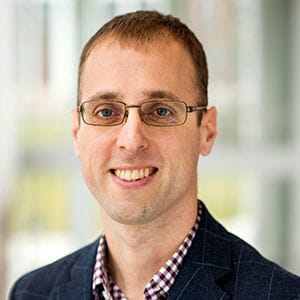
Prof. Peter Nemes is a Professor of Chemistry and Biochemistry at the University of Maryland, College Park. He obtained a M.Sc. in Chemistry (summa cum laude) from the Eotvos Lorand University (Budapest, Hungary). He obtained his Ph.D. in Chemistry with Dr. Akos Vertes at The George Washington University (Washington, DC), where he invented LAESI mass spectrometry. Prof. Nemes completed postdoctoral training in analytical neuroscience with Dr. Jonathan V. Sweedler at the University of Illinois at Urbana-Champaign, IL, where he developed high-sensitivity instruments for small and large biomolecules in single neurons. In 2011, he joined the US Food and Drug Administration as a Laboratory Leader and Staff Fellow. In 2013, Prof. Nemes returned to The George Washington University as an Assistant Professor of Chemistry. Prof. Nemes moved to the University of Maryland in January 2018.
Research in the Nemes Laboratory develops ultrasensitive microanalytical mass spectrometry platforms to study metabolic and proteomic processes in limited cell populations, cells, and organelles with implications in cell and neurodevelopmental biology. Prof. Nemes has published 59 peer-reviewed publications and 6 book chapters.
What does this award mean to you?
I am deeply honored by this award. It recognizes the combined efforts of current group members and alumni, who have built specialized mass spectrometry platforms to enable trace-sensitive proteomics–metabolomics. We have applied these technologies to better understand the molecular state of single embryonic cells (frog) and its implication on differentiation. With colleagues from the life sciences, we have extended these technologies to other biological models. Therefore, this award also celebrates our shared efforts to leverage these instruments in an interdisciplinary context.
What do you think is the biggest challenge currently in your area of research?
Scalability and sensitivity are two of the most pressing challenges in single-cell analyses at present. My lab focuses on single-cell proteomics and metabolomics in developing biological systems. We work with live amphibian embryos, which pose unique challenges: embryonic cells divide fast and migrate over long distances. In parallel, our projects on the murine brain necessitate measuring small cells and neurons, which are tightly packed. Our first grand challenge is the collection of these cells without losing information on their identity and location. For larger cells in the early embryo, precision-fabricated microcapillaries helped us develop dual proteo-metabolomics in vivo. Although we have recently downscaled this to “patch-clamp proteomics” for single neurons, the routine analysis of these cells is still a major challenge. As is detection of low-copy biomolecules to address biological questions. Although our technologies are able to deliver a 30-zmol (~18,000 copies) sensitivity for peptides/proteins, detection of transcription factors is a tough undertaking. With other colleagues, we hope to develop means to efficiently collect cells and extract their contents as well as separate, ionize, detect, and quantify the biomolecules within.
What is next in your research?
We have multiple projects addressing scalability and sensitivity for single cells and other limited amounts of specimens. My group has taken on orthogonal directions to this end. We hope to maximize the detectable ‘omes in the cell by designing next-generation capillary electrophoresis systems and various data acquisition strategies for mass spectrometry. In parallel, we are pursuing ways to help democratize access to these types of instruments so that others can also benefit from them. Of course, a great deal of our work in measurement science is to advance the understanding of the cell. As we seek to address various questions in developmental neurobiology, new analytical barriers arise. These challenges guide the design of our next instruments. This loop keeps us quite busy, and I cannot wait for members of my group to tell readers about the neat advances they have recently made in both technology and biology.
Have there been any highlights in your career to date that you are especially proud of?
I am honored to have developed single-cell metabolomics for embryology and contributed to the inception of single-cell proteomics by mass spectrometry over the last decade. As a measurement scientist, I am excited at the sheer sight of the many small-to-large “toys” my group members have built. These instruments have ushered cell analyses to accuracy, reproducibility, and a capability for quantification. As a card-carrying bioanalytical chemist, it has been especially rewarding for me to learn to work with live organisms (frogs) and be able to advance biology forward. My group has made multiple discoveries in the life sciences thanks to the new proteomic–metabolomic insights we have learned about cells. By systematically applying these tools, we have uncovered small molecules that can alter normal cell fate decisions to epidermal and neural tissues and unveiled small-molecular chemical communication in the vertebrate (frog) embryo. Recently, we have also discovered noncanonical morphogens that the Spemann-Mangold Organizer, a signaling center in the embryo, produces to pattern the body plan. It is gratifying to see the measurement tools we build shine through the lens of life science.
What would your advice be to someone just starting out in the field?
Definitely know your area of specialization but be open to other disciplines to make the most headway. It has been highly rewarding to not only build cool instruments but also to engage them in biology research. Some of these studies even led to discoveries in biology, going well beyond what I had ever dreamed of accomplishing as an aspiring scientist.
Meet Prof. Boris Mizaikoff
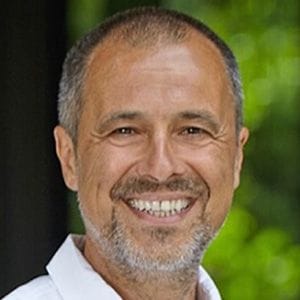
Prof. Boris Mizaikoff is a Chaired Professor and Director of the Institute of Analytical and Bioanalytical Chemistry at Ulm University (Germany) with prior appointments at the Vienna University of Technology (Austria) and at the Georgia Institute of Technology (USA). Since 2021, he is also an Executive Board Member at Hahn-Schickard in Ulm (Germany). His research interests focus on optical sensors, biosensors, and biomimetic sensors, mid-infrared photonics, system miniaturization and integration and biomolecular/biomimetic molecular recognition architectures with applications in environmental monitoring, process analysis, and biomedical/clinical diagnostics. He is author/co-author of 450+ peer-reviewed publications and 20+ patents.
What does this award mean to you?
This award is truly special because it is bestowed by “our community”. On purpose, I say “our” because I cannot thank my research teams enough—past and present—for the fantastic work accomplished at the forefront of modern analytical chemistry. It is an absolute privilege working with so many talented young people and amazing collaborators around the world. This lectureship award honors our interdisciplinary research and enables showcasing the potential of advanced mid-infrared photonic sensing schemes and next-generation biomimetic molecular recognition architectures.
What do you think is the biggest challenge currently in your area of research?
We focus predominantly on two research areas—photonic sensors and biomimetic recognition materials, which are complementary technologies that each have their challenges. One of the main aspects we are currently trying to address is translating fundamental new science from laboratory experiments into what I would call “toolbox technologies” that are rapidly and modularly adaptable to a wide range of application needs. This will be crucial for the more widespread adoption of our technologies in real-world analytical scenarios.
What is next in your research?
We have a strong focus on integrated photonics augmented by molecular recognition architectures for maximizing sensitivity and selectivity in liquid and gas phase molecular analysis and sensing. Truly exciting collaborations are right now ongoing with the University Clinics in Freiburg and Ulm in the field of exhaled breath analysis and intra-operative spectroscopy. Complementarily, we have recently ventured into the topic of cultural heritage protection associated with climate change where the need for sensing and monitoring of molecular parameters in air and water has been identified as a crucial aspect for mitigating chem-/biohazards. We like to keep it diverse, exciting, and challenging!
Have there been any highlights in your career to date that you are especially proud of?
I guess my highlights have always been the graduation of students or the successful accomplishment of postdoctoral research that has enabled young scientists to pursue the next steps in their independent careers in industry or academia. What I am proud of is that we are apparently not (yet) running out of crazy research ideas 😀…
What would your advice be to someone just starting out in the field?
Dare to think outside the box and don’t let anyone tell you what to do and when to do it! I am an amateur ultra-trail runner and I can confirm one analogy: daring research at the forefront is not a sprint, and it is not a marathon—it is an ultra-marathon! Sometimes, you will have to go the distance—and beyond—but any idea you believe in is worth it.
Meet Prof. Juyoung Yoon
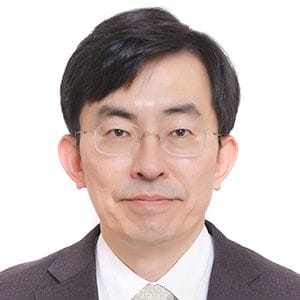
Prof. Juyoung Yoon received his Ph.D. in 1994 at Ohio State University and conducted his postdoctoral work at UCLA and Scripps Research Institute. Currently, he is a Distinguished Professor at the Department of Chemistry and Nanoscience at Ewha Womans University. His research interests include the investigation of fluorescent imaging probes, phototherapy, and theranostics. He has published 475 SCI papers with an h-index of 130. Prof. Yoon has been listed as a highly cited researcher in chemistry since 2014.
What does this award mean to you?
Thank you so much for your kind consideration of the research we have conducted over the past 30 years on fluorescent chemosensors and fluorescent imaging probes. I am so honored and happy to receive this Advances in Measurement Science Lectureship Award which is a great reward and gift for my 60th birthday. Thank you!
What do you think is the biggest challenge currently in your area of research?
Based on fluorescence imaging probe research, we have been researching imaging-guided phototherapeutics for the last 10 years. The biggest challenge in this field is likely to be the development of new fluorophores or photosensitizers with excellent optical and phototherapeutic properties and low biotoxicity.
What is next in your research?
It is research to find and develop biocompatible compounds that can be targeted and regulated in vivo and have excellent photoproperties.
Have there been any highlights in your career to date that you are especially proud of?
I think it could be that I have been selected as one of the top 1% of researchers in Chemistry for the past 10 years.
What would your advice be to someone just starting out in the field?
If you have a good understanding of organic chemistry, physical chemistry, and biochemistry, you will be able to present leading research results in this field.
Learn About Last Year's Winners
Meet the 2023 Advances in Measurement Science Lectureship Award Winners
We are proud to announce Niko Hildebrandt, Julia Laskin, and Jian-Feng Li as the winners of the 2023 Advances in Measurement Science Lectureship Award.