This annual award honors the contributions of an individual from each of three major geographic regions who has made a major recent impact in the field of measurement science. Learn more about the 2025 winners and browse their recent publications in ACS journals.
ACS Measurement Science Au, ACS Sensors, Analytical Chemistry, Journal of Proteome Research, and the Journal of the American Society for Mass Spectrometry, in partnership with the ACS Division of Analytical Chemistry, are proud to announce the winners of the 2025 Advances in Measurement Science Lectureship Award:
- The Americas: Facundo Fernández, Georgia Institute of Technology
- Europe, Middle East, Africa: Julie Macpherson, University of Warwick
- Asia-Pacific: Hui Wei, Nanjing University
This annual award honors the contributions of one individual from each of three major geographic regions—the Americas, Europe/the Middle East/Africa (EMEA), and Asia-Pacific—who has made a major recent impact in the field of measurement science.
The winners will receive their awards and present their research in an upcoming webinar organized by ACS Publications. Look out for more information on how to register for this webinar soon.
Learn more about the winners in their interviews below.
Professor Facundo M. Fernández
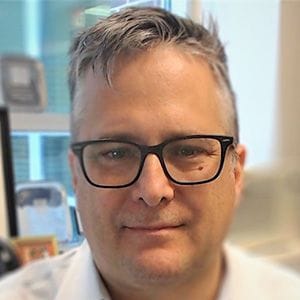
Prof. Facundo M. Fernández is a Regents' Professor and the Vasser-Woolley Chair in Bioanalytical Chemistry in the School of Chemistry and Biochemistry at the Georgia Institute of Technology. He earned his BSc/MSc (Licenciatura) in Chemistry from the Facultad de Ciencias Exactas y Naturales, Universidad de Buenos Aires, in 1995, and his Ph.D. in Analytical Chemistry from the same institution in 1999. From 2000 to 2001, he was a postdoctoral researcher in the group of Richard N. Zare at the Department of Chemistry at Stanford University. Between 2002 and 2003, he joined the research group of Vicki Wysocki at the University of Arizona, where he held roles as senior postdoctoral researcher and later research scientist.
Prof. Fernández is internationally recognized for his contributions to bioanalytical chemistry. His research focuses on developing new tools for analyzing small-volume samples, tissues, and single cells, and applying these methods to improve understanding of diseases such as cancer, cystic fibrosis, and inflammatory bowel disease. He is the author of 226 peer-reviewed publications, has delivered over 225 invited lectures, and has supervised the graduation of 33 Ph.D. and M.Sc. students. Additionally, he serves as the academic director of the Systems Mass Spectrometry Core (SyMS-C) at the Parker H. Petit Institute for Bioengineering and Bioscience at Georgia Tech, where he manages a portfolio of more than 10 mass spectrometers from leading vendors.
In his spare time, Prof. Fernández enjoys camping and overlanding with his family, rock climbing, kayaking, and participating in Summits on the Air (SOTA) with his tiny ham radio.
What does this award mean to you?
Many scientists often overlook Measurement Science, despite its pivotal role in enabling groundbreaking discoveries. For me, this award holds immense significance, as my passion for analytical chemistry has been long-standing, dating back to my days as an undergraduate teaching assistant. Conducting rigorous scientific research is only possible through the use of accurate and precise instruments, making measurement science the foundation of everything we do in science. Being recognized by the American Chemical Society is especially meaningful, as its journal portfolio in Measurement Science is both highly respected and recognized globally.
What do you think is the biggest challenge currently in your area of research?
We are facing a dilemma of data overload, with too much information buried within the massive datasets we generate. Measurement Science stands at a crossroads with Data Science, where each relies on the other to function effectively. Machine learning and AI depend on large datasets for training, while Measurement Science generates datasets that can be too vast for direct human comprehension. The challenge lies in creating measurement platforms that provide high-quality data for data scientists, as well as developing data science tools to extract valuable and relevant insights from these expansive datasets.
What is next in your research?
For years, we have focused on developing innovative tools for mass spectrometry-based metabolomics, including key advancements to enhance mass spectrometry performance. We have also pioneered new methods for exploring the largely uncharted areas of the metabolome, which we refer to as the "dark metabolome." Surprisingly, over 90% of the data we generate remains untapped due to our inability to effectively annotate metabolites. Moving forward, I aim to revisit these datasets and re-annotate the unknown components using more advanced and precise measurement tools. Specifically, we are keen to apply multidimensional techniques to improve metabolite annotation, leveraging machine learning predictions to aid in the process.
Have there been any highlights in your career to date that you are especially proud of?
I am incredibly proud of the achievements of my students and postdocs. It is a true pleasure to work alongside them and uncover the unique qualities that make each of them exceptional. On a more personal note, I am particularly proud of the accomplishments of a large consortium we have been involved in, the Molecular Transducers of Physical Activity Consortium (MoTrPAC, Nature, 2024, 629, 174-183). This ambitious initiative is mapping the effects of exercise on humans through an extensive set of multi-omics measurement platforms. Being part of this team has been a privilege, and I am honored to contribute our expertise in Measurement Science, particularly in the field of lipidomics.
What would your advice be to someone just starting out in the field?
I would advise them to prioritize a healthy work/life balance. While passion for research is admirable, it’s essential to take time to come back to the “ground level”. Strive to make your research sustainable over the course of many decades. Remember what truly matters to you, and never neglect your well-being, or the relationships with your family and friends.
Professor Hui Wei
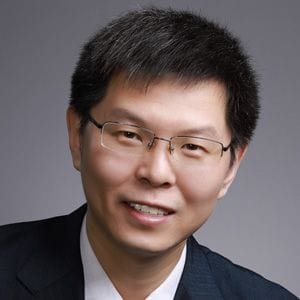
Prof. Hui Wei is a Professor in College of Engineering and Applied Sciences at Nanjing University. He joined Nanjing University after postdoctoral training with Professors Yi Lu and Shuming Nie, respectively. He received his BS degree from Nanjing University, where he carried out undergraduate research with Professor Xinghua Xia. Then, he joined Professor Erkang Wang's group at Changchun Institute of Applied Chemistry, Chinese Academy of Sciences for PhD study. He is a co-PI at the State Key Laboratory of Analytical Chemistry for Life Science, the Chemistry and Biomedicine Innovation Center (ChemBIC), and the Nanozyme Laboratory in Zhongyuan.
His research interests are focused on nanozymes. He has received numerous honors and awards, including the Nature Awards Microbiome Accelerator (2024), Dalton Horizon Prize (2023), the National Science Fund for Excellent Young Scholars (2017), the Fellow of the Royal Society of Chemistry (FRSC) (2015), etc. Currently, he serves as an Associate Editor for the Chinese Journal of Chemistry.
What does this award mean to you?
Receiving this prestigious award was a wonderful and unexpected honor. It not only reflects the recognition of my peers but also highlights the collective support that has advanced the nanozyme field, inspiring me and my group to continue pushing the boundaries of innovation in our research.
What do you think is the biggest challenge currently in your area of research?
One of the most significant challenges in our field is the absence of a comprehensive theoretical framework to guide the rational design of high-performance nanozymes. Without a robust theory, it is difficult to pinpoint the unique niches that are critical for translating laboratory breakthroughs into practical applications.
What is next in your research?
While it is always a challenge to predict the future trajectory of research, my group has outlined several key objectives for the near term:
- Developing a Comprehensive Theory: We plan to establish a solid theoretical foundation that will not only direct the design of high-performance nanozymes but also deepen our understanding of their mechanisms from both physicochemical and biological perspectives.
- Expanding the Nanozyme Database: Currently, we have an alpha version of our database available. With further development and the integration of advanced AI tools, we believe that intelligent nanozyme design will become a reality in the near future.
- Advancing Translational Studies: Our long-term goal is to drive translational research, ultimately bringing one or two nanozyme-based products to the market within the next 5 to 10 years.
Have there been any highlights in your career to date that you are especially proud of?
I am very proud of introducing nanozymes into analytical chemistry through the development of a glucose assay. This study not only established the foundation for our subsequent work in nanozyme-enabled analytical chemistry but also opened up new avenues for research. Over the past decade, we have devised cross-material design strategies that have enhanced the performance of nanozymes, thereby supporting both analytical and therapeutic applications. Currently, we are harnessing their high and enduring catalytic activity to develop theranostic agents for inflammatory diseases. Additionally, I take pride in our commitment to science communications—my team runs a WeChat account (纳米酶 Nanozymes) dedicated to sharing the latest developments in nanozyme research, and we are continuously exploring innovative ways to enhance public engagement and promote science literacy in our society.
What would your advice be to someone just starting out in the field?
Offering truly valuable advice is never easy. For newcomers entering this rapidly evolving field, I recommend focusing on identifying a few "true" challenges—that is, well-defined and genuinely significant problems. Tackle these challenges with a diverse range of strategies and methodologies, remaining adaptable and open to innovative ideas. The dynamic nature of nanozyme research offers abundant opportunities for those who are persistent, creative, and willing to push the boundaries of current knowledge.
Professor Julie Macpherson
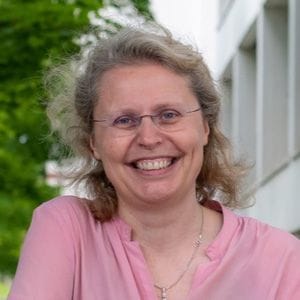
Prof. Julie Macpherson is a Professor of Chemistry at the University of Warwick, specializing in electrochemistry and materials science. Her PhD was undertaken in the Department of Chemistry, University of Warwick, UK with Prof. Pat Unwin in the area of scanning electrochemical microscopy (SECM) applied to crystal dissolution processes (1993-1996). During this period, Prof. Macpherson spent time working in the group of Prof. Allen Bard (Austin, Texas) developing the first electrochemical AFM, here applied to crystal dissolution. For PDRA (1996-1999), she developed new hydrodynamic ultramicroelectrodes for the study of fast electron transfer processes.
In 1999, Prof. Macpherson was awarded a Royal Society University Research Fellowship in the Department of Chemistry University of Warwick to investigate electrochemistry in nanoscopic environments. In 2007, she was promoted to full Professor. In 2014, she received a Royal Society (RS) Industry Fellowship to work on the development of boron doped diamond electrochemical sensors with Element Six. The work was awarded an RS Innovation award in 2017.
Prof. Macpherson has received numerous other awards for her group’s research, including the Royal Society of Chemistry Tilden Prize (2023), Royal Society of Chemistry Geoffrey Barker Award (2020), Royal Society of Chemistry and Society of Chemical Industry McBain Medal (2006) and the Royal Society of Chemistry, Marlow Medal (2005).
She enjoys teaching at all levels and is currently Editor-in-Chief of a new series of tutorial style undergraduate chemistry text books (Royal Society of Chemistry). She has been awarded the Andrew McCamley Prize for best undergraduate lecturer five times and the Warwick University award for teaching excellence once.
Learn About Last Year's Winners
Meet the 2024 Advances in Measurement Science Lectureship Award Winners
ACS Publications is proud to announce Peter Nemes, Boris Mizaikoff, and Juyoung Yoon as the winners of the 2024 Advances in Measurement Science Lectureship Award.