
Meet the next generation of leaders in bioconjugate chemistry and learn about their research, ideas, and aspirations for the field’s future.
Bioconjugate Chemistry is excited to introduce its inaugural Early Career Board (ECB), a group of talented early-career scientists from around the world whose expertise spans the many disciplines that drive innovation in bioconjugate chemistry.
Working alongside the journal's Editor-in-Chief, Theresa Reineke, and editorial board, these researchers will help foster community engagement and bring fresh perspectives to the journal. Learn more about each member and the ideas, experiences, and ambitions they bring to the field.
Browse by Member:
Bethany Almeida, Clarkson University, United States
Shuo Han, Shanghai Institute of Biochemistry and Cell Biology, China
Quanyin Hu, University of Wisconsin-Madison, United States
Wei Qin, Tsinghua University, China
Fiona Lynn Kearns, University of Freiburg, Germany
Muhammad Jbara, Tel Aviv University, Israel
Pratik Kumar, National Centre for Biological Sciences (NCBS), India
Ramya Kumar, Colorado School of Mines, United States
Jun Ohata, North Carolina State University, United States
Xin Zhou, Dana-Farber Cancer Institute, United States
Bethany Almeida
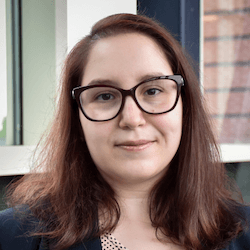
What emerging area of bioconjugate chemistry are you most excited about right now?
I am most excited about the potential of bioorthogonal click chemistry, a conjugation method that allows researchers to covalently bind chemical moieties to biomolecules in a rapid, biocompatible manner. This method is highly selective and occurs under biologically-relevant conditions without toxic by-product formation. Advances in reaction kinetics, functional moieties amenable to bioorthogonal reactions, spatiotemporal control, and in vitro and in vivo applications are enabling increasingly precise conjugation strategies for complex biological systems. This method has broad application potential, ranging from targeted therapeutics, biomolecular imaging, drug delivery, and tissue engineering.
Shuo Han
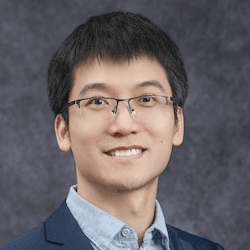
What emerging area of bioconjugate chemistry are you most excited about right now?
I'm most excited about how enzyme-catalyzed bioconjugation chemistry can be integrated with and applied to cancer immunotherapy. For instance, harnessing the power of promiscuously reactive intermediates to conjugate synthetic antigen clusters onto tumor cell surface for recognition and destruction by immune cells.
Quanyin Hu
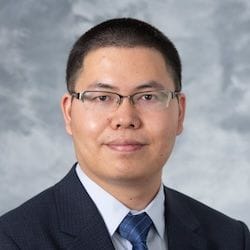
What emerging area of bioconjugate chemistry are you most excited about right now?
I am most excited about the targeted protein degradation area. This emerging technology will shift the paradigm of small-molecule therapeutics for various diseases and offer new opportunities for targeting previously "undruggable" proteins.
Wei Qin
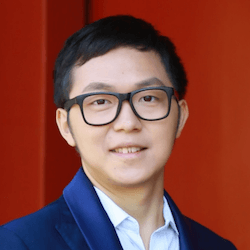
What do you hope to bring to Bioconjugate Chemistry as an ECB member?
I hope to bring broad perspectives spanning protein bioconjugation and proximity‑labeling tool development to Bioconjugate Chemistry. I wish to elevate work at the chemistry‑biology interface, highlighting creative chemical strategies that advance our ability to probe protein function. I also aim to amplify contributions from early‑career researchers whose innovations expand the scope of bioconjugate science.
Fiona Lynn Kearns
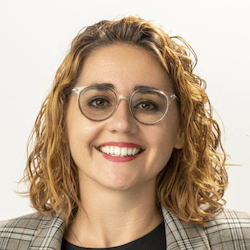
What advice would you give to early-career researchers entering the field?
Never be afraid to ask a “stupid question”! Or at the very least don’t let your fear stop you. I have had to recently start telling myself “just do it scared.” I know it is anxiety inducing to enter a space where there are many leaders or hot-shots in the field, but early career folks have fresh perspectives, and the sewer of not being burdened by the status quo, which empowers them/us to ask unique and challenging questions and develop innovative solutions.
Muhammad Jbara

What advice would you give to early-career researchers entering the field?
Don’t hesitate to tackle complex systems, explore questions beyond your expertise, and seek collaborations with researchers who bring complementary perspectives and approaches. Some of the most exciting discoveries emerge at the boundaries between disciplines.
Pratik Kumar

What emerging area of bioconjugate chemistry are you most excited about right now?
I am most excited about chemigenetic technologies that combine genetically encoded protein tags with synthetic small-molecule reporters. These strategies allow merging the specificity of genetic targeting with the photophysical versatility that only synthetic chemistry can offer. In my lab, we are using the genetically encoded HaloTag “enzyme” to build multifunctional fluorophores for live-cell imaging of proteins, ion concentrations, reactive oxygen species, and membrane properties with a precision that fully genetic or fully synthetic chemistry approaches can’t match on their own.
Ramya Kumar

What drew you to bioconjugate chemistry?
Life happens at the interfaces between cells, macromolecules, and water and living systems are organized as biointerfaces that amplify, catalyze, and control biological transformations. My research group seeks to apply polymer science to design biointerfaces that orchestrate cell behavior, be it cell-instructive polymer coatings for regenerative medicine or polymeric nanocarriers for intracellular delivery of proteins and nucleic acids. Bioconjugate chemistry has been a powerful tool to control and decipher interfacial interactions between synthetic polymers, proteins, and cells and to enhance the biological functionality of the polymers that we make.
Jun Ohata
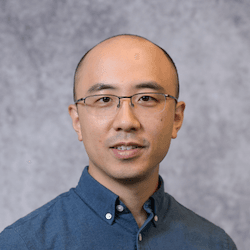
What do you hope to bring to Bioconjugate Chemistry as an ECB member?
Since I jumped into the bioconjugate chemistry field over 10 years ago as a graduate student, I have been impressed by how broad and diverse this field, its research, and its people are. This caring field and people taught me to see chemistry and biology in a much bigger way than I could have ever imagined, and I am so thrilled to keep the beauty of this field welcoming everybody and also expand its potential even further by providing/enriching networking opportunities. As we all are witnessing the considerable growth of research at the interface of chemistry and biology now, I would like to do my best to connect research and people across the world by serving as the Early Career Board member of the Bioconjugate Chemistry journal.
Xin Zhou
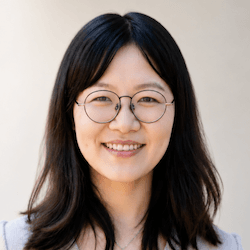
What challenges or opportunities do you see shaping the future of the field?
There is a growing opportunity to use bioconjugation to enable new types of pharmacology, including targeted protein degradation, new approaches to drug delivery, cell-type-specific receptor agonism, and modification of the cell surface. I think this broader use of bioconjugates could open up many therapeutic possibilities that are difficult to achieve with conventional drugs.
Get e-Alerts
Stay Connected With Bioconjugate Chemistry
Never miss an issue again! Sign up now for email updates on future calls for papers, the latest articles, and other content from Bioconjugate Chemistry.
