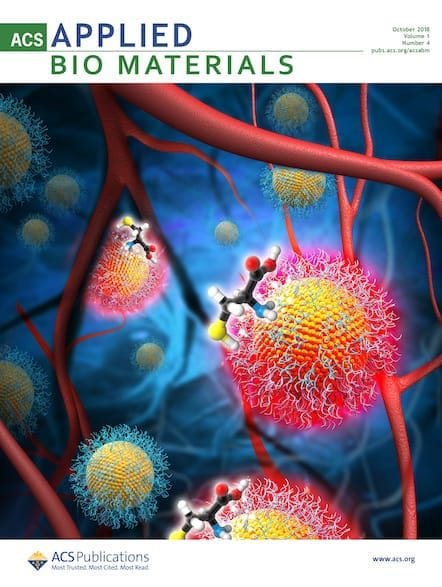
This Special Issue explores how artificial intelligence is transforming biomaterials development by enabling predictive design, navigating complex biological and material spaces, and promoting best‑practice approaches to accelerate translation. Submit your manuscript by November 30, 2026.
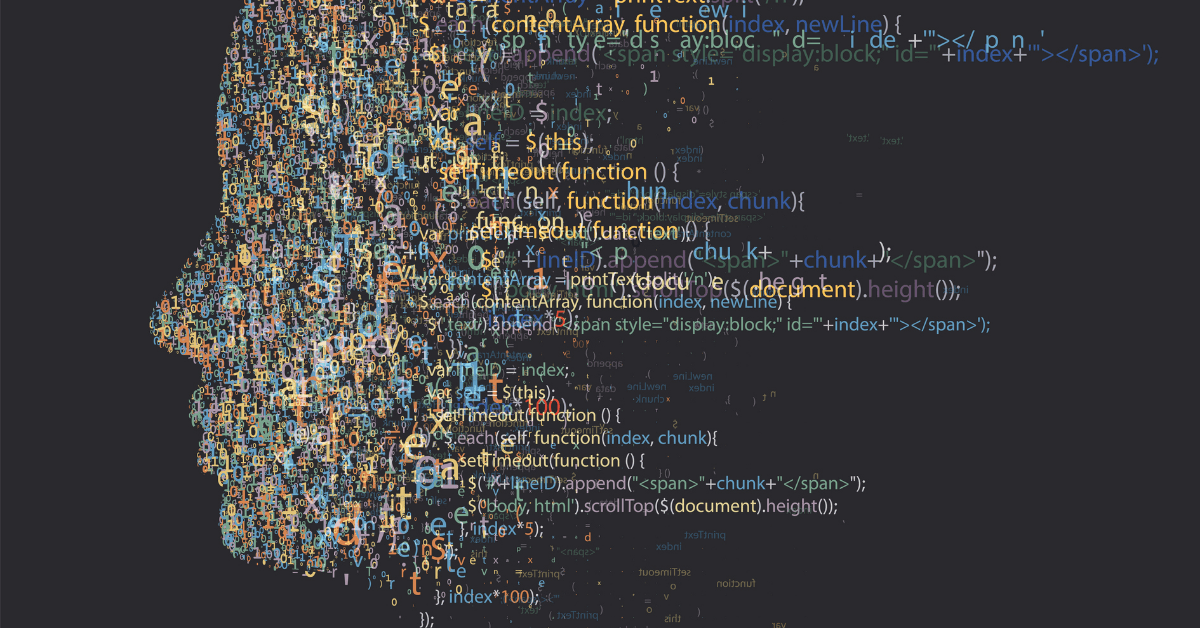
Advances in biomaterials have been slowed by the complexity of modern material design spaces and the limitations of traditional trial-and-error experimentation. As materials become more multifunctional and biologically integrated, researchers need new approaches capable of uncovering structure-function relationships that are too intricate for empirical methods alone. AI-driven tools offer a way to navigate this complexity, accelerating discovery while deepening scientific insight.
ACS Applied Bio Materials and ACS Pharmacology & Translational Science are launching a joint Special Issue designed to capture this rapidly evolving intersection of artificial intelligence and biomaterials innovation. The collection will highlight advances that demonstrate how AI can reshape material design, prediction, optimization, and translation across biomedical applications. It also aims to surface best practices, emerging methodologies, and key challenges —particularly around data quality — to guide the field toward more robust and impactful AI-enabled biomaterials research.
Topics include, but are not limited to:
- AI-enabled design, prediction, and optimization of biomaterials
- Data standards, quality, and infrastructure for biomaterials AI
- Integration of AI with experimental, high-throughput, and automated platforms
- Multiscale modeling of biomaterial-biological interactions
- Generative and predictive models for new material chemistries
- AI for drug delivery, regenerative medicine, and immunomodulation applications
- Explainability, interpretability, and reliability of AI models in biomaterials
- Use of negative data, metadata, and standardized reporting to improve model performance
- Ethical, safety, and translational considerations for AI-designed biomaterials
Organizing Editors
Simon Matoori, Associate Editor, ACS Pharmacology & Translational Science
Université de Montréal, Canada
Shu Wang, Deputy Editor, ACS Applied Bio Materials
Institute of Chemistry Chinese Academy of Sciences, China
Christa E. Müller, Editor-in-Chief, ACS Pharmacology & Translational Science
University of Bonn, Germany
Submission Information
We welcome submissions for this Special Issue through November 30, 2026. Please visit the relevant journal’s Author Guidelines page for ACS Applied Bio Materials and ACS Pharmacology & Translational Science for more information on submission requirements.
Accepted manuscripts for consideration in this Special Issue will include letters, research articles, perspectives, reviews, and viewpoints. Papers accepted for publication for this Special Issue will be available ASAP (as soon as publishable) online as soon as they are accepted. After all submissions have been published, they will then be compiled online on a dedicated landing page to form the Special Issue. Manuscripts submitted for consideration will undergo the full rigorous peer review process expected from ACS journals.
Open Access: There are diverse open access options for publications in American Chemical Society journals. Please visit our Open Science Resource Center for more information.
How to Submit
- Log in to the ACS Publishing Center.
- Select the "Journals" tab.
- Choose ACS Applied Bio Materials or ACS Pharmacology & Translational Science.
- Click "Submit."
- Select your manuscript type, and, under "Special Issue Selection," choose “Artificial Intelligence in the Development of Biomaterials."
If you have any general questions regarding submission to this Special Issue, please contact:
- ACS Applied Bio Materials: managing.editor@abm.acs.org
- ACS Pharmacology & Translational Science: managing.editor@ptsci.acs.org

Get e-Alerts
Stay Connected With ACS Applied Bio Materials
Never miss an issue again! Sign up now for email updates on future calls for papers, the latest articles, and other content from ACS Applied Bio Materials.
Get e-Alerts
Stay Connected With ACS Pharmacology & Translational Science
Never miss an issue again! Sign up now for email updates on future calls for papers, the latest articles, and other content from ACS Pharmacology & Translational Science.