

The contributions of many women to Chemical Research in Toxicology are motivated by a combined passion for science and commitment to making scientific discoveries that impact a sustainable future of humans and the environment through science-driven policies for chemical safety. In celebration of Women's History Month and in recognition of the contributions of women to toxicology and allied areas, we are pleased to highlight a special collection of recent papers published in the journal by authors who identify as women.
The highlighted authors are at various stages of their scientific careers, from doctoral students to established leaders, working around the world at different types of institutions.
Read on to hear from each of these inspiring women in their own words and catch up on the entire series below.
Women in Toxicology: Interviews (Part 1)
Women in Toxicology: Interviews (Part 2)
Women in Toxicology: Interviews (Part 3)
Women in Toxicology: Interviews (Part 4)
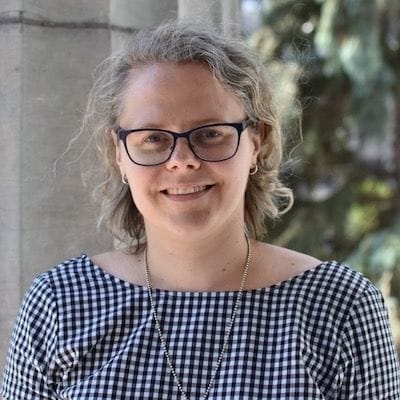
Audrey Moores, Professor, McGill University, Canada
Share about your entry into chemical toxicology and your path to your current area?
As a green chemist, the notion of toxicity has always been important to me. In the last 5 years, I have co led with colleagues an effort at McGill University, the McGill Sustainability Systems Initiatives (MSSI), to incorporate more toxicology data into nanoscience, and we started working on Qdots toxicology this way.
How do you want to contribute to the advancement of the field?
At MSSI we believe that incorporating more toxicology into new materials and molecules design is essential. We are trying to develop toxicology on complicated nanosystems to parse out the role of each component, and possibly of their assembly. We also work on promoting simple models, such as alternative assessments so that chemists can incorporate toxicity more easily.
What inspired you to do the research in the article we are highlighting?
For this work, we were intrigued by the fact that many tested nanomaterials are different from the ones found in formulated products. In this example we made in the lab qdots with similar compositions to the ones found in TV screens. In these systems, we found that the toxicity was also caused by the type of polymer used in formulation and underwent a full hazard profiling.
What is something that has impacted you in a positive manner?
For this work, it was very positive to have my university, McGill, support the type of interdisciplinary research which makes this type of work possible. The implantation of toxicology in green chemistry is still a burgeoning field and it takes highly interdisciplinary teams to make it happen. I am grateful to the whole team for their dedication as well, interdisciplinary research takes more time, but is incredibly rewarding.
What was your training circle like?
I have been fortunate to have had great mentors to support me. Prof. Pascal Le Floch and Robert H. Crabtree have always been very supportive and encouraged me to pursue my academic dreams and develop a research program in green chemistry.
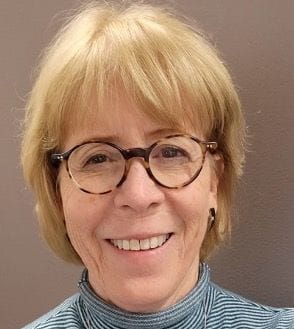
Cynthia J. Burrows, Distinguished Professor, University of Utah, United States
Share about your entry into chemical toxicology and your path to your current area?
Metal-catalyzed oxidation reactions were part of my first project as an assistant professor. My friend and colleague at the time Steve Rokita (now at Johns Hopkins) suggested we try some experiments with DNA as the substrate for oxidation. The results were exciting! We could use nickel-catalyzed oxidation as a structural probe of exposed guanines in DNA and RNA. This opened the door to understanding nickel toxicity and more broadly, free radical-mediated DNA damage. We ended up with a joint NIH grant, a few patents, dozens of papers, and a lifelong friendship.
How do you want to contribute to the advancement of the field?
My current passion is to unravel the chemistry of guanine oxidation, the biochemistry of proteins that bind to a process oxidized guanines, and the impact on cell function, especially gene expression.
What inspired you to do the research in the article we are highlighting?
A paper by Wagner, Cadet et al., published in CRT in 2021 piqued our interest in ozone-mediated oxidation of guanine, and I love a mystery! We were able to show that a major product of this reaction was a 2-iminohydantoin structure that is understudied as a DNA damage product. (It is also hard to study!)
What is something that has impacted you in a positive manner?
Immediately upon moving to the University of Utah in 1995 I was asked to chair the faculty search committee. That year we hired Sheila David and Pete Beal (both now at UC-Davis), and it was my great fortune to collaborate with them both. Sheila taught me everything I know about base excision repair. For almost 20 years we had a joint NCI grant to study oxidative DNA damage and repair—I did the damage, and she did the repair. My mother (not a scientist) once asked me whether I only studied damage or if I “did anything constructive?” Her question inspired me to think about the benefits of oxidative modification of DNA, which led to our hypothesis that 8-oxoG can be epigenetic.
What was your training circle like?
I have no formal training in nucleic acid chemistry or toxicology, but instead I was trained by my students and colleagues. In addition to Steve, Pete, and Sheila, I learned an enormous amount of science from the ‘women of Telluride’—Shana, Amanda, Natalia, Christy, Vickie, Sarah and Marie-Paule, among others. Closer to home, my colleague Aaron Fleming uncovers new DNA and RNA chemistry on almost a daily basis, and his discoveries help keep me current.
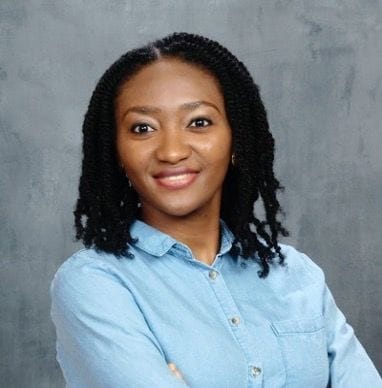
Esther Omaiye, Postdoctoral Researcher, University of California, Riverside, United States
Share about your entry into chemical toxicology and your path to your current area?
During my Master's program in Biotechnology and Bioinformatics at California State University, Channel Islands, I was accepted into the Bridges to Stem Cell Program, sponsored by the California Institute for Regenerative Medicine. I had the opportunity to visit various labs and decide where I would perform my internship for the year. During my meeting with Dr. Prue Talbot at UC Riverside, we had fascinating conversations about ongoing projects in her lab that piqued my interest. In that moment, I knew I wanted to be a part of her team. The internship year was very fulfilling as I learned new skills and techniques and started my own projects. I had improved so much and enjoyed every bit of the experience, such that we discussed pursuing my doctoral research in her lab. I decided to continue my work and focus on investigating e-cigarettes and their potential effects on human health using analytical and in vitro toxicological approaches.
How do you want to contribute to the advancement of the field?
I plan to contribute as an independent researcher or a research scientist at agencies that regulate emerging tobacco products and their constituents. I am acquiring new skills that will be useful in future career opportunities, allowing me to continue contributing novel data to tobacco-related research. I plan to also be involved in tobacco regulatory research, where I can continue to generate data that helps inform policies around the manufacture, composition, distribution, and use of e-cigarettes. The evolution of emerging tobacco products, such as e-cigarettes, makes continuous research relevant as efforts are being made to regulate and enforce policies on e-cigarettes. I am building on my skills and knowledge for expertise in this area, where I can work with teams of scientists from several disciplines to advance the field.
What inspired you to do the research in the article we are highlighting?
The inspiration to investigate one brand of e-liquids purchased worldwide came during a visit to Nigeria. I stopped by a small convenience store and was surprised to see several brands of colorful e-cigarettes on display at the entrance. The devices/products were similar to those I was already studying, and I started a conversation with the vendor to gauge his knowledge and understand his perception of the products. With the differences in levels of economic development, consumer product regulation and quality control in global regions, I became more curious about these products. I wanted to know how these factors can influence the constituents in one brand of e-cigarette product distributed in multiple regions of the world. I also wanted to understand if these differences in chemical constituents impact the toxic effect observed in laboratory settings. Starting this project while visiting family allowed me to discuss and educate more people about my research goals.
What is something that has impacted you in a positive manner?
Many people, experiences, and events have influenced me and my approach to life. These events and people have changed my perspective, taught me valuable lessons, made me more fulfilled, and influenced my relationships and overall well-being. Career-wise, meeting my mentor was a life-changing event that has benefited my personal and professional development. I continue to learn new skills, experience improvement and growth, build supportive networks and relationships, and achieve significant goals while practicing gratitude and impacting others positively.
What was your training circle like?
I am fortunate to have a mentor who actively supports my career journey. My peers and I prioritize supporting each other’s personal and professional development by sharing knowledge and resources that help create a thriving space for growth. My active involvement in the graduate student leadership committee of the Society of Toxicology during my doctoral program allowed me to engage with more senior colleagues, foster collaboration, and access a supportive network of peers in the field.
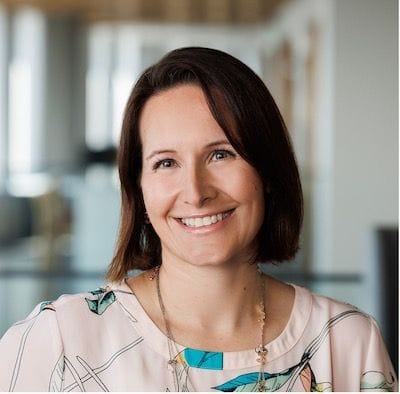
Jessica C. Graham, Director, Head of Product Quality & Occupational Toxicology, Genentech, United States
Share about your entry into chemical toxicology and your path to your current area?
Toxicology is a passion of mine. I have always enjoyed math and chemistry and was fortunate to have excellent teachers throughout my academic years who only enhanced my interests and fueled my passion. After completing a B.S. in Chemical & Biochemical Engineering, I went on to work as a Chemical Engineer in the consulting industry, focused on air and wastewater emissions modeling and permitting. The awareness of chemicals entering our environment spurred me to go back to Rutgers University and earn a Ph.D. in Toxicology with the hopes of better understanding their impact on both human and animal health. Upon completing my PhD, I focused on a career in occupational toxicology which entails assessing the hazards and risks to human health posed by chemical and biologic compounds encountered in the workplace.
How do you want to contribute to the advancement of the field?
I will continue to champion a movement towards leveraging technological and scientific advances and historical data in new ways to answer modern-day questions and needs. For example, evaluating new approach methodologies (NAMs) such as computational models to predict health hazards and fill data gaps, with the ultimate goal of reducing reliance on animal test methods (and supporting 3Rs principles; Reduction of animal use in research, Replacement of animal models, Refinement of animal studies). I also strive to contribute to the field by giving back to the profession that has given me so much and served as a mentor and leader in professional organizations.
Currently, I volunteer and am actively engaged as an elected member of the Board of Directors of the American Board of Toxicology (confers Board-certification, DABT, to toxicologists), as Chair of the Occupational Alliance for Risk Science - Workplace Environmental Exposure Level Committee (sets health-based limits for airborne chemicals in the workplace), an appointed member of the National Institute for Occupational Safety & Health Board of Scientific Counselors (their worker health advisory committee) as well as positions within the Society of Toxicology and International Consortium for Innovation and Quality in Pharmaceutical Development (IQ) DruSafe.
What inspired you to do the research in the article we are highlighting?
Peptide couplers are a highly reactive class of compounds used throughout the pharmaceutical industry as well as academia to facilitate amide bond formation. Cases of dermal and respiratory sensitization from occupational exposures to peptide couplers have been reported in the literature, prompting concern around handling these compounds. These case studies as well as the paucity of toxicity data available for these compounds, their broad use, and a desire to ensure worker safety encouraged the authors to formally evaluate this class of compounds. This work presents an integrated analysis and fills a knowledge gap in the hazard and risk assessment of peptide couplers, informing decision-making in peptide coupler selection, and enabling data-driven hazard communication and “safer” choices for chemical use in pharmaceutical synthesis and academia. We (the authors) also engaged in outreach to manufacturers of peptide coupling agents calling their attention to this newly available health hazard data. Wonderfully, this paper was just selected as the "2022 Paper of the Year" by the Occupational and Public Health Specialty Section of the Society of Toxicology (SOT). A huge Congratulations to Alejandra Trejo-Martin (co-lead) and our awesome author / project team!
What is something that has impacted you in a positive manner?
The support of others. Honestly, I am where I am today (happy, working for an excellent company and loving the work I do) thanks to both the support of others, as well as opportunities brought to my attention by internal and external colleagues. Whether the opportunity was a new responsibility, the invitation to lead a project / team, or to collaborate with a knowledgeable group of professionals, those opportunities have truly built my career into what it is today. Sometimes it has been listening to others, whom I trust and know support and sometimes it is just knowing that this is what I can do to try to make a positive impact. Also, by taking chances, such as going all in for an opportunity that may have otherwise seemed out of reach, by being open to change and taking on new projects, collaboration on projects and workgroups with more senior/experienced toxicologists and, lastly, looking for positive lessons in perceived "fails".
What was your training circle like?
I am fortunate to have had remarkable managers and mentors who fueled my passions and supported my interests. While working as a chemical engineer, my manager knew of my interest in Toxicology. I would walk into work and find a new article on the toxicological effects of a chemical in the environment waiting for me on my chair. While in graduate school, I was an intern at a consumer product company working for the global head of occupational toxicology. She introduced me to the field of occupational toxicology, shared the best practices and methodologies being utilized in the field, and introduced me to her network, ultimately helping me land my first job out of grad school. Since then, colleagues both internally and externally have helped me develop and refine my knowledge and skills, as well as further fueling my interests and passions through opportunities for professional collaborations, leadership and serving the toxicology, health and safety and engineering communities.
Want More from This Journal?
Stay Connected
Sign up today for email updates on the latest research, issues, and other content from Chemical Research in Toxicology.
