
The contributions of many women to Chemical Research in Toxicology are motivated by a combined passion for science and commitment to making scientific discoveries that impact a sustainable future of humans and the environment through science-driven policies for chemical safety. In celebration of Women's History Month and in recognition of the contributions of women to toxicology and allied areas, we are pleased to highlight a special collection of recent papers published in the journal by authors who identify as women.
The highlighted authors are at various stages of their scientific careers, from doctoral students to established leaders, working around the world at different types of institutions.
Read on to hear from each of these inspiring women in their own words and catch up on the entire series below.
Women in Toxicology: Interviews (Part 1)
Women in Toxicology: Interviews (Part 2)
Women in Toxicology: Interviews (Part 3)
Women in Toxicology: Interviews (Part 4)
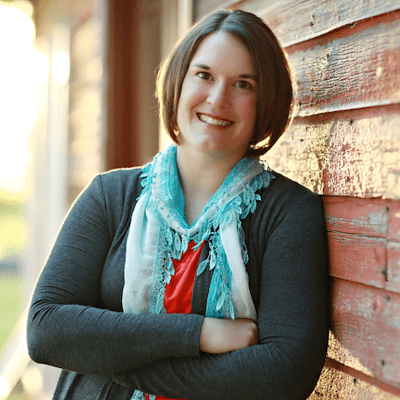
Stacey Wetmore, Professor, University of Lethbridge, Canada
Share about your entry into chemical toxicology and your path to your current area?
I completed a Bachelor’s of Science degree with a combined major in chemistry and mathematics. I was intrigued by the discipline of computational chemistry because it allowed me to apply my math, computer science, and chemistry skills without being in a traditional ‘wet lab’ environment. However, I always had an interest in biological applications. Once computer hardware advanced to the stage that made simulations on biological systems a reality, I entered the field of chemical toxicology and never looked back.
How do you want to contribute to the advancement of the field?
In my opinion, the best science brings together groups of people with diverse backgrounds and expertise. Although when I entered the field of computational chemistry, people were performing calculations on individual DNA/RNA nucleobases, modern graphical processing units (GPUs) and developments in chemistry software have pushed the application of molecular modeling to biologically relevant models. I hope that my team members' work helps advance chemical toxicology by highlighting how computer simulations can be used predictively to understand problems of relevance to the broad field of chemical toxicology.
What inspired you to do the research in the article we are highlighting?
Since it is difficult to obtain structural information about carcinogenic DNA adducts from traditional ‘wet lab’ experiments, my team strives to provide this data and predict the toxicity of DNA adducts using computer modeling. In addition to highlighting this information for a specific DNA adduct, the article being highlighted provides critical insight required to understand how DNA polymerases bypass these types of DNA damage and uncovers key information about the chemical features of DNA adducts that dictate their mutagenic behavior.
What is something that has impacted you in a positive manner?
One of the things that has had the most positive impact on me is attending scientific conferences and working with many excellent experimental collaborators. Science is about discoveries and there would not be discoveries without people. It is fantastic to have a job that allows you to build friendships and travel to different corners of the world.
What was your training circle like?
I was fortunate to have very positive mentors as a graduate student, scientists I remain in touch with today. Nevertheless, the field of computational chemistry was dominated by male graduate students and postdoctoral fellows when I was a trainee, which led to challenges that are more broadly discussed these days. As a result of challenges, I faced as a trainee, I strive to provide the same quality mentorship I received to my own students, while ensuring to foster a diverse and inclusive environment.

Suphiya Parveen, Assistant Professor, JAIN (Deemed-to-be University), India
Share about your entry into chemical toxicology and your path to your current area?
My interest was triggered by the myriad of toxicities caused by the effect of chemicals on the environment and by the adverse drug reactions that cause millions of emergency departmental visits each year. These can occur as a result of interactions between a medication and other drugs the person is taking, or between the medication and the person’s medical conditions or genetic makeup. Adverse drug reactions can range from mild side effects to serious and potentially life-threatening reactions. Moreover, the problem is amplified with the unregulated drug usage in the form of traditional herbs, contemporary folk medicines etc. The risks of unregulated drug usage and adverse drug reactions can be significantly increased when drugs are used without medical supervision. This invoked my curiosity towards studying drug-drug interactions and adverse drug effects to identify and understand the potential health risks associated with exposure to chemicals. This might pave the way to develop regulations, guidelines, and policies that protect human health and the environment.
How do you want to contribute to the advancement of the field?
There is a need for an increased focus in understanding the mechanisms of toxicity at the molecular and cellular level, which can help identify biomarkers of exposure and toxicity. We can contribute using in silico models, -omics technologies, analytical methods, bioinformatics, and computational tools to predict the toxicity of chemicals and the development of new methods for measuring exposure to chemicals in the environment and human population. Through our research, we can help improve the understanding of how chemicals affect human health and the environment. This could lead to the development of more effective methods for preventing and managing chemical exposures. Moreover, obtaining accurate and complete exposure data of individuals and populations for the thousands of chemicals over the lifespan and to be able to predict the exposure from chemical property data could be a great advancement towards the field of chemical toxicology. This can also aid in developing safer alternatives to toxic chemicals and developing treatments for individuals exposed to toxic chemicals.
What inspired you to do the research in the article we are highlighting?
Over the past few years, many novel psychoactive drugs have emerged in the market, and this has led to the rise in the production of illicit drugs. Synthetic opioids and designer benzodiazepines are illegally sold worldwide. Misuse of these drugs is becoming a topic of major concern as the death rate rises. Although these drugs were discovered many years ago in around 1950s, the emergence of these substances in the illicit drugs market has become apparent in recent years. The recent illicit trade of drugs in the dark market has led to increase in number of deaths. Due to ignorance and lack of data, these drugs are not screened in the forensic investigations. Thus, these limitations on the detection of drugs of abuse led us to write in detail about the application of hyphenated chromatographic techniques used to analyze multiple novel fentalogs, using in vitro and in vivo methods that could be useful for the detection and differentiation of multiple fentalogs.
What is something that has impacted you in a positive manner?
My exposure to Tata Institute of Fundamental Research (TIFR), Mumbai on a Visiting Students’ Research Program (VSRP) changed the way I was looking ahead at my career. My interactions with Late Prof. Veronica Rodrigues, her insightful thinking and her approach to work have immensely helped me in all aspects of life. As one of the prominent women scientists, she inspired me to further my academic career and motivated me to join a doctoral program. As I reflect on my journey so far, Prof. Veronica has been the biggest influence in shaping my research journey and helped me reach where I am today. This also makes me realize the immense role a women mentor and role model play in the life of young women graduates. Thus, even in my current role as a professor I invest a lot of time mentoring young students in my college and try to help them in whatever way I can to help them advance their career in the research field and help Science progress.
What was your training circle like?
During my graduation and post-graduation days at AMU, Aligarh, I have trained at some of the premier institutes of India like National Institute of Immunology (NII), New Delhi and Tata Institute of Fundamental Research (TIFR), Mumbai which has been very influential in giving me the insights for research. My doctoral degree added new dimensions to my understanding and capabilities as a researcher in the field of Nanobiotechnology. Thereafter I have trained at Indian Association for the Cultivation of Sciences (IACS), Kolkata which gave me insights into the mechanism and functioning of various nanocrystals. My experiences at School of Sciences, Jain (Deemed- to-be University), Bengaluru as well as my interaction with highly experienced researchers with distinguished expertise belonging to academic and industrial worlds have been instrumental in my professional development.
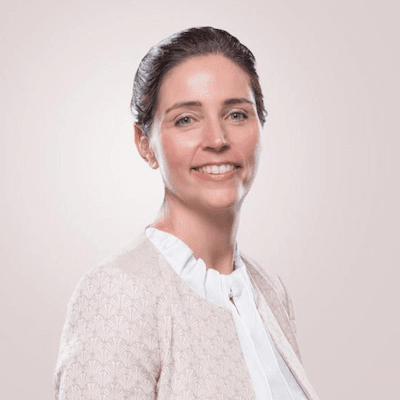
Dorothee Funk-Weyer, VP Experiment Toxicology & Ecology, BASF, Germany
Share about your entry into chemical toxicology and your path to your current area?
I studied biochemistry in Tübingen and completed my PhD at the German Cancer Research Center. In 2011, I joined BASF as lab leader conducting plant and in-vitro metabolism studies in our Agricultural Sciences division. My next step was the team leader position for metabolism studies in plants, animals, and in-vitro. In 2018, I moved to the US to take over responsibility for our Stewardship activities for BASF’s seed business. In 2019, I took over the role of Director Environmental Fate for our crop protection business. I was leading a team that studied the degradation of plant protection products in soil, water, and air. Overall, I held multiple positions around development and registration of plant protection products and chemicals, before moving into the current position in 2021, as Vice President Experimental Toxicology & Ecology for BASF. Our department conducts toxicological and ecological studies for BASF’s whole product portfolio.
How do you want to contribute to the advancement of the field?
I see my contribution by enabling great scientists to advance research in their areas. I do this by providing resources but also connecting people across industry, authorities, and academia to support them collaborating to solve the challenges of tomorrow. My work in associations allows me to define some of the areas we are working in but choosing the right person leading such a topic is equally important. Another contribution I consider particularly important is the support and coaching of young scientists, supporting their careers, and thereby helping the next generation of toxicologists to grow.
What inspired you to do the research in the article we are highlighting?
In the published article we studied ways to realistically determine effective concentrations of test substances in cell culture. At BASF it is our clear goal to develop methods which contribute to the replacement of animal testing. We believe that quantitative in-vitro to in-vivo extrapolation will play an important part in allowing linking key events observed in-vitro to in-vivo adverse outcomes. One crucial point will also be to have validated and reliable methods ready to use. In the current work we tested two different approaches to determine cellular concentrations of compounds – in-vitro and in-silico determination. The results clearly show that both options are much more realistic than using the nominal concentration. It is important to share the knowledge we are generating with our research with a broader audience to allow the whole toxicological community to progress.
What is something that has impacted you in a positive manner?
An important part of my work but also my career has been the interaction with other people, the collaborations with colleagues inside and outside of BASF. Sharing a common goal and working together to achieve it is something that gives me a lot of energy. I also would like to emphasize the positive impact that my leaders had on me, supporting my development, providing me with opportunities to grow, allowing mistakes, sharing feedback, giving me the freedom to take my own decisions and to succeed. Getting into my current role without a longstanding experience in toxicology shows me their trust and I am thankful for that. I have benefited from their support and now I would like to pass this on to the next generation.
What was your training circle like?
In all my roles I was trained on the job. Especially when I started in industry, many things were new to me. I learned from peers but also had great mentors supporting me. Quickly becoming responsible for certain topics allowed me to grow. I received training to advance my skills, learning with but also from others by exchanging experiences was key. The higher I got in the hierarchy; it became also increasingly important to learn from the experts in my organization without being an expert myself. That was important to develop myself into an empowering leader. I learned a lot by being part of women networks. Interestingly, at the beginning of my career, I was often the only female leader in the room. Today, half of the leadership team I am part of are women. I consider this a great achievement and I am proud to see this development.
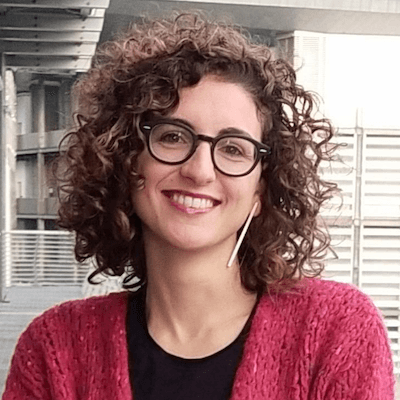
Giulia Moro, Postdoc, Ca' Foscari University of Venice, Italy
Share about your entry into chemical toxicology and your path to your current area?
I stepped into the field of chemical toxicology during my PhD studies in chemistry and bioengineering with the awareness that global challenges, such as water pollution, are inherently complex and cannot be tackled using a single discipline, but instead require a multifaceted and integrated approach. At the time I was designing novel biosensing strategies to monitor the level of PFAS (per- and polyfluoroalkyl substance) in drinking water using serum proteins. Elucidating the mechanism of interaction of PFAS with serum proteins was crucial for the development of our project and had multiple toxicological, medical, and environmental applications. Studying these interactions through the lens of toxicological chemistry changed my approach to sensor design, enriching my perspective. This field of studies has become a key part of my research interests, broadening my horizon.
How do you want to contribute to the advancement of the field?
We often identify our scientific contributions with the capacity to answer specific questions, support our interpretations or create models able to explain a certain phenomenon; in other words, scientific advancements coincide mostly with the development of a “vertical knowledge”. However, by embarking into the field of chemical toxicology I began to appreciate the importance of horizontalizing knowledge, building “bridges” between our existing knowledge to understand the phenomena in its entirety. Imagine a skyline of fully interconnected skyscrapers: you will not need to go downstairs to reach another building! By transposing chemical toxicology findings into the design of highly performing biorecognition layers for analytical devices, such as biosensors, I will contribute to this horizontalization process. In this path, our cross-disciplinary network will not only provide a better fundamental knowledge (i.e., PFAS-serum proteins binding modes) by answering curiosity-driven questions but will also provide better solutions to existing/emerging complex socioenvironmental issues (i.e., design and validation analytical strategies to tackle PFAS leaching in groundwater).
What inspired you to do the research in the article we are highlighting?
By unveiling the binding mode of last generation PFAS compounds with serum albumin, the most abundant protein in our body, we provided a better understanding of the molecular basis of their toxicity. PFASs are highly persistent in the environment (both water and soil) and can accumulate in human and animal tissue by interacting with circulating serum albumin. PFASs are known to be carcinogenic and have been associated with thyroid disease, elevated cholesterol, damage to the liver and kidneys, effects on fertility and low birth weight in humans. The harmful impacts of PFASs at different levels drove us through this work with a common goal: reduce exposure to PFAS. The elucidation of the interaction between PFAS and serum albumin might provide a better assessment of the absorption and elimination mechanisms of these compounds in vivo. In addition, it will guide the development of novel molecular receptors for biosensor, bioremediation, and biomedical applications.
What is something that has impacted you in a positive manner?
The network of enthusiastic scientists that I had the fortune to work with throughout this project allowed me to grow as a person, both professionally and personally. As a young scientist, the positive mentorship of my PhD supervisors, Prof. L.M. Moretto and Prof. K. De Wael, had a tremendous impact on me and on my academic experience. Both passionate and ambitious, they taught me how to overcome any inexperience/failure with a thirst for sharing my knowledge. They instilled in me a sense of responsibility, stimulating me to build my own network and giving me the freedom to tackle important scientific questions. As a postdoctoral researcher, I am grateful to Prof. A. Angelini who encouraged me to be resilient, ambitious and embark on new relevant challenges at the frontier of chemical toxicology, pharmacology, and bioengineering.
What was your training circle like?
By embracing computational, synthetic chemistry as well as scientists specialized in drug discovery, analytical chemistry, biological chemistry and proteomics, chemical toxicology showed me the importance of networking in my training circle. The network was helping me understand the gaps in the scientific topic I was investigating and looking at it from different perspectives, realizing the limitations in terms of technological applications as well as fundamental knowledge. The continuous contact with the network motivates me to fill the gaps in the current studies and applications related to PFAS interactions with serum proteins. At the same time, the possibility of tackling an environmental problem from different directions allowed me to keep a result-oriented approach and structure my experimental research in multiple parallel lines.
Want More from This Journal?
Stay Connected
Sign up today for email updates on the latest research, issues, and other content from Chemical Research in Toxicology.
