These four Collections from ACS journals explore how advances in digital medical engineering—spanning bioimaging, biosensors, AI, and bioinformatics—are driving innovation in biomedical research and clinical care.

ACS Publications journals have long published cutting-edge content exploring the applications of digital medical engineering technologies to innovative tools and methods, such as bioimaging, biosensors, wearable devices, artificial intelligence, and bioinformatics, which advance clinical practice or biomedical discovery for human health.
The four collections below from ACS journals explore the latest opportunities arising from these new technologies.
Jump to Section:
Biomedical Tools & Devices
Bioinformatics & Computational Biology
AI-Powered Biomedical Intelligence
Precision Interventions & Medical Engineering
Introducing Digital Medical Engineering
Biomedical Tools & Devices
Next-generation biomedical tools and devices—spanning biosensors, wearable/implantable systems, biomedical robotics, and molecular/clinical imaging technologies—present great potential as the essential physical layer for observing and interacting with the human body. Advances in enhancing their sensitivity, precision, biocompatibility, and reliability within complex biological environments unlock precise data acquisition across diverse healthcare scenarios.

Bioinformatics & Computational Biology
Computational methods for extracting fundamental insights from molecular-scale biomedical data present new frontiers in systems biology and translational medicine. Leveraging biostatistics and network theory to analyze genomic, transcriptomic, proteomic, and metabolomic data, this field maps biological networks, elucidates disease mechanisms, and discovers novel biomarkers and therapeutic targets, serving as the essential basic science engine generating mechanistic hypotheses for translational research.

View the Collection
Bioinformatics & Computational Biology
AI-Powered Biomedical Intelligence
AI-powered biomedical intelligence holds great potential for deciphering biological and clinical information to generate actionable insights for healthcare innovation. Applying artificial intelligence, machine learning, and big data analytics to drug/protein design, screening, biomedical image/data analysis, and treatment response prediction, this field builds predictive digital twins and intelligent systems that turn complex data into precise diagnostics, optimized therapies, and improved patient health outcomes.

View the Collection
AI-Powered Biomedical Intelligence
Precision Interventions & Medical Engineering
Precision interventions and translational engineering hold great potential for bridging proof-of-concept innovations to real-world clinical impact, driving targeted healthcare solutions. Encompassing novel therapeutic platforms (e.g., targeted delivery, gene editing, cell/tissue engineering, neuromodulation), interoperable digital health ecosystems (e.g., telemedicine, mHealth, interoperable biomedical data systems, human-centered design), and biofabrication engineering (3D bioprinting, organ-on-a-chip, organoid and microtissue fabrication), this field ensures efficacy, safety, and technical, regulatory, and systemic viability to deliver meaningful improvements in health outcomes.
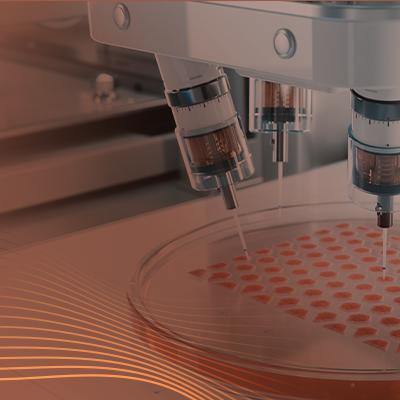
View the Collection
Precision Interventions & Medical Engineering
Introducing Digital Medical Engineering
Digital Medical Engineering, led by Editor-in-Chief Gaolin Liang (Southeast University, China), will continue this great tradition by providing a journal focused on trailblazing interdisciplinary research that integrates digital technologies, engineering, and healthcare.