This year, we're featuring insightful interviews with four Indian scientists, along with a curated selection of research articles based on the pioneering discoveries of Sir C. V. Raman and related technologies recently published in ACS journals.
National Science Day is celebrated annually on February 28 in India, dedicated to the discovery of the Raman Effect by the renowned Indian physicist, Sir C.V. Raman. On this day in 1928, Raman made the discovery that would later earn him the Nobel Prize in Physics in 1930. The Raman Effect, which explains the scattering of light, has had profound implications in various fields, including spectroscopy and quantum mechanics.
The theme for this year’s National Science Day, "Empowering Indian Youth for Global Leadership in Science & Innovation for Viksit Bharat," underscores the importance of nurturing young talent to drive India's scientific and technological advancements. The key initiatives undertaken by India last year such as the Anusandhan National Research Foundation, National Quantum Mission, and National Supercomputing Mission showcase the country’s strength and commitment towards science and technology in alignment with the VIKSIT BHARAT@2047 mission (a developed India by 2047). Last year, India made significant strides in space exploration, achieving milestones such as the launch of Aditya-L1, SpaDeX, and PSLV-C59 / Proba-3, among others.
Additionally, the Science for Equity, Empowerment, and Development initiative promotes inclusive growth, while clean energy and water technology initiatives address environmental challenges. The WISE-KIRAN program empowers women in STEM, fostering gender equity and enriching the scientific community. Together, these efforts exemplify India's dedication to innovation and sustainable development.
On this occasion, ACS Publications is excited to present research highlights and interviews with four scientists in India from diverse backgrounds, discussing the state of research, the importance of government support, and offering advice for aspiring researchers.
Additionally, we invite you to explore a curated collection of research articles published in ACS journals, featuring the application of Raman scattering or related technologies.
As we celebrate National Science Day 2025, it’s a timely reminder of the words of Sir C.V. Raman: "Science is a language that transcends boundaries; it is a universal tool for understanding the world." Let us continue to nurture a spirit of inquiry and innovation, paving the way for a sustainable and prosperous future.
Jump to Section:
Read Interviews From Thought Leaders in India
Browse Research Highlights From ACS Journals
Join ACS on Campus in India
Read Interviews From Scientists in India
Prof. Suparna Mukherji
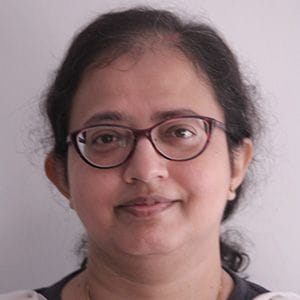
Prof. Mukherji is MPCB Chair Professor in the Environmental Science and Engineering Department (ESED) at IIT Bombay, Mumbai. She completed her Ph.D. in 1997 from the University of Michigan, USA. She served as the Head of Sophisticated Analytical Instrument Facility (SAIF) and Centre for Research in Nanotechnology and Science (CRNTS) (2022-2025) and Head of ESED at IIT Bombay (2018-2021).
Notable awards Prof. Mukherji has received include the AICTE Career Award Grant for Young Teachers by AICTE in 2000 and the Women Bioscientist Award by DBT In 2009. She is a Fellow of the Indian National Academy of Engineering (INAE), National Academy of Sciences India (NASI), Geological Society of India (GSI), Institution of Engineers India (IEI) and Royal Society of Chemistry (RSC).
Could you share a brief overview of your current research and its potential impact on addressing real-world challenges, especially in the context of National Science Day?
My research focuses on bioremediation, monitoring of emerging pollutants in water/wastewater, and wastewater treatment. In one study we are exploring the release of antibiotics from common effluent treatment plants (CETPs) that treat industrial wastewater. Residual antibiotics in the effluent were also found in the creek, where some antibiotics were present at a high enough concentration to pose a risk of antimicrobial resistance (AMR) development in microbes. We are also developing cost-effective tertiary treatment processes for removal of antibiotics using nanocomposites. AMR is one of the leading causes of death in the world, thus, our research is focused on real-world challenges.
Can you recount a particularly significant discovery or breakthrough in your field that you believe is worth highlighting on National Science Day?
Advances in High Resolution Mass Spectrometry coupled with gas and liquid chromatography have enabled us to detect micropollutants in environmental matrices. Such advances have helped us get insights into water quality and to understand the capabilities of treatment techniques in removing micropollutants that may be present at very low concentrations.Before these techniques were developed we were unable to quantify micropollutants in water and wastewater and hence, we could not link the adverse effects on the ecosystem and human health to micropollutants.
How has government support and funding impacted your research initiatives, and how crucial is this support for the overall growth of scientific research in India?
Government funding has greatly impacted my research. I have had several sponsored projects from the Department of Science and Technology (DST) and Department of Biotechnology (DBT).Apart from government sponsored projects, support in the form of assistantships and fellowships for students have greatly benefited my research. The funding prospects have improved with the establishment of Anusandhan National Research Foundation (ANRF) and announcement of increase in Government funding on Research and Development.Government funding is crucial for the growth of scientific research in India.
What advice would you give to aspiring researchers and scientists to encourage them to pursue their passion for scientific inquiry?
I strongly encourage aspiring researchers and scientists to pursue their passion for research. It is a rewarding journey, a journey that impacts the way we approach a problem and frame critical research questions that leads to new insights on environmental phenomena and processes. New findings can make an impact on the field. Even when the findings appear only incremental, they can serve as stepping stones for future research endeavours.
Prof. Siddhesh Kamat
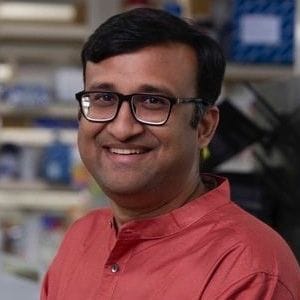
Prof. Kamat is currently an Associate Professor, a Swarnajayanti Fellow, and an EMBO Young Investigator in the Department of Biology at the Indian Institute of Science Education and Research (IISER) Pune. Broadly, Prof. Kamat is a chemical biologist by training, and his research interests are annotating function to uncharacterised enzymes and mapping biological pathways deregulated in human diseases and pathophysiological conditions, using mass-spectrometry based lipidomics, and functional chemical proteomics.
Could you share a brief overview of your current research and its potential impact on addressing real-world challenges, especially in the context of National Science Day?
My research group is interested in studying the signalling mechanisms regulated by bioactive lipids in mammalian physiology, and how their dysregulation results in different human diseases. Our long term goal is to identify and characterize as-of-yet uncharacterized lipid signalling pathways in vivo, annotate enzymes and/or cognate receptors that regulate their biology, and provide new insights and therapeutic paradigms for orphan and/or emerging human diseases. Specifically, we have been studying a class of bioactive lipids called lysophosphatidylserines (lyso-PSs), and understanding its physiological roles in the central nervous and immune systems. Over the past few years, we have also figured out how dysregulation in the metabolism of lyso-PS causes diverse human neurodegenerative and autoimmune diseases. Given this knowledge and our experience in this field, over the next few years, we are hoping to take these biological findings to the clinic to treat different diseases associated with dysregulation lyso-PS metabolism.
Can you recount a particularly significant discovery or breakthrough in your field that you believe is worth highlighting on National Science Day?
The causal association of lyso-PS lipids with human diseases has now been known for over two decades, yet a detailed mechanistic understanding is somewhat lacking. The past few years have seen a tremendous impetus in the development of pharmacological tools and high-end technologies that have enabled a clearer understanding of how dysregulated lyso-PS metabolism and signalling cause human neurological and immune disorders. In particular, the discovery of the metabolic (biosynthetic and degradative) enzymes and receptors across different tissues that regulate physiological concentrations of lyso-PS and its biological signalling networks have been a major breakthrough in this field of research over the past decade.
How has government support and funding impacted your research initiatives, and how crucial is this support for the overall growth of scientific research in India?
Over the years our research program has received generous funding from various government agencies (e.g. SERB (now ANRF), DBT, ICMR) and government associated funders (e.g. India Alliance) to pursue various research projects and endeavours. This funding has been substantial, timely, and fairly flexible for us to pursue our research in an uninterrupted manner. More recently, from our lab’s experience, we see that the government has been very proactive and outspoken in supporting basic science research, with the understanding that basic science research is the backbone that leads to real world applications and has tremendous translational potential.
What advice would you give to aspiring researchers and scientists to encourage them to pursue their passion for scientific inquiry?
The most important piece of advice I would pass on to anyone interested in pursuing their passion for scientific inquiry is to enjoy the science they are doing. I have found over the years from my personal experience, is that if one enjoys what they are doing, most other things (e.g. funding, finding the right people to work with, collaborators, infrastructure etc.) fall into place and eventually work out. This is particularly important for those who are just about to start their independent careers, because this is a very challenging and stressful time—but enjoying the science one does often results in wonderful things and great discoveries.
Prof. Ranjani Viswanatha

Prof. Viswanatha is a Professor at the Jawaharlal Nehru Centre for Advanced Scientific Research (JNCASR), where she specializes in quantum dots. She earned her Ph.D. from the Indian Institute of Science and carried out postdoctoral research at the University of Arkansas and Los Alamos National Laboratory. A founding member of INYAS, Prof. Viswanatha has made significant contributions to the scientific community, serving on various editorial advisory boards, including that of ACS Energy Letters, and reviewing for top-tier journals. She has received numerous national and state-level awards in recognition of her work, which is widely published and acknowledged. Prof. Viswanatha is a sought-after speaker, delivering invited talks at prestigious conferences and playing a key role in advancing the fields of nanoscience and quantum materials.
Could you share a brief overview of your current research and its potential impact on addressing real-world challenges, especially in the context of National Science Day?
As we celebrate National Science Day, we at the Quantum Dot Lab, JNCASR, Bangalore, reflect on our work in nanomaterials, quantum dots, quantum materials, and perovskites. Our research focuses on their electronic structures, optical properties, and magneto-optics, aiming to develop advanced solar cells, light-emitting devices, and spintronic systems. These energy-efficient technologies tackle key challenges in renewable energy, data storage, and precision sensing. By bridging fundamental discoveries with real-world applications, our work contributes to India’s scientific progress and aligns with the national vision for sustainable and transformative technology development.
Can you recount a particularly significant discovery or breakthrough in your field that you believe is worth highlighting on National Science Day?
One of the most transformative discoveries in nanoscience was the invention of quantum dots in the 1980s by researchers like Alexei Ekimov and Louis Brus. These nanoscale semiconductor crystals exhibit unique size-dependent optical properties, leading to innovations like vibrant quantum dot TVs, revolutionizing display technology with unparalleled color accuracy. This breakthrough culminated in the 2023 Nobel Prize in Chemistry awarded to Ekimov, Brus, and Moungi Bawendi, recognizing their foundational contributions. On National Science Day, this achievement exemplifies how fundamental research in quantum dots has reshaped technology and inspired advancements in energy, medicine, and beyond.
How has government support and funding impacted your research initiatives, and how crucial is this support for the overall growth of scientific research in India?
Government funding for fundamental research is essential for fostering innovation and achieving "Make in India" ambitions. Breakthroughs in areas like nanomaterials and quantum dots require sustained support to drive technological advancements. For example, the global AI revolution led by tech giants like Google and Meta underscores how early investments in fundamental science establish leadership in cutting-edge industries. Similarly, by funding basic research in India, we can develop transformative technologies, increase exports, and position the nation as a global scientific leader. Such support is vital for bridging foundational discoveries with real-world impact, fuelling economic and technological growth.
What advice would you give to aspiring researchers and scientists to encourage them to pursue their passion for scientific inquiry?
Be yourself and remain open to exploring different research areas, as the reality of research often differs from theoretical knowledge. Once you discover your true passion, focus deeply and work hard to solve problems not with incremental improvements but with transformative, path-breaking changes. Be prepared for challenges, as groundbreaking ideas often take time for the community to embrace. Learn to enjoy the process of exploration, persistence, and eventual recognition. Passion, perseverance, and the courage to innovate are key to leaving a lasting impact in the world of science.
Prof. Jatish Kumar

Prof. Jatish Kumar obtained his Ph.D. in 2013 from CSIR-NIIST, Trivandrum, India working under the guidance of Professor George Thomas. Subsequently, he had two postdoctoral stints; as a JSPS fellow at NAIST, Nara, Japan and as Marie Curie fellow at CIC biomaGUNE, San Sebastian, Spain. In December 2018, he began his independent career as an assistant professor at the Department of Chemistry, Indian Institute of Science Education and Research (IISER) Tirupati, India, where currently he is currently an Associate Professor. Prof. Kumar is a physical chemist with a research focus on materials science. With an aim to understand the ground and excited state optical activity, his group at IISER Tirupati is working towards the development of chiral light emitting molecules and materials.
Could you share a brief overview of your current research and its potential impact on addressing real-world challenges, especially in the context of National Science Day?
Three dimensional displays with high brightness and contrast, anti-counterfeiting inks with enhanced level of security, chiral recognition and sensing, quantum computing and drug synthesis are only a few among the vast applications that light with circular polarization can offer. Working in this direction, our group at IISER Tirupati aims at the development of nanomaterials that can exhibit circular polarization in light absorption and emission. A wide range of nanomaterials such as plasmonic nanoparticles, luminescent nanoclusters, quantum dots, upconversion nanophosphors and organic nanoparticles are synthesized and studied in the lab. With an aim to develop (i) compact and efficient light emitting devices, (ii) security inks with better safeguarding features, (iii) catalyst with enhanced enantioselectivity and (iv) biosensors with high sensitivity, the group is working towards developing nanosystems exhibiting enhanced circular polarization in luminescence.
Can you recount a particularly significant discovery or breakthrough in your field that you believe is worth highlighting on National Science Day?
Even though luminescent nanomaterials have received significant attention over the past decades (as evident from Nobel Prize in 2022 for quantum dots), nanoscale chirality is an area that was unexplored. The field of chirality witnessed a rejuvenation with the unleashing of optical activity in nanomaterials. The synthesis of chiral metal nanoclusters by Schaaff and Whetten in 1998 marked a turning point in the field of nanoscale chirality, and since then the area is being expanded to different class of materials such as plasmonic nanomaterials, carbon nanomaterials, metal nanoclusters, perovskite nanocrystals, upconversion nanophosphors etc. The chiral nanomaterials, due to their vast potential, are projected as viable alternatives for the molecular counterparts in various applications.
How has government support and funding impacted your research initiatives, and how crucial is this support for the overall growth of scientific research in India?
The funding from government of India has been crucial for the progress of our research activities. Funded projects from Science and Engineering Research Board (SERB), Department of Science and Technology (DST), Council of Scientific Research (CSIR), and Ministry of Education (MoE) has been crucial in our initial stages. The DST-JSPS bilateral project helped bridge fruitful collaborations with researchers in Japan. The SERB International Travel Grant (ITS) was useful for attending research conference abroad, which is crucial to connecting with international community in the area. With the establishment of Anusandhan National Research Foundation (ANRF), streamlining of funding, with a substantial scale up, is expected for basic and applied research in India.
What advice would you give to aspiring researchers and scientists to encourage them to pursue their passion for scientific inquiry?
Science, unlike other fields, is always evolving. Hence, continuous learning and staying committed to the objectives are the key to achieving the goals. As research demands confronting new challenges daily, setbacks and failures are part of this game. Learning from failures and developing resilience to overcome challenges are key to sustenance in the field. As Sir C. V. Raman said, “I am the master of my failure. If I never fail, how will I ever learn?” Asking the right questions, confronting the right problems, and possessing a sense of curiosity is key to achieving greater heights in research.
Browse Research Highlights From ACS Journals
In Situ Raman Hyperspectral Analysis of Microbial Colonies for Secondary Metabolites Screening
Shunnosuke Suwa, Masahiro Ando*, Takuji Nakashima, Shumpei Horii, Toyoaki Anai, and Haruko Takeyama*
DOI: 10.1021/acs.analchem.4c02906
Charge Recognition in Ru(bpy)32+ on a Metal Surface via Ultrahigh Vacuum Tip-Enhanced Raman Spectroscopy
Sayantan Mahapatra, Chamath Siribaddana, Linfei Li, Soumyajit Rajak, Xu Zhang, and Nan Jiang*
DOI: 10.1021/acs.jpcc.4c02758
Dyed Hair and Swimming Pools: The Influence of Chlorinated and Nonchlorinated Agitated Water on Surface-Enhanced Raman Spectroscopic Analysis of Artificial Dyes on Hair
Aidan P. Holman, Roa Elsaigh, Ragd Elsaigh, Axell Rodriguez, and Dmitry Kurouski*
DOI: 10.1021/acsomega.4c06734
Nanocavities for Molecular Optomechanics: Their Fundamental Description and Applications
Philippe Roelli, Huatian Hu, Ewold Verhagen, Stephanie Reich, and Christophe Galland*
DOI: 10.1021/acsphotonics.4c01548
Factors that Affect Quantification in Surface-Enhanced Raman Scattering
Meikun Fan and Alexandre G. Brolo*
DOI: https://pubs.acs.org/doi/10.1021/acsnano.4c15183
Breath Analysis via Surface Enhanced Raman Spectroscopy
Adrián Fernández-Lodeiro, Marios Constantinou, Christoforos Panteli, Agapios Agapiou, and Chrysafis Andreou*
DOI: 10.1021/acssensors.4c02685
Resonant Electron–Phonon Interaction and Its Non-Fano-Type Wavelength and Power-Dependent Raman Manifestation
Deb Kumar Rath, Chanchal Rani, Shivansh Raj Pandey, Love Bansal, Bhumika Sahu, Nikita Ahlawat, Shailendra K. Saxena, and Rajesh Kumar*
DOI: 10.1021/acs.jpcc.4c04058
Unveiling the Molecular Secrets: A Comprehensive Review of Raman Spectroscopy in Biological Research
Anshuman Chandra, Vimal Kumar, Umesh Chandra Garnaik, Rima Dada, Imteyaz Qamar, Vijay Kumar Goel, and Shilpi Agarwal*
DOI: 10.1021/acsomega.4c00591
Join ACS on Campus in India!
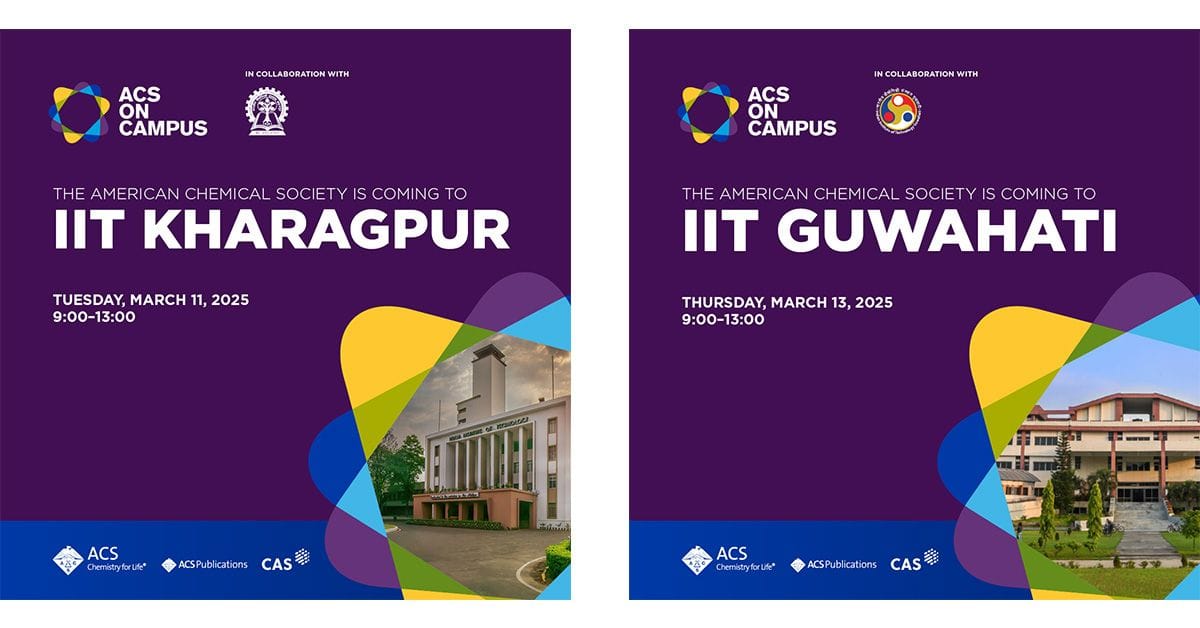
Join ACS at IIT Kharagpur on March 11 or IIT Guwahati on March 13 for an engaging half-day event. Get to know Prof. Joan-Emma Shea, P.h.D., Editor-in-Chief of the Journal of Physical Chemistry A/B/C and other featured ACS Editors, who will share their Top Tips for Scholarly Publishing and Effective Writing. Plus, find out more about Cultivating Your Scientific Presentation Skills and the latest ACS Resources you can use to grow your career.
Both events are FREE and open to all students and researchers studying the sciences—not just chemistry! Attendees will receive a personalized participation certificate after the event.
Learn more and register for IIT Kharagpur or IIT Guwahati on the ACS on Campus website!