This award recognizes early career researchers leading the environmental science and technology fields in new directions through creative, novel ideas. Learn more about the 2025 winners in these exclusive interviews.

The James J. Morgan Environmental Science & Technology Early Career Award is presented annually by Environmental Science & Technology (ES&T) and Environmental Science & Technology Letters (ES&T Letters). This award, named after the first Editor-in-Chief of ES&T, recognizes those early career researchers who are leading the fields of environmental science and technology in new directions through creative, new ideas consistent with Morgan’s early contributions in environmental chemistry.
This year, the award recognizes five young investigators based in Europe, The Middle East, and Africa.
We are excited to announce the 2025 winners:
- Razi Epsztein, Technion - Israel Institute of Technology, Israel
- Naresh Kumar, Wageningen University, The Netherlands
- Philiswa Nomngongo, University of Johannesburg, South Africa
- Case van Genuchten, Geological Survey of Denmark and Greenland, Denmark
- Zongsu Wei, Aarhus University, Denmark
Congratulations to the 2025 award recipients! Each winner will receive their award and present a lecture during a special ES&T Journals Award Session at ACS Spring 2025 on Monday, March 24. Come and join us in congratulating them.
Learn more about this year's winners and their leading-edge research below.
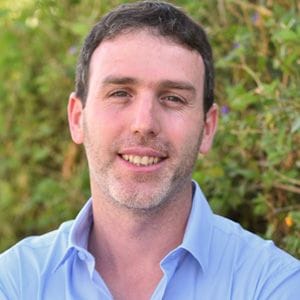
Razi Epsztein
Tell us about yourself.
I am an Associate Professor in the Faculty of Civil and Environmental Engineering at the Technion – Israel Institute of Technology. My academic journey began with a B.Sc. and M.Sc. from Ben-Gurion University of the Negev, followed by a Ph.D. from the Technion. I then pursued postdoctoral training in Prof. Menachem Elimelech’s lab at Yale University, where I transitioned from studying biological water treatment processes to membrane-based separation technologies.
My research group focuses on advancing membrane-based processes for water and wastewater treatment. We aim to deepen the fundamental understanding of molecular transport and selectivity in membranes and nanopores, which, in turn, guides the development of advanced membranes and processes with enhanced selectivity for various applications. Inspired by biological channels in living cells, a major research focus in my lab is the design of ion-selective membranes that recognize target ions through specific binding sites and interactions.
What does this award mean to you?
ES&T and ES&T Letters are widely regarded as the leading journals in environmental science. As a young researcher, I have always aimed to publish my best work in these journals, knowing that many of the most impactful studies in our field appear there. Receiving this early career award from ES&T is a tremendous honor and a meaningful recognition of my research. It serves as a great source of motivation as I continue to pursue new scientific challenges.
What are you working on now?
My lab’s research is divided into two main areas: (1) fundamental investigations into molecular transport in membranes and (2) applied research focused on developing next-generation membranes and processes with enhanced selectivity.
On the fundamental side, we are working to better understand ion dehydration in membranes—a key phenomenon that drives ion selectivity. By unravelling the forces and parameters that govern this process, we hope to design membranes that selectively enhance or suppress the transport of specific ions.
On the applied side, we are exploring novel approaches for designing ion-selective membranes based on the principles we uncover. One of our major projects involves introducing ion-recognition chemistry into state-of-the-art polyamide NF and RO membranes. For example, we are working to develop desalination membranes that effectively remove sodium chloride from saline water while retaining essential minerals such as calcium and magnesium. These membranes could significantly improve desalination processes by reducing (or even eliminating) the costly remineralization step commonly required in current desalination plants. In Israel, such advancements could be particularly impactful by addressing concerns over magnesium deficiencies in desalinated drinking water.
What advances are you hoping to see in your field in the next decade?
Despite the significant progress made in membrane separation over the past 60 years, there are still many open questions and knowledge gaps. We need new technologies and tools to gain a more complete understanding of molecular transport in membranes and to fabricate membranes with atomic precision.
In recent decades, advancements in computational simulations, fabrication techniques, and analytical instrumentation have provided unprecedented insights into membrane structure and function. I hope that these developments will accelerate in the coming years, enabling breakthroughs in membrane design and expanding the potential of membrane separation beyond its current applications.
What advice would you give to young investigators who aspire to be where you are now?
I hesitate to give advice at this stage of my career 😊, but if I had to highlight two key elements of success, they would be passion and persistence. Loving what you do and working hard toward your goals are essential for making meaningful contributions to science.
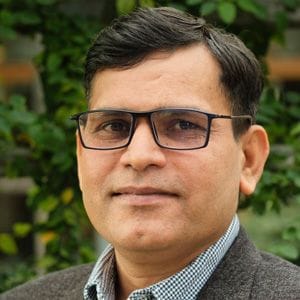
Naresh Kumar
Please tell us about yourself!
I was born and raised in a small village in Northern India. After completing my PhD from CEREGE- Aix-Marseille University in France, I went on for a postdoc at Stanford University. I took a junior group leader position at University of Vienna (2018-2021) in Austria, and since 2021, I am an Assistant Professor in Soil Chemistry group at Wageningen University in the Netherlands. I have been privileged to have had opportunities to work with great mentors and in diffent research environments globally, that have shaped my career to a large extent.
What does this award mean to you?
It is a tremendous personal honor to be among the recipients of the James J. Morgan award as I have always admired the great work of current and previous awardees. To be associated with the name of the great James J. Morgan, a pioneer in aquatic chemistry, brings a sense of responsibility. This award is also a great recognition not only for the work we have done in the past few years, but also for my students, and mentors who have shaped my thinking in many ways. I feel privileged to have learned from each of them. It is also humbling to realize that our work has resonated with the broader geochemistry community and that is a great motivation to continue this journey.
What are you working on now?
In our group, we continue to develop molecular scale mechanistic understanding of processes at aqueous-mineral interface that control fate and mobility of nutrients and contaminants, including in redox dynamic environments. We are interested in behaviour of redox-sensitive contaminants like As, Cr and U and the role of organics in their environmental fate. We are currently also looking at P (bio)availability in soils in relation to Fe-redox cycling.
What advances are you hoping to see in your field in the next decade?
I strongly believe that the environmental geochemistry community will continue to address new challenges imposed by emerging new contaminants and continuous degradation of global soil health to ensure food security and groundwater quality. Advancement in our understanding of spatial and temporal redox heterogenity in soils that drive many of the unusual biogeocehemical redox reactions and green house gas release, will help us find climate resilient solutions. Newer analytical developments (e.g. advance high resolution X-ray spectroscopy and imaging analysis) allows us to resolve these reactions in real time and at atomic resolution unraveling underlying mechanisms.
What advice would you give to young investigators who aspire to be where you are now?
Though, I am still learning and may lack wisdom to give advice, but if I were to share my own experience, I would say, it is important to enjoy and value learning process much more than the external outcomes, particularly at early career stage. In my personal experience, perseverance is the key. Failure and rejection in science and academia are common, so, it is important to find your own internal measures of success and not give up.
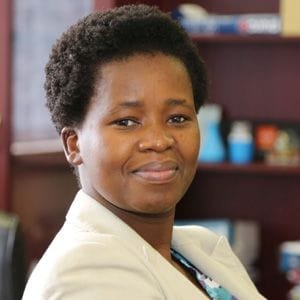
Philiswa Nomngongo
Tell us about yourself.
I was born and raised in Lusikisiski, but now my home is in Flagstaff, one of the small neighbouring rural towns in the Eastern Cape Province, South Africa. The majority of the villages from these small towns have limited or no access to clean water sources, and the communities depend on rivers, streams, and unprotected springs as sources of drinking water. However, these water sources are susceptible to pollution from agricultural runoff, poor sanitation systems, livestock, drought, heavy rains and human activities. The water-related issues in my villages motivated me to pursue studies that can help solve these problems. So, I then went on to study chemistry (specialising in analytical chemistry). I completed a B.Sc. in Applied Chemistry (2008), B.Sc. (Hons) in Chemistry (2009) and M.Sc. (Chemistry, 2011) at the University of KwaZulu Natal, followed by a Ph.D. in Chemistry (specialising in Analytical Chemistry, 2014) at the University of Johannesburg.
In 2015, I joined the University of Johannesburg as a lecturer, and my research focus has been dedicated to environmental analytical chemistry and nanotechnology, aiming to solve environmental problems in water quality and environmental protection. My most significant contributions have been mainly in developing sample preparation methodologies using nanostructured materials as adsorbents for monitoring inorganic and organic pollutants (more specifically, emerging contaminants which include pesticides, endocrine disruptors and personal care and pharmaceutical products) in water systems as well as water quality monitoring.
What does this award mean to you?
It is my pleasure and greatest honour to be named among the recipients of the James J. Morgan Early Career Award. Receiving this award signifies a momentous validation of my work, a recognition of the dedication and effort invested in my research. It is also a powerful motivator to continue exploring new avenues that lead to more impactful contributions in solving water issues in my villages. Moreover, this award represents and recognises the hard work, perseverance and dedication of my devoted research team (Environmental Analytical Research Group) and collaborators. This award serves as a validation of our efforts, and it is a source of motivation to continue striving for excellence and inspiring future scientists.
What are you working on now?
My research focuses on the application of nanomaterials for monitoring and adsorption technology for the removal of recalcitrant pollutants such as pesticides, heavy metals, per-and polyfluoroalkyl substances (PFAS), pharmaceuticals and personal care products (PPCPs) in water and other complex matrices. A number of projects in my research group are embarking on developing fit-for-purpose methods for key water pollutants that are required for environmental monitoring programmes. Furthermore, my team and I are spending a lot of our time in several villages in the Eastern Cape, profiling drinking water sources used for drinking, water quality, demand, availability, and pollution sources that threaten water security in these areas. In summary, my research comprises the multifaceted interrelationships between the major fields of analytical chemistry, environmental chemical engineering, and nanotechnology, as well as their application in solving water problems.
What advances are you hoping to see in your field in the next decade?
Advances in environmental analytical chemistry could significantly enhance our ability to monitor and address environmental challenges everywhere, including the most remote rural areas. I believe that the development of portable analytical devices will continue to revolutionise the field, thus facilitating real-time monitoring of pollutants and reducing the need for time-consuming sample transportation to laboratories. These advancements could also allow timely and accurate assessments of water pollution levels and help to ensure improvements in water quality, thus supporting the achievement of Sustainable Development Goals (SDG) 6 targets 6.1 (safe and affordable drinking water), 6.3 (improve water quality, wastewater treatment and safe reuse) and 6.6 (protect and restore water-related ecosystems). Furthermore, advances in the field will contribute to the sustainable management of water resources, especially in rural communities.
What advice would you give to young investigators who aspire to be where you are now?
Bearing in mind that every researcher's journey is unique, it is important for young scientists to embrace their path, stay motivated, and keep striving for excellence.
Here are a few pieces of advice I have for young scientists:
- Curiosity leads to innovation and discovery. Therefore, ask questions continuously and seek to understand the "why" behind the problem at hand. This will help you focus on mastering and understanding fundamental concepts, which is crucial for tackling complex issues.
- Stay informed and keep up with the latest research trends in your field because science is constantly evolving. Also, build and maintain partnerships with peers, mentors, and professionals in your field because collaboration often leads to new opportunities and insights.
- Scientific breakthroughs often take time and dedication; therefore, it is important to pursue what you love, be patient with the process, and conduct your research with honesty and integrity.
- Science can be challenging; stay resilient, learn from failures, keep pushing forward, and know that setbacks are part of the journey.
Case van Genuchten
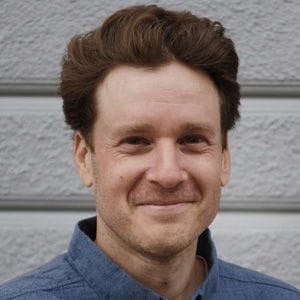
Tell us about yourself.
I was born in Southern California, where I lived most of my life until finishing my undergrad degree at San Diego State University. I then moved to Northern California for graduate school at UC Berkeley (Civil and Environmental Engineering). After some years as a post-doc in Switzerland and the Netherlands, I ended up in Copenhagen, Denmark, where I met my wife in 2016. I now live in Copenhagen full time and work at the Geological Survey of Denmark and Greenland (GEUS) as a Senior Researcher in the Geochemistry Department. I have been interested in water quality and water treatment since my undergrad and my early career involved several projects to improve water quality in different socioeconomic settings, which is how I started working on arsenic. Outside of science, I am just trying to keep my head above water these days with two kids under 3, but if there is time, I like to pretend I am still in Southern California and go surf in Northwest Denmark (and yes, the water is cold).
What does this award mean to you?
I am not sure if there is a more meaningful award to me than the James J. Morgan Early Career Award from Environmental Science & Technology (ES&T). Since I was a Ph.D. student, ES&T always set the standard for innovative and rigorous work in water treatment and environmental sciences more broadly. One of the reasons I personally hold ES&T in high regard is that it is one of the only journals that encourages authors to delve deep into molecular-scale science, while also maintaining a strong link to practical environmental and technical challenges. To put it another way, I often use synchrotron-based characterization techniques in my work, and I never feel this type of data is out of place at ES&T, which is not the case for other more applied journals. The fact that the award also bears Morgan’s name is a bonus since I often reference his work in my own research, especially his articles on manganese oxide sorption reactivity. So in short, I still do not believe that I was part of the cohort selected for the award, but it is a real honor and provides some strong motivation to continue my current research.
What are you working on now?
My group is currently investigating new chemical methods to convert the waste produced from drinking water treatment into valuable materials. Specifically, my team (post-doc Kaifeng Wang and Ph.D. student Tinatin Tkesheliadze) works a lot with arsenic-laden iron oxide sludge generated from groundwater treatment. Arsenic removal from groundwater generates huge quantities of waste that is viewed by the water sector as a disposal issue, with landfilling being the most common waste management practice. However, metallic arsenic (As0) is now classified as a Critical Raw Material (CRM) in the USA and European Union partly because it is used to produce high-speed electronics (e.g., arsenic-bearing semiconductors). We have developed a two-step process to upcycle arsenic-rich sludge to yield pure As0, which eliminates the need for unsustainable waste management practices and generates local sources of CRMs. We hope to continue to improve this process by not only generating As0, but potentially creating high-value advanced functional materials from the upcycled As0. Through the sale of valuable materials, this valorization process might help to improve the often challenging economics of water treatment in resource-scarce regions, including arsenic-affected areas of South Asia.
What advances are you hoping to see in your field in the next decade?
What I hope to see in my field of water treatment, and specifically inorganic contaminant removal, is not necessarily a technical advancement, but more of an advancement in how we think about water treatment. A more traditional view is that water treatment aims to remove one or more contaminants to below certain threshold concentrations, ideally at the lowest cost possible and using the least amount of resources. However, I think there is a part missing to that perspective, particularly in view of changing societal needs. Many notorious environmental pollutants have dual properties as both toxic metal(loid)s and as materials needed to transition from fossil fuels to clean energy systems (i.e., Critical Raw Materials; CRMs). Arsenic has been my favorite contaminant to think about because of its catastrophic global health impacts from widespread drinking water contamination and its simultaneous growing use in society (e.g., in high-speed electronics). Many elements that are contaminants and CRMs, including arsenic, are often encountered in water treatment, such as manganese, antimony, nickel and copper. So the advancement that I hope to see would be to add another aspect to the water treatment process that relates to waste production. To put it in the form of a question: how can we control the (electro/bio/geo) chemical conditions of water treatment to create more valorizable treatment products, while maintaining contaminant removal performance at minimal cost? This is a familiar concept for phosphorous recovery during wastewater treatment, but is still in its infancy for drinking water treatment.
What advice would you give to young investigators who aspire to be where you are now?
I had never considered myself to be in a place where someone else would aspire to be, but if I had to give some advice to young independent investigators, I would say two things. The first is to not be scared to work on really challenging problems. This advice stems from my Ph.D. work on arsenic contamination in drinking water, which is still a problem that affects millions of people worldwide and continues to be a major personal motivation for me. The second thing I would say is that you should not listen (too much) to those that are dismissive of your ideas or who think what you are doing is impossible. Of course constructive feedback is important, but if you want to accomplish something, don’t give up. This piece of advice is very much related to the work my group is currently doing with arsenic waste valorization, which has been something I have been thinking about for more than ten years, though we only just found a method that works effectively. As a Ph.D. student, a senior member of my group once told me “if this were an easy problem, someone would have solved it years ago.” I think about that a lot when things go wrong, because they always do, the key is just to not give up.
Zongsu Wei
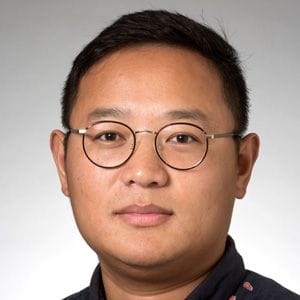
Tell us about yourself.
I now live in Aarhus with my wife Yueyun and my two sons, Ethan and Max. We moved to Denmark in 2019 after nearly 10 years in the U.S., where I received my academic training. We enjoy traveling and exploring diverse cultures around the world. Outside of my work, I like reading, cycling, spending time with family, and following my beloved Ohio State Buckeyes football team.
As the group leader for Water Engineering Innovation (WEI) Lab, I work with my students and postdocs to develop various advanced oxidation/reduction processes aimed at addressing the growing concern of persistent organic pollutants such as the forever chemicals — per-and polyfluoroalkyl substances (PFAS). Our goal is to achieve breakthroughs in PFAS degradation through methods like photolysis, photocatalysis, and sonolysis, setting new standards and making significant contributions toward the complete defluorination of PFAS to achieve zero-pollution targets.
What does this award mean to you?
Receiving the James J. Morgan Early Career Award is of immense personal and professional significance to me. Personally, it marks a key milestone in my journey and serves as validation for years of hard work, dedication, and innovation in water treatment technologies. I couldn’t have come this far without the unwavering support of my mentors, students, and family, who have inspired me every step of the way. Professionally, this award motivates me to continue pursuing excellence and to shape the direction of my research in the years ahead.
What are you working on now?
Thousands of man-made chemicals and particles have been released into water sources, becoming toxic pollutants. Our team is driven to develop novel water treatment technologies to remove these pollutants and ensure a safe and clean water supply for the public. Specifically, we are focused on developing reactions that enable the removal of fluorine atoms from PFAS molecules. By combining knowledge in chemistry, materials, and engineering, we are empowered to solve many of the pressing water challenges we face. These interdisciplinary tools are crucial in providing the creative spark needed to find radical and scientifically sound solutions.
What advances are you hoping to see in your field in the next decade?
PFAS, also known as “forever chemicals,” are also “everywhere chemicals,” because they are so widely used in both industrial and consumer goods. This widespread use calls for us to profile PFAS in the environment and in consumer products, establish a publicly available database, assess the health and ecological impacts, and identify PFAS-free alternatives. I hope we can take swift and decisive action to find a comprehensive solution to PFAS management. Addressing the risks posed by PFAS will require us to rethink how we mitigate their impact. This challenge will necessitate staying at the forefront of water innovation research to produce high-quality, low-cost, user-friendly technologies that incorporate sustainable materials, energy, and processes. I am eager to contribute significantly to this important field by innovating new treatment technologies using interdisciplinary tools.
What advice would you give to young investigators who aspire to be where you are now?
It is often said that curiosity ignites joy in creative knowledge, but becoming an independent researcher also requires dedication, creativity, and hard work. Research is a long journey, and perseverance is key. We must navigate failures in experiments, frustrations with tough reviewers, and the pressures of securing positions/funding. Stay positive every day, and success will come to those who prepare diligently.
Learn About Last Year’s Winners